.svg "logo no tag line (1)")
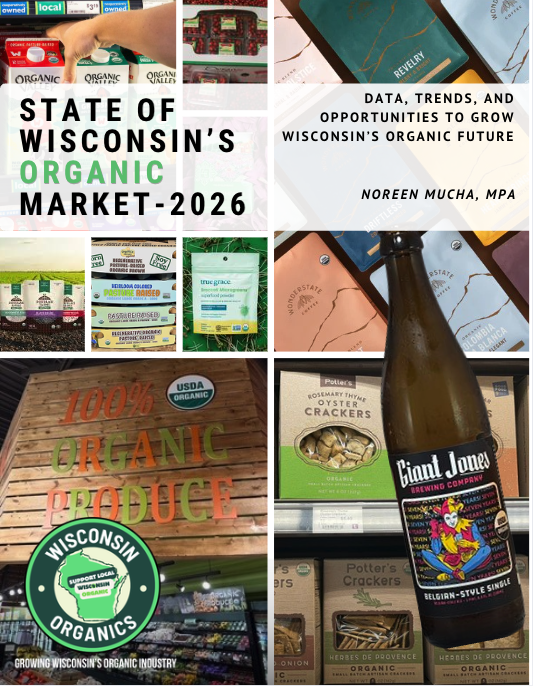
State of Wisconsin's Organic Market-2026
The State of Wisconsin’s Organic Market 2026 Report examines Wisconsin’s organic market across production, processing, value-added products, agricultural inputs, retail, distribution, and industry governance. The report identifies sector opportunities and presents recommendations to strengthen and grow Wisconsin’s organic industry
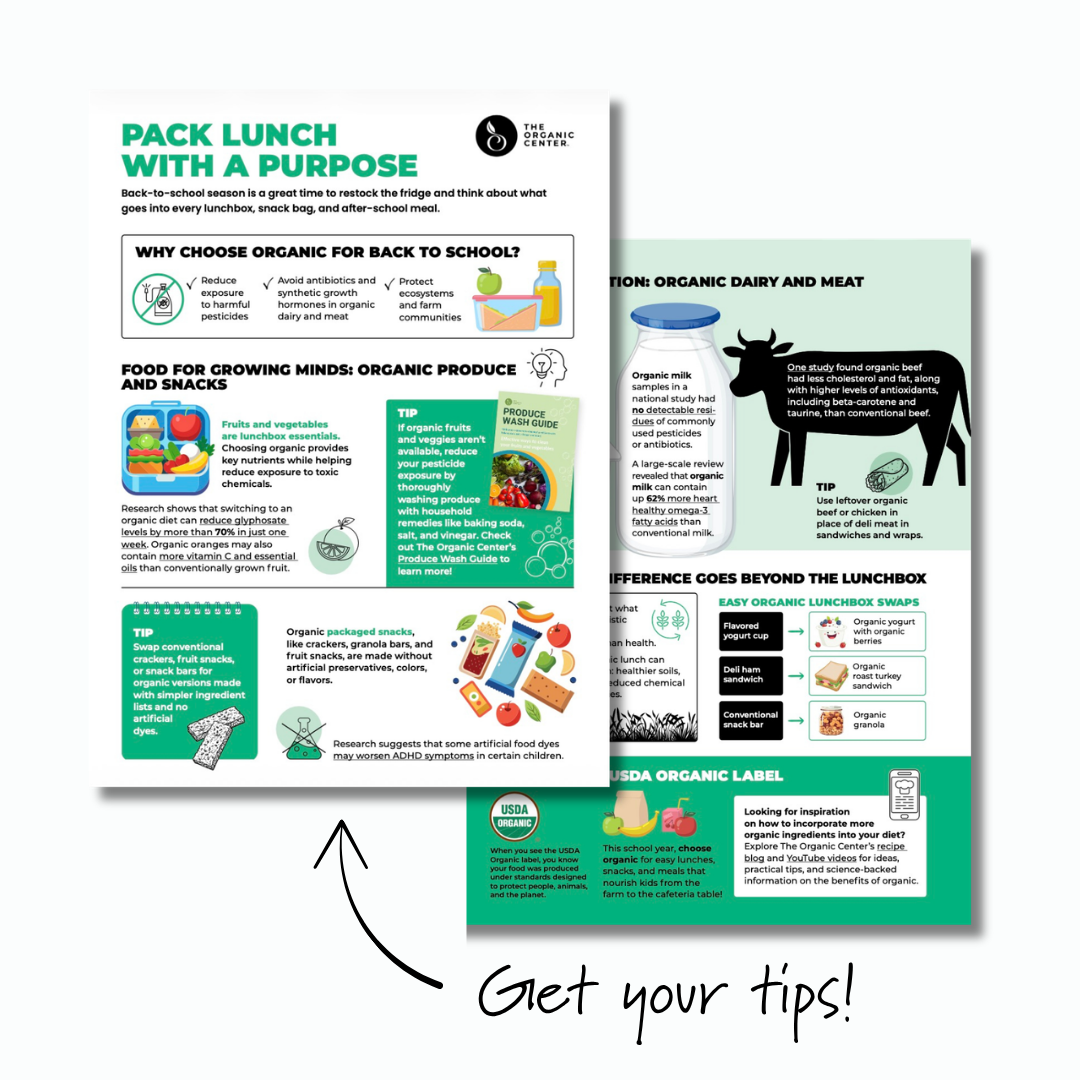
Pack Lunch with a Purpose
Just in time for back-to-school season, The Organic Center has launched a new Seal Makes It Simple tip sheet to help families make informed organic choices for lunches, snacks, and after-school meals. Pack Lunch with a Purpose shares science-backed benefits of choosing organic produce, snacks, dairy, and meat, along with easy lunchbox swaps and practical tips for reducing exposure to pesticides, antibiotics, synthetic growth hormones, and artificial food dyes.
.svg)
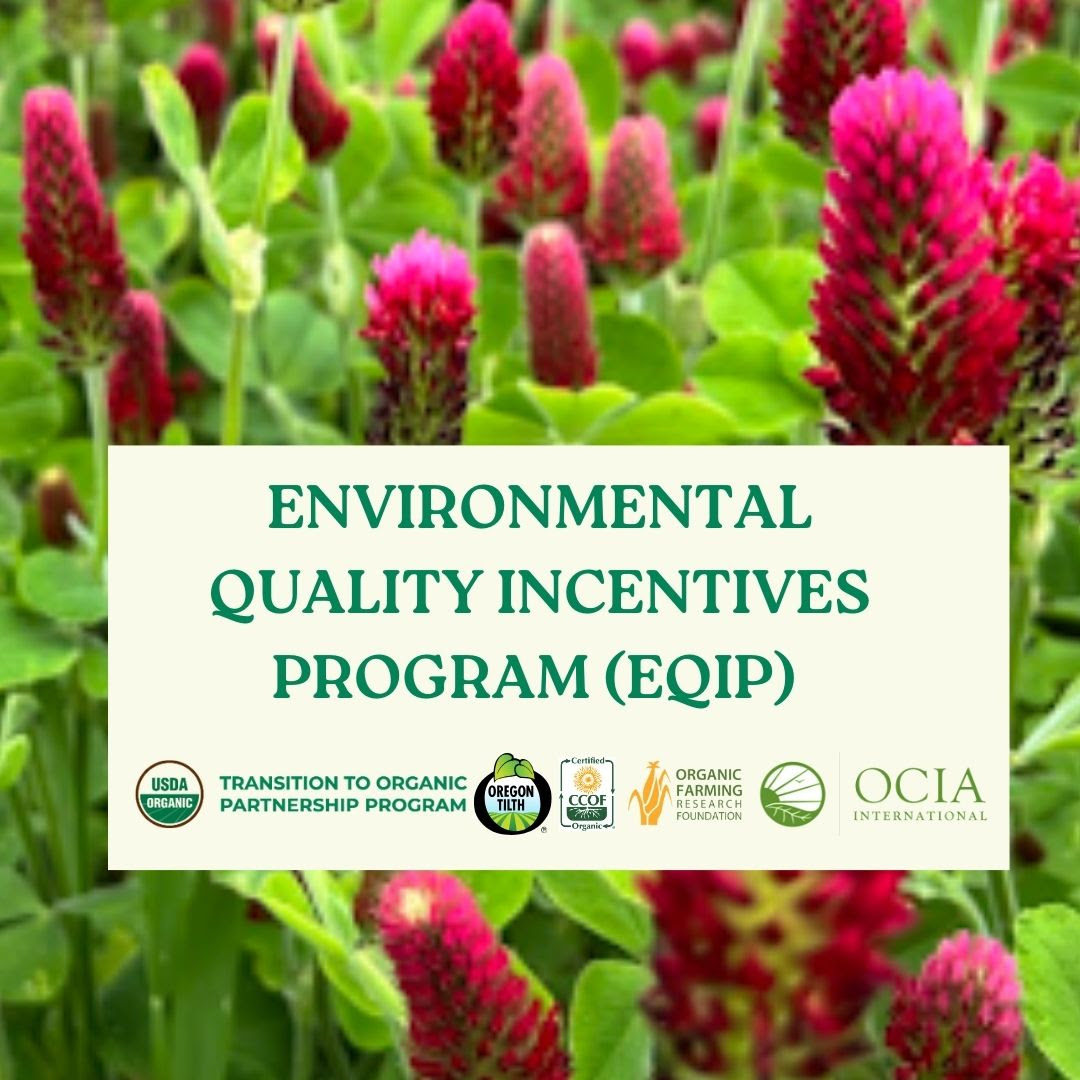
USDA Environmental Quality Incentive Program (EQIP) Toolkit
The National Resource Conservation Service (NRCS)’ EQIP program offers financial assistance and technical support to implement new conservation practices on your farm, with additional support for historically underserved applicants including socially disadvantaged, beginning, veteran, and limited-resource farmers and ranchers. While the next ranking date for this program is January 15, 2026, applications and proposal reviews are ongoing.
Community Supported Agriculture (CSA) Innovation Network Resources
The Community Supported Agriculture (CSA) Innovation Network is committed to gathering resources that will support CSA farmers and Technical Assistance (TA) providers. From implementing a financial assistance program to developing best marketing practices, this library compiles case studies, toolkits, videos, and more.
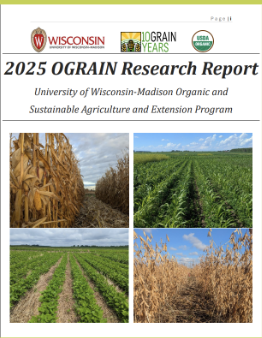
University of Wisconsin-Madison 2025 OGRAIN Research Report
The 2025 OGRAIN Research Report highlights a decade of UW–Madison’s Organic and Sustainable Agriculture Program advancing practical tools for organic grain farmers in Wisconsin and the Upper Midwest.
University of Wisconsin-Madison Organic Transition Resource Toolkit
UW–Madison Extension has launched a new Organic Transition Resource Toolkit, an online library designed as a one-stop hub for farmers who are organic-curious, transitioning, or already certified and looking to strengthen their systems. The site pulls together guides, factsheets, videos, tools, and expert contacts to support more resilient and successful organic farms across Wisconsin.cropsandsoils.extension.wisc
The toolkit is coordinated by Ari Abbrescia, an Extension specialist focused on organic agriculture outreach and farmer support. Ari works with producers statewide to share research, develop practical resources, and create opportunities for peer learning and connection; farmers can reach her directly at ariana.abbrescia@wisc.edu or 608-263-1054 for questions or help navigating the toolkit.
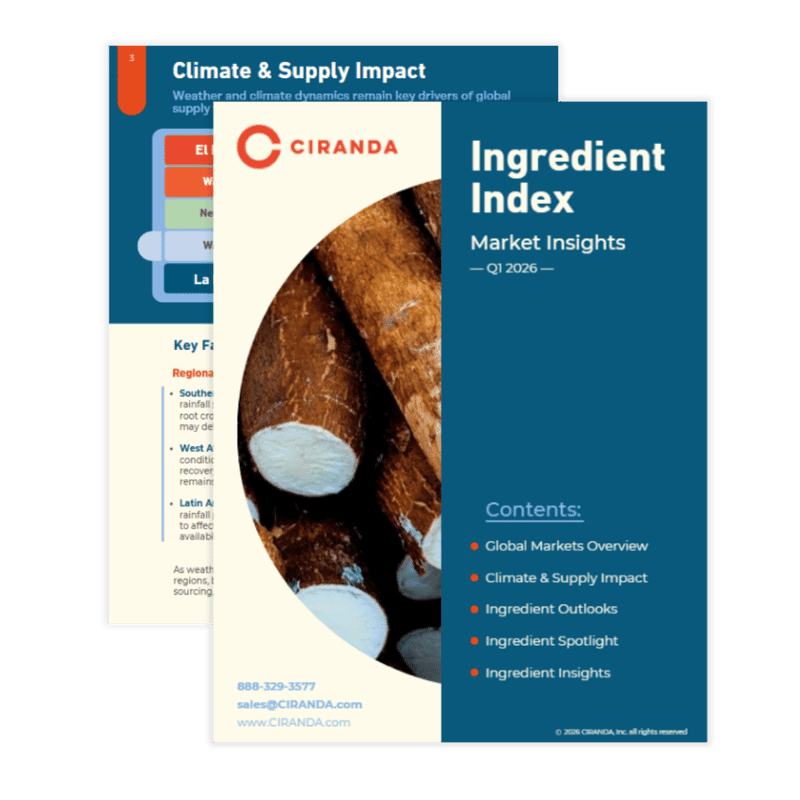
Ciranda Ingredient Index
A recent global ingredient update outlines current market conditions, climate and supply dynamics across key sourcing regions, and what they mean for future pricing and availability. It provides forward‑looking outlooks for tapioca, cocoa, and coconut, plus technical spotlights to help formulators understand functionality and best‑use cases. Readers are invited to explore the full ingredient portfolio, designed to support clean‑label, high‑performance formulations, and can request tailored samples to support new product development.
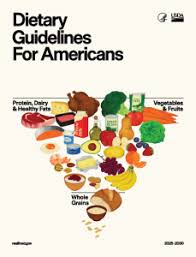
American Dietary Guidelines
The new Dietary Guidelines at realfood.gov emphasize “real food”—whole, minimally processed, nutrient-dense foods—as the foundation of better health, and explicitly warn against highly processed products linked to chronic disease. The guidance promotes higher protein intake (1.2–1.6 grams per kilogram of body weight per day) from animal and plant sources with healthy fats (e.g., eggs, meat, full-fat dairy, nuts, seeds, olives, avocados), alongside daily goals of about 3 servings of vegetables, 2 servings of fruit, and 2–4 servings of whole grains while sharply reducing refined carbohydrates. It frames this shift as a reset of U.S. nutrition policy toward whole foods, transparency, and personal responsibility, supported by detailed scientific reports, serving guides, and policy resources.
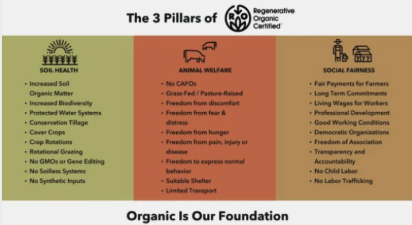
What is Organic and What is Regenerative?
This article explains that “organic” and “regenerative” are related but distinct concepts. Organic is a legally defined, third‑party‑certified system that prohibits synthetic fertilizers, pesticides, GMOs, and certain other inputs, and requires practices that support ecological balance and biodiversity. Regenerative, as used today, is broader and looser: it focuses on outcomes like rebuilding soil health, increasing biodiversity, and drawing down carbon, but many regenerative programs do not strictly prohibit synthetic inputs. Rodale argues that the strongest path forward is regenerative organic—farms that meet the rigorous USDA Organic standard while also going further on soil health, animal welfare, and social fairness—so that “regenerative” delivers real, measurable improvements without weakening the hard‑won protections of organic.
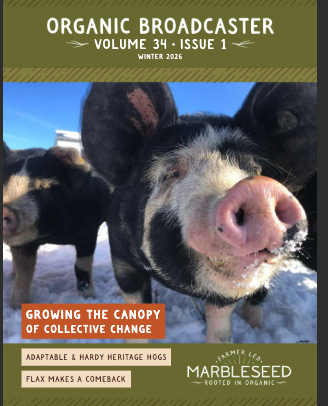
Marbleseed Organic Broadcaster, Winter 2026
This article explains that “organic” and “regenerative” are related but distinct concepts. Organic is a legally defined, third‑party‑certified system that prohibits synthetic fertilizers, pesticides, GMOs, and certain other inputs, and requires practices that support ecological balance and biodiversity. Regenerative, as used today, is broader and looser: it focuses on outcomes like rebuilding soil health, increasing biodiversity, and drawing down carbon, but many regenerative programs do not strictly prohibit synthetic inputs. Rodale argues that the strongest path forward is regenerative organic—farms that meet the rigorous USDA Organic standard while also going further on soil health, animal welfare, and social fairness—so that “regenerative” delivers real, measurable improvements without weakening the hard‑won protections of organic.
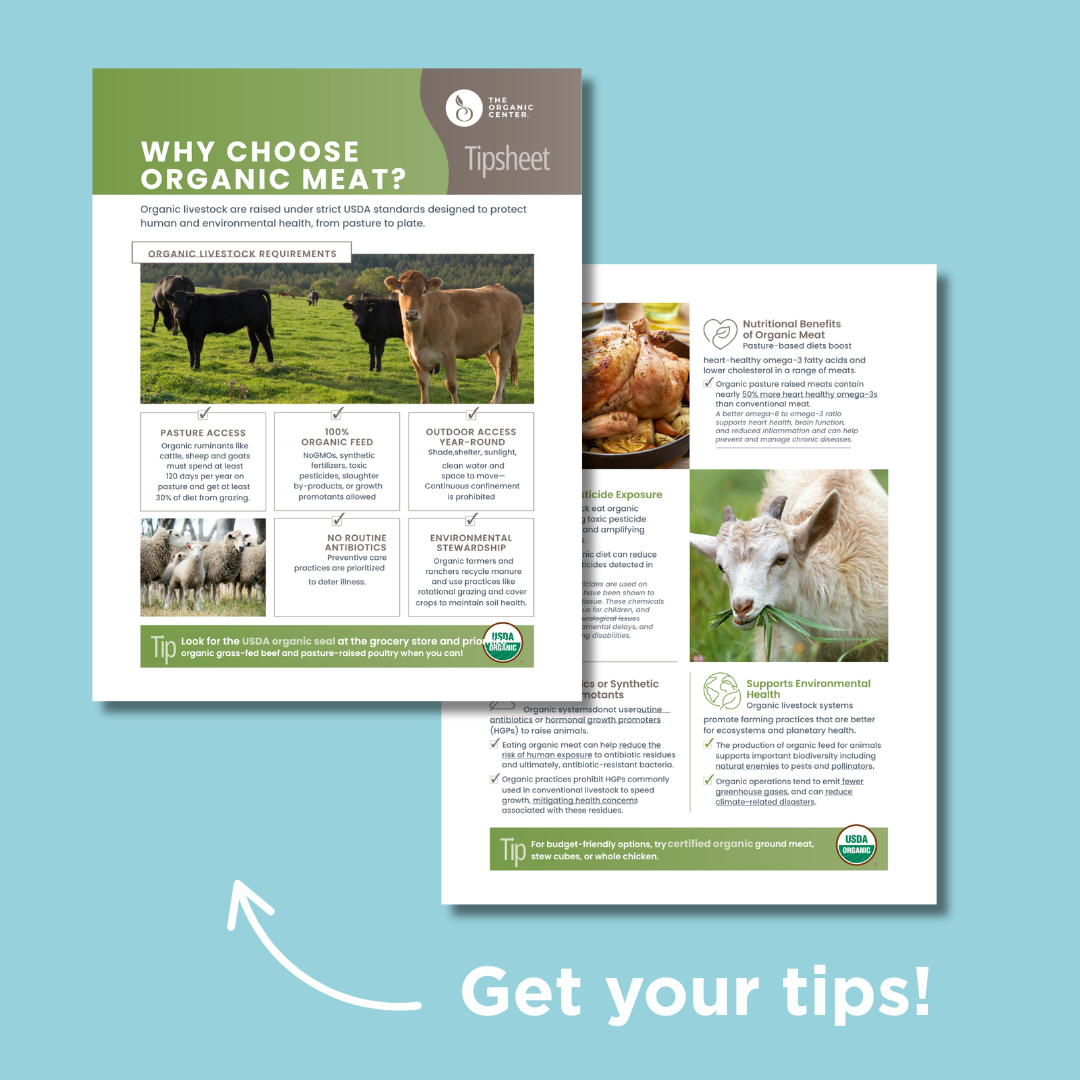
Organic Meat Tip Sheet
This document is a short explainer and download hub for “The Benefits of Organic Meat” tip sheet from The Organic Center. It highlights that USDA Organic meat must meet strict livestock standards, including pasture access, organic feed, environmental stewardship, and higher animal welfare, which together make it a more trustworthy choice. The text emphasizes that choosing organic meat can help reduce pesticide and antibiotic exposure, support healthier ecosystems, and offer nutritional benefits for people and the planet. It links to free PDF tip sheets in English and Spanish that summarize these points for consumers.
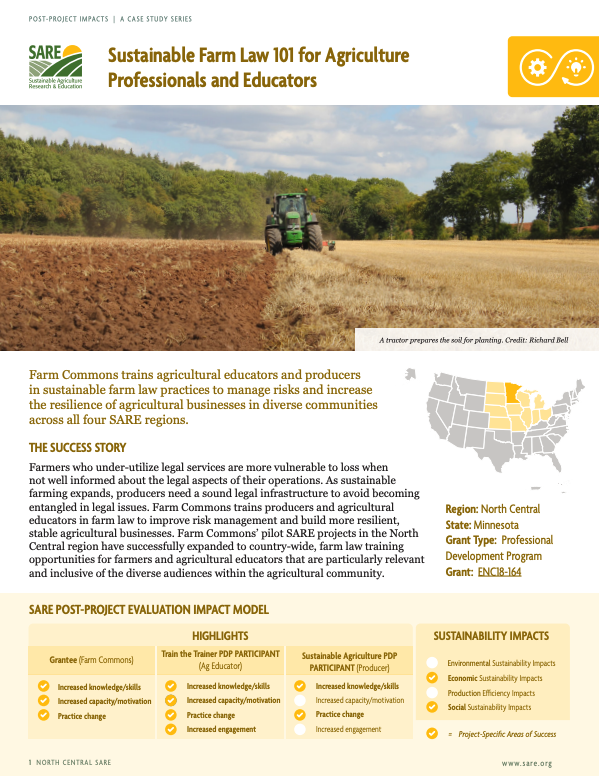
Farm Commons’ Sustainable Farm Law 101
SARE’s “Sustainable Farm Law 101” case study highlights a Farm Commons project that trains ag professionals to help farmers manage legal risk more proactively. With SARE Professional Development support, Farm Commons created regionally adapted workshops and online modules that cover core issues like land tenure, business entities, liability, and labor law in a practical, farm-centered way. Extension staff, FSA personnel, and nonprofit farm advocates reported greater confidence and capacity to guide producers through common legal challenges, which in turn strengthens farm resilience and the long‑term economic and social sustainability of farming operations.
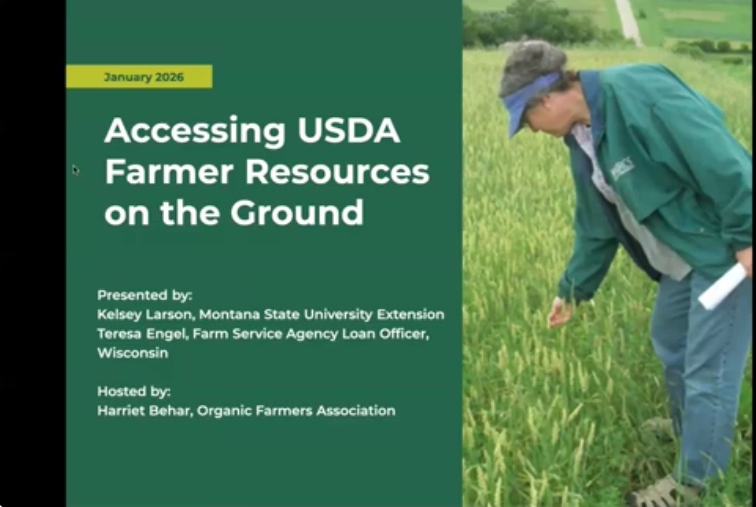
A Seeds of Success Webinar, Accessing USDA Farmer Resources on the Ground: NRCS and FSA
Accessing USDA Farmer Resources on the Ground: NRCS and FSA” is part of the Seeds of Success series and focuses on how farmers can effectively work with local USDA offices, especially as structures and staffing change.
The webinar explains the distinct roles of the Farm Service Agency (FSA) and Natural Resources Conservation Service (NRCS), clarifying which programs each agency manages (such as conservation cost-share, technical assistance, and farm loans) and how they fit together. Speakers walk through what to expect when visiting a local USDA Service Center, tips for preparing documents and farm records, and strategies for building relationships with agency staff so farmers—especially new, small-scale, and underserved producers—can actually access available funding and support.
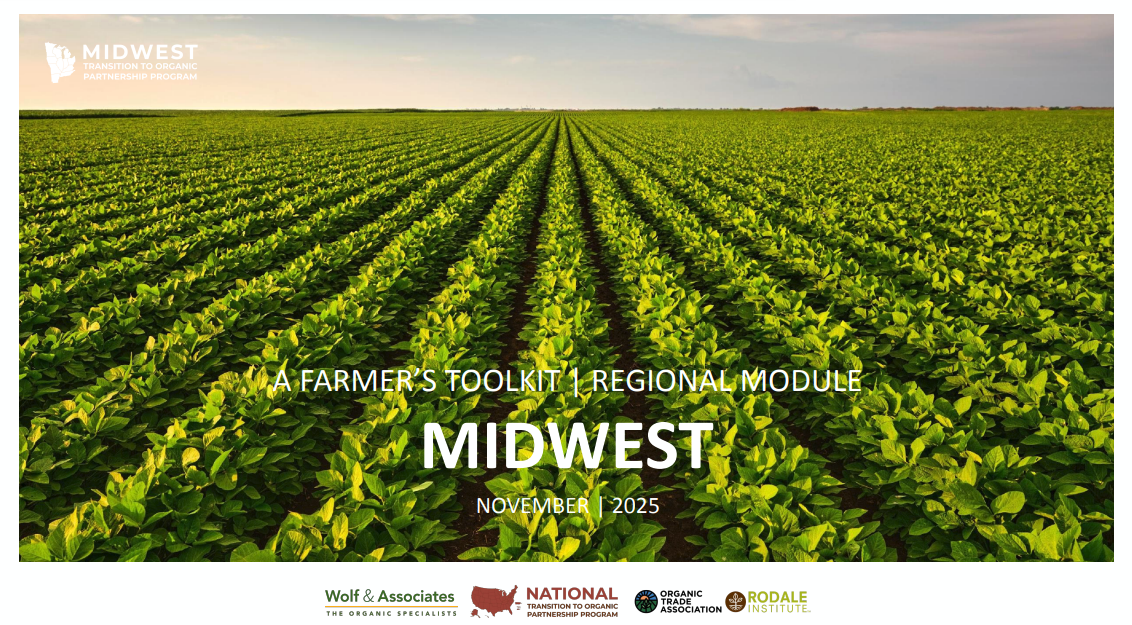
Advancing Regional Organic Markets A Farmers Toolkit Midwest
Through the “Advancing Regional Organic Markets: A Farmer’s Toolkit (Midwest)” project, Rodale compiled demand, pricing, import reliance, and infrastructure data by crop, then packaged it into regional modules that help identify high‑opportunity organic markets and underused infrastructure in the Midwest. The toolkit, developed with TOPP support and OTA/OGRAIN collaborators, is designed so farmers and stakeholders can spot where existing elevators, processors, bottling lines, and transport networks could carry more organic volume, and where gaps in processing or aggregation remain.
Wisconsin Nutrient Management Workbook
The Wisconsin Nutrient Management Workbook is a free, step-by-step planning tool that helps farmers organize all the information needed to create or update a nutrient management plan tailored to their operation. Designed for Wisconsin farms, it guides users through checklists, farm and field inventories, fertilizer and manure records, and a manure spreader calibration worksheet so they can budget nutrients efficiently and protect water quality. Farmers can download and print the workbook as a PDF, then work with UW–Madison Extension’s Nutrient and Pest Management team, local conservation staff, or crop advisors to turn the completed pages into a full plan or SnapPlus entry.
Organic Grain Prices and Market Outlook for 2026
Understanding market trends is essential for making informed decisions in organic grain production. Ryan Koory, Vice President Economist for Agriculture at Argus Media, provides a comprehensive market review of U.S. organic commodities, highlighting key price movements and supply-demand dynamics. He also offers forward-looking perspective on market and price risks for the upcoming year, helping producers and buyers navigate uncertainty and plan strategically.
Albert Lea Seed Organic Seed Highlights for 2026
Jake Hansen and Mac Ehrhardt provide an overview of new organic corn hybrids and soybean varieties and discuss how the last year's challenges impacted existing products.
Spring Interseeding Winter Small Grains and Organic Soybeans for Weed Suppression- Farmer Scott Myers
Scott Myers, a farmer with Woodlyn Acres Farm in Dalton, Ohio, offers his step-by-step approach from field preparation, to planting, to weed control, to harvest. He outlines his successes and failures, sharing tips to help others have a better chance of success.
No-Tilling Organic Corn into Living Alfalfa, Part 1 - Dr. Erin Silva from U of WI
Dr. Erin Silva’s research program, in collaboration with Cornell University, has been investigating outcomes of planting organic corn into living mulches, including alfalfa, red clover, and yellow blossom sweet clover. Dr. Silva presents these research findings, including the impacts of inter-row mowing and variety selection.
No-Tilling Organic Corn into Living Alfalfa, Part 2 | Ben Miller with Clear Frontier
This document is a short explainer and download hub for “The Benefits of Organic Meat” tip sheet from The Organic Center. It highlights that USDA Organic meat must meet strict livestock standards, including pasture access, organic feed, environmental stewardship, and higher animal welfare, which together make it a more trustworthy choice. The text emphasizes that choosing organic meat can help reduce pesticide and antibiotic exposure, support healthier ecosystems, and offer nutritional benefits for people and the planet. It links to free PDF tip sheets in English and Spanish that summarize these points for consumers.
Managing Canada Thistle Organically | Farmers Paul Mugge, Jon Frindlay, and Jared Siverling
This document is a short explainer and download hub for “The Benefits of Organic Meat” tip sheet from The Organic Center. It highlights that USDA Organic meat must meet strict livestock standards, including pasture access, organic feed, environmental stewardship, and higher animal welfare, which together make it a more trustworthy choice. The text emphasizes that choosing organic meat can help reduce pesticide and antibiotic exposure, support healthier ecosystems, and offer nutritional benefits for people and the planet. It links to free PDF tip sheets in English and Spanish that summarize these points for consumers.
Effective Weed Management Strategies for Organic Soybeans, Part 1 | Farmer Aaron Butler
Weed control in organic soybean production requires a thoughtful combination of planning, timing, and adaptability. Aaron Butler from Butler Family Farms in Malta, Illinois, shares his approach to managing weeds while maintaining soil health and crop productivity. Get a sneak peak at this farm and an overview of the key management decisions that support successful weed control in his organic soybeans. He also highlights the practices that have made the biggest impact and how he adapts to changing conditions.
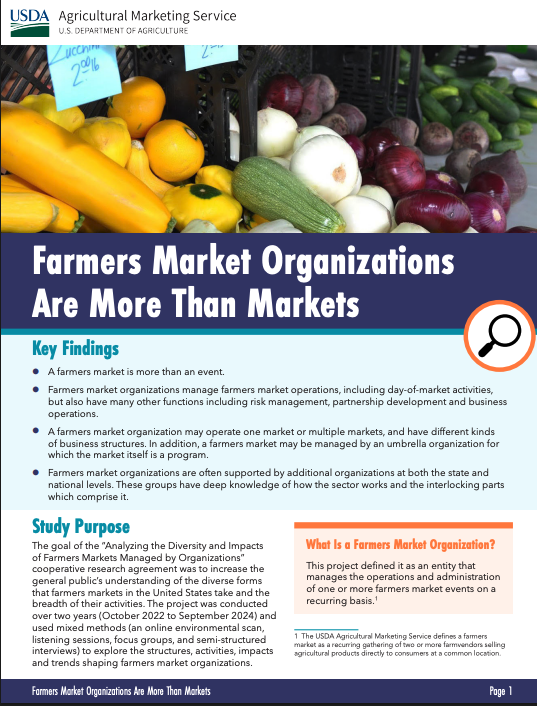
Farmers Market Organizations Are More Than Markets
A recent USDA-funded study shows that farmers market organizations are much more than the visible market day itself; they are year-round institutions that hold local food systems together. Over a two-year mixed-methods project (2022–2024), researchers used surveys, listening sessions, focus groups, and interviews to understand how these organizations are structured, what they do, and how they are evolving across the United States.
The findings highlight that market organizations handle far-reaching responsibilities: they craft mission and strategy, manage business operations and risk, build partnerships, and advocate with municipalities, public health agencies, nonprofits, and vendors. Markets may be run by nonprofits, LLCs, municipal governments, universities, or umbrella organizations where the market is just one program, and they are often supported by state and national groups with deep sector expertise.
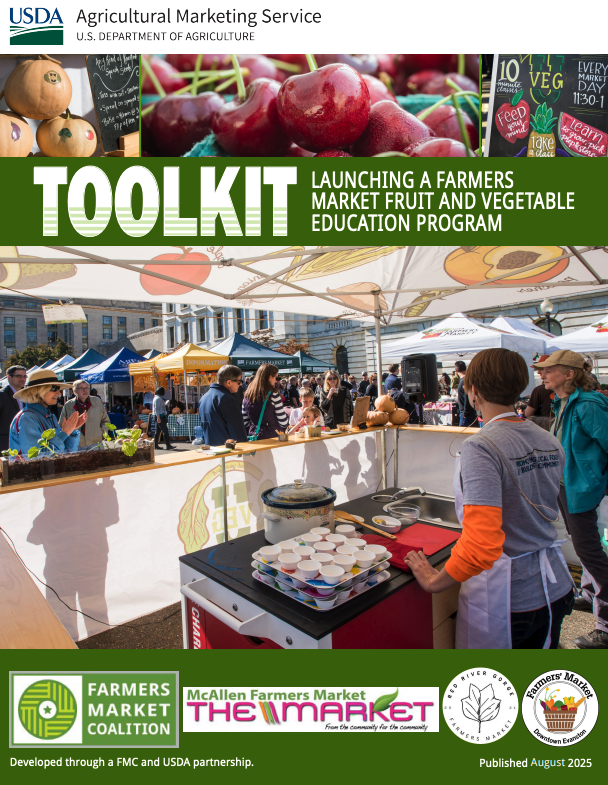
Fruit & Vegetable Education Toolkit
This toolkit is designed to help farmers market staff create nutrition education programs that fit their community, teach visitors how to grow, choose, cook, and store produce, boost fruit and vegetable intake, and ultimately increase produce sales for local farmers.
A Food Hub Operator's Toolkit
The USDA’s “Many Hats – A Food Hub Operator’s Toolkit” is a national resource designed to help food hub leaders navigate the complex, multi-role nature of their work as they move from start-up to expansion and innovation. It updates and extends the 2012 Regional Food Hub Resource Guide, reflecting a sector that has grown from 168 documented hubs to more than 400 with active contacts by 2021—a 58% increase over roughly a decade.
Developed by USDA’s Agricultural Marketing Service in partnership with the University of Vermont and Michigan State University, the toolkit is organized around four core areas: organizational development, producers and customers, operations, and partnerships. It functions as a “central depot” of templates, context, and links to practical resources so operators can address issues ranging from governance and business planning to logistics, food safety, and market development.
U.S. Organic Export Report-2025
U.S. organic exports are now estimated at 3.3 billion dollars, confirming strong and growing global demand for American organic products. According to OTA’s 2025 U.S. Organic Exports Report, 61% of U.S. organic companies export, with Canada, Europe, and Japan as leading destinations and rising interest in the UK, mainland Europe, and Southeast Asia. Nearly two-thirds of current exporters plan to enter new markets in the next two to three years, even as they face challenges like price competition, transportation costs, tariffs, and complex regulations.
Organic 101 for Extension Agents: Understanding Certification, Standards, and Producer Journeys
This webinar is for extension agents, technical service providers, or anyone who wants to understand organic certification and help growers make the transition to organic farming. In the first half of this informative session, you will learn the basic principles of organic certification, and become familiar with organic standards. During the second half, you will have the opportunity to interact with farmer panelists as they share their experiences in becoming certified organic producers. Panelists include April Thatcher of April Joy Farm in Washington, Beth Hoinacki of Goodfoot Farm in Oregon, and Diane Green of Greentree Naturals in Idaho. This webinar is brought to you by the Organic Farming Research Foundation, Oregon Tilth, and Western SARE.
OFGA Video: High Tunnels Build Climate Resilience at Little Hill Berry Farm
Hear Aaron Wills from Little Hill Berry Farm talk about how he uses high tunnels to successfully grow organic berries at his farm near Northfield, MN. Aaron uses permanent high tunnel structures as well as less expensive caterpillar tunnels to raise day-neutral strawberries and raspberries. The tunnels prevent rain splash and greatly reduce fungal disease on the berry crops. A BCS walk-behind tractor is a key tool in allowing Aaron to efficiently manage the tunnels.
Soils: A Practical Guide for Organic Farmers and Gardeners
Written by Valerie Dantoin of Northeast Wisconsin Technical College, the guide Soils: A Practical Guide for Organic Farmers and Gardeners offers an ecological and hands-on perspective on soil science. It provides practical insights for both farmers and gardeners on critical aspects, including soil testing, fertility management, composting techniques, erosion prevention, and integrating organic practices to foster long-term soil vitality. This resource can be particularly valuable for small-scale operations committed to sustainable growing methods.
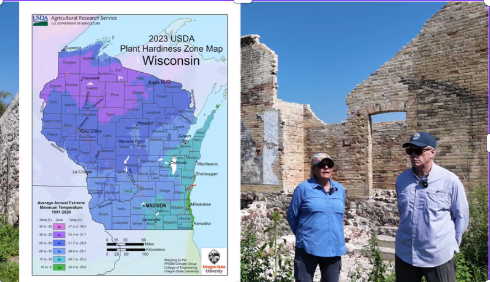
Hail Netting for an Organic Apple Orchard at Dream Apple Farm
Hear Peggy and Ed Callahan from Dream Apple Farm talk about the hail netting they installed at their organic orchard near Port Washington, WI. Peggy & Ed discuss in detail how they installed the hail netting, how they work around the netting to perform orchard operations, and how the netting may affect insect pests and reduce the need for hand-thinning.
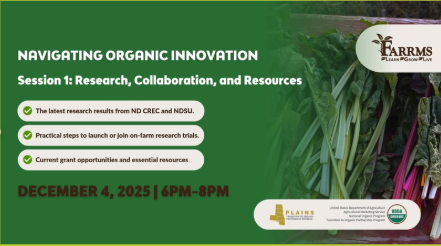
Organic Research, Collaboration & Resources
This 1 hour, 53 minute FARRMS webinar, “Session 1: Research, Collaboration & Resources,” helps farmers use on-farm research to strengthen organic operations by connecting them with NDSU researchers, funding programs, and farmer examples of successful trials. Speakers share recent applied organic research from NDSU’s Carrington Research Extension Center, walk through how to design and scale practical on-farm experiments, and highlight grant opportunities, mentor programs, and networks like SARE, Organic Seed Alliance, and TOPP that support farmer-led innovation.
The Organic System Plan & Farmer Insights
A This two-hour FARRMS webinar, “Session 2: The OSP and Farmer Insights,” walks farmers through the Organic System Plan step by step, focusing on how to complete certification paperwork with confidence and use it as a living management tool rather than just a form. Presenters from OFRF and NCAT share free planning tools, research hubs, and the Farmer-Led Trials Program, followed by a farmer panel where organic producers discuss real-world record-keeping systems, transition challenges, and the economic realities and opportunities of going organic operations.
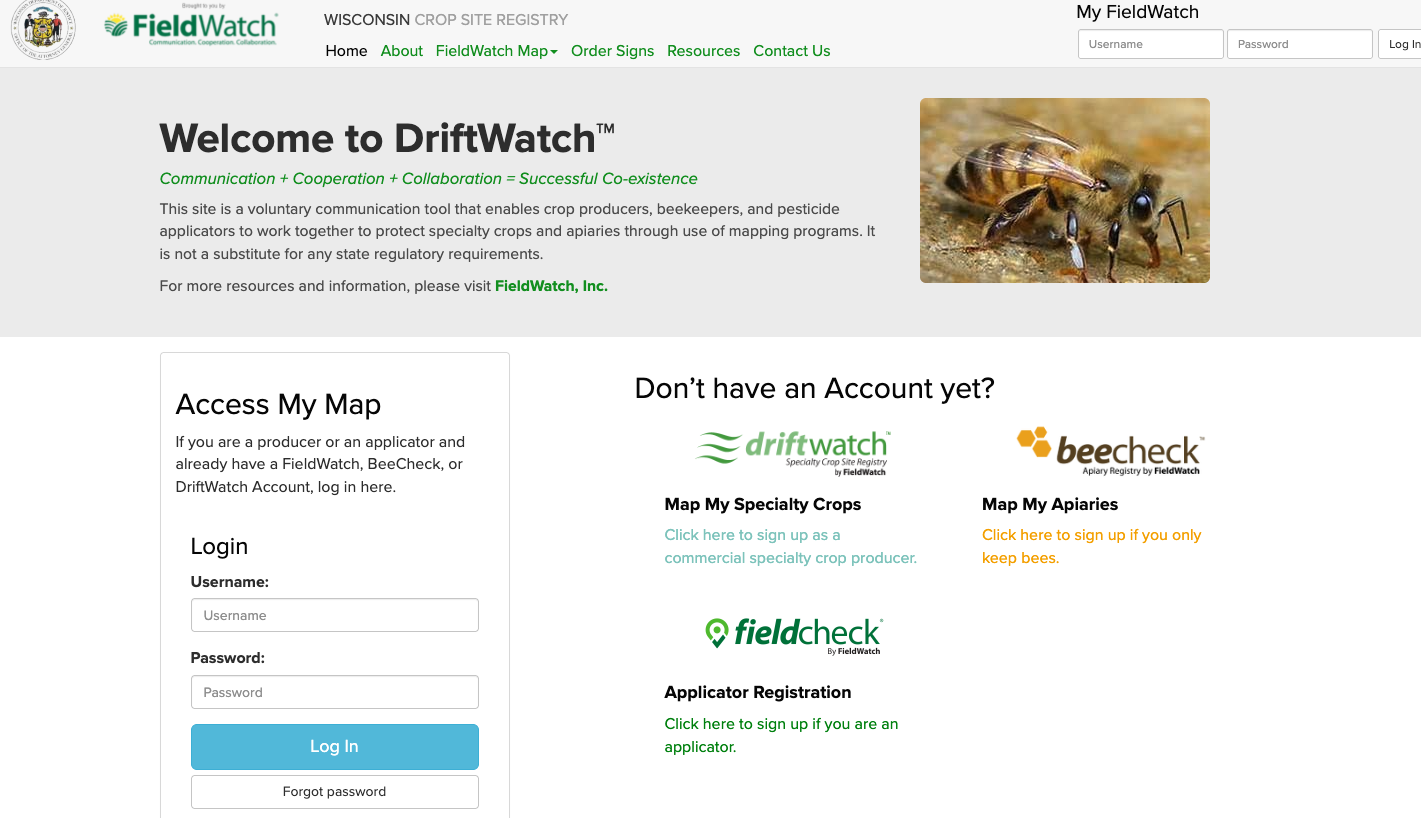
Drift Watch
This document is a short explainer and download hub for “The Benefits of Organic Meat” tip sheet from The Organic Center. It highlights that USDA Organic meat must meet strict livestock standards, including pasture access, organic feed, environmental stewardship, and higher animal welfare, which together make it a more trustworthy choice. The text emphasizes that choosing organic meat can help reduce pesticide and antibiotic exposure, support healthier ecosystems, and offer nutritional benefits for people and the planet. It links to free PDF tip sheets in English and Spanish that summarize these points for consumers.
Simplifying the Paperwork: Recordkeeping Strategies for Organic Farmers
The National Organic Coalition facilitated a webinar with practical strategies to make organic recordkeeping less overwhelming while still meeting NOP requirements and supporting good management decisions. Recordkeeping is framed as a management tool, not just a compliance burden, helping farmers track rotations, inputs, costs, yields, and marketing channels, with an emphasis on aligning records with how the farm already works so farmers are more likely to keep up with them through the season.
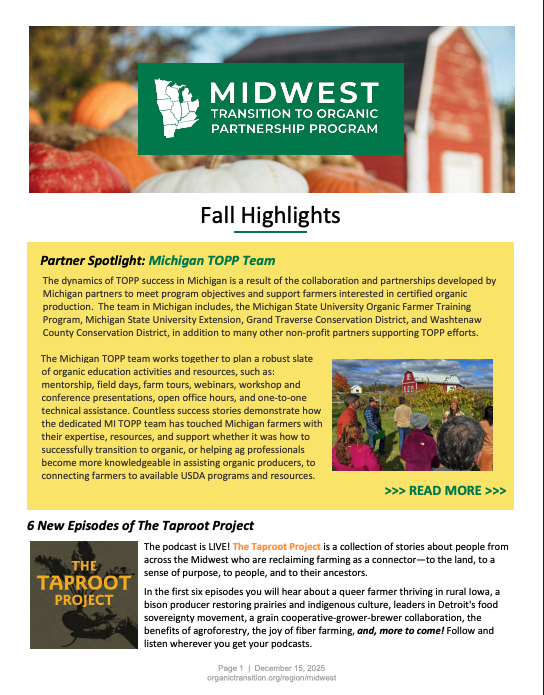
USDA Transition to Organic Partnership Program (TOPP) Fall Newsletter (December 2025)
The Q4 2025 Midwest Transition to Organic Partnership Program (TOPP) newsletter highlights how regional partners are ramping up support for transitioning and certified organic farmers through mentorship, education, and policy wins. A Michigan partner spotlight showcases a strong collaborative network delivering field days, tours, webinars, and one‑on‑one technical assistance, while success stories feature OFARM bringing organic voices to a national soil‑health roundtable, OGRAIN’s farmer–distiller grain field day, Iowa State’s organic research tours, and Missouri’s Organics in the Ozarks event.

Organic Cotton Tip Sheet
A new bilingual GOTS cotton guide breaks down what the Global Organic Textile Standard label really means for shoppers and brands. It highlights GOTS’ strict environmental and social criteria, tight chemical restrictions, and processing safeguards that protect workers, waterways, and consumers from seed to finished fabric. Both the English and Spanish versions explain how choosing GOTS‑certified cotton supports cleaner fibers, safer production, and more trustworthy sustainable textile products.
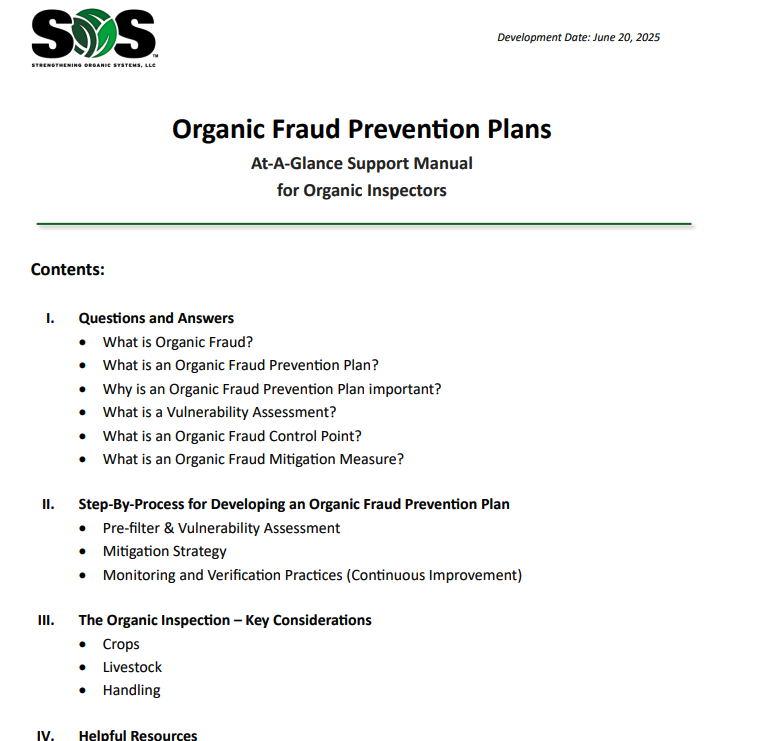
Organic Fraud Prevention Plan for Handlers
This technical resource is a step-by-step guide for developing and implementing an Organic Fraud Prevention Plan within an organic operation or supply chain. It explains key concepts, outlines a practical process, and provides examples to help organic businesses and certifiers identify and reduce fraud risks.
This training module lays out the core elements of an Organic Fraud Prevention Plan, starting with clear definitions of organic fraud, why it undermines market trust, and how structured plans protect organic integrity. It introduces vulnerability assessment, fraud control points, and mitigation measures as the basic building blocks, then walks participants through a pre‑filter and detailed vulnerability assessment to pinpoint where fraud risk exists in products, suppliers, and supply chains. From there, it explains how to design mitigation strategies and build monitoring and verification systems that drive continuous improvement. The course also covers what inspectors look for in crop, livestock, and handling operations, using practical examples of higher‑risk scenarios, mitigation and monitoring protocols, critical preventive measures, supplier and product risk factors, and the key components of a complete, audit‑ready Organic Fraud Prevention Plan.
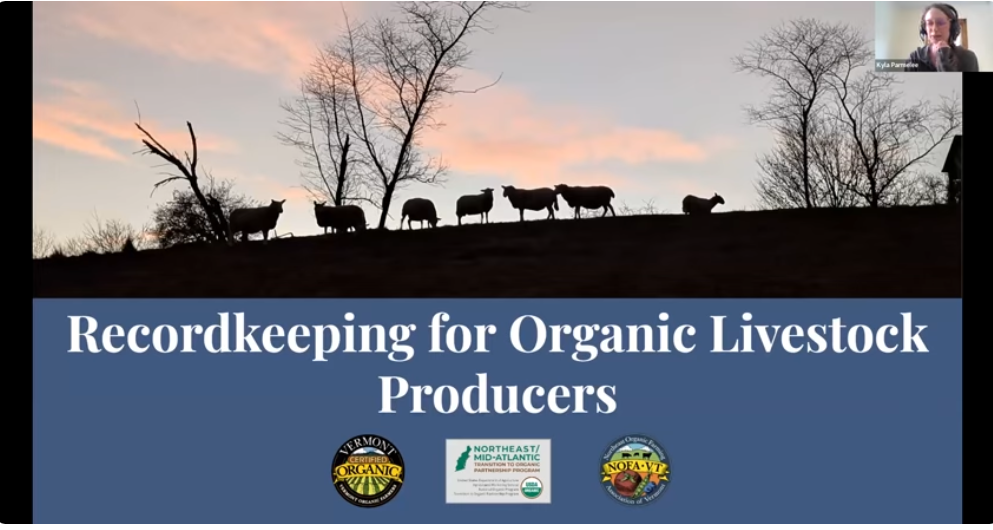
Recordkeeping for Organic Livestock Producers
A webinar, “Recordkeeping for Organic Livestock Producers,” walks farmers through what certifiers need to see and how to organize those records without drowning in paperwork. The session covers required documentation for feed, health care, pasture access, and animal movements, and offers practical tips and digital/analog tools to keep everything audit‑ready. It is geared to both transitioning and already‑certified livestock operations who want smoother inspections and fewer certification surprises. Here are some direct links to resources and info shared during the webinar.
- VOF recordkeeping page with templates and checklists
- Livestock feed - 15 min video recording (including calculating dry matter)
- ATTRA/USDA documentation & templates
- eOrganic - lots of good resources and more webinars
- Transition to Organic Livestock Resources
- USDA General Organic Livestock Producers Guide
Understanding the National List: What It Means for Your Organic Products
This on-demand webinar offers an insider’s look at how the National List—the framework that determines what materials can be used in organic production—actually works in practice. Led by Scott Rice, Senior Director of Regulatory Affairs at the Organic Trade Association, the session translates complex USDA rules into clear, usable insights for organic professionals. Viewers gain a grounded understanding of how petitions move through the National Organic Standards Board, how updates can affect product formulations and labeling, and how material review organizations fit into the compliance landscape. It’s a practical resource for anyone navigating the intersections of regulation, certification, and organic integrity.
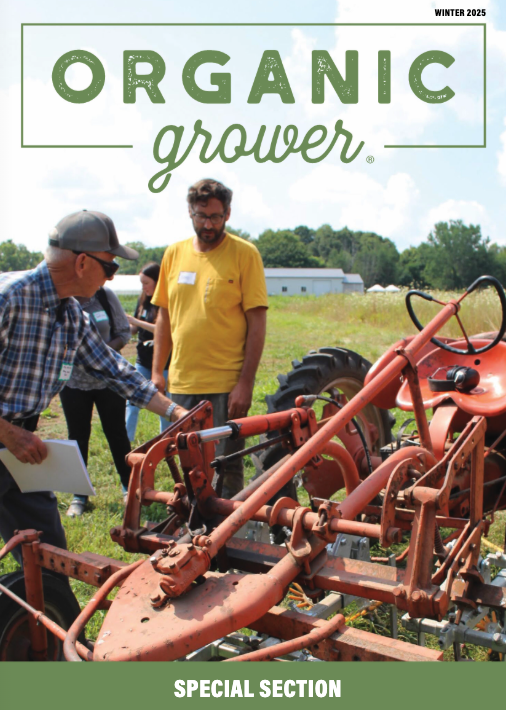
Organic Grower December 2025 Issue Features Organic Fruit Growers
The December 2025 issue of Fruit Growers News highlights several fronts of innovation and challenge in specialty fruit production, from new thornless blackberry genetics to cutting-edge field robotics. Researchers with the University of Arkansas, NC State, and USDA report finding the genetic region responsible for blackberry thorns, a breakthrough that could accelerate breeding of thornless varieties favored by growers and pickers alike.
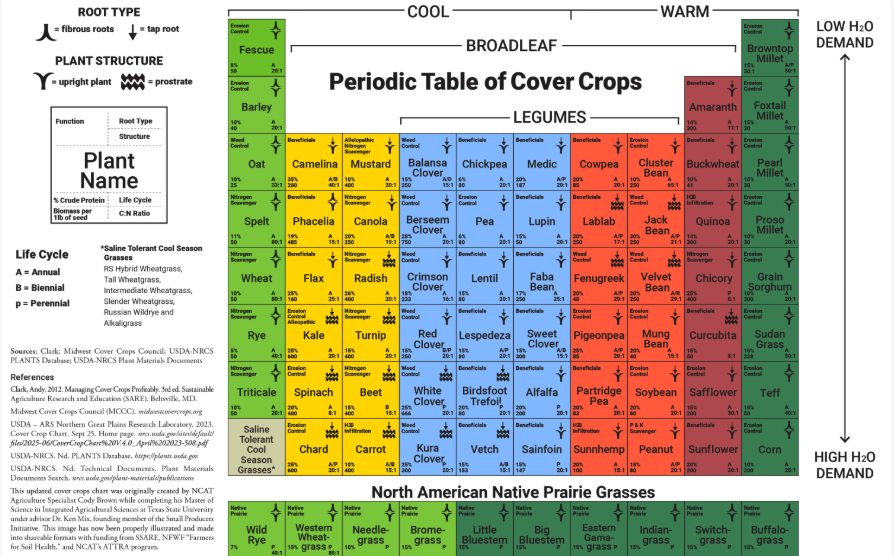
Periodic Table of Cover Crops
ATTRA’s new Periodic Table of Cover Crops is a one‑page visual guide that helps farmers quickly match cover crop species to their soil health goals. It arranges dozens of cover crops in a chart modeled on the periodic table of elements, using plant position, color, numbers, and icons to convey key agronomic traits. Each “square” includes eight data points: plant name, primary function, root type, plant structure, crude protein, life cycle, biomass per pound of seed, and estimated carbon‑to‑nitrogen ratio. The table also organizes species by three main criteria—season (warm vs. cool), plant type (grass, legume, broadleaf), and water demand (low vs. high)—so land stewards can quickly identify mixes that fit their climate, soil conditions, grazing plans, and cash‑crop timing.
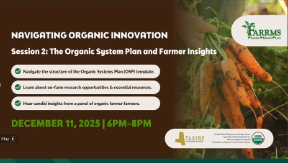
The Organic System Plan & Farmer Insights
This two-hour FARRMS webinar, “Session 2: The OSP and Farmer Insights,” walks farmers through the Organic System Plan step by step, focusing on how to complete certification paperwork with confidence and use it as a living management tool rather than just a form. Presenters from OFRF and NCAT share free planning tools, research hubs, and the Farmer-Led Trials Program, followed by a farmer panel where organic producers discuss real-world record-keeping systems, transition challenges, and the economic realities and opportunities of going organic operations
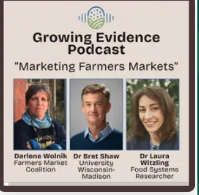
Growing Evidence for Farmers Markets Podcast
A new 30‑minute episode of the Growing Evidence podcast features Dr. Bret Shaw (UW–Madison), Dar Wolnik (Farmers Market Coalition), and Dr. Laura Witzling discussing what multi‑year research reveals about how to grow and sustain farmers market customer bases. The conversation highlights evidence-based communication and evaluation tools market managers can use to attract new shoppers, strengthen community ties, and better document markets’ economic and public health impacts.
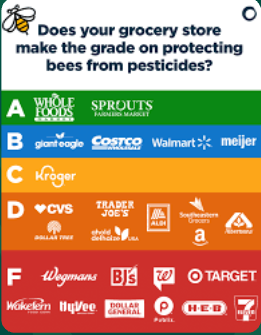
Friends of the Earth’s 2025 Bee-Friendly Retailer Scorecard
Friends of the Earth’s 2025 Bee-Friendly Retailer Scorecard ranks 25 of the largest U.S. grocery retailers on how well they are reducing toxic pesticides in their supply chains and protecting pollinators. The latest findings show that while a few companies are stepping up with stronger pollinator health and pesticide reduction policies, widespread inaction still leaves the sector exposed to growing financial, ecological, and consumer trust risks. Readers can explore the new scorecard to see how major retailers stack up and which are leading—or lagging—in shifting toward more bee-friendly, organic, and ecological sourcing practices.
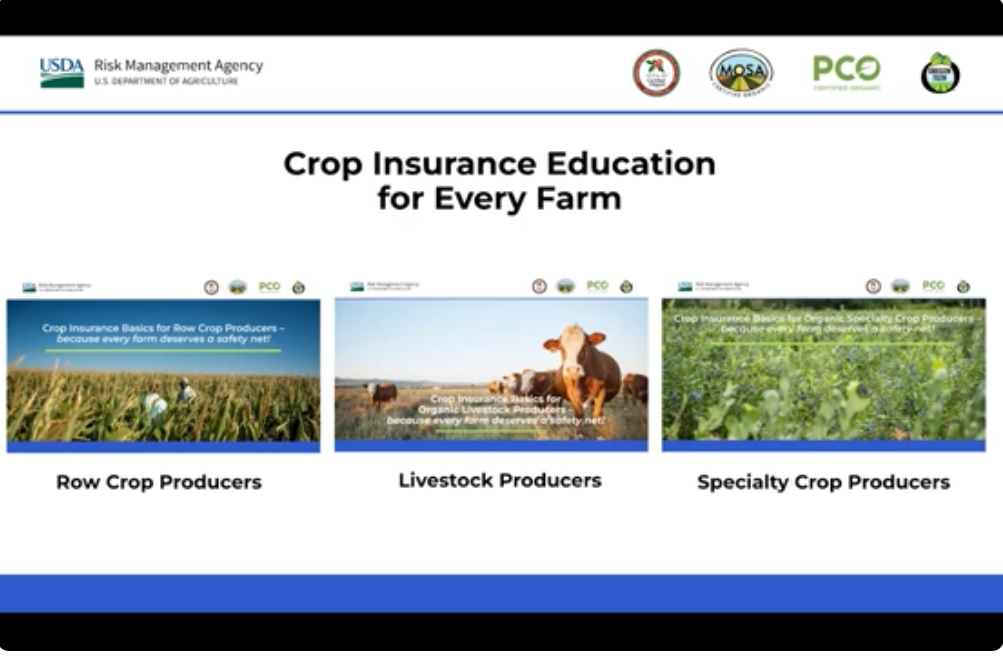
Crop Insurance for Every Farm
A new 25‑minute video from Oregon Tilth and Organic Farmers Association offers a practical introduction to crop insurance for organic and transitioning row‑crop producers, emphasizing that “every farm deserves a safety net.” Presenter Julia Barton explains how federal crop insurance works, walks through options like Multi‑Peril Crop Insurance, organic price elections, enterprise units by practice, Whole Farm Revenue Protection, the MicroFarm program, Pasture–Rangeland–Forage coverage, and NAP disaster assistance, and highlights recent improvements and remaining barriers for organic farms. The session also shares farmer and educator perspectives on choosing agents, navigating paperwork, and using crop insurance as part of a broader resilience strategy in the face of extreme weather and volatile market.
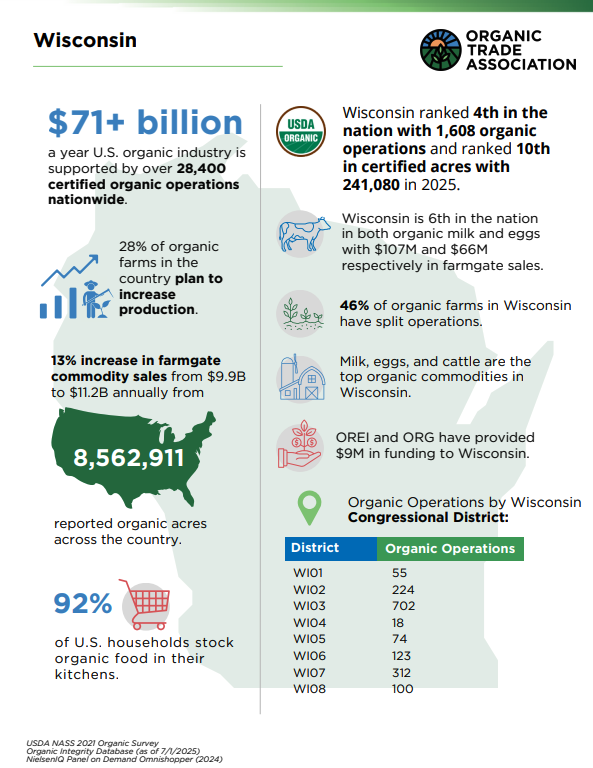
Wisconsin Organic Advocacy Fact Sheet-Organic Trade Associations
The 2025 Wisconsin organic “state sheet” highlights Wisconsin as a national organic leader, with 1,608 certified organic operations (4th in the U.S.) and 241,080 certified acres (10th) in 2025. Organic farmgate commodity sales have risen 13%, from $9.9 billion to $11.2 billion annually nationwide, and Wisconsin’s organic sector is anchored by milk, eggs, and cattle, with the state ranking 6th in the country for organic milk and eggs and posting $107 million and $66 million in farmgate sales respectively. The sheet notes that 46% of Wisconsin organic farms are split operations, OREI and ORG grants have invested $9 million in Wisconsin, 92% of U.S. households buy organic food, and 28% of U.S. organic farms plan to increase production, underscoring strong consumer demand and growth potential. demand and growth potential.
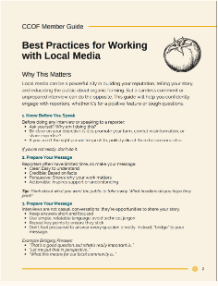
Get Your Farm Noticed: Use CCOF’s Free Producer Media Toolkit
CCOF’s Producer Media Toolkit is a free resource that helps organic and small-scale farmers get positive attention from local media and social channels by sharpening their stories, photos, and interviews. It offers guidance on selecting and taking compelling farm images, preparing key messages and talking points, deciding when and how to give interviews, and avoiding missteps that could lead to negative publicity. The toolkit aims to help farms build reputation, reach new customers, and educate the public about organic agriculture.
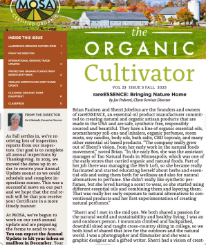
The Organic Cultivator Fall 2025
The MOSA Fall 2025 newsletter highlights a feature on rareESSENCE, an organic essential oil company that grew from aromatherapy-infused greeting cards into a U.S.-made line of natural, synthetic‑free wellness products, while maintaining close relationships with organic growers and distillers at home and abroad. MOSA’s director notes operational improvements that moved annual update and inspection timelines earlier so clients can receive organic certificates more quickly, and previews preparations for the 2026 update cycle. The issue also covers international organic trade developments, biosecurity guidance for organic poultry flocks, updates on organic certification cost share, and detailed, practical instructions for cleaning shared farm equipment and post‑harvest infrastructure to maintain organic integrity, along with classifieds and community demand and growth potential.
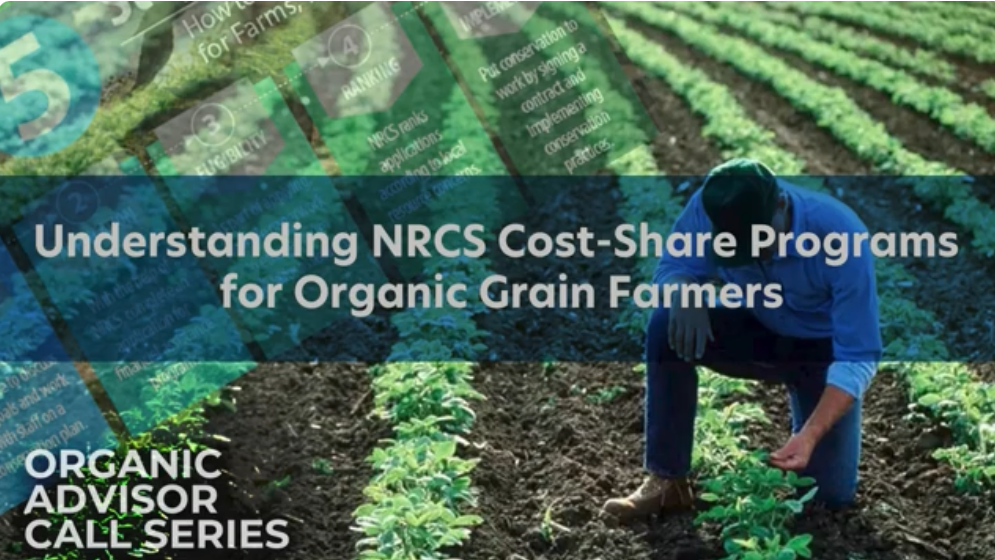
Understanding NRCS Cost-Share Programs for Organic Grain Farmers
Organic Agronomy Training Service has released the recording of its recent Zoom session, “Understanding NRCS Cost-Share Programs for Organic Grain Farmers,” featuring Thomas Manley, organic conservation specialist for Wisconsin NRCS and climate conservation specialist at Marbleseed. In the conversation with host Sam Oschwald Tilton, Manley unpacks how EQIP, CSP, the Organic Initiative, and the Organic Transition Initiative work on organic grain farms, explains the nuts and bolts of conservation planning, and highlights how advisors can add value as Technical Service Providers while helping farmers benefit from NRCS funding and long-term conservation planning. The free recording, resource links (including TSP directories and NRCS fact sheets), and details on this USDA TOPP-supported call are now available online for anyone who works with organic or transitioning grain grower.
Technical Resources:
Midwest TOPPS Quarterly Newsletter-2025
During Quarter 2 (Apr – Jun 2025), MWTOPP partners made progress on TOPP goals to increase organic across the U.S. The Organic Mentorship program supported 96 mentor pairs across the 11-state region, and helped 6 new operations transition to certified organic on 436 new acres. MWTOPP Partners offered 1:1 technical assistance to at least 135 producers, created 71 new resources, and participated in 50 events providing a wide-range of resources about organic certification, crop production, markets, and other topics. Read this and more in the Midwest Transition to Organic Partnership Program (TOPP) newsletter.
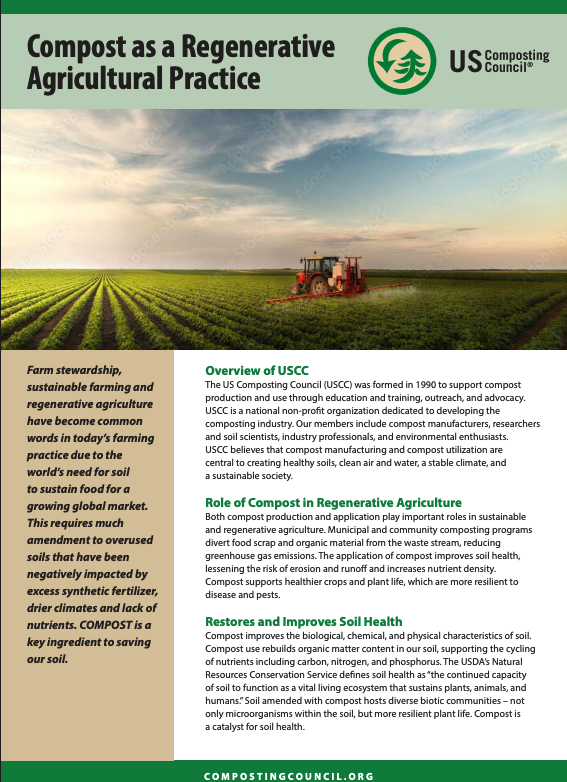
Compost as a Regenerative Agriculture Practice
The publication "Compost as a Regenerative Agriculture Practice" highlights compost's key role in enhancing soil health by transforming organic waste into nutrient-rich humus. Composting improves soil structure, moisture retention, and microbial activity, leading to increased fertility and crop resilience. It supports a closed nutrient cycle, reducing the need for synthetic fertilizers, and helps sequester carbon in the soil, contributing to climate change mitigation. The document emphasizes compost as an essential regenerative practice that benefits ecosystems, promotes sustainable farming, and fosters long-term agricultural productivity and environmental health. This summary integrates knowledge on composting's regenerative benefits, including soil improvement, carbon capture, and sustainable nutrient cycling as foundations of regenerative agriculture..
Organic Certification: One Step at a Time Podcast
This podcast episode from NCAT’s Voices from the Field features Agriculture Specialists Audrey Kolde, Ann Baier, and Andrew Coggins discussing the step-by-step process of obtaining organic certification for farms. It covers insights into developing an Organic System Plan (OSP), preparing for inspections, and meeting USDA National Organic Program standards. The experts share practical advice from their professional experience, including how to navigate certification requirements, documentation, and inspections for both crops and livestock operations. The episode also highlights resources available to farmers transitioning to organic farming and provides encouragement for navigating certification one step at a time to ensure compliance and success.mand and growth potential.
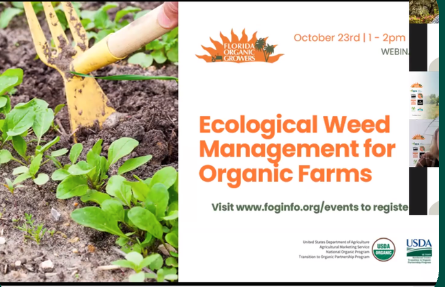
Ecological Weed Management for Organic Farms
Discover innovative and soil-friendly strategies for weed control in organic farming. Featuring Dr. Carlene Chase, Associate Professor of Horticultural Sciences at the University of Florida, this session dives into techniques like cover cropping, living mulches, and sustainable practices tailored to organic systems. Learn how to reduce environmental impact and boost farm resilience through practical insights from a leading expert. This is a must-watch for growers seeking ecological solutions. and and growth potential.
Organic Fertilizer - How Much?
This technical resource is a recorded Zoom event titled "Organic Fertilizer - How Much?" featuring James Schroepfer, a Certified Crop Advisor and organic farmer, and guest-hosted by Ashley Adair. In the session, James analyzes real soil tests, explains how different types of manure require tailored management strategies, and highlights critical questions that advisors should ask when making fertility recommendations. The event is part of a free Organic Advisor Call Series supported by Albert Lea Seed and funded through the USDA Transition to Organic Partnership Program (TOPP). It offers valuable insights for organic farmers, agronomists, and technical advisors seeking to optimize organic fertility management. ntial.
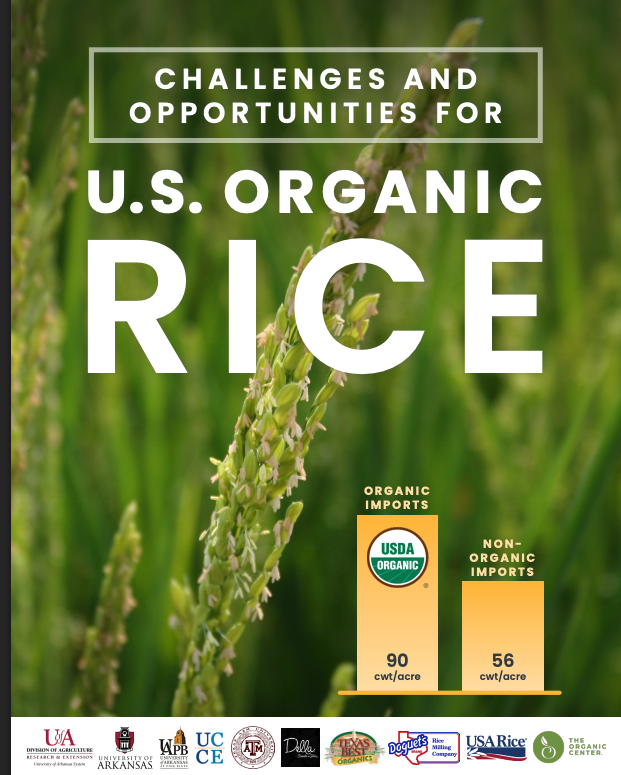
Challenges and Opportunities for U.S. Organic Rice
A new report from The Organic Center highlights the persistent gap between rising U.S. consumer demand for organic rice and limited domestic supply, with organic rice making up only about 1% of U.S. production despite strong price premiums and proven grower capacity. Surveyed farmers cited high transition barriers, risk, lack of crop insurance and input options, and weak local buyer networks as major hurdles, especially outside California and Texas. The study recommends targeted education, better financial and policy supports, and supply chain development to enable U.S. growers to meet organic rice demand and reduce reliance on imports.
Agroforestry Primer for Small and Mid-Size Farms
Croatan Institute and Savanna Institute have released Financing Trees & Perennial Crops for Your Farm: An Agroforestry Primer. The free, 36-page publication highlights key funding options, provides practical examples, and shares insights from experienced producers. This Primer is designed for small and mid-sized farmers and landowners in the Midwest who are in the early stages of exploring financing options for agroforestry and perennial agriculture.
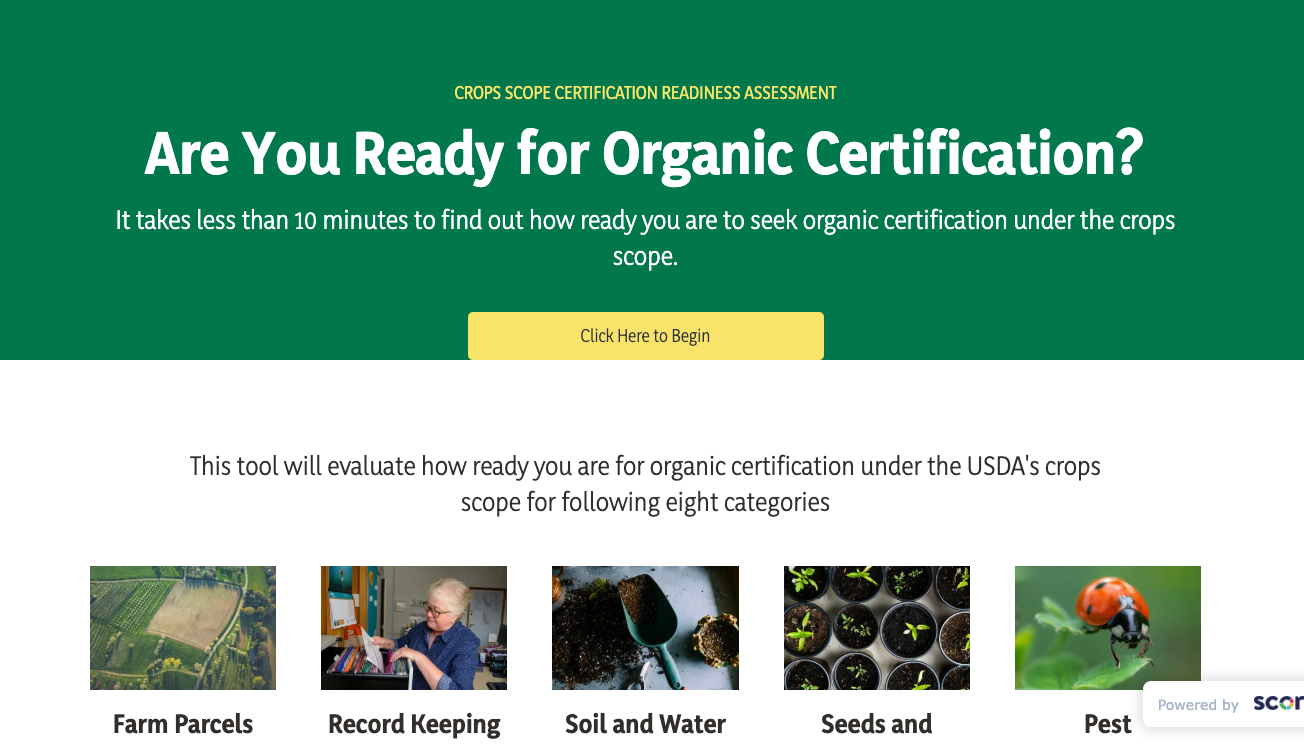
Organic Crops Scope Certification Readiness Assessment
Michigan State University's Organic Farmer Training Program and Washtenaw County Conservation District partnered to develop the Crops Scope Certification Readiness Assessment to help farmers evaluate current farming and recordkeeping practices. The assessment tool also provides an idea of what kinds of changes an operation may need to make in order to become organic compliant. Key areas assessed include:
- Land history: Has the land been managed without synthetic or prohibited substances for the required transition period?
- System plan: Does the farm have an organic system plan documenting practices for soil management, pest control, fertility, and barriers to contamination?
- Recordkeeping: Are records kept on all inputs, practices, and harvests to create an audit trail for certification?
- Physical separation: Are systems in place to prevent mixing with non-organic crops or exposure to prohibited substances during harvest, storage, and handling?
- Compliance: Are all practices aligned with the National Organic Program’s allowable inputs and prohibited substance list?
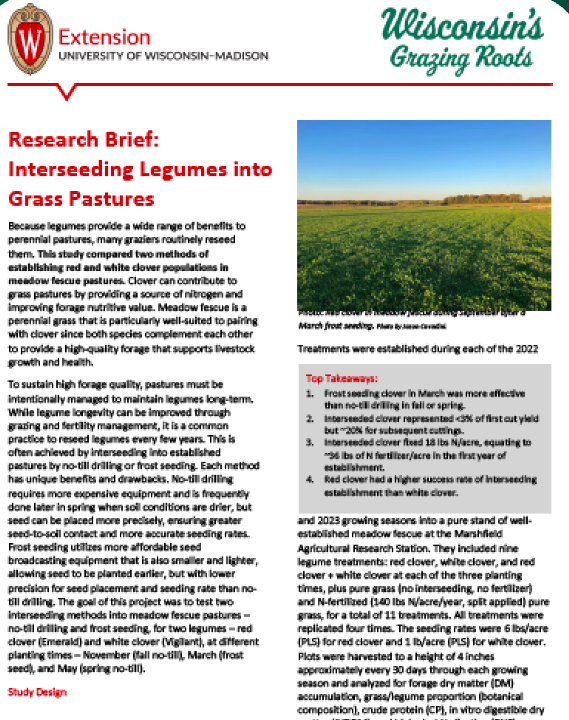
Interseeding Legumes into Grass Pasture
The recent research brief from the University of Wisconsin evaluated the effectiveness of two interseeding methods—no-till drilling and frost seeding—for introducing red and white clover into established meadow fescue pastures. The study found that frost seeding, which is a lower-cost and earlier method, was generally more successful at establishing legumes, particularly red clover, which significantly increased the legume proportion in pastures and contributed to forage quality and nitrogen fixation. Although nitrogen-fertilized grasses produced higher total yields, interseeding legumes improved forage protein and digestibility while reducing the need for synthetic fertilizers, offering a more sustainable and cost-effective pasture management strategy. This research provides practical insights for livestock producers aiming to improve pasture health and productivity by maintaining legume populations in perennial grass systems.
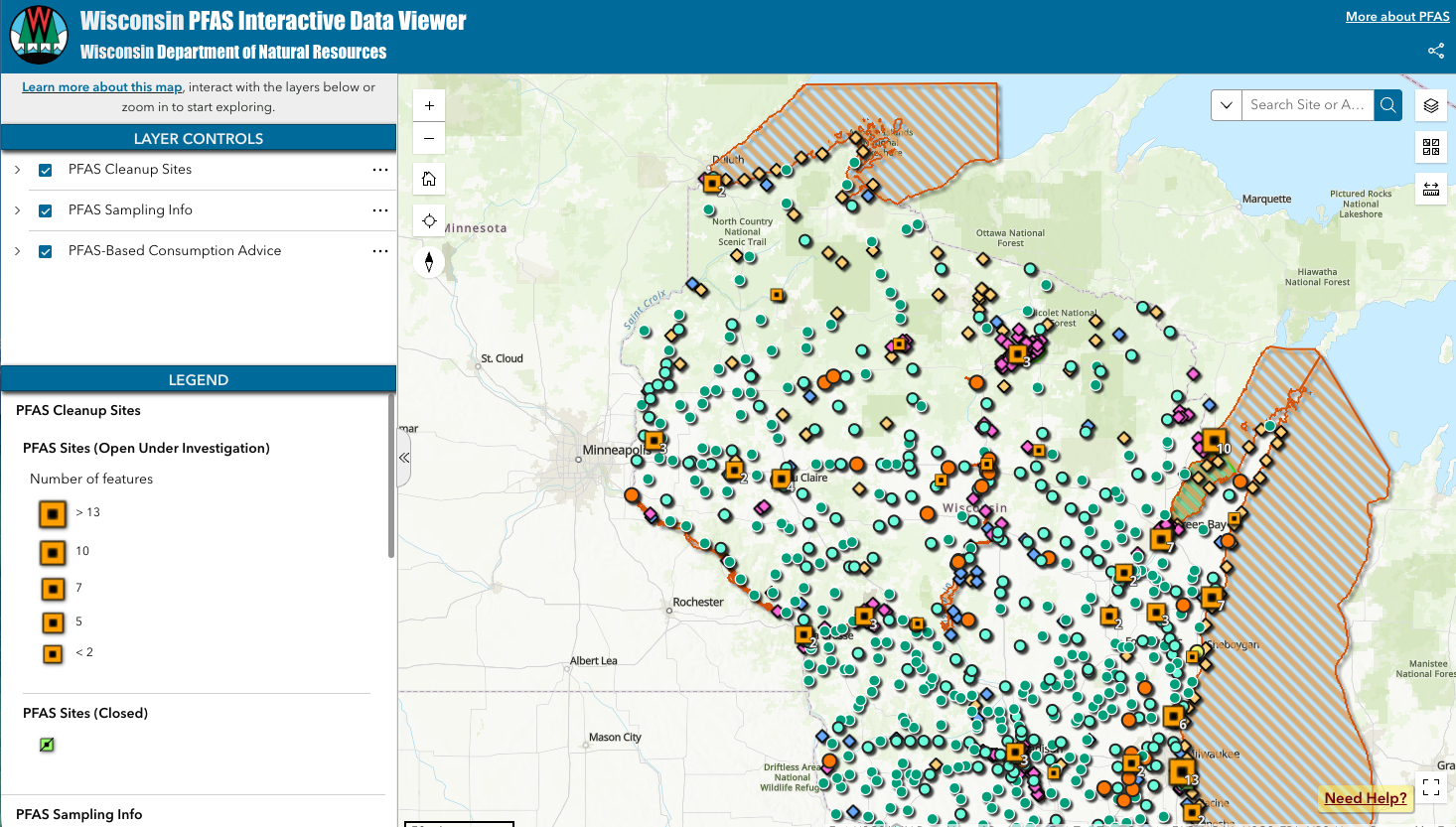
Wisconsin PFAS Map
he Wisconsin PFAS Interactive Data Viewer map highlights locations across the state where PFAS contamination has been detected or addressed by the Wisconsin Department of Natural Resources (DNR). It provides detailed information on contamination sites, cleanup progress, drinking water test results, fish consumption advisories, and areas sampled for these persistent “forever chemicals.” The map reveals concentrated contamination near former military bases, airports, and industrial sites, reflecting ongoing public health concerns and regulatory efforts to monitor and mitigate PFAS pollution in Wisconsin’s environment and water supplies. This tool serves as a vital resource for communities, policymakers, and researchers working to understand and reduce PFAS exposure.ure risks statewide.
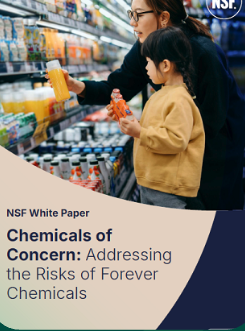
PFAS White Paper
NSF’s new white paper, “Forever Chemicals, Real Risks: Understanding the Growing Impact of PFAS,” provides an in-depth analysis of the science and regulatory landscape surrounding PFAS—persistent chemicals found in many supply chains—and their implications for food safety and brand reputation. The paper highlights where PFAS are most likely to appear in food production, how evolving regulations could affect operations, and showcases proactive strategies used by leading retailers to mitigate risks. With rising consumer awareness and regulatory scrutiny, the white paper emphasizes the urgency of addressing PFAS to protect public health and maintain consumer trust in a rapidly changing market.
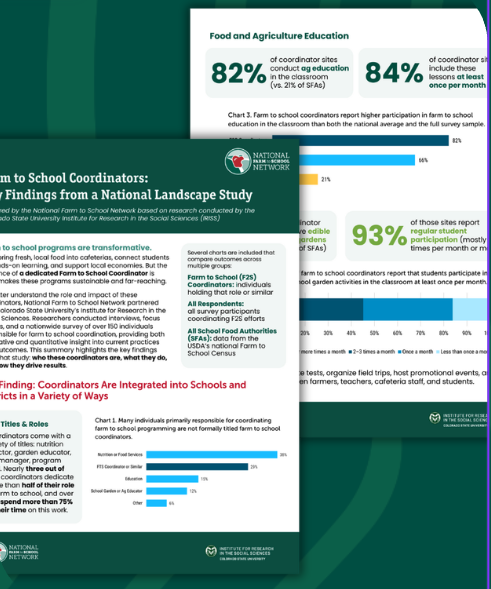
Farm to School Coordinators: Key Findings from a National Landscape Study
Farm to School Coordinators play a crucial role in sustaining and expanding farm to school programs across the U.S., connecting fresh local food to cafeterias, providing hands-on agricultural education, and supporting local economies. A national study of over 150 coordinators revealed that schools with dedicated coordinators have significantly higher participation in farm to school activities across all grade levels compared to the national average. Coordinators report higher rates of serving local foods, conducting taste tests and cooking demos, promoting local food through themed events, celebrating Farm to School Month, and generating media coverage. They also lead extensive efforts in agricultural education and maintaining edible school gardens, with many engaging students multiple times a month. This study highlights how coordinators drive impactful farm to school initiatives that benefit students, schools, farmers, and communities/
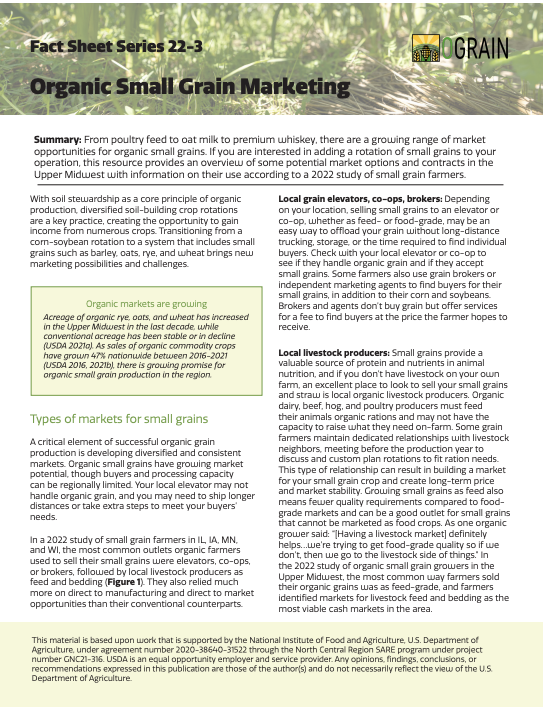
Small Grain Marketing Fact Sheet-January 19, 2023 |
Organic small grains have a growing market potential! Check out this fact sheet on marketing small grains in the Upper Midwest. It lays out the types of markets and types of contracts used for small grains. It also includes results of a 2022 study of small grain farmers in Wisconsin, Illinois, Iowa and Minnesota – see how your neighbors market their small grains!
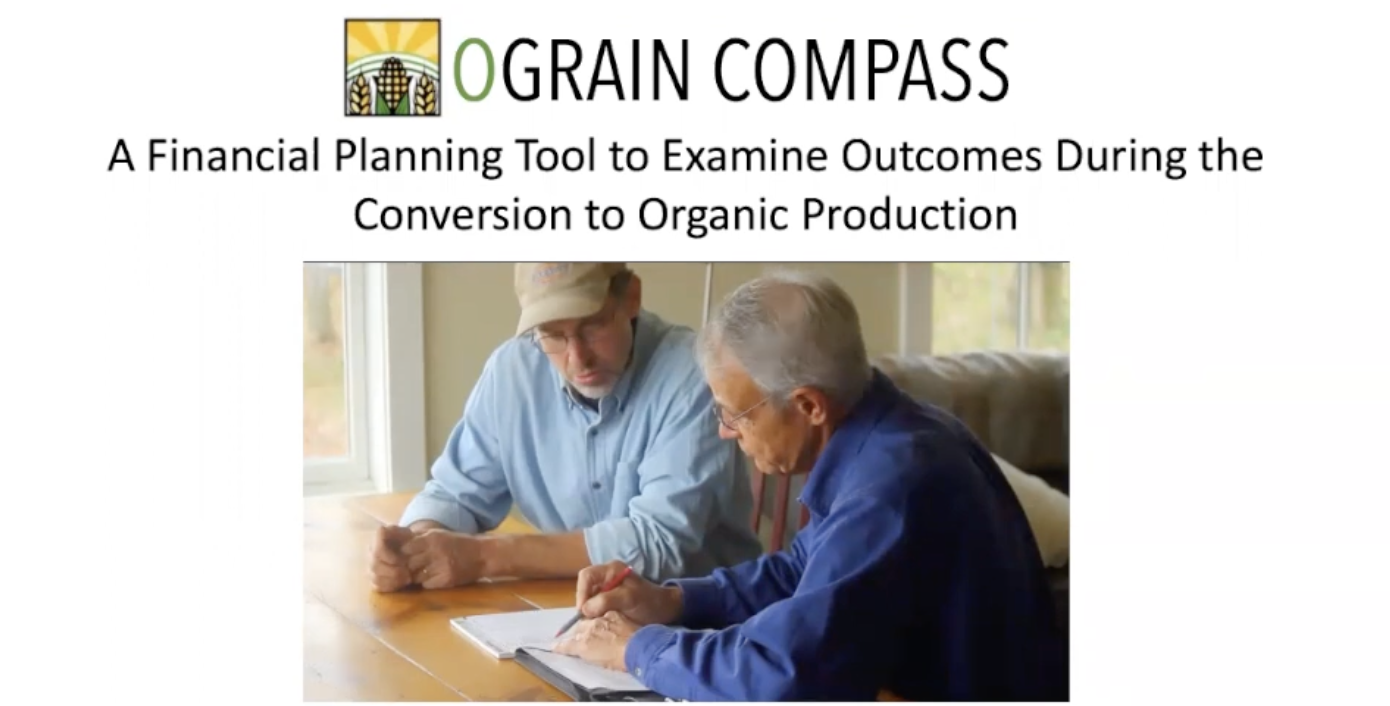
OGRAIN Compass
OGRAIN’s Compass is a planning tool developed by the University of Wisconsin to help farmers evaluate the long-term financial outcomes of transitioning to or expanding organic grain production. Designed by Dr. Erin Silva, Jim Munsch, and John Hendrickson, it models ten-year financial projections based on user-provided data such as crop rotations, yields, input costs, and equipment investments. The accompanying tutorial booklet, “Turning Grain into Dough” by Paul Dietmann, guides users through the financial analysis process and data inputs. Together, these resources help conventional, organic, and beginning farmers assess profitability, test various scenarios, and communicate financial plans with lenders or partners.
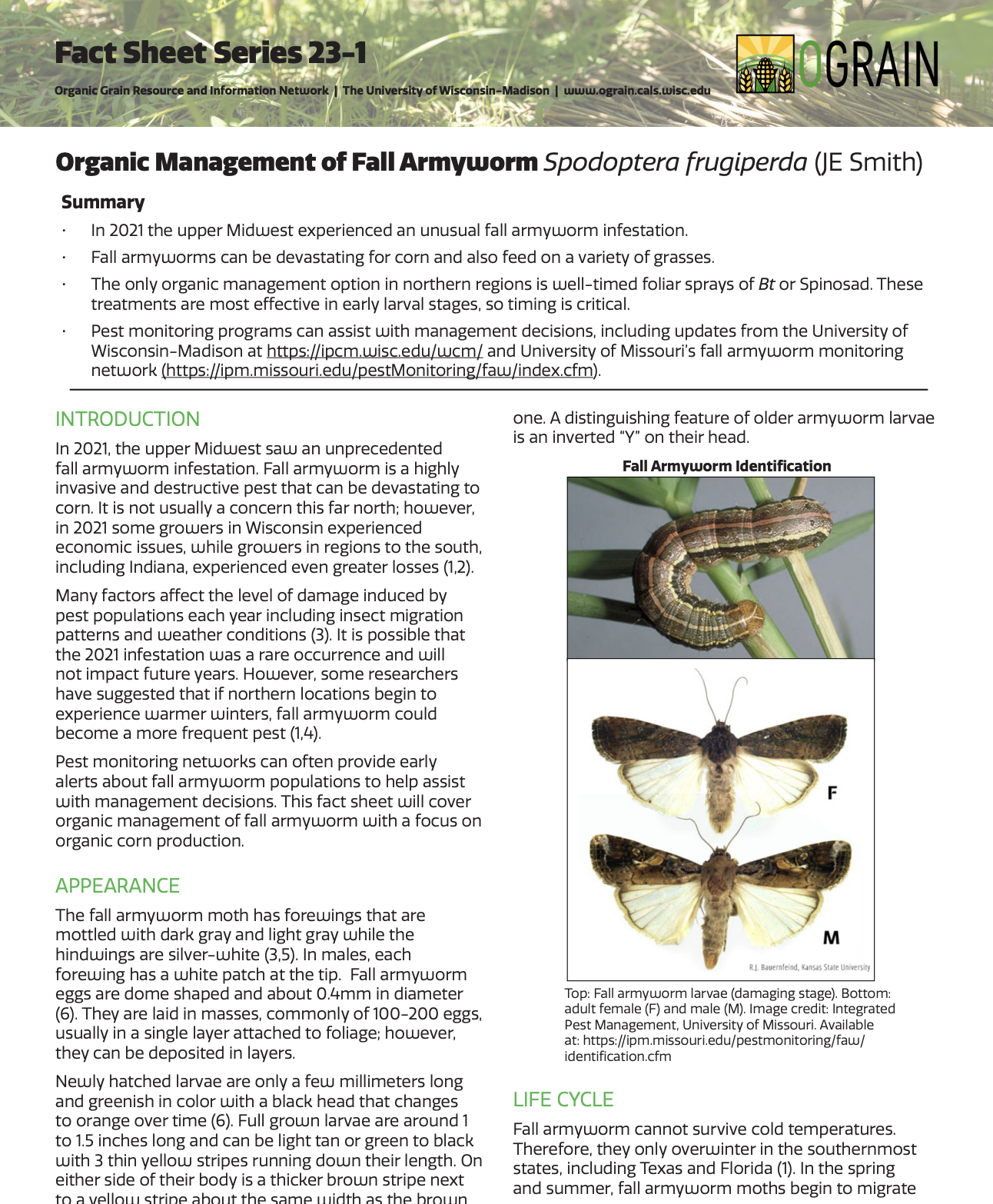
Organic Management of Fall Armyworm S
Farm to School Coordinators play a crucial role in sustaining and expanding farm to school programs across the U.S., connecting fresh local food to cafeterias, providing hands-on agricultural education, and supporting local economies. A national study of over 150 coordinators revealed that schools with dedicated coordinators have significantly higher participation in farm to school activities across all grade levels compared to the national average. Coordinators report higher rates of serving local foods, conducting taste tests and cooking demos, promoting local food through themed events, celebrating Farm to School Month, and generating media coverage. They also lead extensive efforts in agricultural education and maintaining edible school gardens, with many engaging students multiple times a month. This study highlights how coordinators drive impactful farm to school initiatives that benefit students, schools, farmers, and communities/
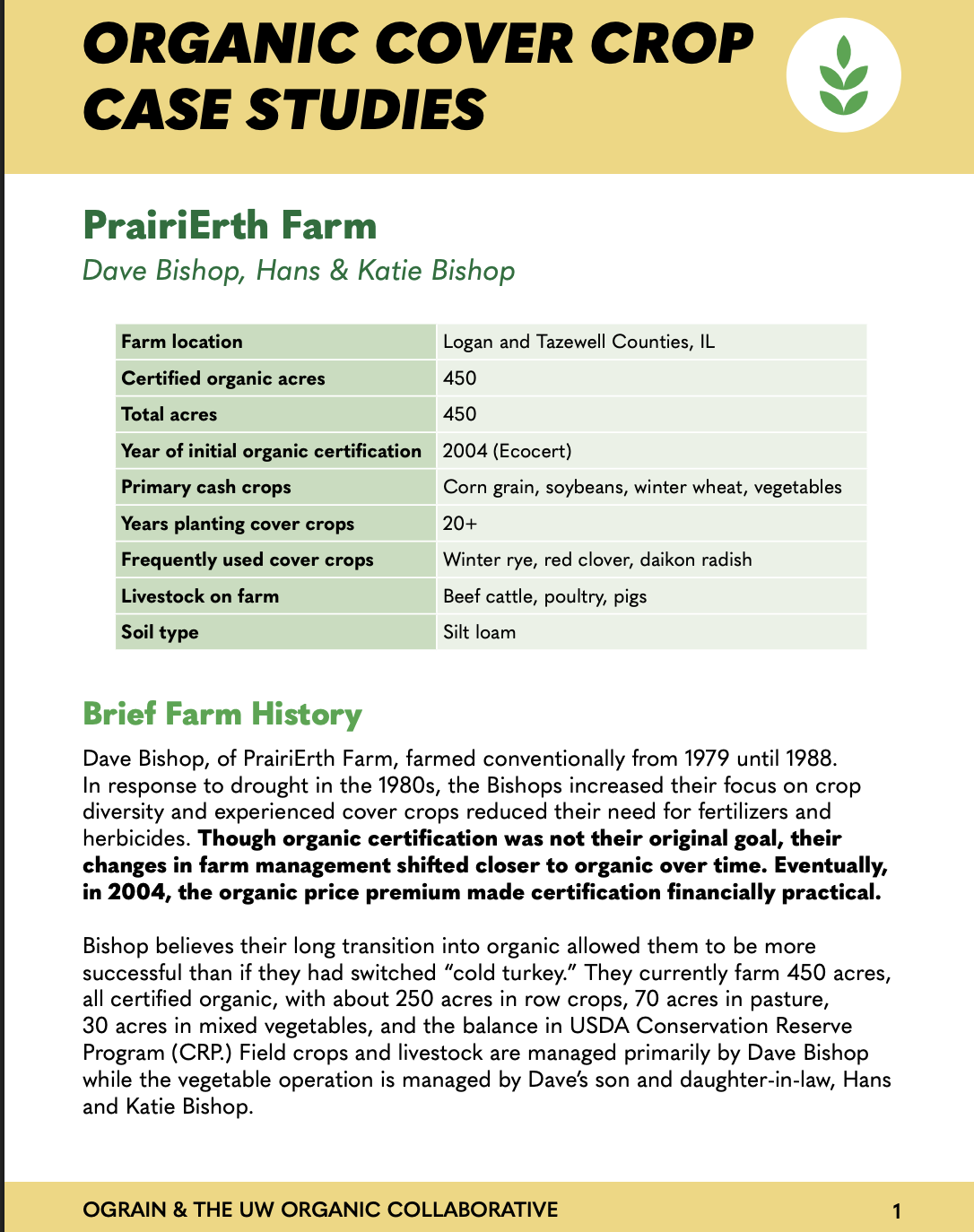
Organic Cover Crop Case Studies: PrairiErth Farm
Dave Bishop, of PrairiErth Farm, farmed conventionally from 1979 until 1988. In response to drought in the 1980s, the Bishops increased their focus on crop diversity and experienced cover crops reduced their need for fertilizers and herbicides. Though organic certification was not their original goal, their changes in farm management shifted closer to organic over time. Eventually, in 2004, the organic price premium made certification financially practical.
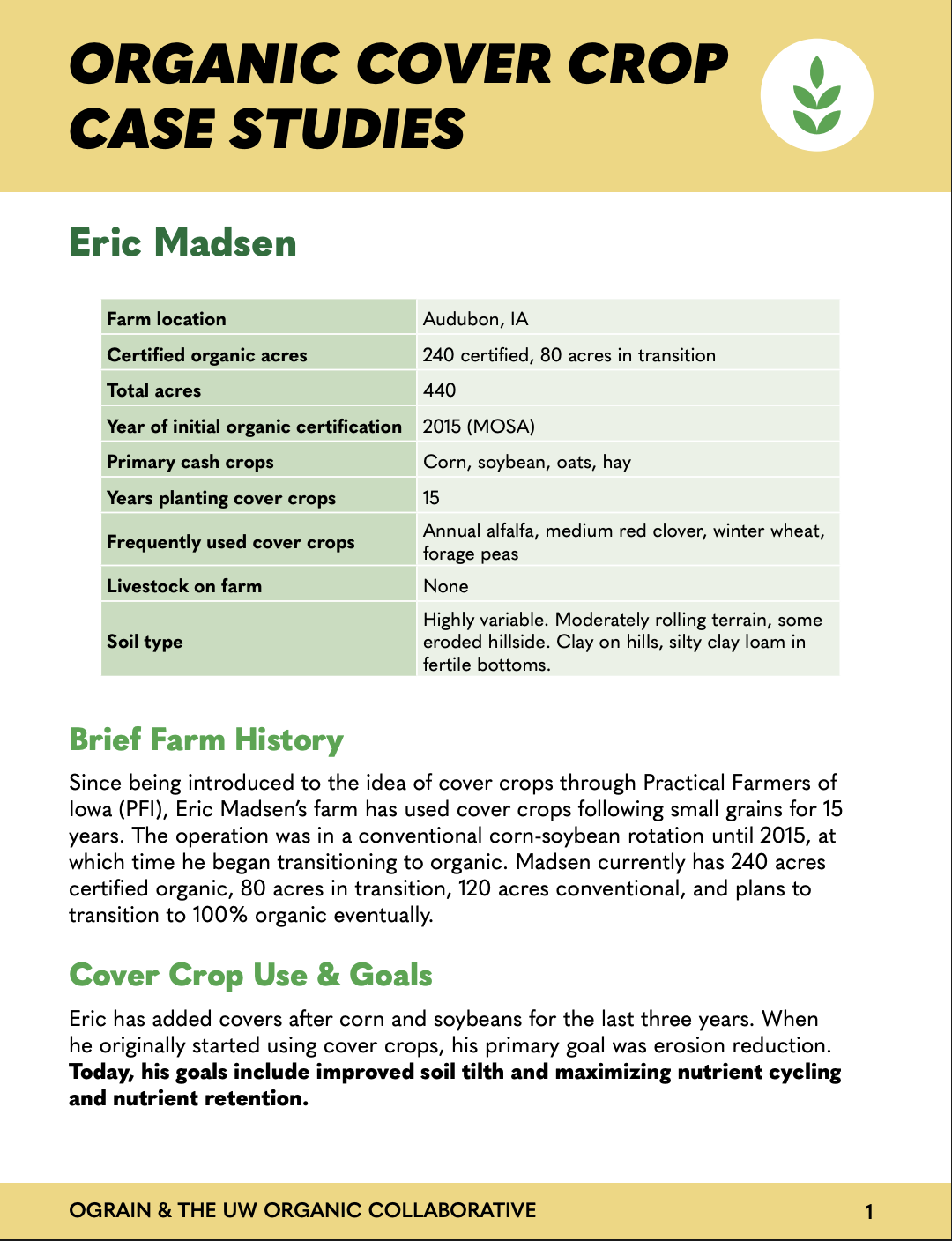
Organic Cover Crop Case Studies: Eric Madsen
Since being introduced to the idea of cover crops through Practical Farmers of Iowa (PFI), Eric Madsen’s farm has used cover crops following small grains for 15 years. The operation was in a conventional corn-soybean rotation until 2015, at which time he began transitioning to organic. Madsen currently has 240 acres certified organic, 80 acres in transition, 120 acres conventional, and plans to transition to 100% organic eventually.
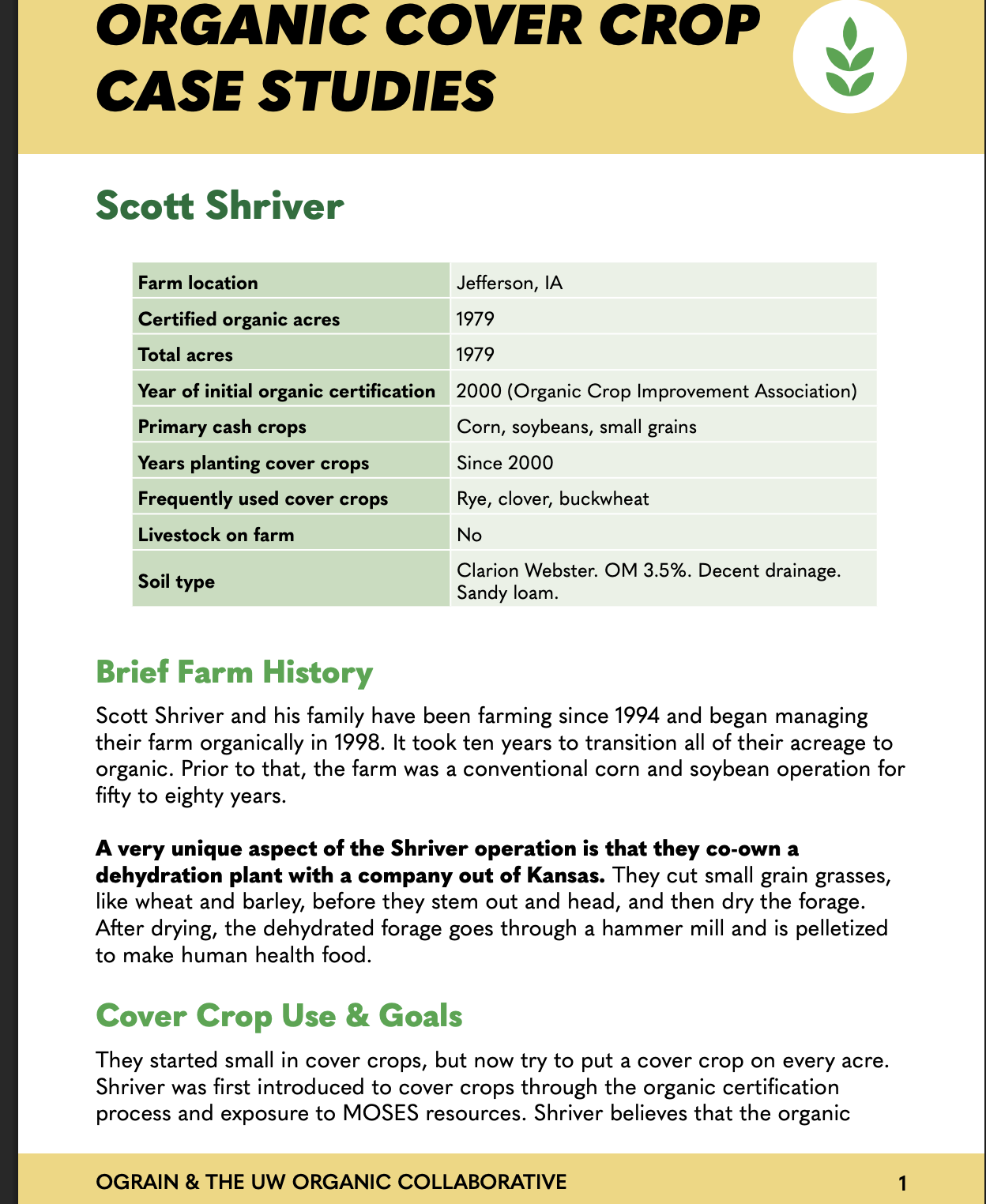
Organic Cover Crop Case Studies: Scott Shriver
Scott Shriver and his family have been farming since 1994 and began managing their farm organically in 1998. It took ten years to transition all of their acreage to organic. Prior to that, the farm was a conventional corn and soybean operation for fifty to eighty years.
Organic Cover Crop Case Studies: Lily Lake Organic Farm-Dave Campbell
Lily Lake Organic Farm has been certified organic since 1990 and is operated by Dave Campbell and his family. They began incorporating cover crops as a part of organic transition in 1988 when they took over the farm. Prior to that, the land was farmed conventionally from 1963-1987 in an exclusive corn and soybean rotation. There were livestock on the farm prior to 1963. Cover crops weren’t used during that time, but alfalfa, grass and clovers were used in hay and pasture rotations. Since 1988, Campbell has been planting red clover with oats or frost seeding red clover into winter wheat. He was also an early adopter of planting cereal rye after corn before soybeans.
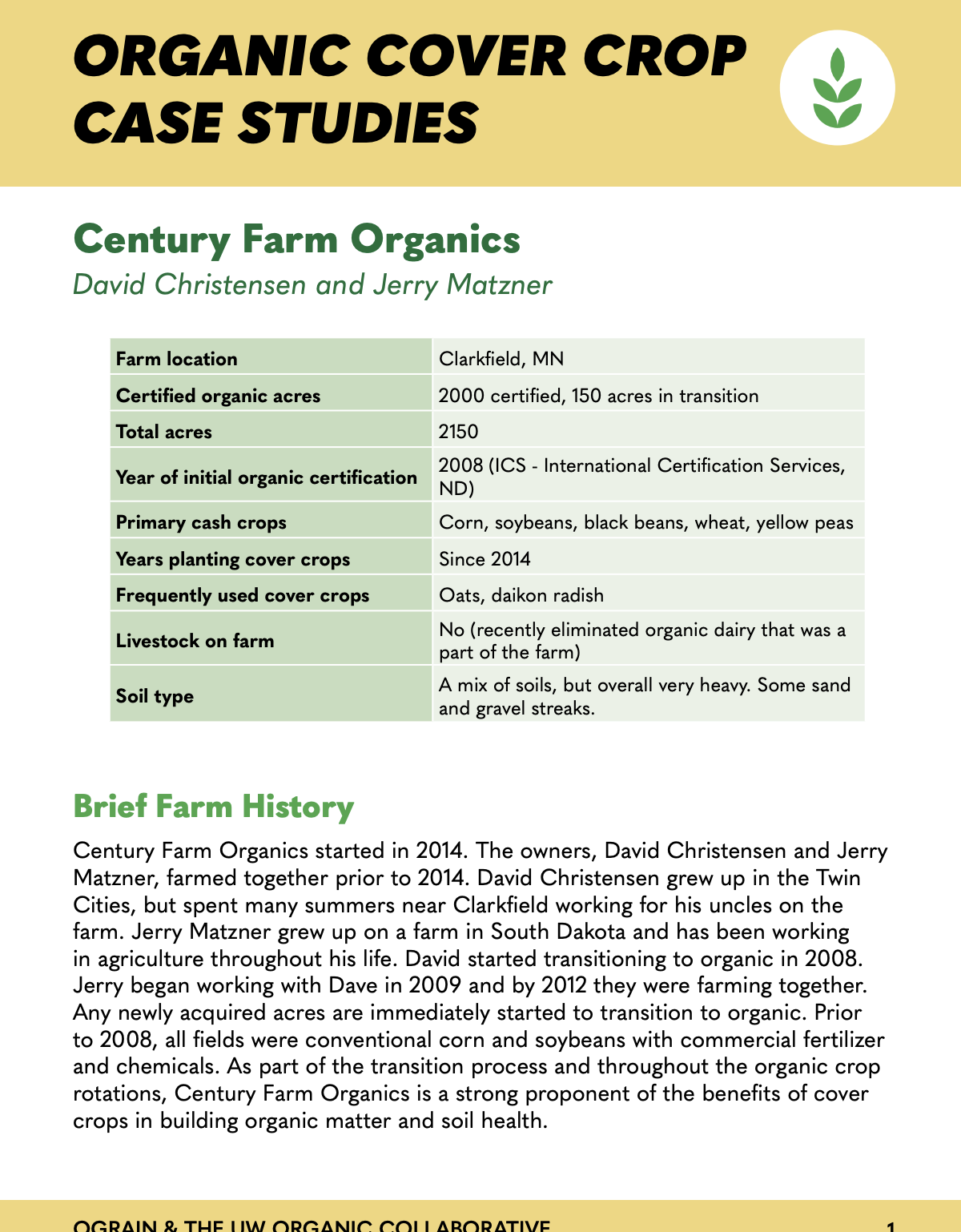
Organic Cover Crop Case Studies: Century Farm Organics
Century Farm Organics started in 2014. The owners, David Christensen and Jerry Matzner, farmed together prior to 2014. David Christensen grew up in the Twin Cities, but spent many summers near Clarkfield working for his uncles on the farm. Jerry Matzner grew up on a farm in South Dakota and has been working in agriculture throughout his life. David started transitioning to organic in 2008. Jerry began working with Dave in 2009 and by 2012 they were farming together. Any newly acquired acres are immediately started to transition to organic. Prior to 2008, all fields were conventional corn and soybeans with commercial fertilizer and chemicals. As part of the transition process and throughout the organic crop rotations, Century Farm Organics is a strong proponent of the benefits of cover crops in building organic matter and soil health.
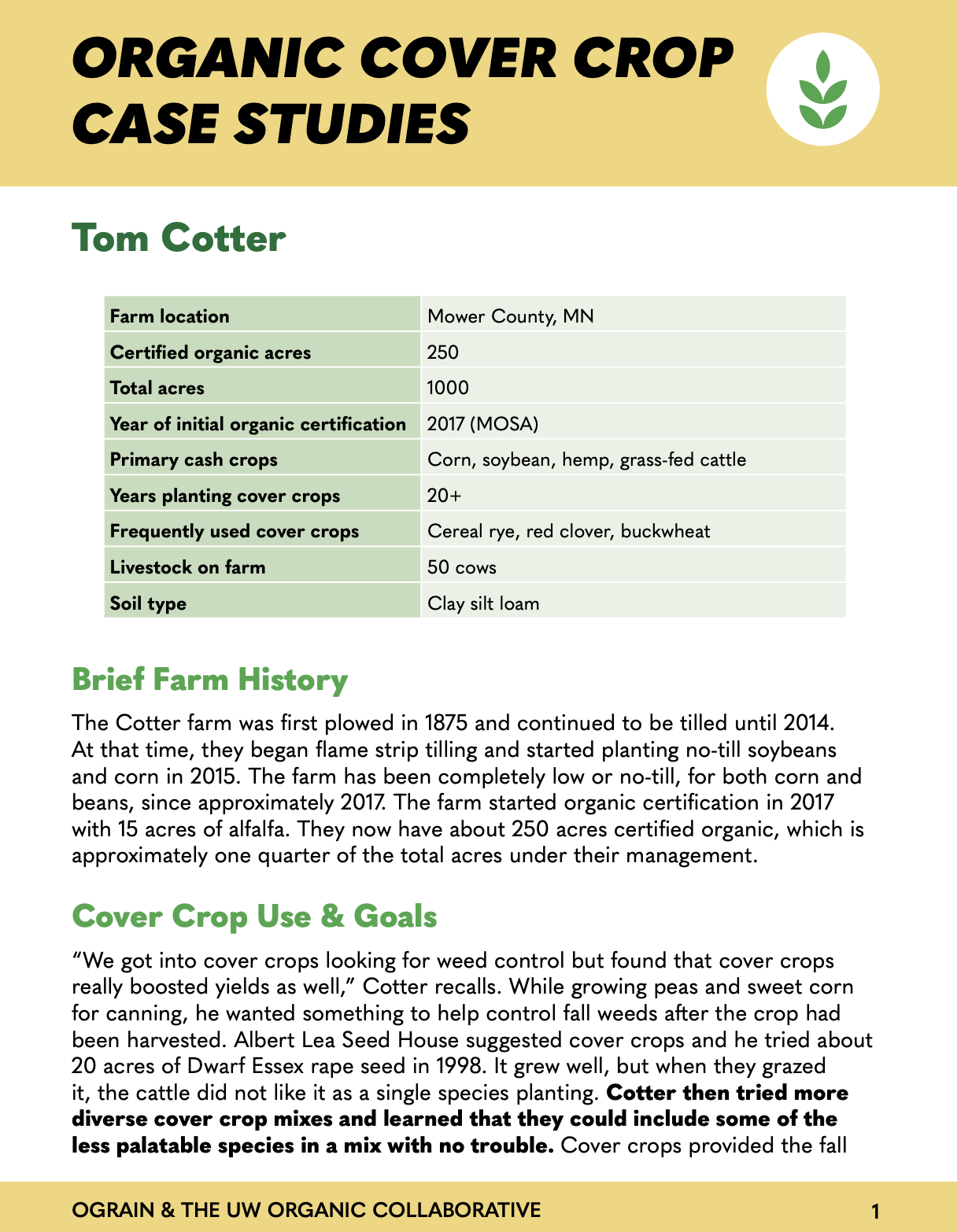
Organic Cover Crop Case Studies: Tom Cotter
The Cotter farm was first plowed in 1875 and continued to be tilled until 2014. At that time, they began flame strip tilling and started planting no-till soybeans and corn in 2015. The farm has been completely low or no-till, for both corn and beans, since approximately 2017. The farm started organic certification in 2017 with 15 acres of alfalfa. They now have about 250 acres certified organic, which is approximately one quarter of the total acres under their management.
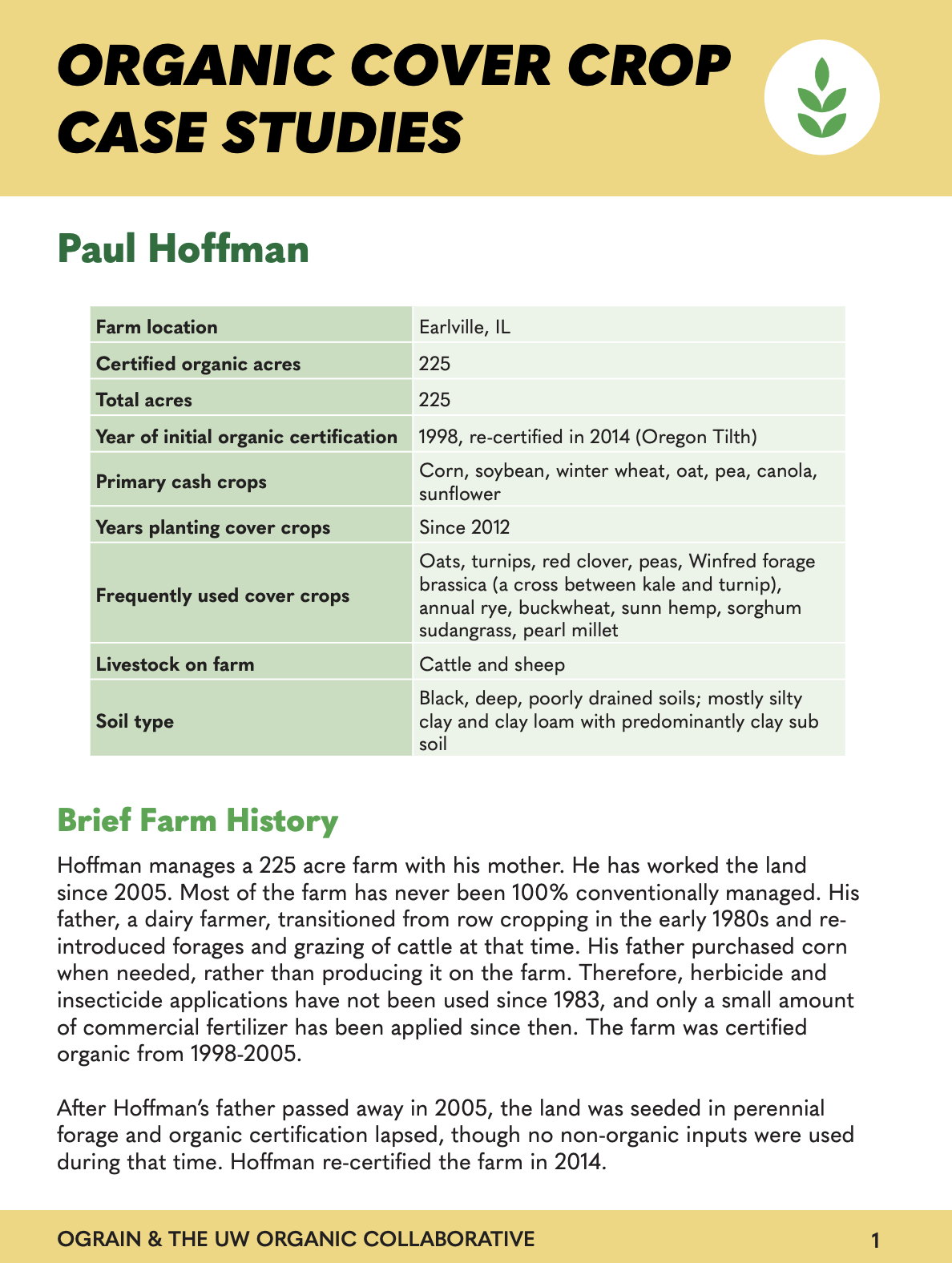
Organic Cover Crop Case Studies: Paul Hoffman
Hoffman manages a 225 acre farm with his mother. He has worked the land since 2005. Most of the farm has never been 100% conventionally managed. His father, a dairy farmer, transitioned from row cropping in the early 1980s and reintroduced forages and grazing of cattle at that time. His father purchased corn when needed, rather than producing it on the farm. Therefore, herbicide and insecticide applications have not been used since 1983, and only a small amount of commercial fertilizer has been applied since then. The farm was certified organic from 1998-2005.
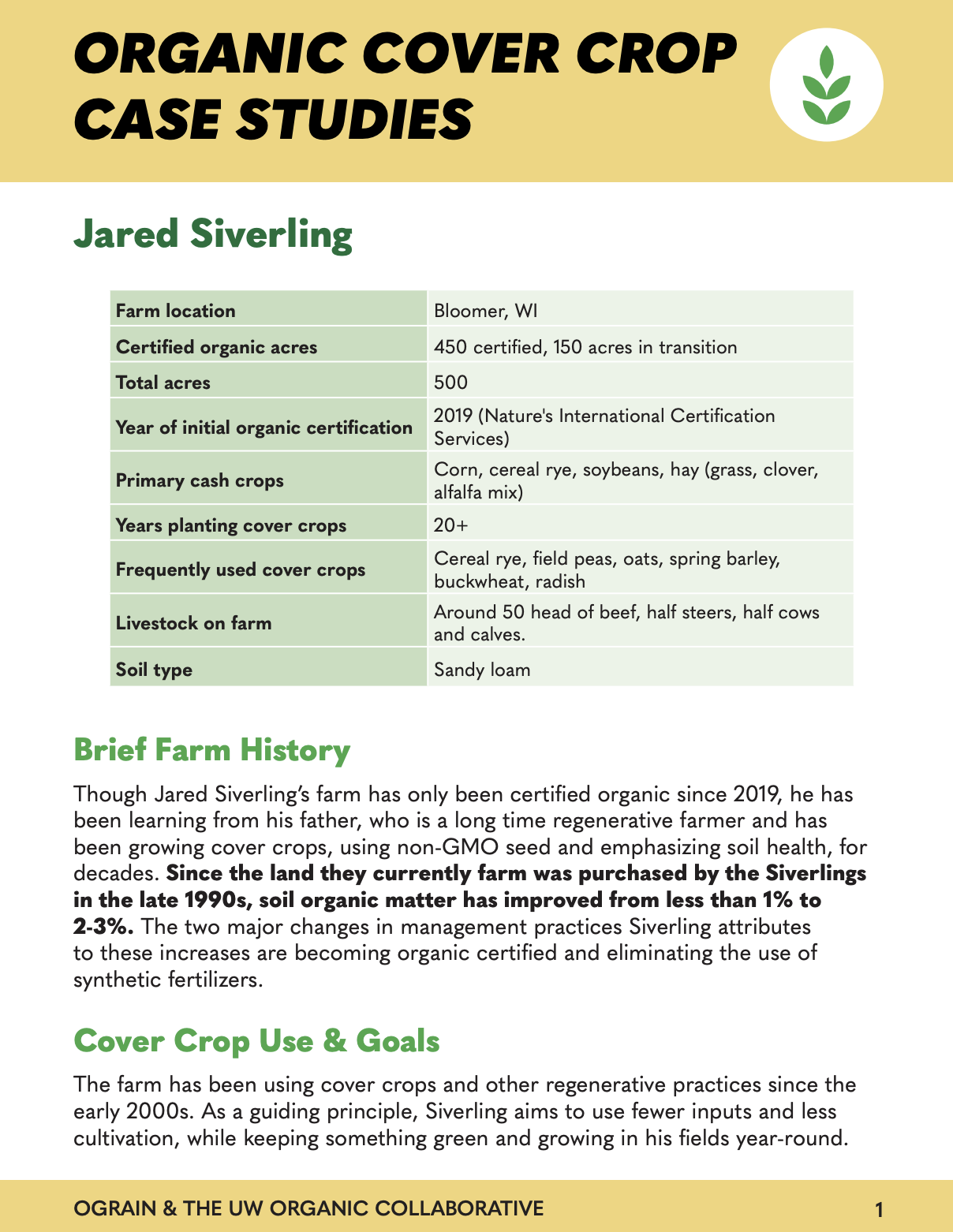
Organic Cover Crop Case Studies: Jared Siverling
Though Jared Siverling’s farm has only been certified organic since 2019, he has been learning from his father, who is a long time regenerative farmer and has been growing cover crops, using non-GMO seed and emphasizing soil health, for decades. Since the land they currently farm was purchased by the Siverlings in the late 1990s, soil organic matter has improved from less than 1% to 2-3%. The two major changes in management practices Siverling attributes to these increases are becoming organic certified and eliminating the use of synthetic fertilizers.
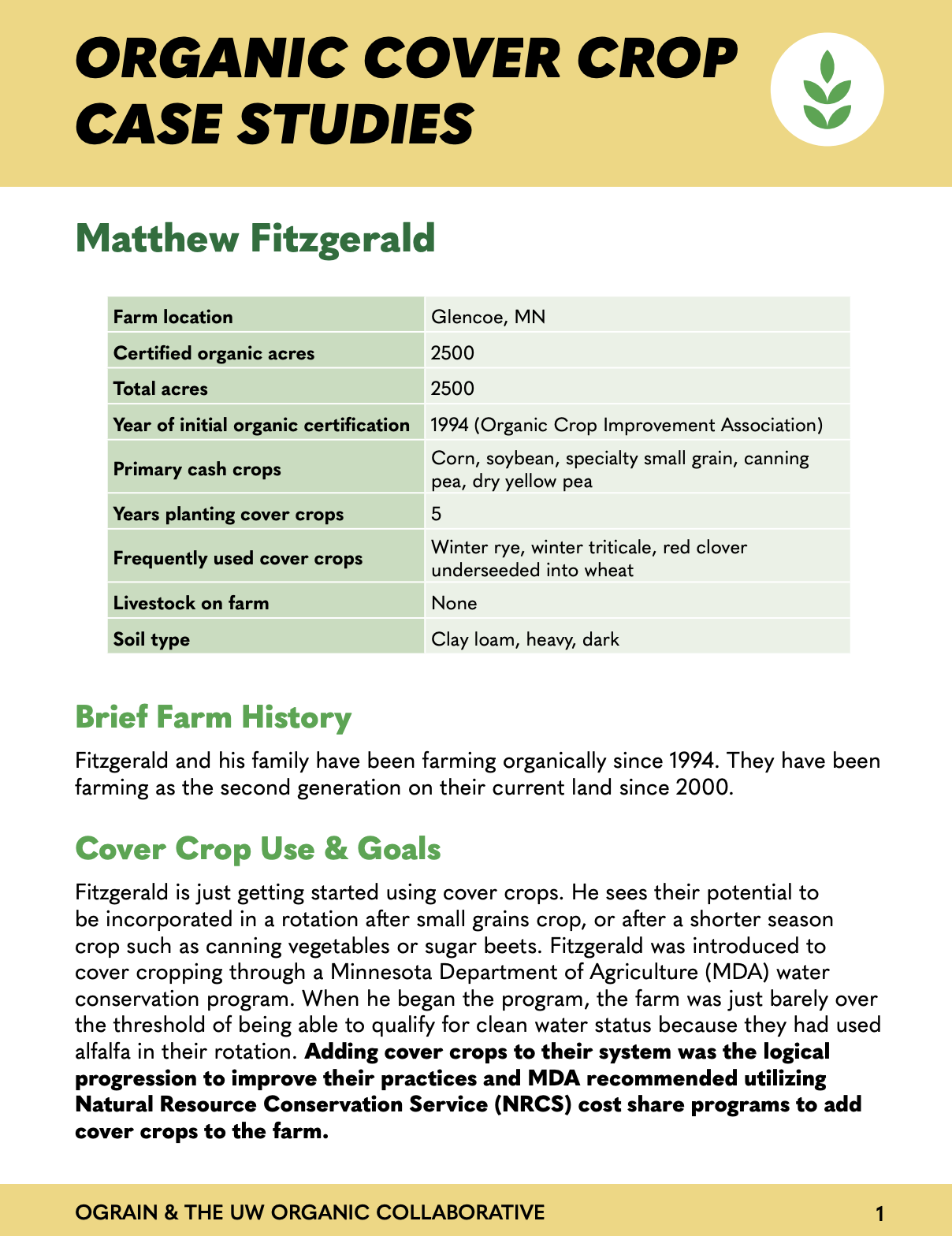
Organic Cover Crop Case Studies: Matthew Fitzgerald
Fitzgerald is just getting started using cover crops. He sees their potential to be incorporated in a rotation after small grains crop, or after a shorter season crop such as canning vegetables or sugar beets. Fitzgerald was introduced to cover cropping through a Minnesota Department of Agriculture (MDA) water conservation program. When he began the program, the farm was just barely over the threshold of being able to qualify for clean water status because they had used alfalfa in their rotation. Adding cover crops to their system was the logical progression to improve their practices and MDA recommended utilizing Natural Resource Conservation Service (NRCS) cost share programs to add cover crops to the farm.
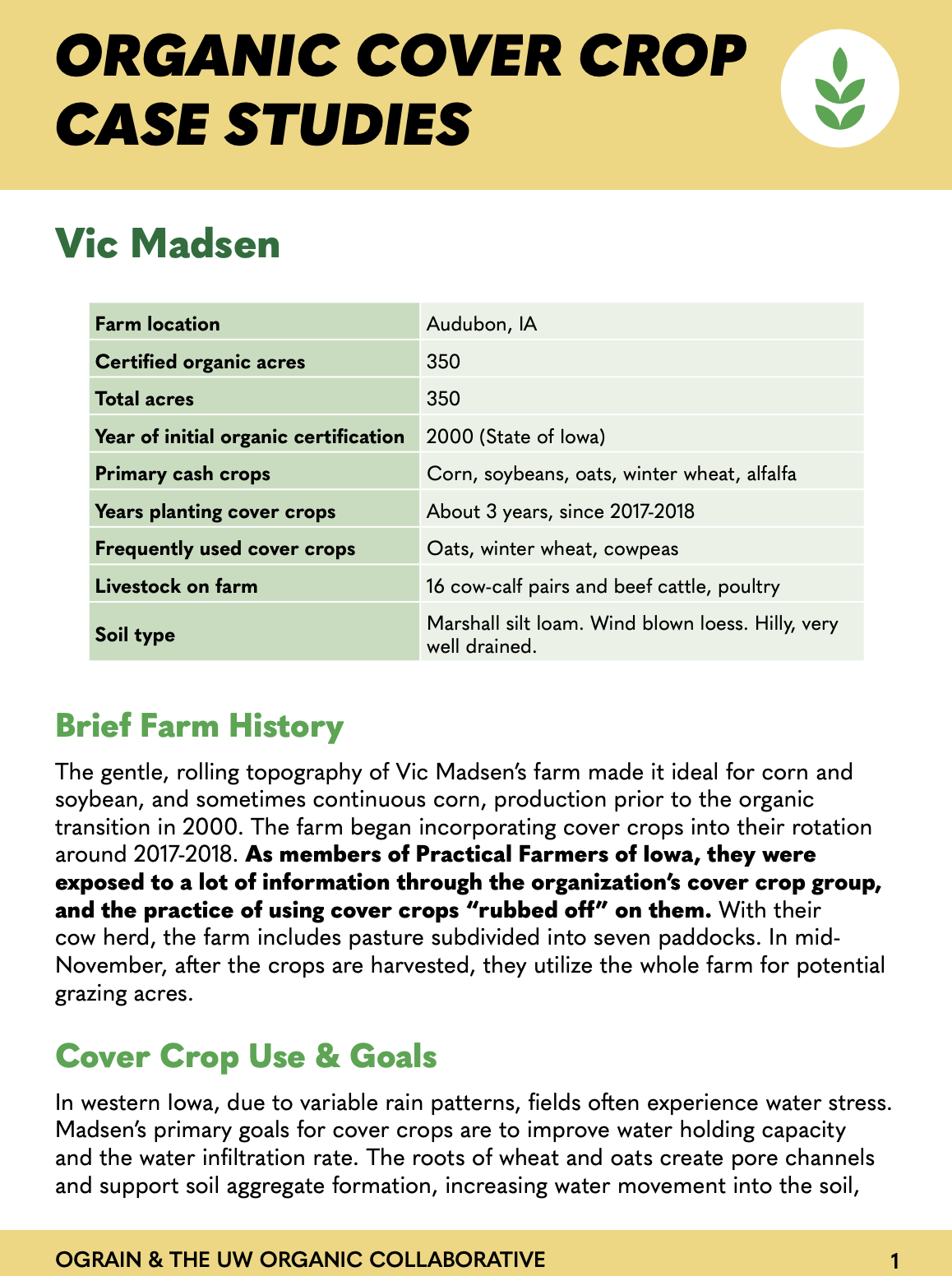
Organic Cover Crop Case Studies: Vic Madsen
The gentle, rolling topography of Vic Madsen’s farm made it ideal for corn and soybean, and sometimes continuous corn, production prior to the organic transition in 2000. The farm began incorporating cover crops into their rotation around 2017-2018. As members of Practical Farmers of Iowa, they were exposed to a lot of information through the organization’s cover crop group, and the practice of using cover crops “rubbed off” on them. With their cow herd, the farm includes pasture subdivided into seven paddocks. In mid-November, after the crops are harvested, they utilize the whole farm for potential grazing acres.
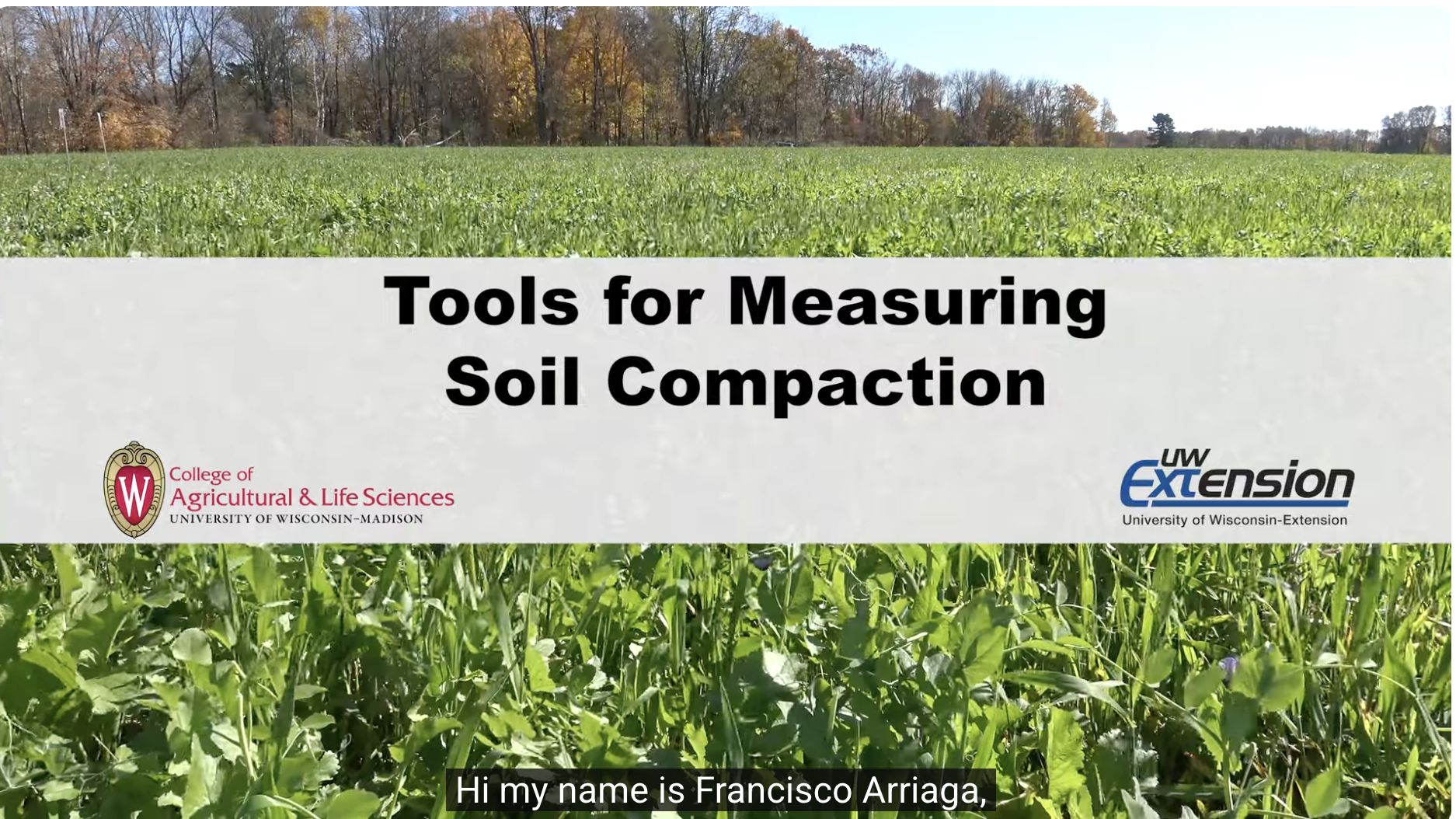
Tools for Measuring Soil Compaction
Need to measure the depth of soil compaction in a field? Here is a quick demo of five different tools you could use. Francisco Arriaga, state specialist from the UW-Madison department of soil science and Jamie Patton, UWEX agriculture agent in Shawano county briefly describe how to use each tool.
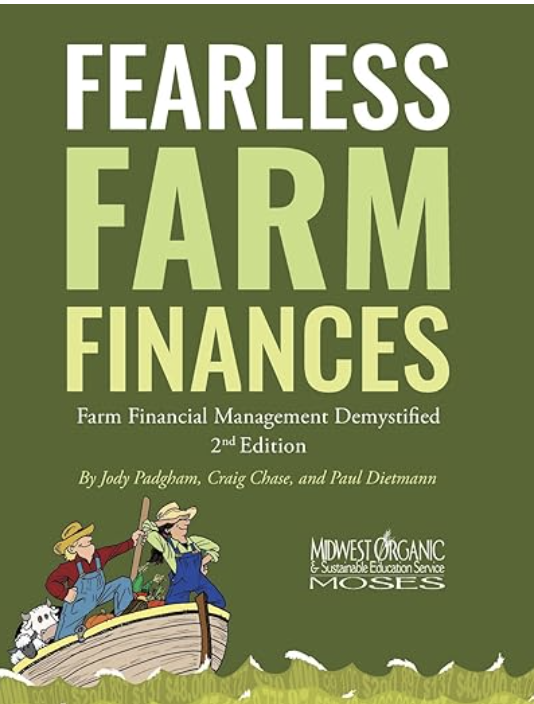
Fearless Farm Finances
Fearless Farm Finances is a unique and comprehensive resource designed to help farmers set up and manage their farm financial systems with confidence. Packed with practical instructions, helpful tips, and useful tools, this guide walks readers through everything from bookkeeping and record-keeping to budgeting and financial analysis. It includes real-life examples from successful farmers and sample data to illustrate how financial forms and records should look, making complex financial concepts approachable and manageable for farms of all sizes and types.verwhelmed by technical jargon.
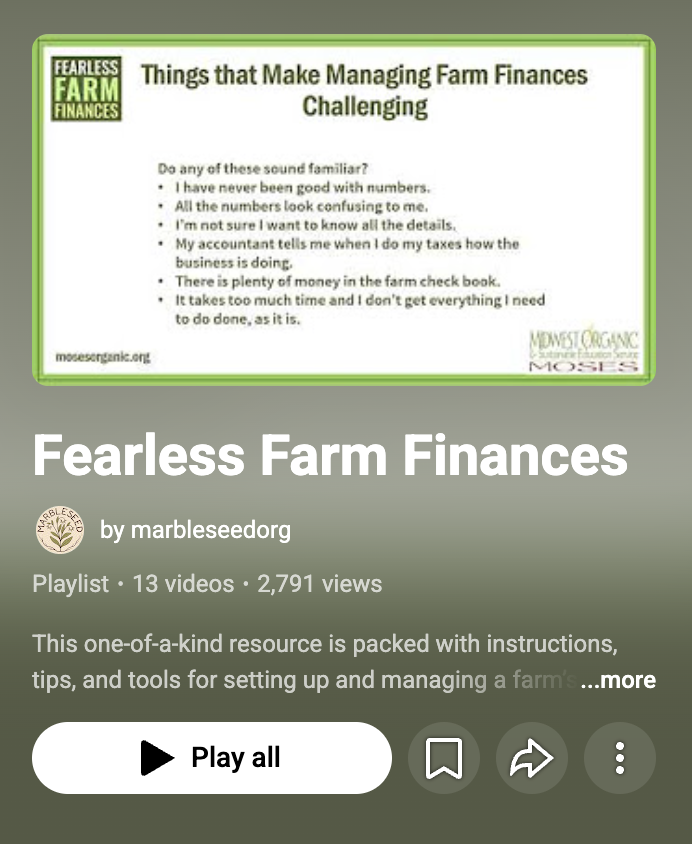
Fearless Farm Finances Youtube Channel
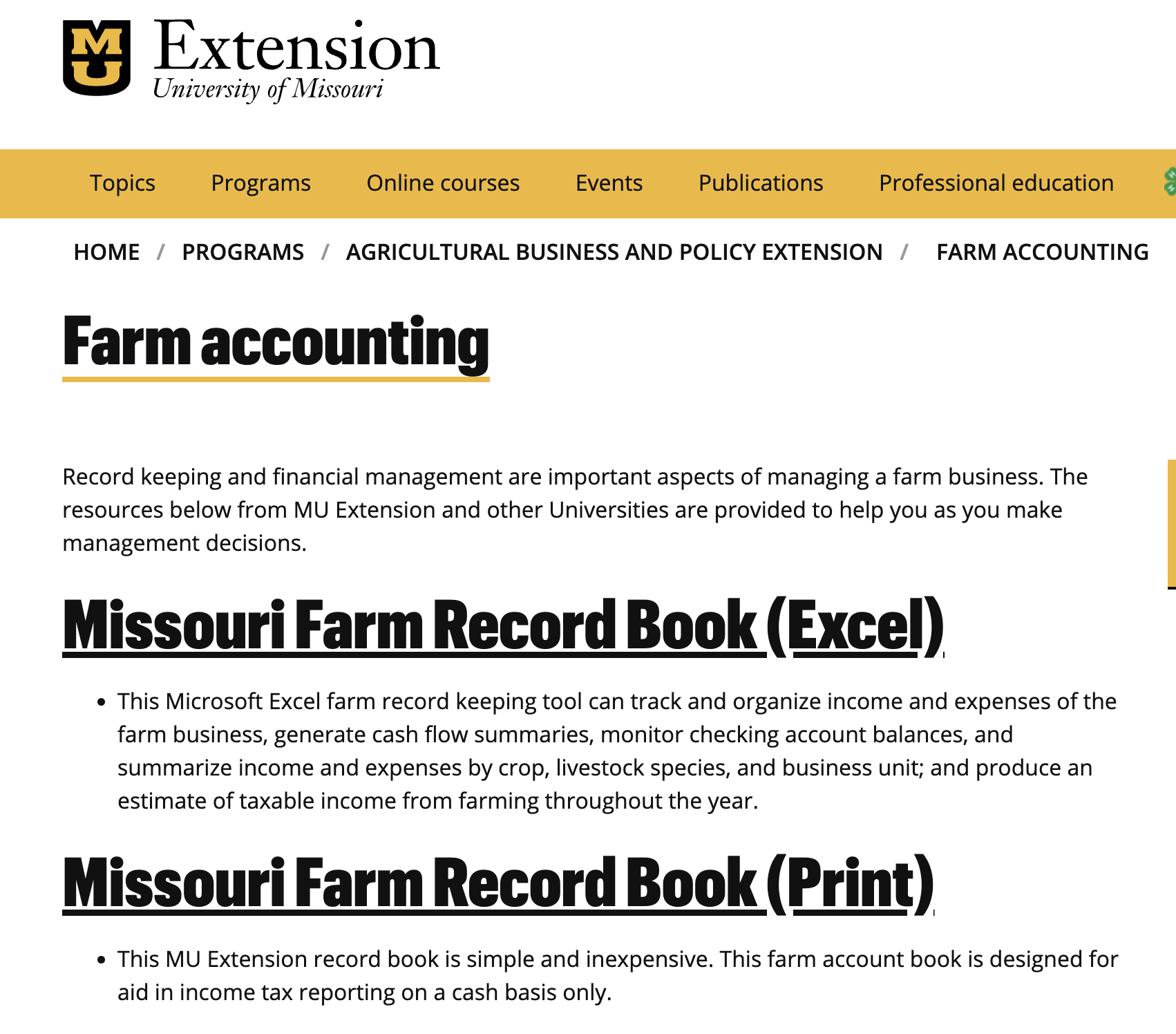
Missouri Farm Record Book
Farm Balance Sheet
Fearless Farm Finances Youtube Channel
Farm Balance Sheet
The resource is a practical guide that explains how to prepare a farm business balance sheet—a key financial statement that presents a snapshot of the farm’s financial position at a specific moment in time. It details the universal accounting equation: Assets = Liabilities + Net Worth (Owner’s Equity), breaking down the definitions and classifications of assets (current and non-current), liabilities (current and non-current), and net worth. The guide follows the Farm Financial Standards Council (FFSC) framework for farm financial statements and offers clear instructions on the balance sheet’s two-column structure (assets on the left, liabilities and net worth on the right). It also provides a downloadable Excel-based sheet. Balance Sheet Tool.
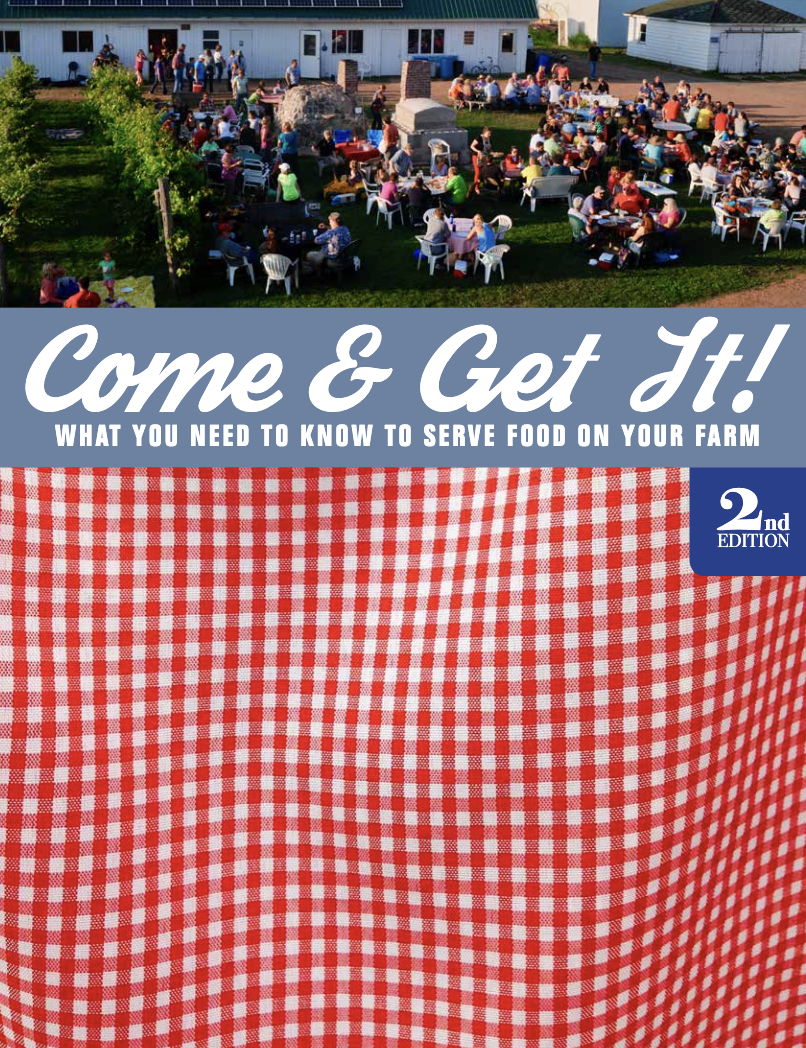
Come & Get it: What you Need to Know to Serve Food on Your Farm
This publication serves as a starter toolkit and roadmap for farmers interested in launching on-farm food service ventures. It highlights the emerging and still-evolving nature of the farm-to-table industry, emphasizing that legal, regulatory, and business frameworks are still adapting to this new model. Because such ventures don’t fit neatly into traditional categories like restaurants or special events, farmers entering this field are pioneering new entrepreneurial territory that requires creativity, flexibility, and careful attention to regulations, insurance, and liability.
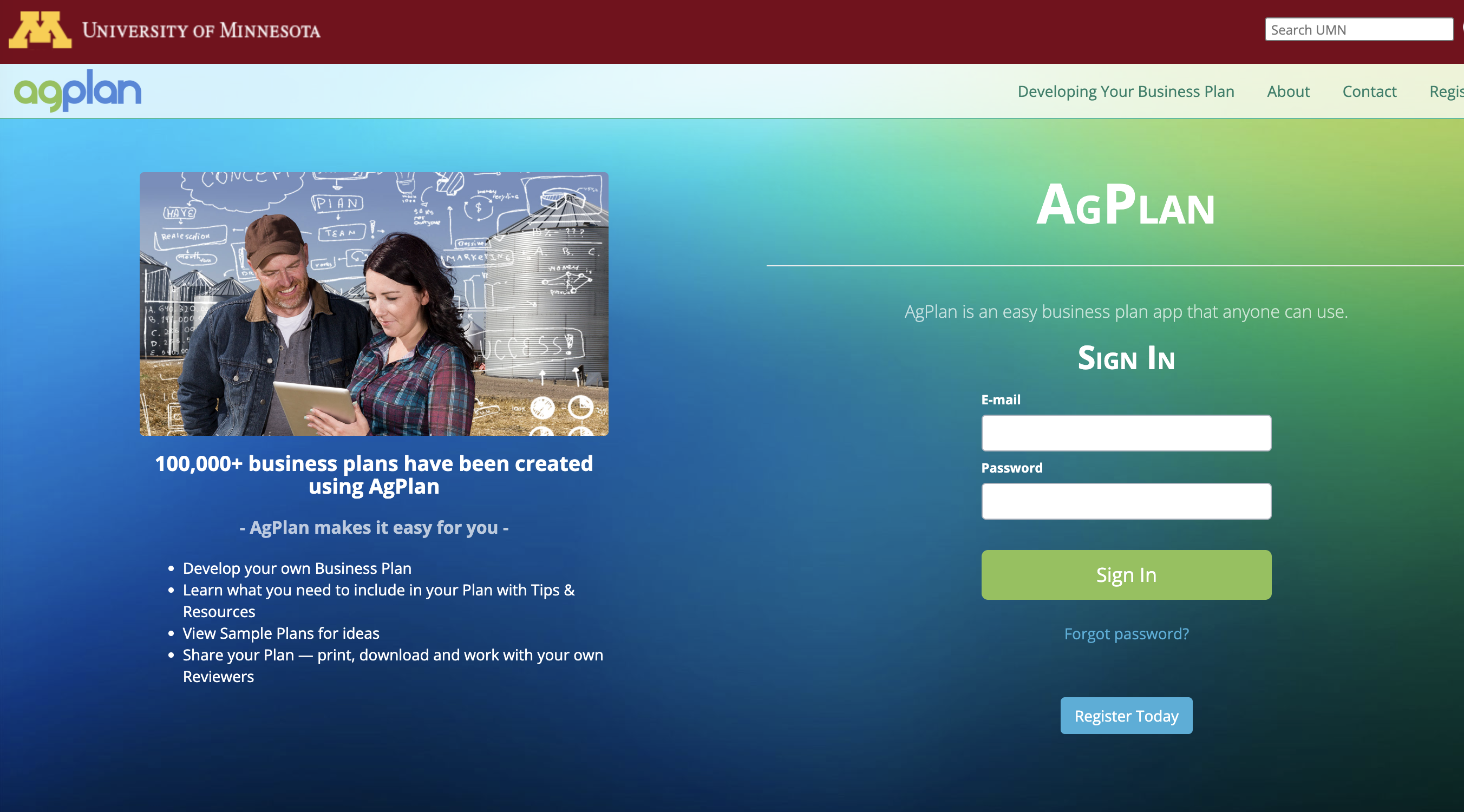
Ag Plan
AgPlan is a free, easy-to-use online business planning tool developed by the University of Minnesota. It helps farmers, ranchers, and rural business owners create customized business plans with section-by-section guidance, planning tips, and real-world sample content. AgPlan offers an intuitive editor similar to a word processor, features built-in resources for each plan section, and allows users to share their plans with advisors, educators, or consultants for collaborative feedback—all in a secure and accessible online environment.Balance Sheet Tool.
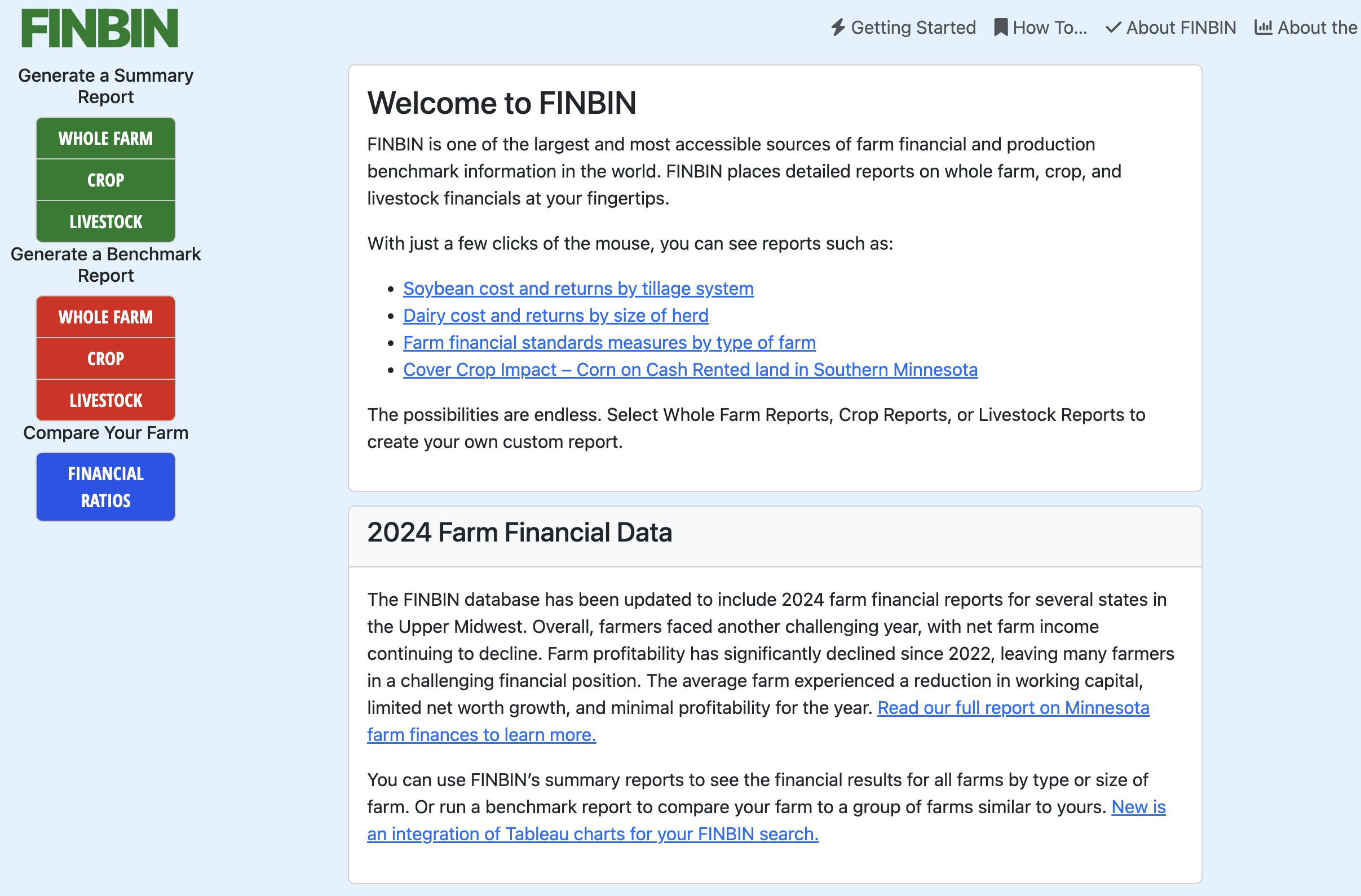
FINBIN
FINBIN, hosted by the University of Minnesota's Center for Farm Financial Management, is one of the largest and most accessible farm financial and production benchmark databases worldwide. With just a few clicks, farmers, educators, lenders, and agricultural professionals can access detailed reports on whole farm, crop, and livestock financials. The database compiles verified farm data from thousands of producers who use FINPACK software for farm business analysis. Users can explore summary reports to view average financial results by farm type or size, or generate custom benchmark reports comparing their farm with similar operations.
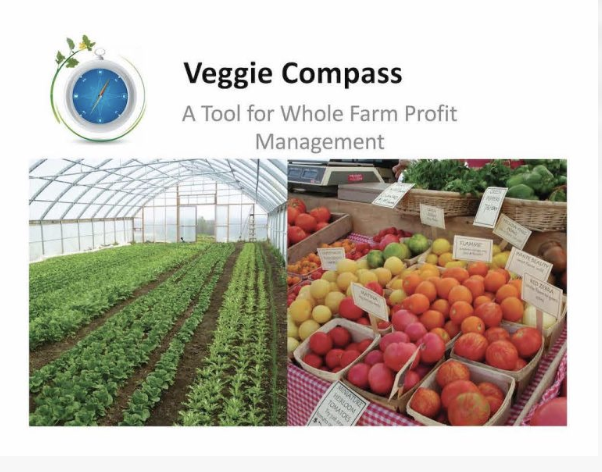
Veggie Compass
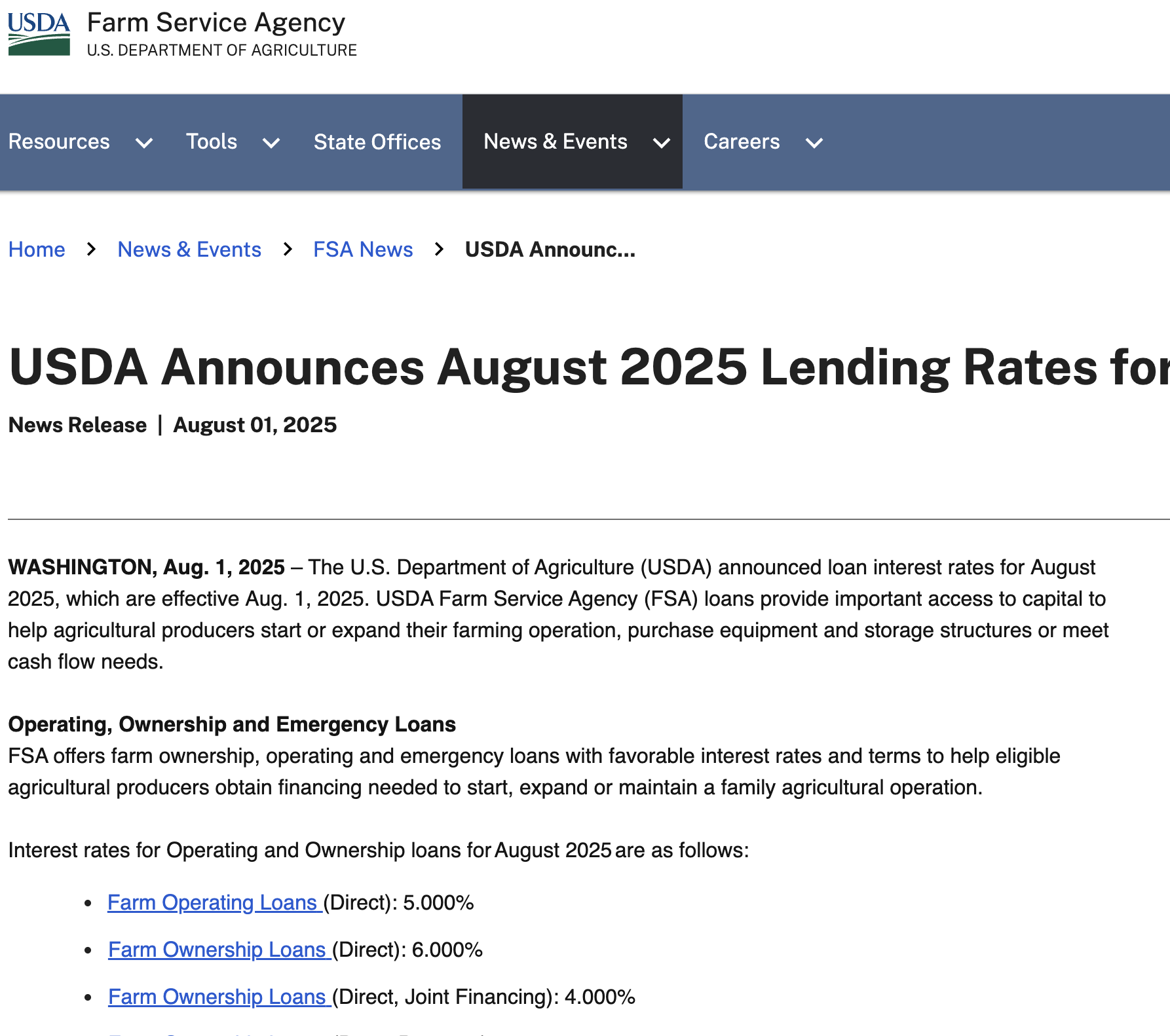
USDA FSA Loan
Revolving Loan Funds (RLF)
Revolving Loan Funds (RLFs) are flexible, self-replenishing financial resources designed to help farmers, small businesses, and rural enterprises access affordable capital for starting, expanding, or sustaining their operations. An RLF works by loaning out money from a pool of funds, then recycling the repayments—including principal and interest—to provide new loans over time. These funds often fill the "gap" when private lenders or conventional financing sources do not fully cover a project's cost. RLFs typically offer competitive interest rates and favorable terms, tailored to meet individual borrower needs, making them especially valuable for farmers and agribusinesses facing challenges securing traditional loans.
e.
.png)
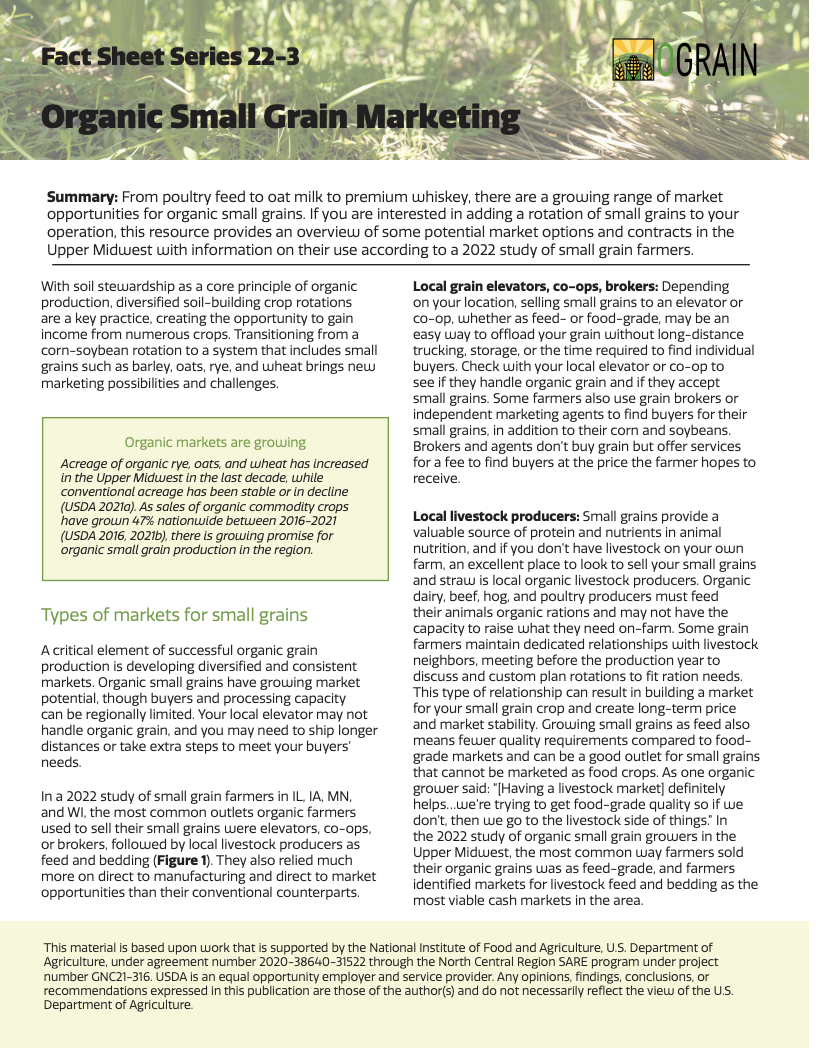
Small Grain Marketing Fact Sheet
From poultry feed to oat milk to premium whiskey, there are a growing range of market opportunities for organic small grains. If you are interested in adding a rotation of small grains to your operation, this resource provides an overview of some potential market options and contracts in the Upper Midwest with information on their use according to a 2022 study of small grain farmers.
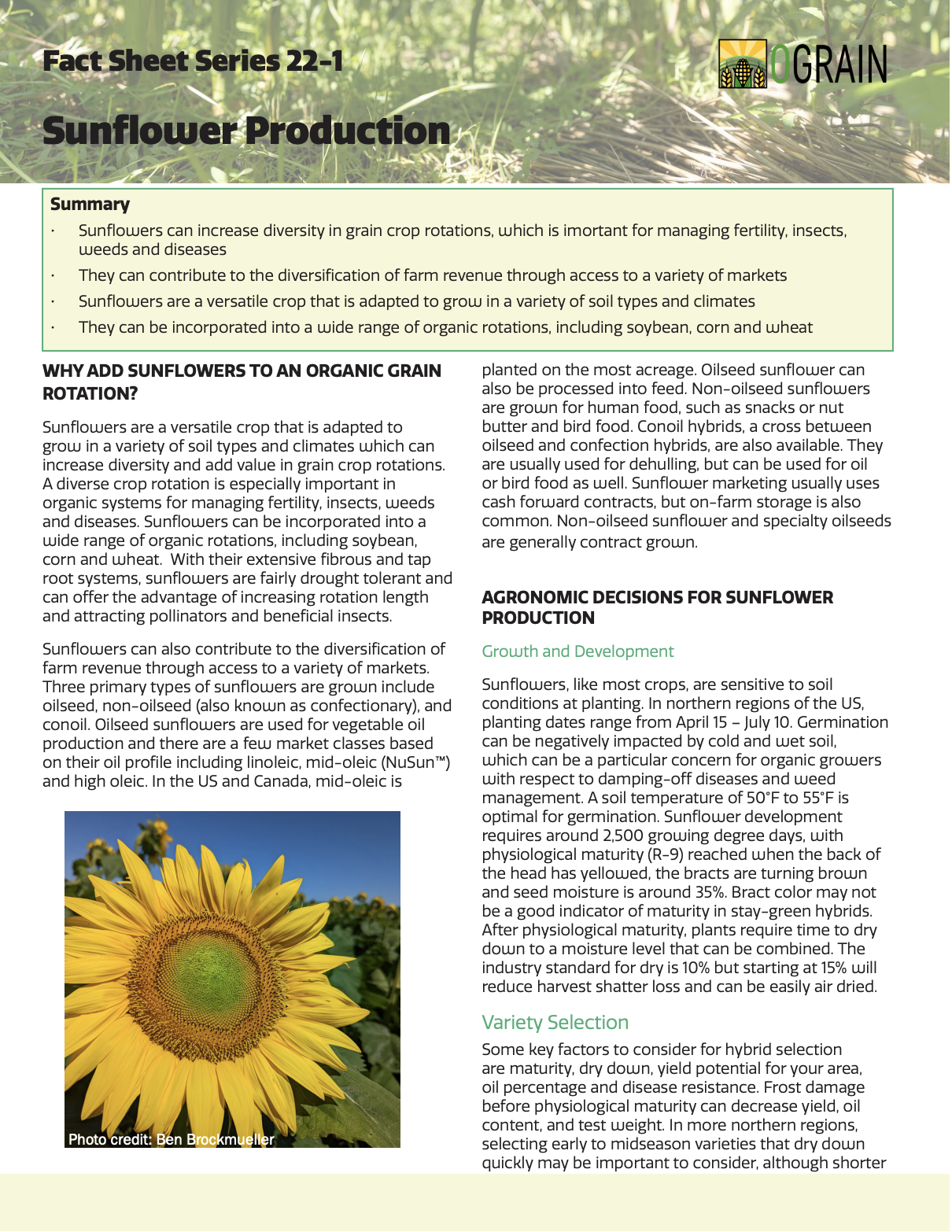
Sunflower Production
Sunflowers are a versatile crop that enhance diversity in grain rotations, helping manage soil fertility, pests, weeds, and diseases. They also boost farm profitability by opening access to multiple markets and can grow well in varied soils and climates, making them a valuable addition to organic rotations with crops like soybeans, corn, and wheat.
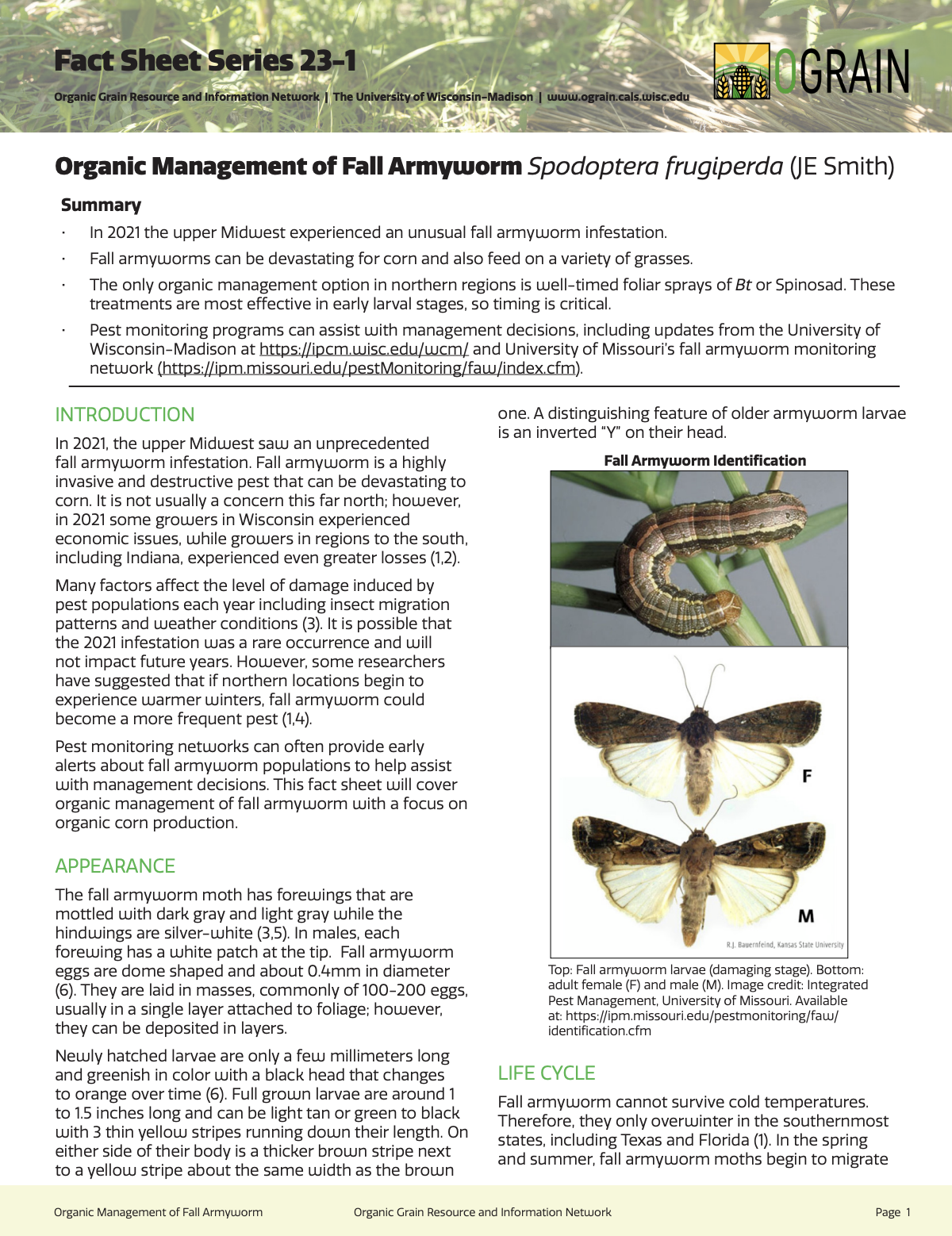
Organic Management of Fall Armyworm
In 2021, the upper Midwest faced an unusual outbreak of fall armyworm, a pest that severely damages corn and other grasses. For organic producers in northern regions, the main control options are well-timed foliar sprays of Bt or Spinosad, most effective during the pest’s early larval stages. Monitoring programs—such as those from the University of Wisconsin–Madison and the University of Missouri—can help farmers track infestations and make timely management decisions.
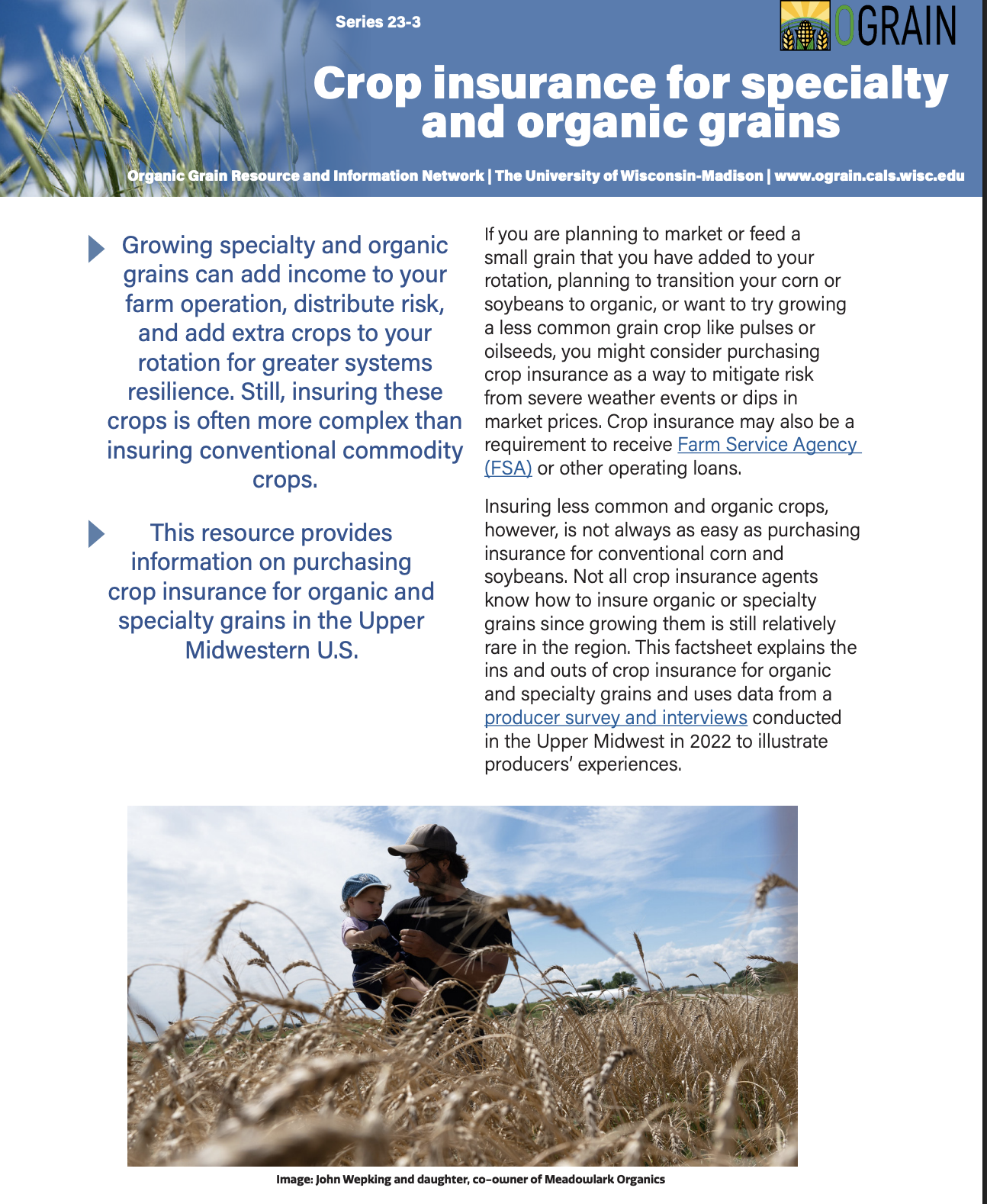
Crop Insurance for Specialty and Organic Grains
Sunflowers are a versatile crop that enhance diversity in grain rotations, helping manage soil fertility, pests, weeds, and diseases. They also boost farm profitability by opening access to multiple markets and can grow well in varied soils and climates, making them a valuable addition to organic rotations with crops like soybeans, corn, and wheat.
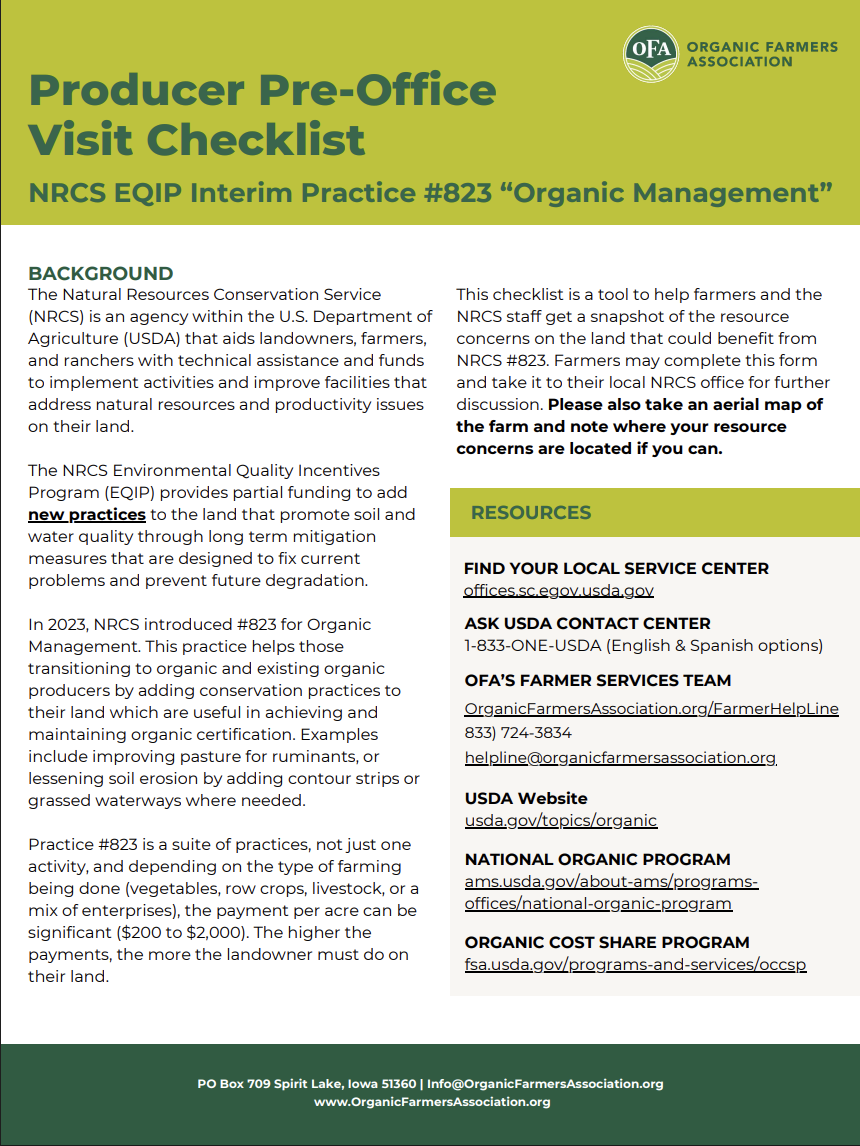
Producer Pre-Office Visit Checklist
Sunflowers are a versatile crop that enhance diversity in grain rotations, helping manage soil fertility, pests, weeds, and diseases. They also boost farm profitability by opening access to multiple markets and can grow well in varied soils and climates, making them a valuable addition to organic rotations with crops like soybeans, corn, and wheat.
Organic Production and IPM Guide for Grapes (2022)
The 2022 Organic Production and IPM Guide for Grapes from Cornell University is a comprehensive resource outlining best practices for managing organic grape production with a focus on pest and disease management. It emphasizes cultural, biological, and mechanical practices to promote plant health and reduce pest problems within an integrated pest management (IPM) framework. The guide includes detailed sections on soil health, cover crops, site and variety selection, nutrient management, and the importance of balancing vine vigor for optimal growth and fruit quality. It provides specific organic-approved pesticide options and strategies tailored for key grapevine diseases such as black rot, powdery mildew, and bunch rot, as well as insect, mite, weed, and wildlife management.
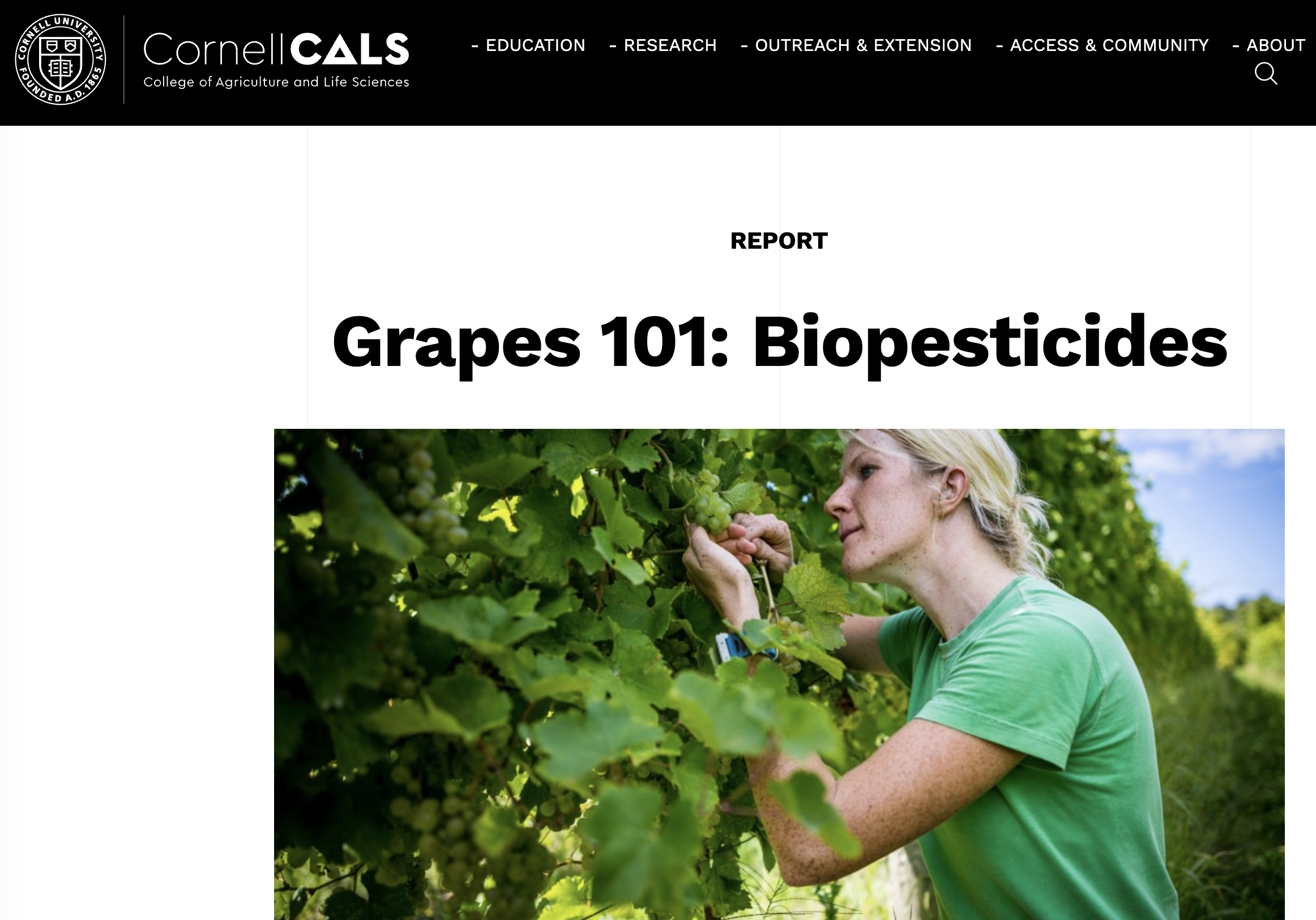
Grapes 101: Biopesticides
Sunflowers are a versatile crop that enhance diversity in grain rotations, helping manage soil fertility, pests, weeds, and diseases. They also boost farm profitability by opening access to multiple markets and can grow well in varied soils and climates, making them a valuable addition to organic rotations with crops like soybeans, corn, and wheat.
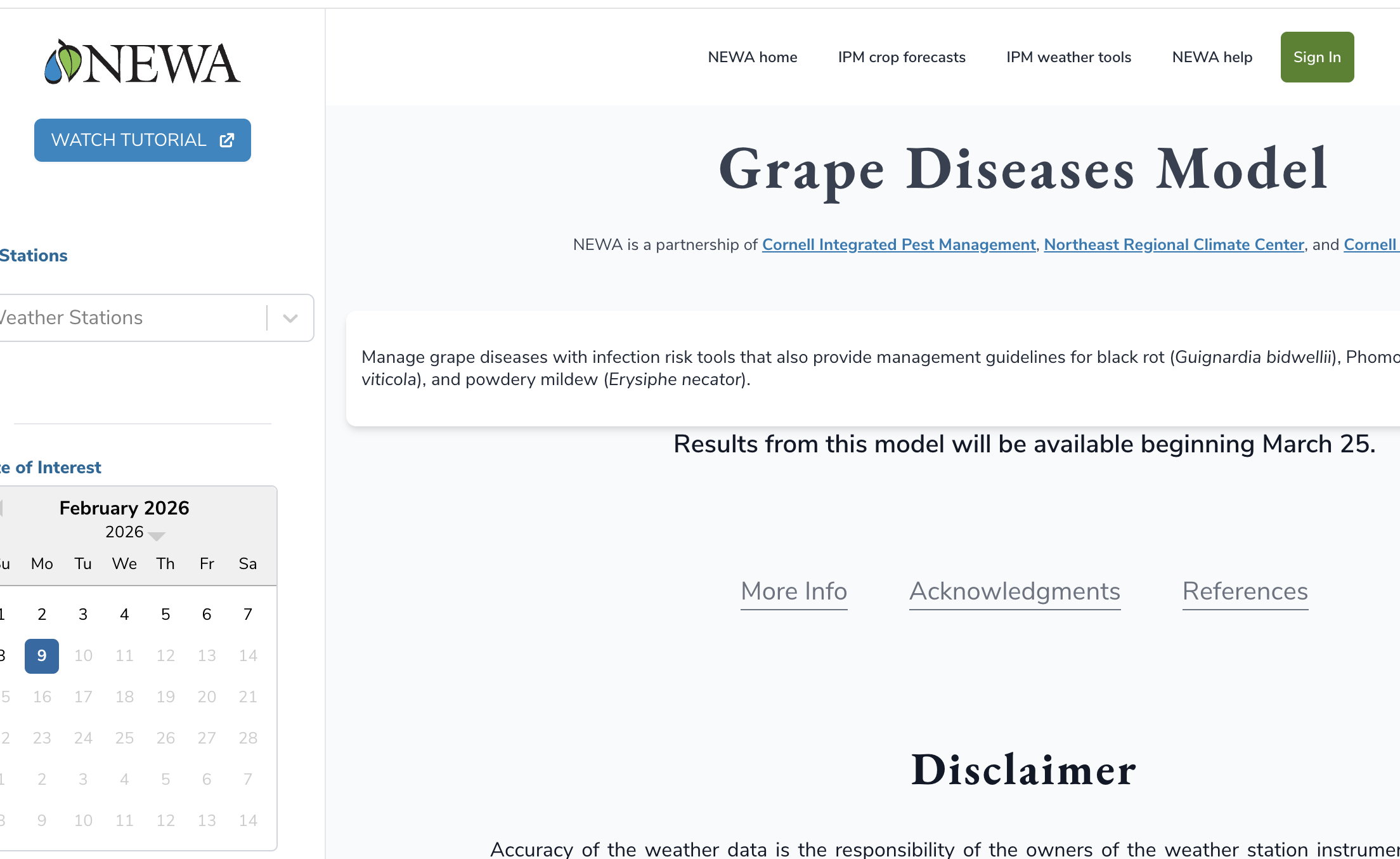
NEWA Grape Diseases Model
The Cornell NEWA Grape Diseases Model is an online tool designed to help grape growers manage key diseases such as black rot (Guignardia bidwellii), Phomopsis cane and leaf spot (Phomopsis viticola), and powdery mildew (Erysiphe necator) by providing real-time infection risk forecasts and management guidelines. This model aids vineyard managers in timing fungicide applications more effectively based on local weather conditions that favor disease development. By using this data-driven resource, growers can optimize disease control, reduce unnecessary chemical use, and improve vineyard health and productivity throughout the growing season. The model is especially valuable for integrated disease management and organic production systems.
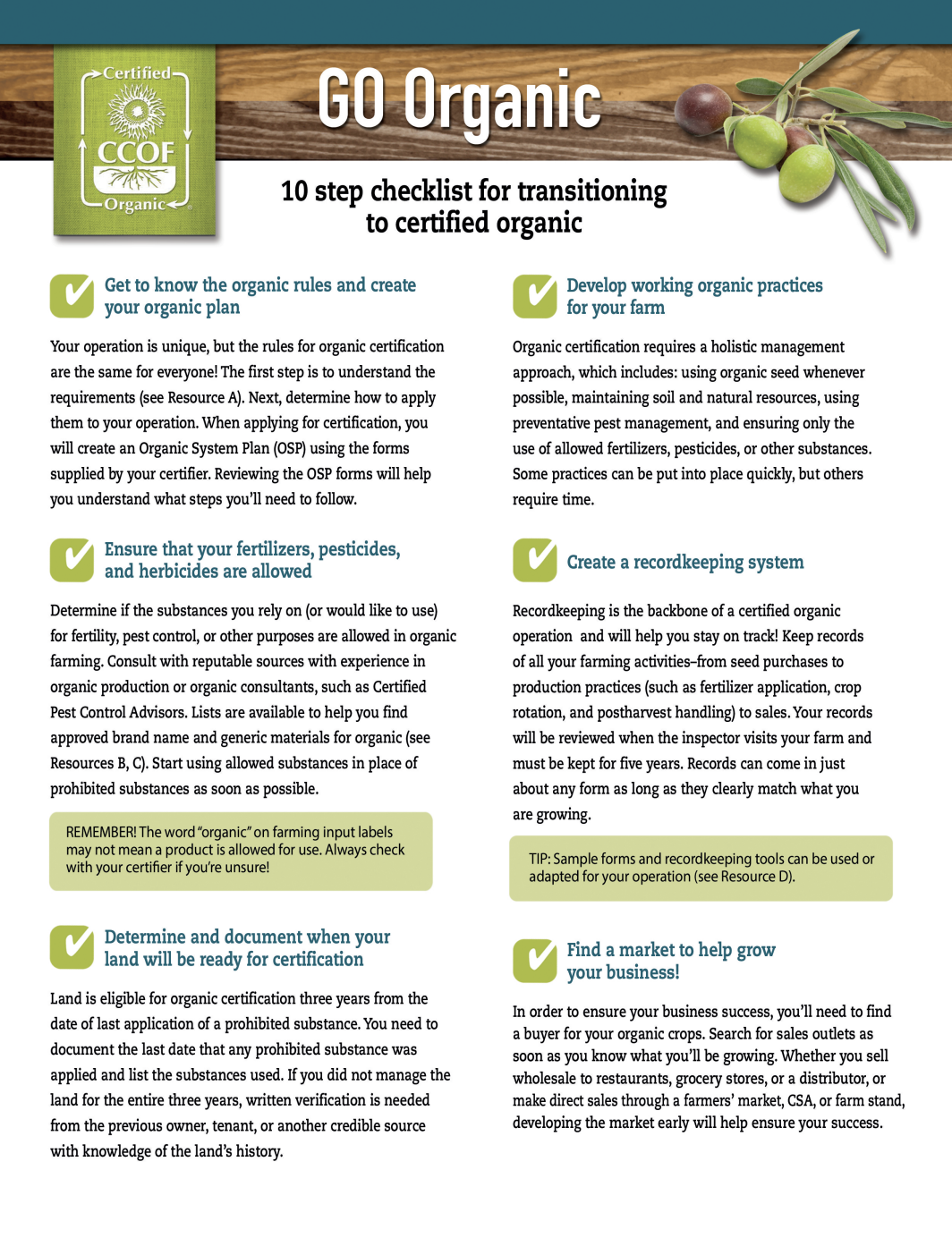
Thinking about Transitioning to Organic? Checklist
Ready to go organic? This 10-step checklist makes transitioning to certified organic simple. Swipe through to discover the essential steps. Whether you're just starting to think about organic or ready to begin the process, this checklist will guide you through! Going organic doesn't have to feel overwhelming when you know what to expec
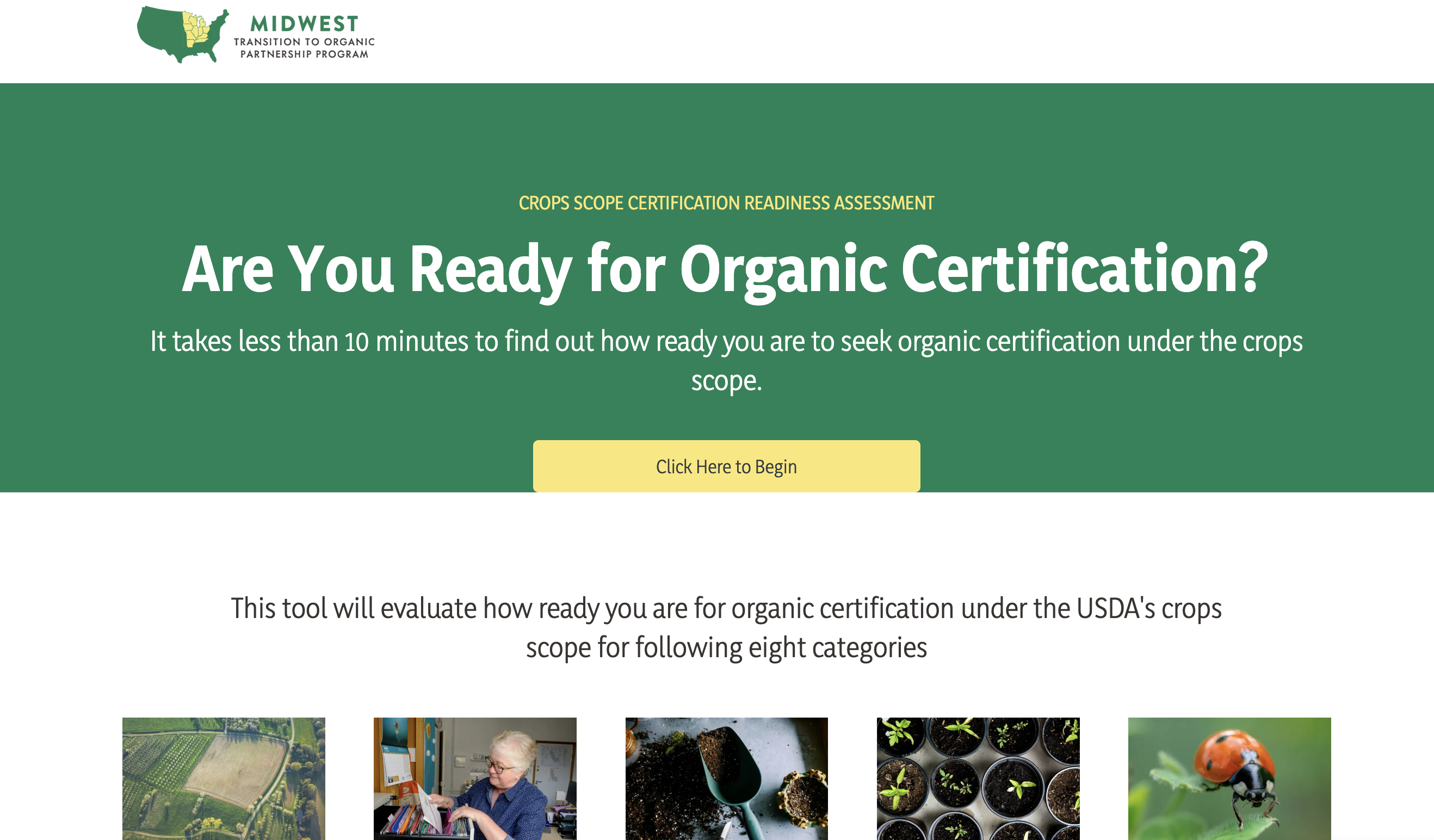
Organic Crops Scope Certification Readiness Assessment
Michigan State University's Organic Farmer Training Program and Washtenaw County Conservation District partnered to develop the Crops Scope Certification Readiness Assessment to help farmers evaluate current farming and recordkeeping practices. The assessment tool also provides an idea of what kinds of changes an operation may need to make in order to become organic compliant. Key areas assessed include:
Land history: Has the land been managed without synthetic or prohibited substances for the required transition period?
System plan: Does the farm have an organic system plan documenting practices for soil management, pest control, fertility, and barriers to contamination?
Recordkeeping: Are records kept on all inputs, practices, and harvests to create an audit trail for certification?
Physical separation: Are systems in place to prevent mixing with non-organic crops or exposure to prohibited substances during harvest, storage, and handling?
Compliance: Are all practices aligned with the National Organic Program’s allowable inputs and prohibited substance list?
.png)
Whole-Farm Revenue Protection (WFRP): Insurance Options for Small-Scale Organic and Transitioning Growers
Whole-Farm Revenue Protection (WFRP) is a federally backed crop insurance policy designed to protect the entire expected revenue of a farm operation, rather than just the yield of a single crop. This makes it especially valuable for organic, specialty, direct-market, and diversified farms with multiple crops and livestock under one policy. WFRP offers a tailored risk management solution for farms that grow a mix of crops and animals, particularly those in organic and specialty markets. It helps ensure financial stability in the face of unpredictable challenges and supports sustainable farming practices.
Key Benefits:
WFRP covers up to 85% of expected revenue for the farm year, with coverage levels adjustable in 5% increments.
It values organic crops at organic market prices, providing fair revenue protection for organic producers.
The policy covers losses due to natural disasters, market fluctuations, pests, and diseases.
Compliance: Are all practices aligned with the National Organic Program’s allowable inputs and prohibited substance list?
Organic Record Keeping
This Organic Agronomy Training Service youtube training features organic farmer and inspector Matthew Fitzgerald alongside program director Mallory Krieger discussing the crucial role of detailed recordkeeping for organic certification. They explain that effective records cover planned and actual farm activities, focusing on completeness, traceability, and auditability to maintain the organic premium and ease inspection stress. The episode offers practical tips on using analog methods and digital tools like Farmflow and clarifies inspection processes such as mass balance audits. Highlighting recordkeeping as a valuable practice rather than a burden, the discussion supports organic farmers in streamlining certification and building trust in their products.
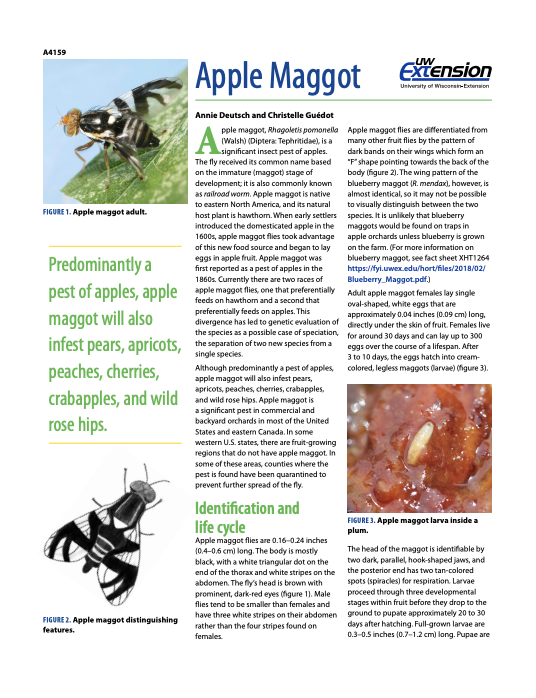
Apple Maggot Management
Probably no other type of pest is as damaging to home fruit production as the apple maggot, a.k.a. railroad worm. It is native to this part of the world and is ubiquitous throughout the state. It occurs during mid to late summer, when many families are taking their summer vacations, and even a brief lack of attention can result in substantial fruit infestation.
Although the apple scab fungus may be more uniformly common throughout the state, and is more of a concern to commercial orchardists, a couple of factors make it less important than apple maggot to home growers.
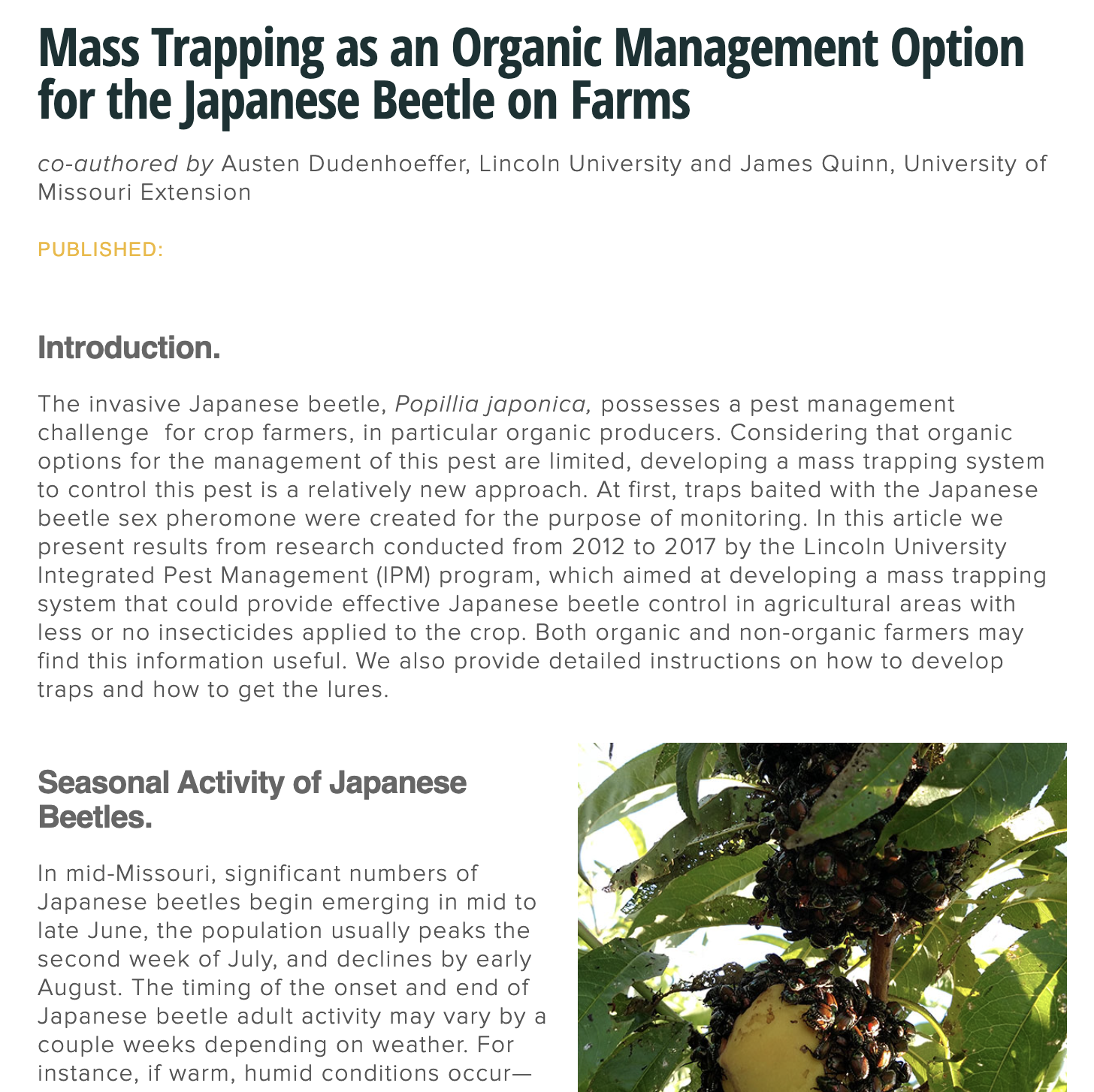
Mass Trapping as an Organic Management Option for the Japanese Beetle on Farms
The Japanese beetle (Popillia japonica) poses a serious challenge for crop producers, especially those using organic methods with limited pest control options. Research by Lincoln University’s IPM program (2012–2017) explored mass trapping as a promising, low-insecticide strategy to reduce beetle populations. Originally developed for monitoring, pheromone-baited traps can now be adapted for control when properly designed and deployed. The study offers guidance on trap construction, lure sourcing, and management practices to prevent beetle aggregations that lead to feeding frenzies. In Missouri, adult beetles typically emerge in mid- to late June, peak in early July, and decline by August, with slight annual variations.
Wisconsin Orchard Update: Fire Blight Management
This update reviews how Wisconsin apple growers can better manage fire blight by understanding the disease cycle and using a mix of copper, antibiotics, biopesticides, and growth regulators at the right times. Copper is emphasized as a preventive, early-season tool, while antibiotics like streptomycin, Kasumin, and oxytetracycline are reserved for high-risk bloom periods and must be carefully timed and rotated to avoid resistance. Growers are encouraged to integrate OMRI-listed biopesticides (such as Blossom Protect and Bacillus-based products) and oxidizers into bloom-time and pre-bloom programs to reduce antibiotic use while still protecting blossoms. For shoot blight, products like Apogee/Kudos and Actigard are highlighted for their ability to harden tissues and induce systemic resistance, with combined programs showing the strongest suppression in vigorous, high-risk orchards.
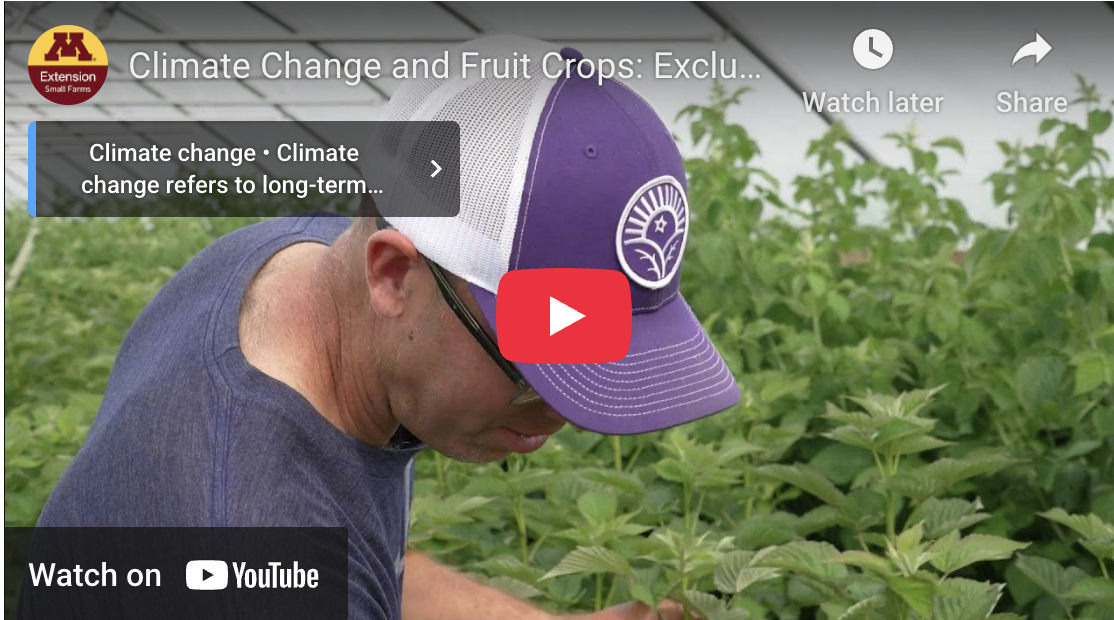
Apple Maggot Management
Hail netting is an increasingly common investment for fruit growers to protect crops from frequent hailstorms, such as those in Minnesota. Overhead and draped netting both reduce hail damage, but draped netting can also significantly limit insect pests because it fully covers the trees. Although installation costs are high, reduced pesticide use and improved fruit quality can lead to economic benefits for growers, making draped hail netting a promising climate-resilience strategy.
Workforce Development Needs Assessment for the Organic Industry
The “Workforce Development Needs Assessment for the Organic Industry” evaluates the current and future workforce challenges facing the U.S. organic sector, especially in inspection and certification roles. Commissioned by the USDA’s Transition to Organic Partnership Program (TOPP), the report identifies workforce shortages due to retirement, training bottlenecks, and lack of diversity, and recommends expanding access to training, increasing mentorship, and improving outreach to attract and support a broader, more capable workforce to sustain industry growth.
USDA Organic Situation Report-2025
This report analyzes current trends in domestic and global organic production, U.S. Department of Agriculture initiatives to remove barriers to transition, imports and exports, price premiums relative to conventional commodities, and value of retail sales.
Key Users:
Organic farmers
Researchers,
Policy makers,
Marketers and
Retail outlets
Organic Retail Toolkit
The USDA Organic Retail Toolkit is a suite of customizable consumer education materials designed for use by retailers to build awareness and trust in the USDA organic label. Developed by the USDA National Organic Program (NOP) in collaboration with organic industry stakeholders, the toolkit addresses consumer confusion about the meaning and value of "organic" by offering clear, unified messaging and visually engaging in-store and online display.
Key Users:
Retailers (grocery stores, supermarkets)
Brands selling organic products
Online marketplaces
Small Organic Farmer Marketing Toolkit
The USDA Organic Retail Toolkit is a suite of customizable consumer education materials designed for use by retailers to build awareness and trust in the USDA organic label. Developed by the USDA National Organic Program (NOP) in collaboration with organic industry stakeholders, the toolkit addresses consumer confusion about the meaning and value of "organic" by offering clear, unified messaging and visually engaging in-store and online display.
Key Users:
Retailers (grocery stores, supermarkets)
Brands selling organic products
Online marketplaces
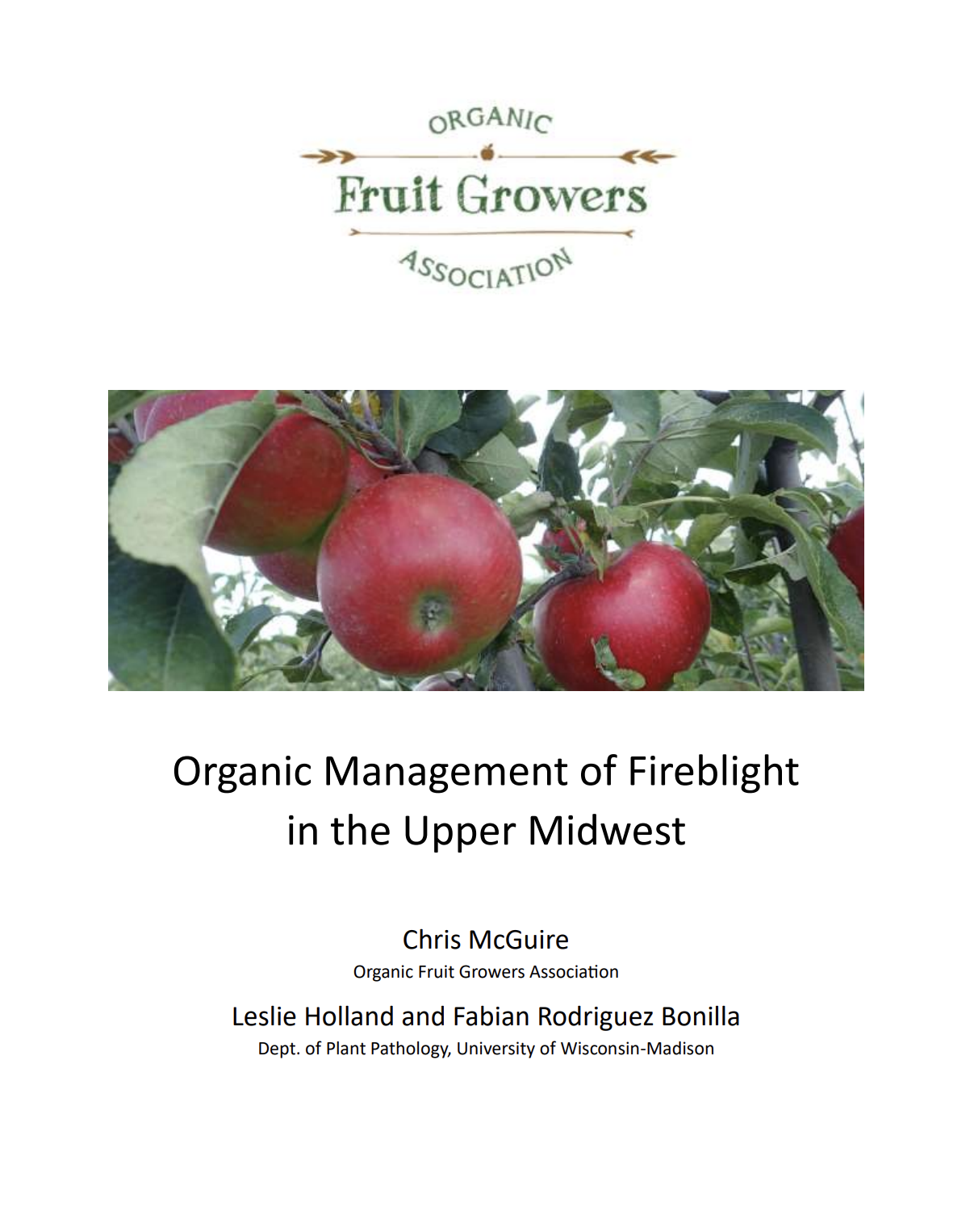
Organic Management of Fire Blight in the Upper Midwest
Fruit farmers are increasingly trying to meet the demand for organic, locally grown apples and pears in the Upper Midwest. Fire blight and other diseases are a major barrier to organic fruit production in our region. To help organic farmers control this disease and to lay the groundwork for future research, OFGA has published a guide to summarize recent scientific research alongside information from in-depth interviews with practicing organic farmers.
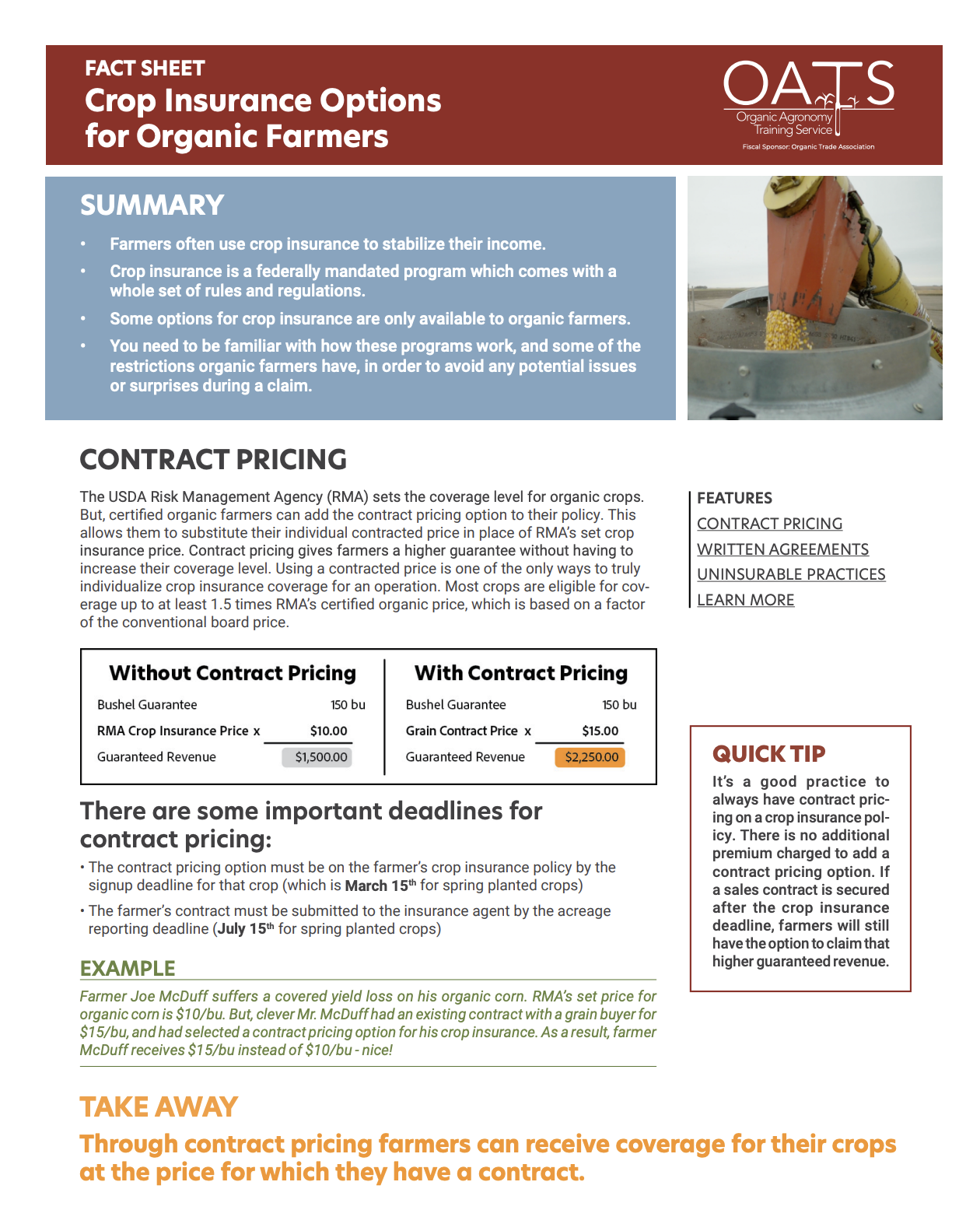
Crop Insurance Options for Organic Farmers: FACT Sheet
Crop Insurance Options for Organic Farmers" (2024), by Megan Vaith and Sam Oschwald Tilton, is a guide designed to help organic farmers navigate and optimize crop insurance through USDA's Risk Management Agency (RMA). Contract Pricing Option: Certified organic farmers can use the contract pricing option to insure their crops for the price specified in their sales contracts, rather than RMA’s default set price. This is particularly useful because organic crop prices are generally higher than conventional, so using a contract price often results in a higher insurance guarantee without needing a higher coverage level. Most eligible organic crops can be insured up to at least 1.5 times the RMA’s organic price election, offering individualized risk protection.
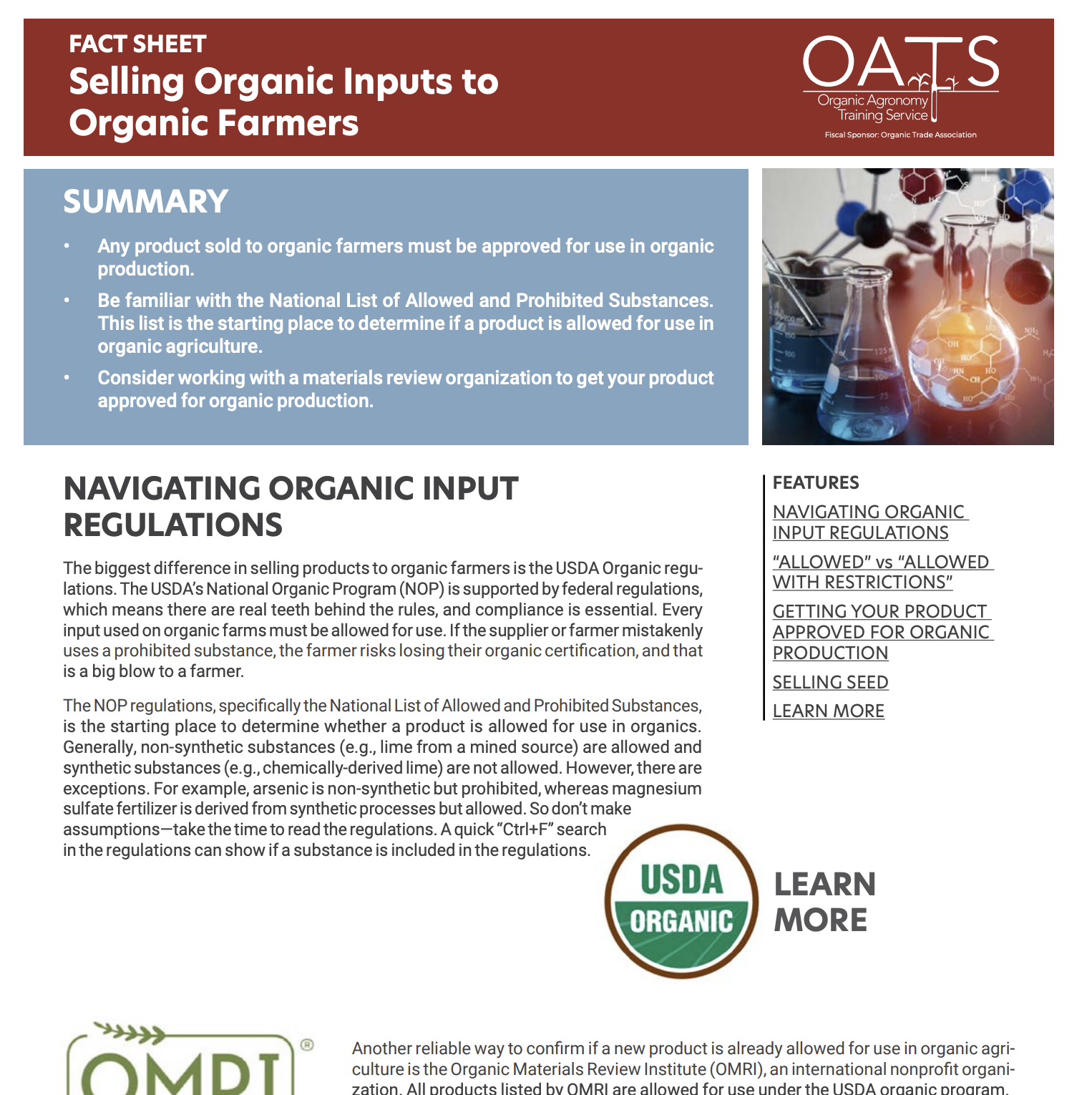
Selling Organic Inputs to Organic Farmers- FACT Sheet
The 2024 fact sheet "Selling Organic Inputs to Organic Farmers" explains that any product sold to certified organic farms must comply with USDA National Organic Program (NOP) regulations. The National List of Allowed and Prohibited Substances is the primary guide, though some exceptions exist—so assumptions about a product’s eligibility can lead to costly mistakes. Sellers are encouraged to verify product status using tools like the Organic Materials Review Institute (OMRI) and understand that terms like “organic” on a label don’t guarantee compliance. To protect organic certifications and build trust, suppliers should ensure their products are approved and clearly communicate usage guidelines to farmers.
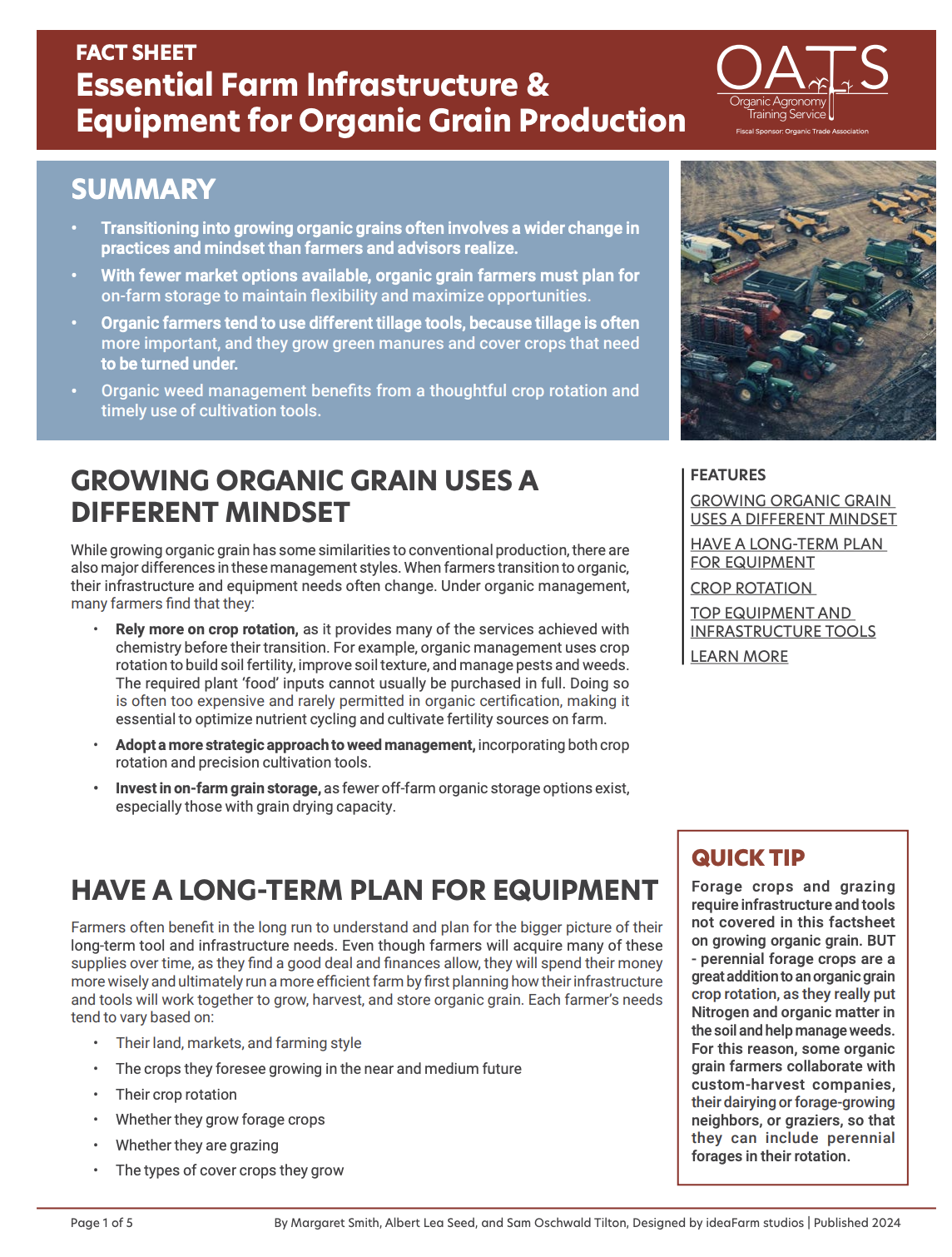
Essential Infrastructure & Equipment for Organic Grain Production
The 2024 fact sheet "Essential Farm Infrastructure & Equipment for Organic Grain Production" outlines how transitioning to organic grain farming requires a different mindset and management approach compared to conventional production. Organic farmers must rely more on crop rotation for soil fertility and pest management, use strategic weed control combining crop rotation and precision cultivation, and often invest in on-farm grain storage due to limited off-farm options. The publication emphasizes the importance of planning ahead for equipment and infrastructure needs—tailoring choices to land, market, crop rotation, and farming style—to run an efficient and resilient organic grain operation.
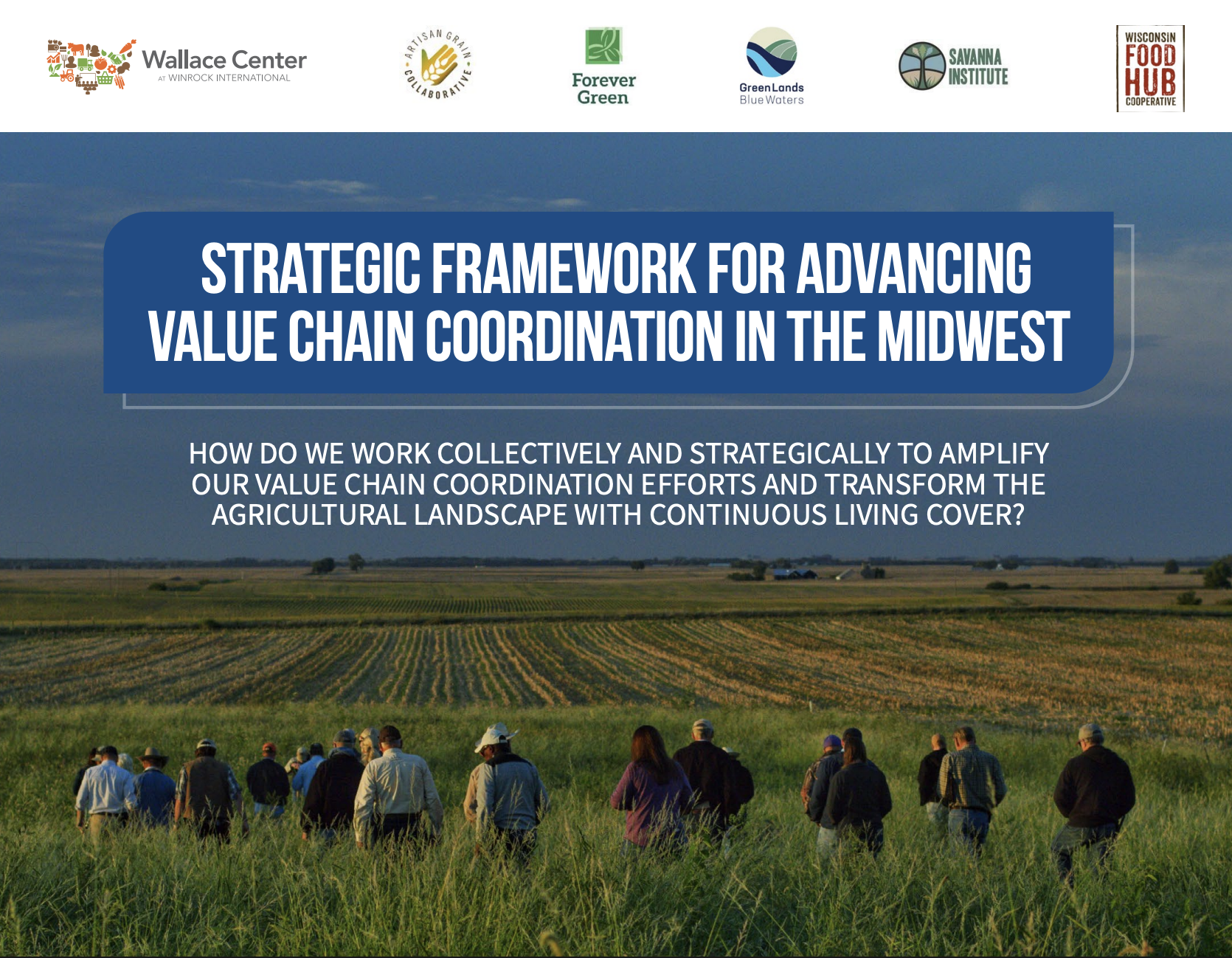
Strategic Framework for Advancing Value Chain Coordination in the Midwest
The Midwest is at a critical juncture in transforming its agricultural landscape toward regenerative practices and continuous living cover (CLC). While interest in sustainable farming is growing,
efforts to build the necessary value chain infrastructure to bring these products to market remain fragmented and underr-esourced. This strategy document outlines a collaborative framework to strengthen Value Chain Coordination (VCC) across the region, enabling farmers, businesses, and communities to thrive in a more equitable and resilient food system.
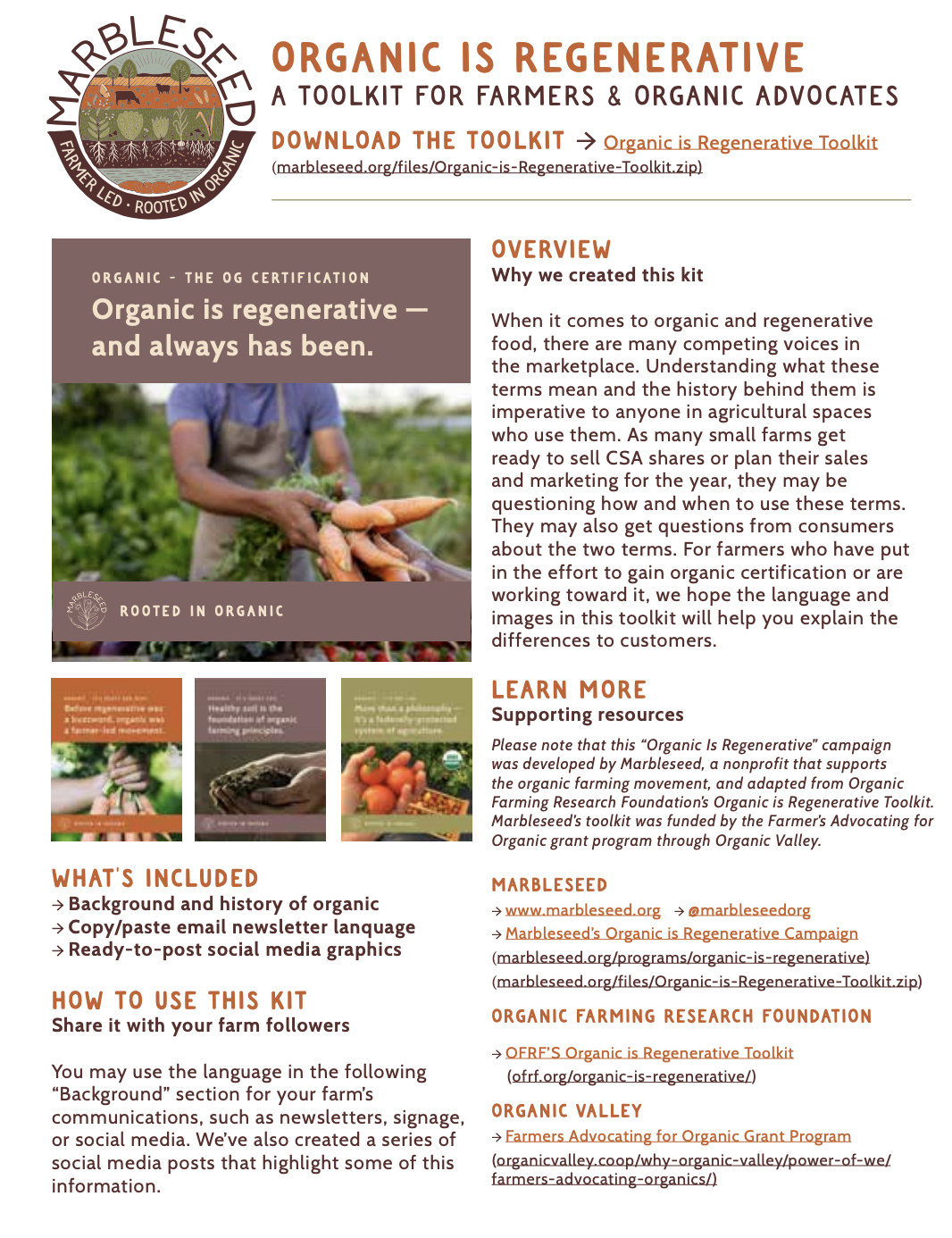
Organic is Regenerative Toolkit
Marbleseed’s Organic is Regenerative initiative promotes the message that organic farming is inherently regenerative, grounded in decades of farmer-led practice and national research from the Organic Farming Research Foundation. The program equips farmers and advocates with communications tools, educational resources, and messaging frameworks to clearly explain how organic systems restore soil health, protect biodiversity, and support climate resilience while remaining economically viable. By aligning organic and regenerative narratives, it helps farmers, organizations, and consumers push back against greenwashing and uplift certified organic as a robust, trusted path to truly regenerative agriculture
.png)
Crop Insurance for Transitioning to Organic Livestock Using the Transitional Production Plan (TPP)
This video from Oregon Tilth explains how to use a Transitional Production Plan (TPP) to access crop insurance while transitioning livestock to organic certification. It walks through key organic livestock requirements section by section, including compliant livestock feed, animal care and production practices, mammalian and non-avian living conditions, pasture practice standards, avian housing, and rules for transport and slaughter. Time-stamped chapters help producers understand what information they must document in their TPP so insurers and certifiers can verify that livestock, feed, pasture, and handling all meet USDA organic standards during the transition periodt.
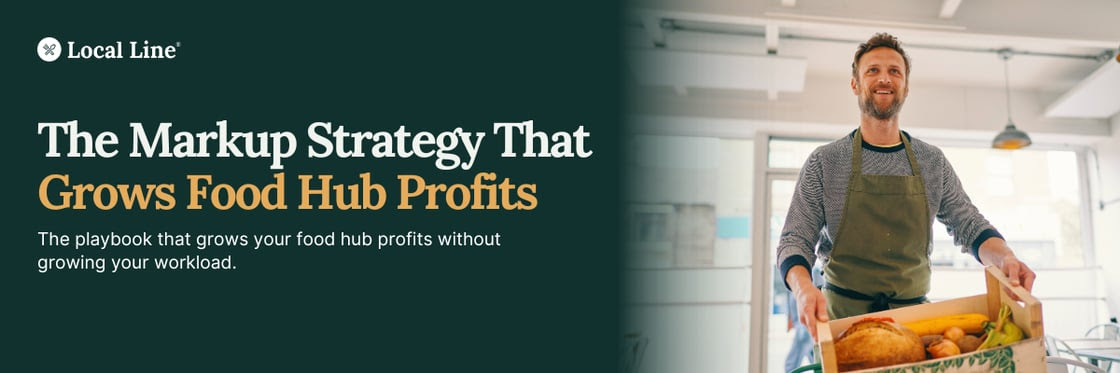
Markup Strategy that Grows Food Hub Profits
This Local Line guide explains how food hubs can increase profitability by using a clear, intentional markup strategy on products from their vendors. It walks managers through how to calculate sustainable markups and fees, align them with operating costs, and communicate transparently with producers so prices remain fair while covering expenses like labor, packing, and delivery. The guide shares benchmark data (such as typical vendor markup percentages), examples of different fee structures, and practical tips to adjust margins by sales channel, product type, and customer segment. Overall, it positions markup planning as a key lever for financial stability, helping food hubs move from break-even to resilient, mission-aligned profitability
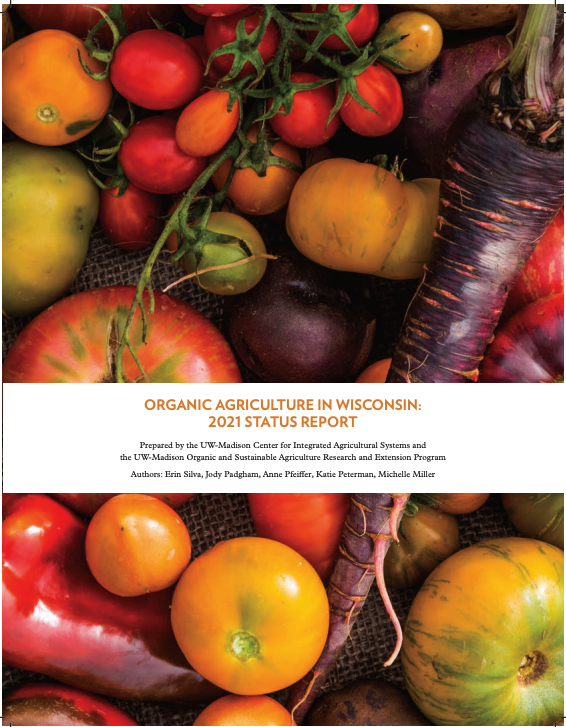
Organic Agriculture in Wisconsin 2021 Status Report
This report is a joint effort of the Wisconsin Department of Agriculture, Trade and Consumer Protection (DATCP),
the University of Wisconsin-Madison (UW) Center for Integrated Agricultural Systems (CIAS), and the UW Organic and Sustainable Agriculture Research and
Extension Program. The findings and policy recommendations in this resource
are those of the authors and do not necessarily represent the views of UW-Madison or the Wisconsin Department of
Agriculture, Trade and Consumer Protection.
Wisconsin Ag News – 2021 Certified Organics
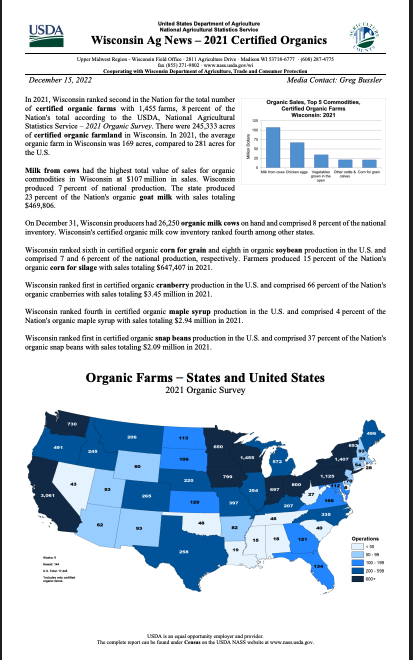
In 2021, Wisconsin ranked second in the Nation for the total number of certified organic farms with 1,455 farms, 8 percent of the Nation's total according to the USDA, National Agricultural Statistics Service – 2021 Organic Survey. There were 245,333 acres
of certified organic farmland in Wisconsin. In 2021, the average organic farm in Wisconsin was 169 acres, compared to 281 acres for
the U.S.
Pesticide Drift: Experiences, Impacts, and Takeaways
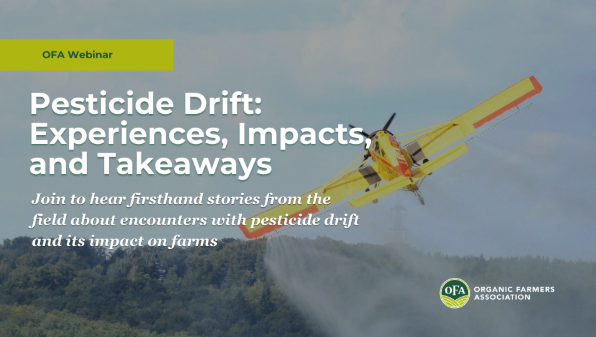
Farmers Angela Jackson of Prairiesun Organic Farm and Jared Lukens-Black of Budding Moon Farm joined OFA to share their firsthand experiences on how pesticide drift has affected their farming operations.
Angela and Jared shared how to identify signs of pesticide drift, the steps they took in response to drift, and valuable lessons learned along the way. Listen as they detail their experiences communicating with neighbors and agencies, and the challenges organic farmers face when drift occurs and what to do about it!
Advancing Regional Organic Markets: A FARMER’S TOOLKIT
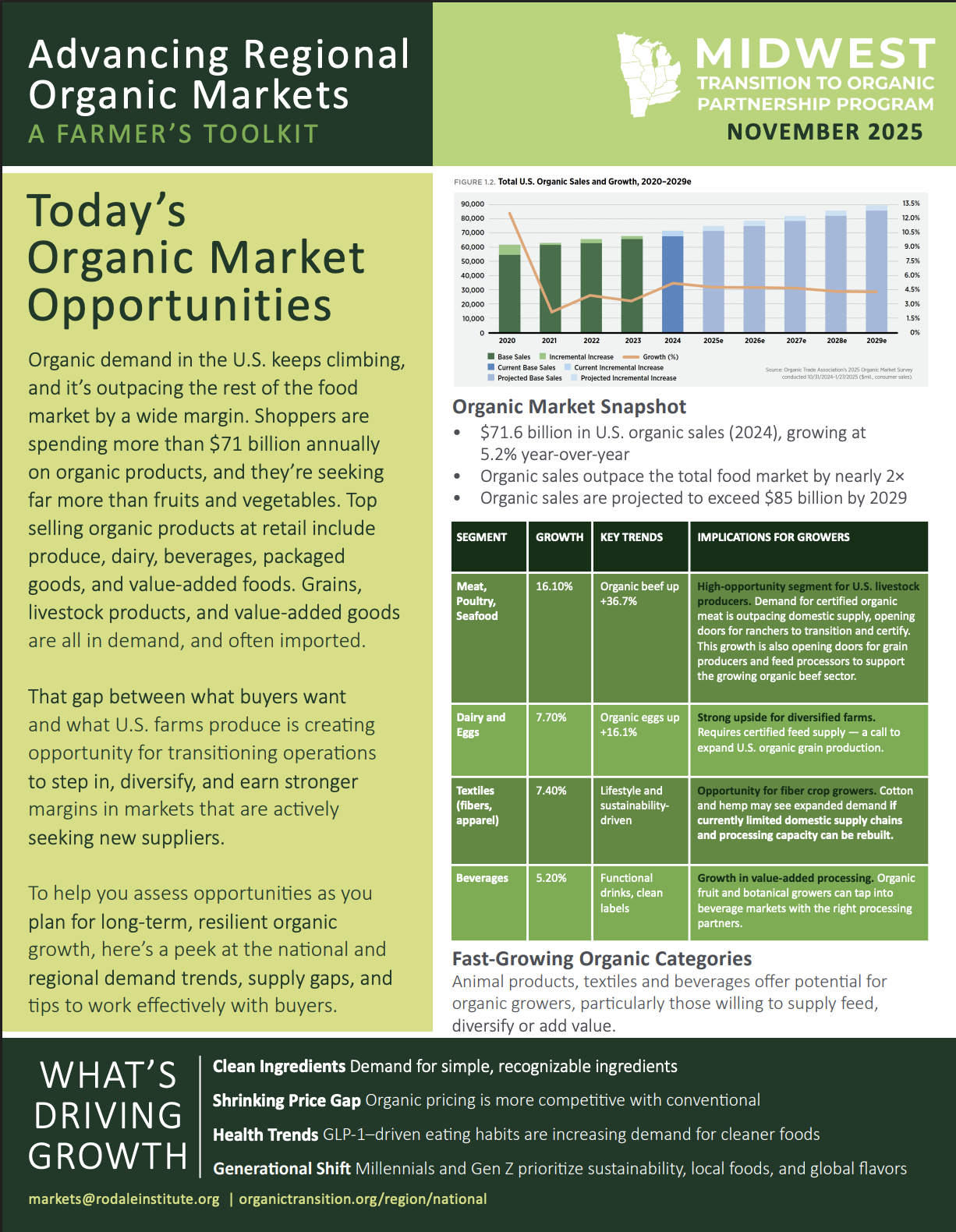
The Mid-West brochure serves as an entry‑level guide helping Midwestern farmers identify and respond to organic market opportunities. It highlights high‑demand organic crops that fit regional conditions while pointing out where local production could replace imported organic products. At the same time, it stresses the importance of building resilient, place‑based, identity‑driven supply chains that retain more economic value in local communities. The brochure offers foundational data, insights, and opportunity analysis, and then directs interested farmers to a more comprehensive toolkit for deeper guidance and concrete next steps
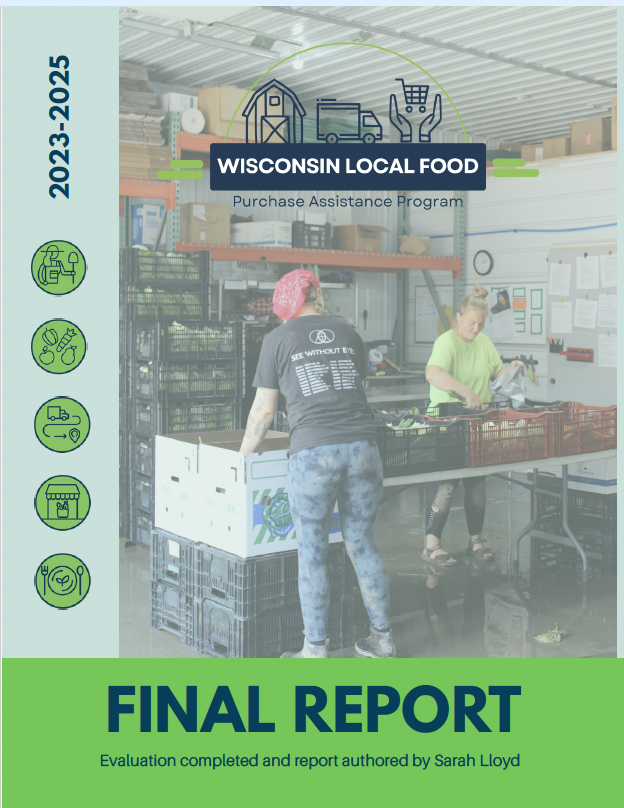
Wisconsin Local Food Public Assistance Final Report
The WI LFPA was able to purchase and distribute over $4.55M of produce, proteins, and value-added product to all counties in the state, engaging with 283 unique farmers and growers. Networks were developed and aggregation and distribution infrastructure were put into action with program resources. Farmers’ wholesale readiness was improved. The quick ramp up of the program meant that the project team needed to be adaptive to meet the opportunities and address challenges in the complex system.
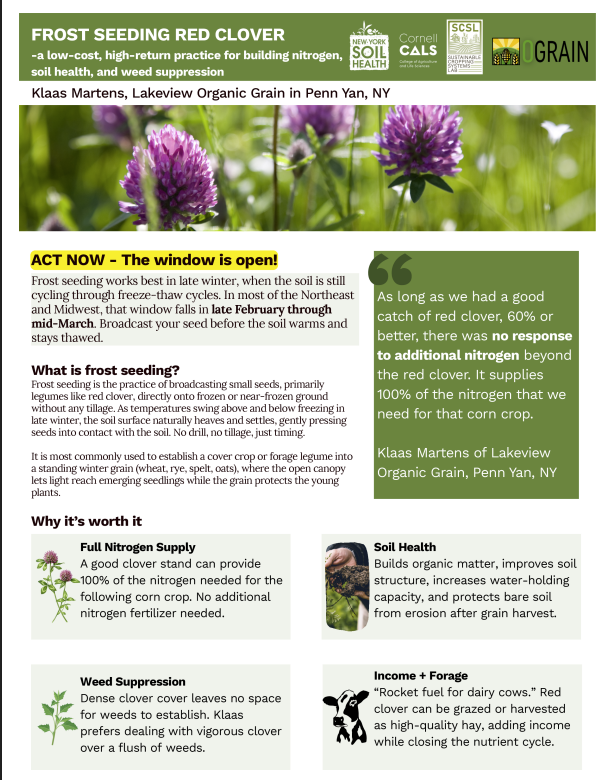
Frost Seeding Red Clover
The document explains frost seeding red clover into winter small grains (wheat, rye, spelt, oats) as a low‑cost, no‑till way to add a nitrogen‑fixing legume, improve soil health, and provide high‑quality forage in organic systems. Using natural freeze–thaw cycles, seed is broadcast on frozen ground in late winter and worked into the soil as it heaves and settles, eliminating the need for drilling
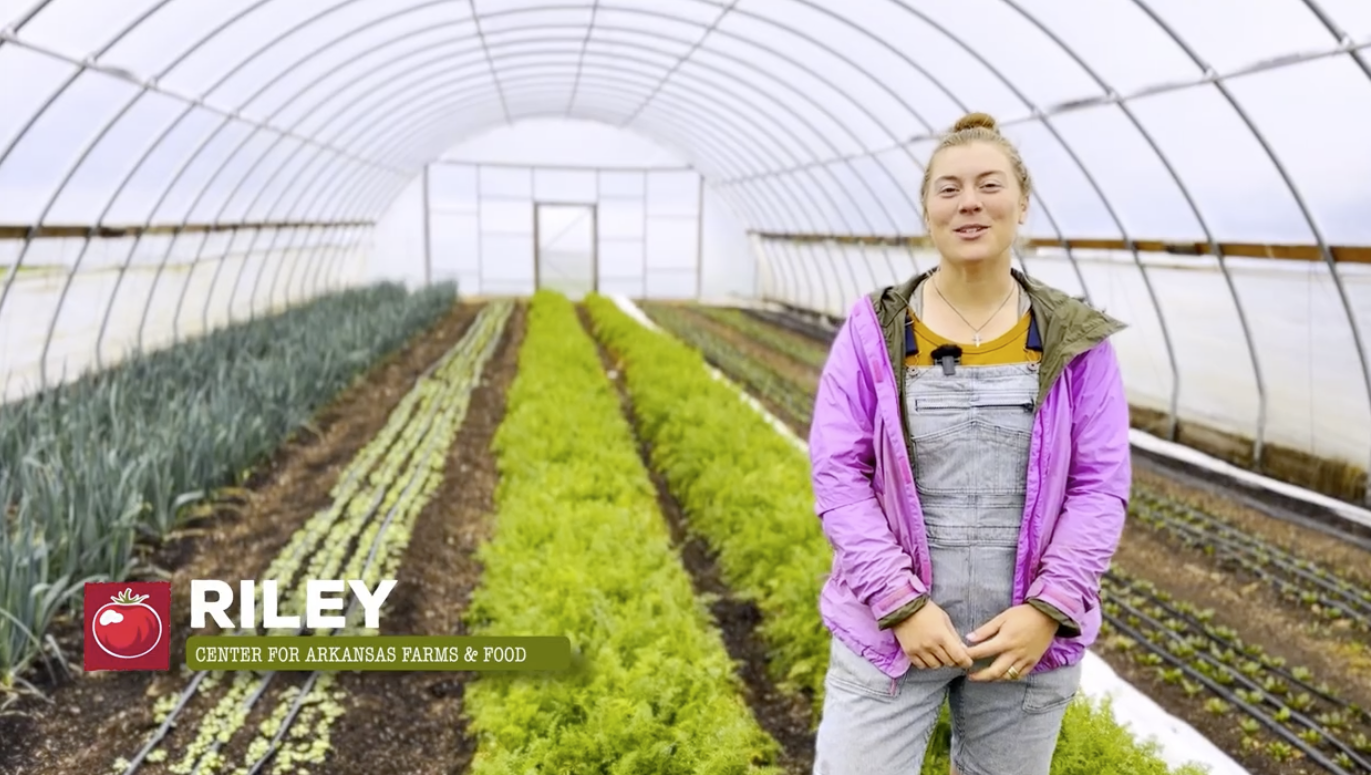
No-Till Bed Prep for Organic Market Farms
Join Riley from the Center for Arkansas Farms and Food (CAFF) at Cobblestone Farms in Fayetteville, Arkansas, as we explore effective organic bed prep strategies. This video focuses on preparing no-till, deep-mulch compost raised beds, covering every step from evaluating your needs to managing soil health. Learn about the importance of soil preparation, techniques for terminating existing crops, relieving soil compaction with a broad fork, amending the bed mix, and applying compost to ensure a fertile, well-structured bed for planting. Enhance your organic farming practices with these expert tips and ensure the health of your garden beds for years to come.
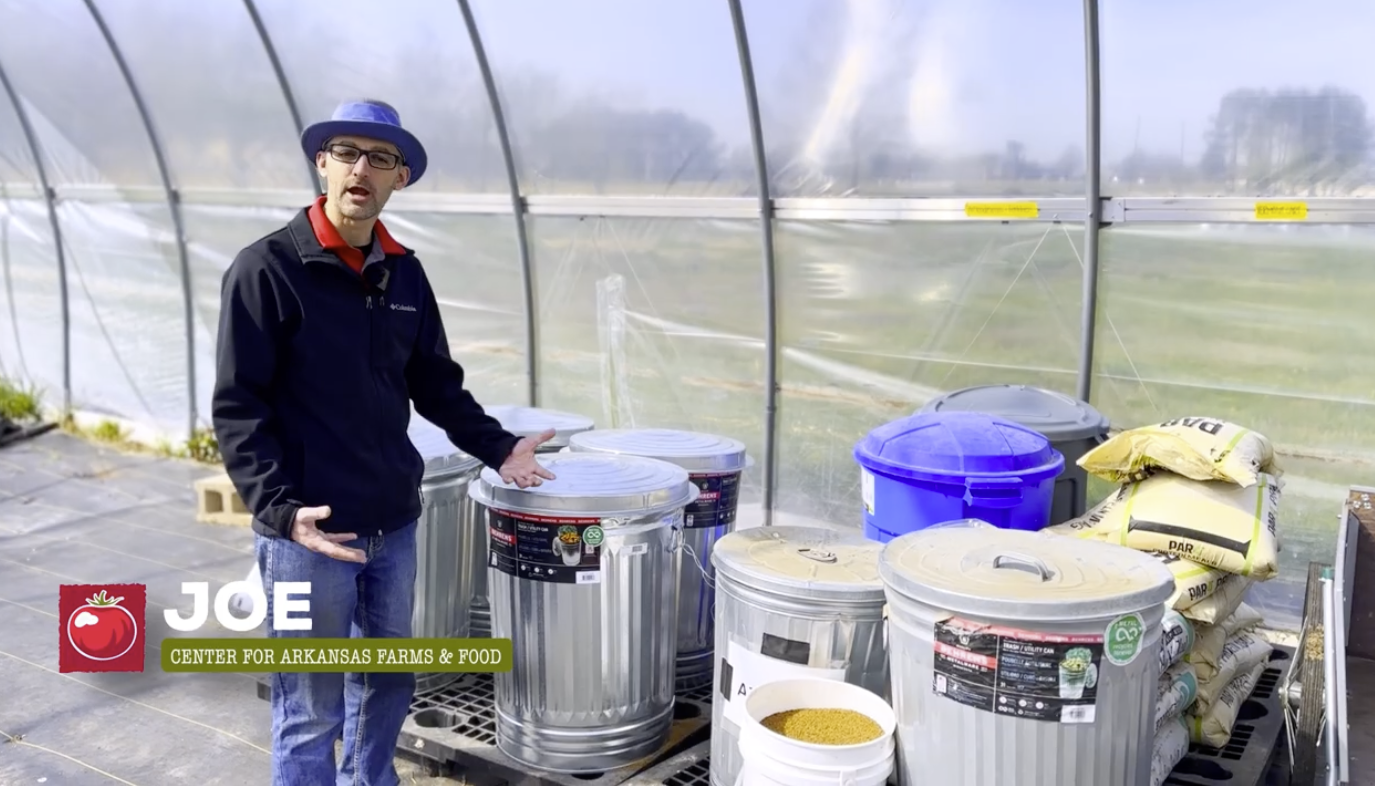
How to Choose the Right Organic Fertilizer
This video delves into the various forms of organic soil amendments, including manure, blood meal, and rock phosphate, and their importance in soil fertility. It explains the crucial components to measure during soil sampling, such as phosphorus, potassium, and soil pH. The video also contrasts the application and effectiveness of organic versus conventional nutrients and discusses the challenges and benefits of different amendment forms like granular and powdered products. Lastly, it offers practical advice on using alfalfa meal and other amendments to achieve balanced soil nutrition.
Cornucopia Organic Egg Scorecard
This short video highlights key moments from The Cornucopia Institute’s recent Organic Egg Scorecard webinar, a supporter benefit that offers direct access to experts and farmers working to protect organic integrity. Director of Policy Kestrel Burcham and organic egg producer Ed McNamara (SOVA Farms, NY) explain what USDA organic standards do and don’t cover, and why Cornucopia’s Organic Egg Scorecard helps shoppers go “beyond organic” by identifying brands that excel in animal welfare, transparency, and authentic organic farming practices.
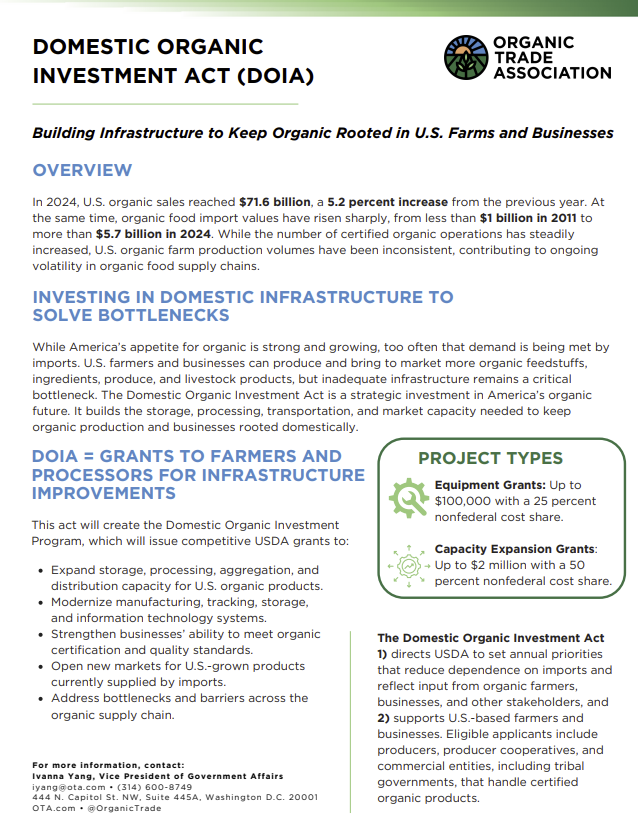
Domestic Organic Investment Act (DOIA)
The Domestic Organic Investment Act (DOIA) would create a new USDA grant program to strengthen U.S.-based organic infrastructure so more of America’s fast‑growing organic demand is met by domestic farms and businesses rather than imports. It targets bottlenecks in storage, processing, aggregation, distribution, tracking, and IT systems, helping organic operations expand capacity, modernize equipment, meet certification and quality standards, and open new markets for products now largely supplied by imports.
Website Optimization
The CSA Innovation Network's CSA Ideas Lab webinar teaches CSA farms how to improve their website's search visibility and convert visitors into customers. It provides actionable tips and resources for making quick, high-impact improvements that help secure CSA sign-ups by demonstrating product value and trustworthiness to potential customers.
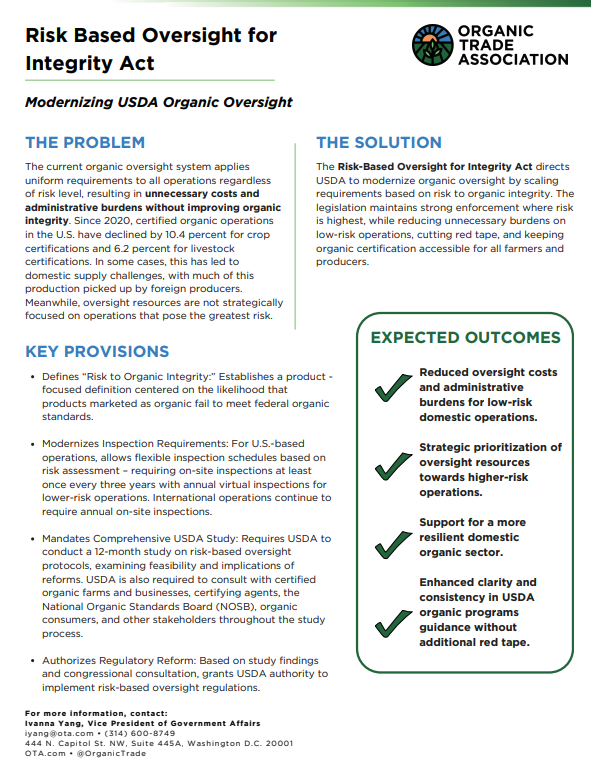
Risk Based Oversight for Integrity Act
The overview explains that the Risk-Based Oversight for Integrity Act would modernize USDA organic oversight by tailoring requirements to the actual risk that products marketed as organic fail to meet federal standards, instead of applying the same level of scrutiny to all operations. It responds to recent declines in U.S. organic certifications and supply challenges by defining “risk to organic integrity,” allowing less frequent in‑person inspections for lower‑risk domestic operations (paired with virtual checks), mandating a 12‑month USDA study on risk-based oversight protocols with broad stakeholder input, and authorizing USDA to implement resulting regulations.
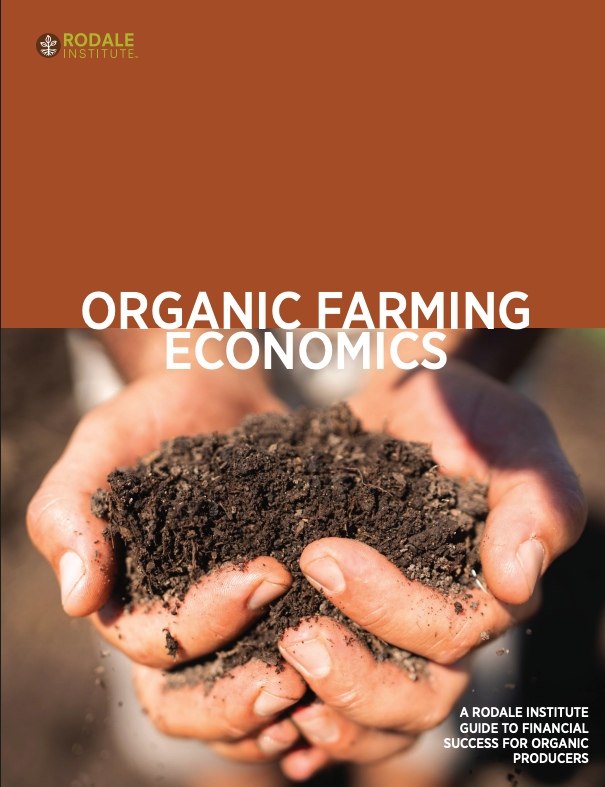
Organic Farming Economics: A Rodale Institute Guide to Financial Success for Organic Producers
This publication presents Rodale Institute’s “Economics of Organic” report, which argues that organic farming is not only agronomically sound but also financially advantageous for many producers. Drawing on farm-level financial data and case studies across crops and regions, it shows that diversified certified organic operations can achieve equal or better net profits than comparable conventional farms, even when organic yields are slightly lower, due to price premiums and lower dependence on volatile synthetic input costs. The guide walks farmers through transition economics, cost of production, revenue projections, and available funding or support programs, positioning organic transition as a strategic path to long-term business resilience rather than a niche or purely values-based choice.
2026 CSA Farm Guide
The 2026 CSA Farm Guide is here! FairShare CSA Coalition has just released this year’s edition, your go‑to resource for finding a local CSA farm and learning how Community Supported Agriculture works. Madison-area readers can pick up a print copy in the latest issue of Isthmus, while anyone can explore the virtual guide online to compare farm offerings, share types, pickup sites, and more—all designed to help households connect directly with nearby organic and sustainable growers.
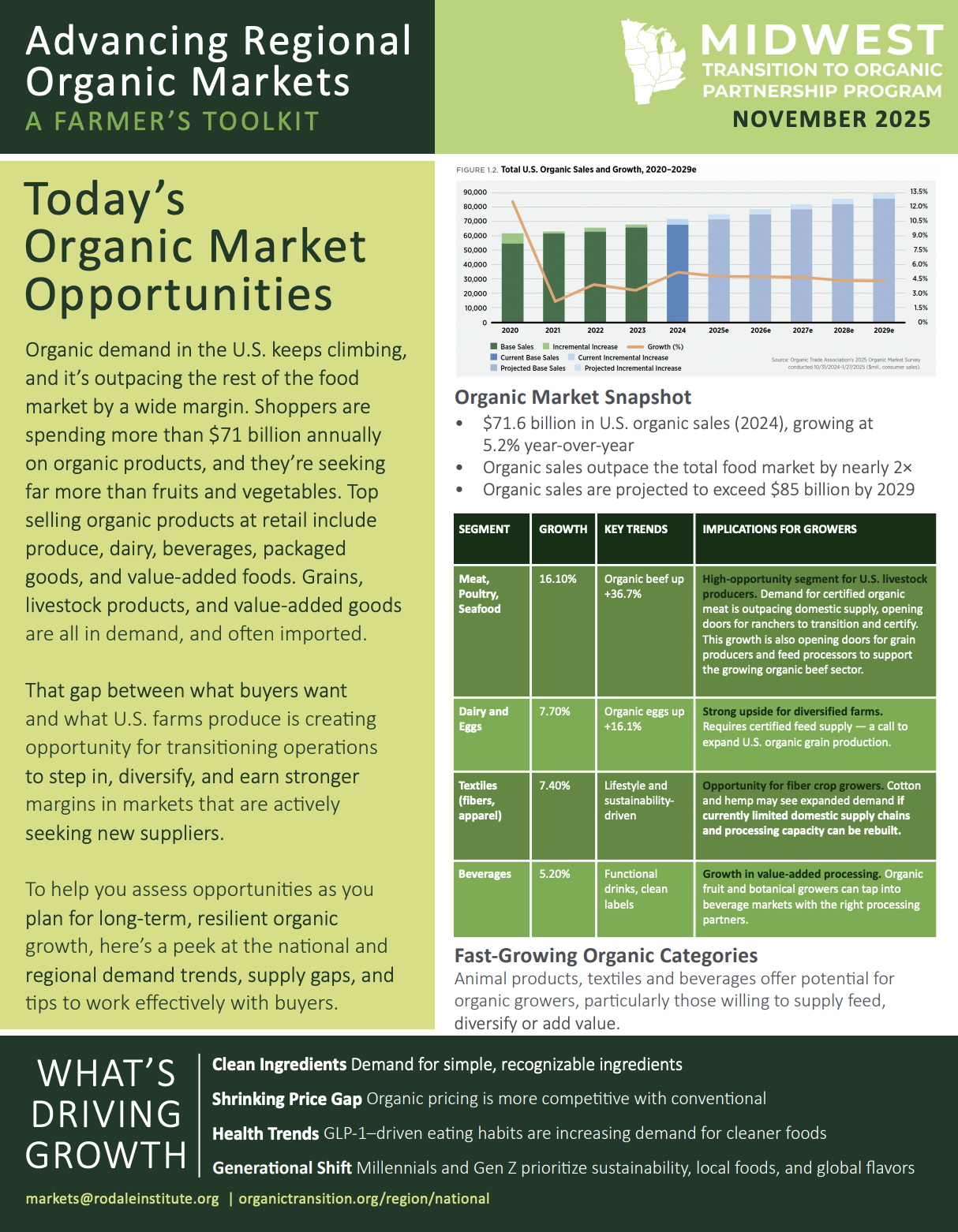
Advancing Regional Organic Markers: A Farmers Toolkit
This four page guide aims to support Mid-West farmers in unlocking more regional production of high-demand organic crops, reduced dependence on imports, and more resilient U.S. supply chains rooted in local identity through data, insights, and opportunity analysis.
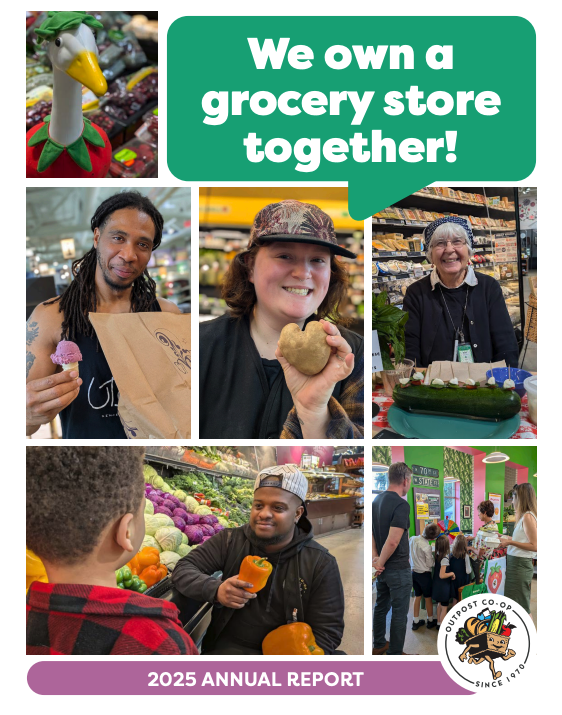
Outpost Co-Op 2025 Annual Report
Outpost’s 2025 Annual Report highlights a year of stabilization, growth, and impact for the 23,400‑owner cooperative, with sales topping $52.3 million (about $3 million above 2024) and a strong balance sheet marked by low debt, increased owner equity, and a clean independent audit. The report emphasizes renewed in‑store energy and community engagement through events like Buy A Slice, Community Creatives, Outpost Celebrates, and We Love Outpost Day, plus record giving—nearly $177,000 in shopper donations—for local hunger relief, health, youth leadership, and disaster recovery efforts.
Obtaining an Unique Entity ID (UEI) for Government Grant and Contract Opportunities
On March 4th, 2026, the Southwest Regional Food Business Center hosted a webinar focused on “Obtaining an Unique Entity ID for Government Grant and Contract Opportunities.” The webinar featured Center partners as speakers, from the University of California, Santa Cruz Center for Agroecology and University of Nevada, Reno Extension.
Speakers presented an in-depth overview, including the basics of a UEI, a step-by-step process for UEI registration and renewal, and guidance through best practices on maintaining a UEI and SAM.gov profile.
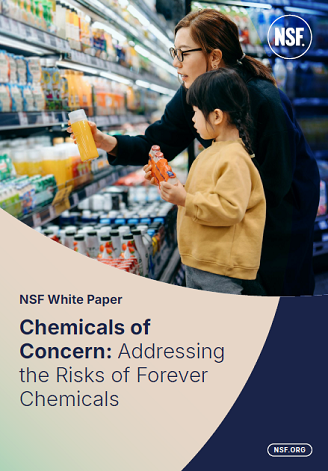
Forever Chemicals, Real Risks: Understanding the Growing Impact of PFAS
NSF’s new white paper, “Forever Chemicals, Real Risks: Understanding the Growing Impact of PFAS,” offers a comprehensive examination of the science, regulatory landscape, and implications for food safety and brand trust..
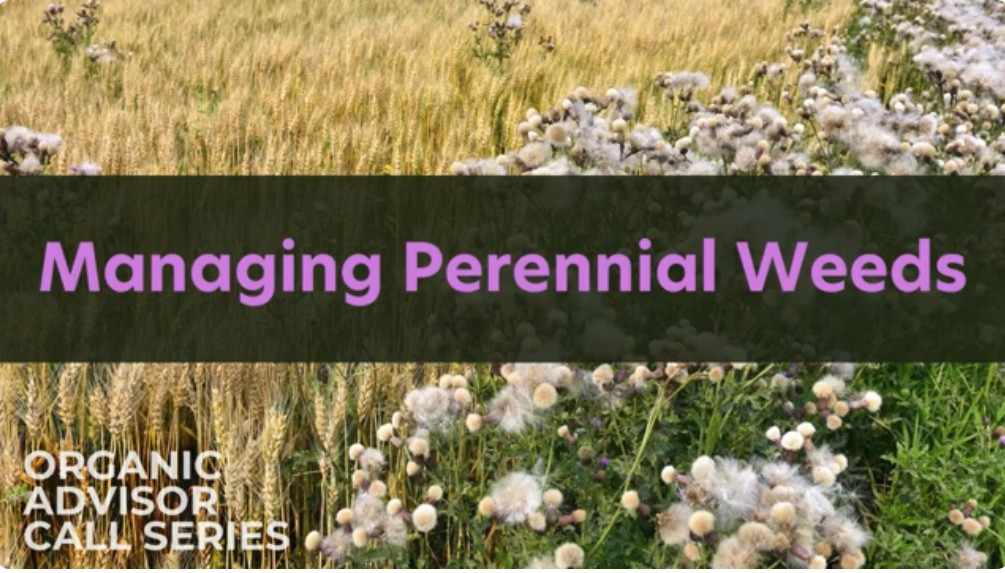
Managing Perennial Weeds in Organic Grain Rotations
In this call, Dr. Pat Carr, cropping systems professor at the Montana State Agricultural Research Center, and Will Glazik, organic farmer and crop advisor in Paxton, Illinois, dig into why creeping perennials like canada thistle and field bindweed play by different rules in organic systems. They cover what the research shows about suppression strategies and what realistic management, not eradication, looks like on a working organic grain farm.
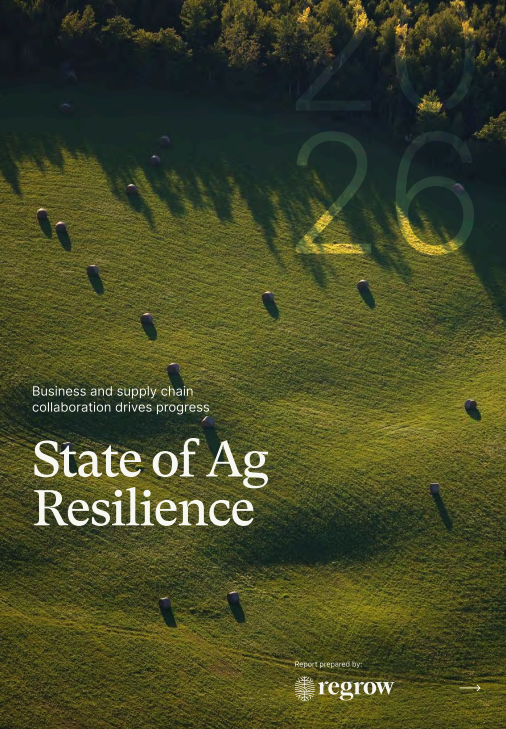
The State of Agricultural Resilience
The 2026 State of Agriculture Resilience report (by Regrow Ag) finds that climate risk is rapidly becoming a core driver of supply-chain decisions in food and agriculture companies. Around 60% of surveyed leaders already use climate risk assessments to guide sourcing, procurement, or regenerative agriculture investments, yet roughly 40% still are not doing so, leaving significant resilience opportunities untapped. The report emphasizes that building agricultural resilience now hinges on fit-for-purpose data systems, robust climate and soil analytics, and partnerships that can scale regenerative practices while aligning with evolving ESG and disclosure frameworks.
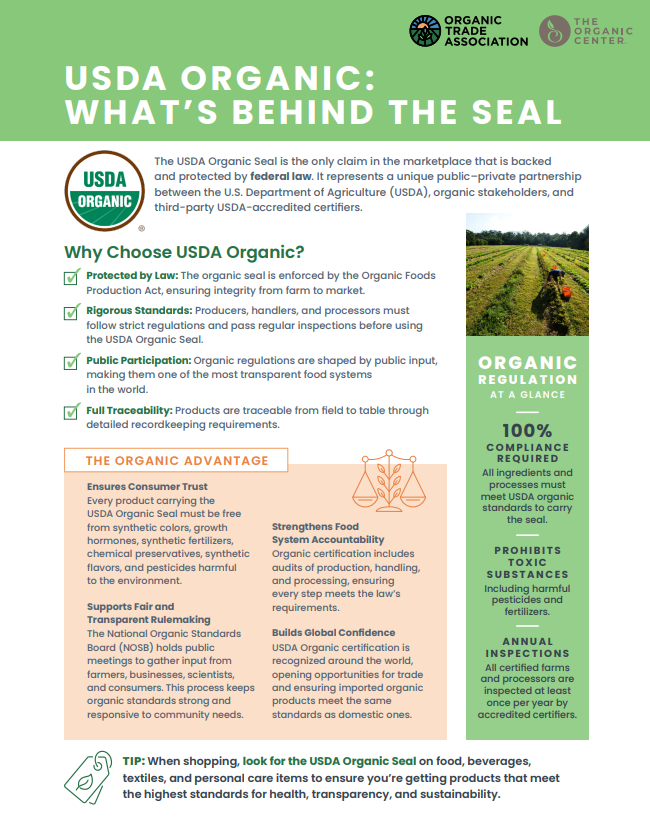
USDA Organic: What's Behind the Seal
The Organic Center’s “USDA Organic Regulatory Tip Sheet” is a concise, consumer‑ and advocate‑oriented overview of what the USDA Organic seal actually means on the ground, translated into everyday language rather than dense regulation text. It explains how the USDA National Organic Program (NOP) sets and enforces rules that require certified organic producers to avoid synthetic pesticides and fertilizers, genetic engineering, irradiation, and sewage sludge, while using practices that protect soil health, water quality, and biodiversity.
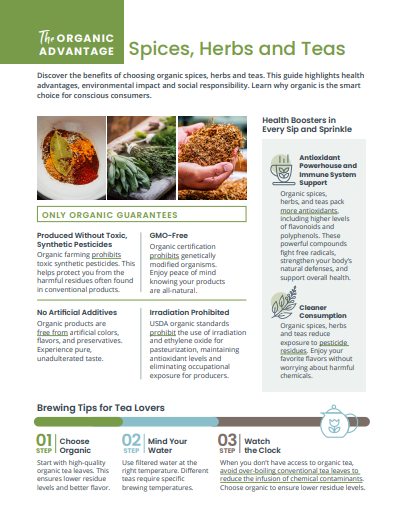
The Benefits of Organic Spices, Herbs, and Teas
The Organic Center’s tip sheet on organic spices, herbs, and teas explains how choosing organic options can reduce exposure to pesticide residues, protect environmental health, and ensure greater product purity, all in a concise, consumer-friendly guide available in both English and Spanish.
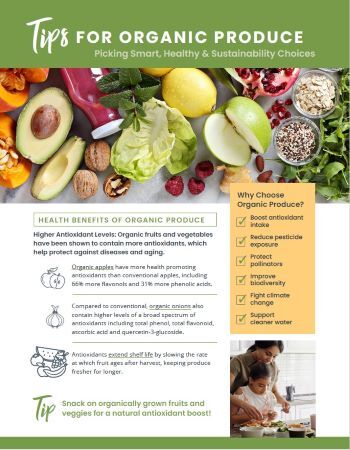
The Benefits of Organic Produce
The Organic Center’s “Benefits of Organic Produce” tip sheet gives consumers a quick overview of why choosing organic fruits and vegetables matters, highlighting reduced pesticide exposure, environmental advantages, and product purity in a short, easy-to-use resource that is also available in Spanish.
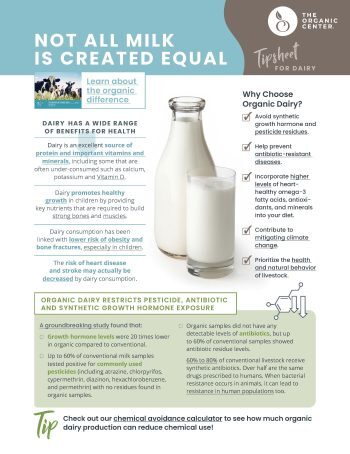
The Benefits of Organic Dairy Tip Sheet
The Organic Center’s “Benefits of Organic Dairy” tip sheet briefly explains how organic milk and other dairy products can support health, reduce environmental impacts, and offer higher purity standards, presenting these points in a concise, consumer-oriented guide that is also available in Spanish.
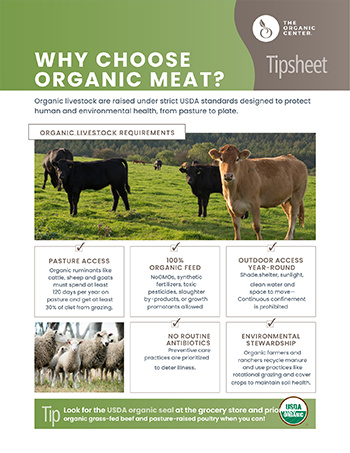
The Benefits of Organic Meat Tip Sheet
The Organic Center’s “Benefits of Organic Meat” tip sheet gives consumers a concise overview of why choosing organic meat matters. It explains that organic livestock are raised with higher animal welfare standards, fed 100% organic feed, and not given antibiotics, synthetic growth hormones, or GMOs, which reduces chemical and drug residues in meat and protects the environment.
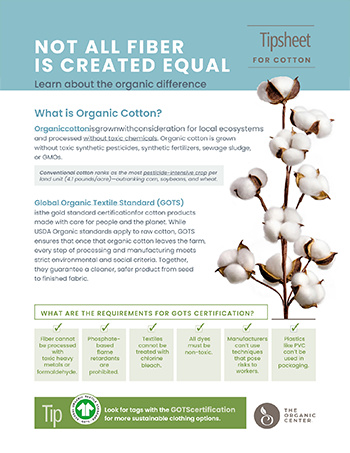
The Benefits of Organic Cotton Tip Sheet
This explains the benefits of Global Organic Textile Standard (GOTS)–certified organic cotton. It highlights that GOTS sets strict environmental and social standards, tight chemical restrictions, and processing safeguards, positioning it as the “gold standard” for sustainable textiles and assuring cleaner fibers, safer production, and trustworthy products from seed through finished fabric. The same message is provided in Spanish, and the guide is available to download in Spanish as well
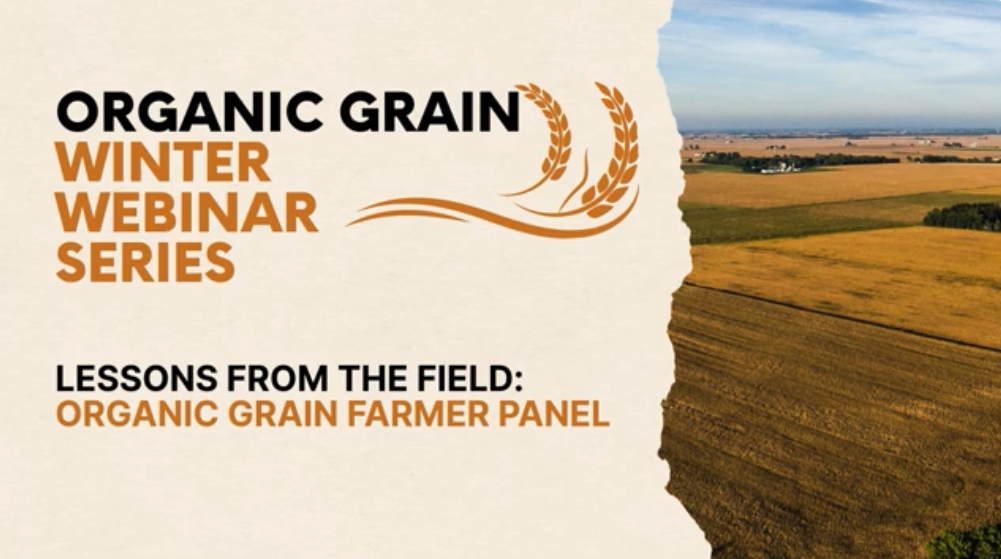
Lessons From the Field - Organic Grain Webinar Series
Hear directly from organic grain farmers navigating the realities of transitioning, managing, and marketing their crops. Our farmer panel shares what’s worked, what hasn’t, and what they’ve learned along the way. This session was designed to be honest, practical, and useful no matter where you are on your organic journey.
A Comprehensive Approach to Land-Based Emissions and Removals
The Land Sector and Removals Standard takes a holistic view of a company's land-based impacts, covering emissions from land use change, land management, and biogenic products, as well as carbon removals from natural and technological processes. This comprehensive accounting aims to provide companies with a complete picture of their land-related greenhouse gas footprint. Notably, the standard excludes forestry and non-productive lands, as the GHG Protocol was unable to reach consensus on how to properly account for these areas. Companies will need to use their own methodologies for forestry-related emissions, such as from packaging materials, and be prepared to pivot when further guidance is released.
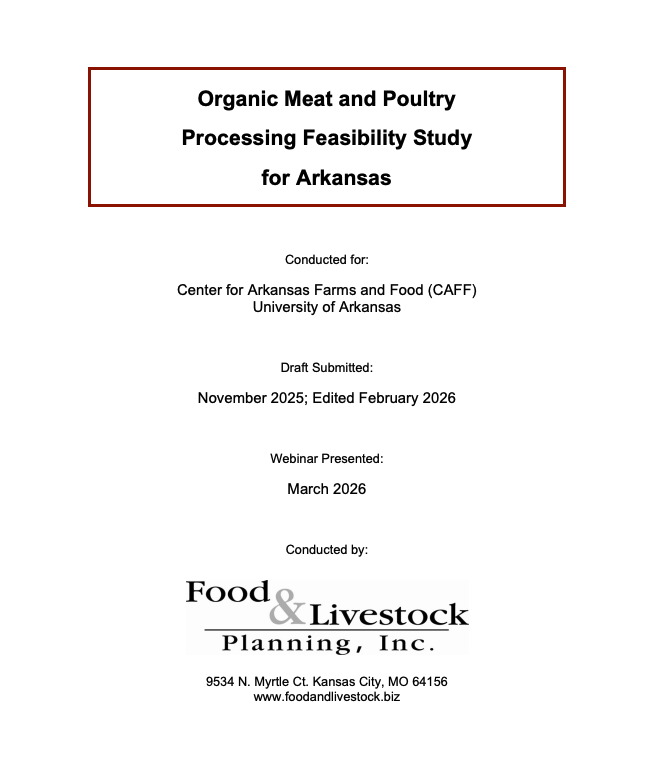
Organic Meat and Poultry Processing Feasibility Study for Arkansas
This comprehensive study, conducted by Food and Livestock Planning, Inc. for the Center for Arkansas Farms and Food (CAFF) at the University of Arkansas, examines the potential for developing organic meat processing capabilities in Arkansas. The study was drafted in November 2025, edited February 2026, and presented via webinar in March 2026.
Organic Livestock and Poultry Processing Feasibility
The webinar explores the practical roadblocks to scaling organic poultry and livestock—from limited processing capacity and organic feed access to market, certification, and financing hurdles—while highlighting strong consumer demand and growth potential in Arkansas and similar regions. It features NCAT Agriculture Specialist Margo Hale in conversation with Keith DeHaan and Matthew Gibson of Food & Livestock Planning, Inc., and is supported by USDA’s Transition to Organic Partnership Program (TOPP), which aims to help more conventional producers successfully transition into certified organic systems and connect with technical assistance through ATTRA.
The Organic Vegetable Growers Virtual Toolkit for Pest & Disease Management
The Organic Vegetable Growers Virtual Toolkit for Pest & Disease Management is a UW–Madison Extension resource hub that gives vegetable growers research-based, Wisconsin-focused tools to manage insects, diseases, and weeds using integrated pest management (IPM) principles. It sits within the broader Fruit and Vegetable Production resources, alongside materials on resistance management, irrigation and water quality, and market strategies, and connects growers to related programs like UW Vegetable Pathology, Vegetable Entomology, and the Specialty Crops Innovation and Integrated Pest and Crop Management program.
Is Regenerative Organic? Is Organic Regenerative?
This video invites people to explore whether “regenerative” and “organic” really mean the same thing, or whether they are being used in conflicting ways. It outlines a history where chemical companies have tried to discredit organic while simultaneously embracing “regenerative,” and raises concerns that USDA “climate smart” funding may end up supporting input‑intensive, herbicide‑ and fertilizer‑dependent no‑till systems under a regenerative label, creating confusion and potentially compromising both terms.
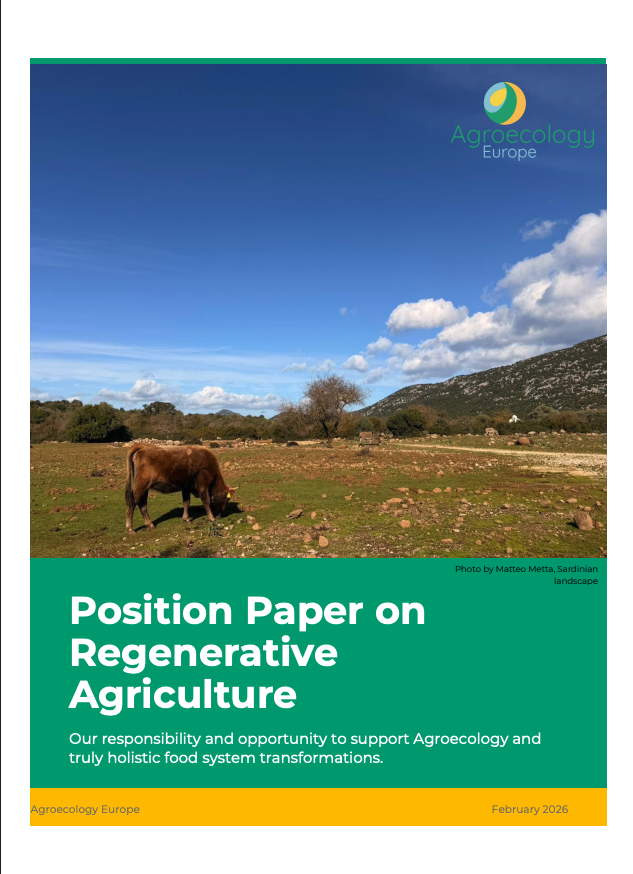
Position Paper on Regenerative Agriculture
Agroecology Europe’s 2026 position paper warns that “regenerative agriculture” is being rapidly taken up in EU and international policy debates in ways that risk corporate capture, greenwashing, and “greenhushing.” The paper clarifies where regenerative agriculture overlaps with agroecology and organic (soil health, biodiversity, reduced inputs) but argues that vague, non-binding regenerative claims can be used by agribusiness and financial actors to preserve input-intensive models while appearing climate-friendly.
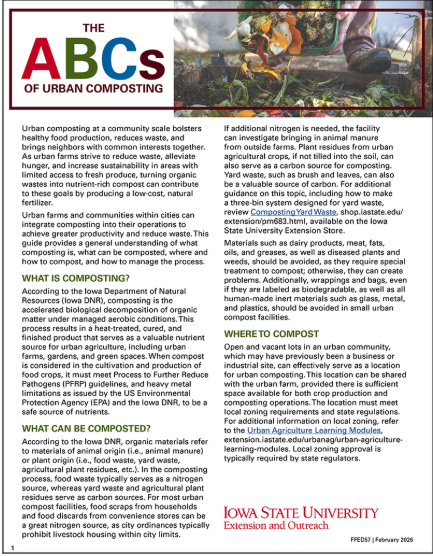
Urban Composting
“The ABCs of Urban Composting” is a free, 5‑page Iowa State University Extension guide that explains how to do community‑scale composting in cities, emphasizing its benefits for healthy food production, waste reduction, and neighborhood connection. It covers what composting is, what materials can be composted, where and how to set up composting systems, and how to manage the process effective.
Market Gardening: A Start-up Guide
This ATTRA/NCAT publication is a practical start-up guide for people wanting to turn small- to mid-scale vegetable, fruit, or flower production into a profitable market garden business. It walks readers through business planning (using the classic “What, Why, Who, When, Where, How” questions), choosing and diversifying markets (farmers markets, CSAs, restaurants, schools, food hubs), selecting equipment and infrastructure, managing labor, and addressing food safety, insurance, and organic certification. The updated 2026 edition adds more emphasis on financial planning, risk management, and digital tools, and includes grower profiles, sample budgets, and links to related ATTRA resources so beginners can build a realistic, step-by-step plan for launching or scaling a market garden.
Origin of Livestock (OOL) Final Rule-Public Webinar
USDA’s Origin of Livestock (OOL) final rule for organic dairy establishes a uniform national standard that allows each new or converting dairy operation only a single, one-time transition of nonorganic animals into organic production, after which all animals brought in must have been under continuous organic management from the last third of gestation. This closes the loophole that allowed some certified operations to repeatedly introduce transitioned animals, creating unfair cost and market advantages, and responds to long-standing concerns from producers, certifiers, and watchdogs about inconsistent interpretation of the rules. Developed through multiple rounds of public comment and informed by National Organic Standards Board recommendations and an Inspector General audit, the rule is broadly supported and is expected to improve fairness, consistency, and consumer trust in the organic dairy sector while imposing relatively modest compliance costs on operations that previously relied on continuous transition. All certified organic dairy operations were required to comply by April 5, 2023, and certifiers must update their oversight, Organic System Plans, and inspection procedures accordingly.
National Organic Program; Origin of Livestock
“National Organic Program; Origin of Livestock” is a federal rule that clarifies how and when conventional animals can be transitioned into organic dairy herds.
At its core, the rule says a dairy operation may transition a given herd from conventional to organic only once, over a one‑year period, using clear, consistent standards. After that one‑time transition, nearly all new animals brought into the organic herd must already be managed organically from the last third of gestation—no repeated or rolling transitions of conventional animals. The rule is meant to stop “loophole” practices where some producers continually brought in conventional replacement animals, thereby undercutting farms that raised their replacements organically from birth.
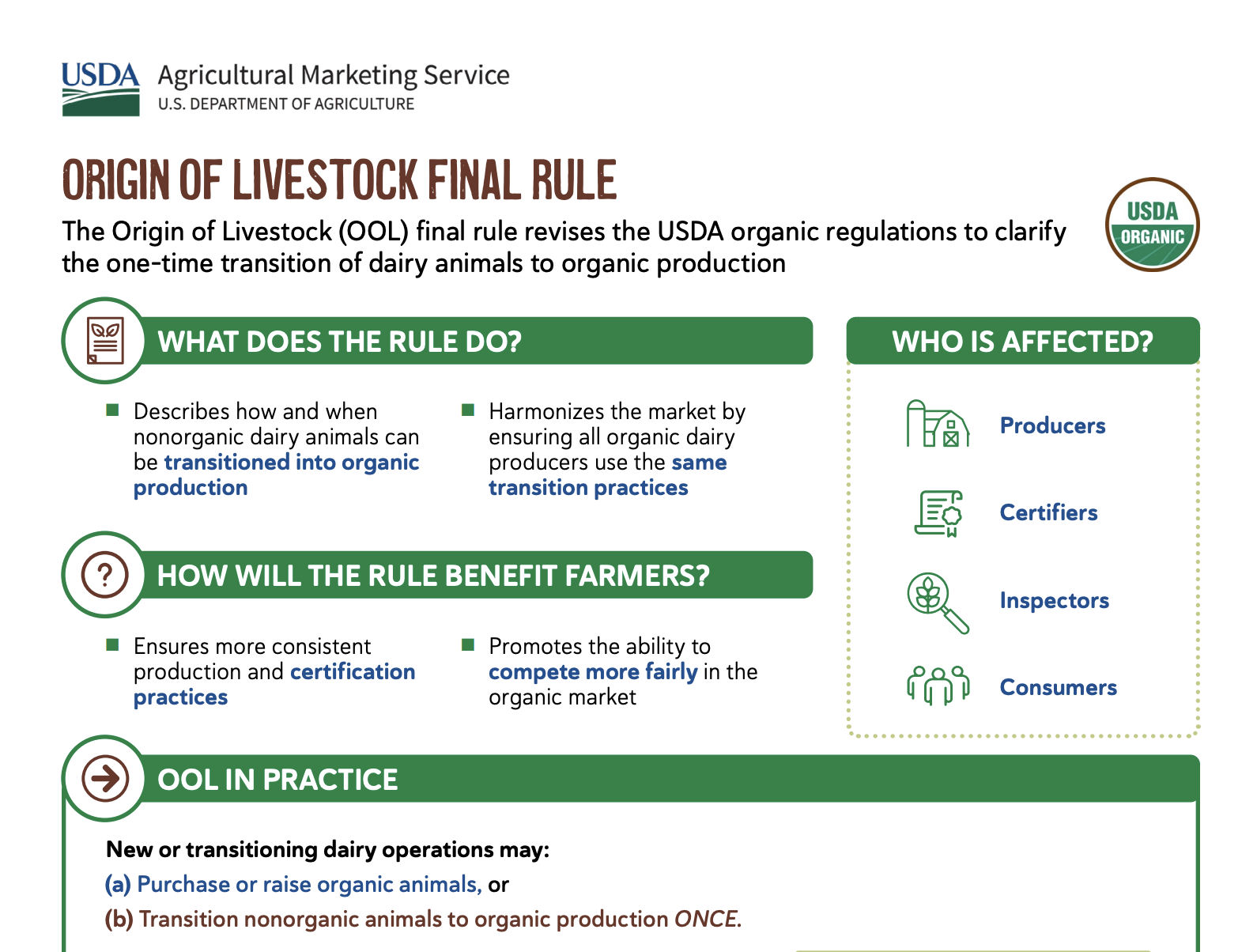
Origin of Livestock Final Rule Infographic
The Origin of Livestock final rule sets a uniform national standard for how organic dairy operations bring animals into organic production, allowing each operation only a single, one‑time transition of nonorganic animals and then requiring all added animals to be under organic management from the last third of gestation. This harmonizes previously inconsistent practices among certifiers, prevents ongoing herd transitions and the purchase of transitioned animals from other operations (with narrow, AMS‑approved small‑business exceptions), and is intended to ensure fair competition and integrity in the organic dairy market.
USDA Guidelines for Organic Certification of Dairy Livestock
This document outlines practical guidelines for certifying organic dairy livestock under USDA’s National Organic Program, covering land, animals, feed, health care, living conditions, pasture, slaughter, labeling, and records. It explains that land for feed and pasture must be free of prohibited substances for three years; dairy herds can either be transitioned over one year under full organic management or purchased as already-organic animals; all organic animals must receive 100% certified organic feed (including organic bedding if it’s roughage); and young stock must be fed organic milk and feed. It details preventive, welfare-focused health care practices, requires treatment (including antibiotics) when needed for animal welfare but removes treated animals from organic production, and tightly restricts use of hormones and synthetic parasiticides, including withdrawal times and segregation. The guidelines require year-round access to outdoors and pasture, prohibit continuous confinement of ruminants over six months, mandate at least 120 days on pasture and an average of at least 30% dry matter intake from grazing in the grazing season, and specify pasture plan elements.
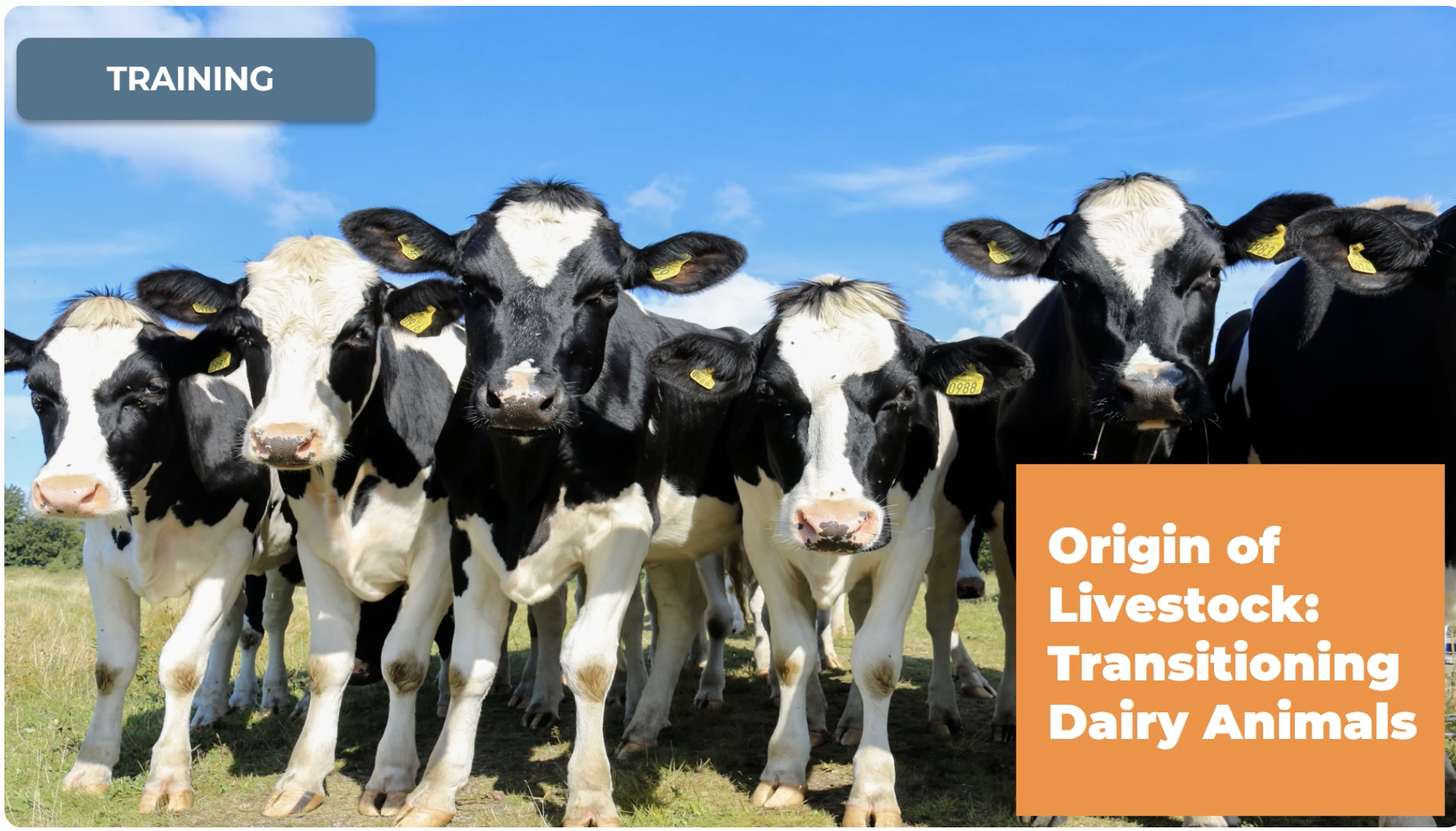
Transitioning Dairy Animals to Organic
This 9‑minute Oregon Tilth training explains how the NOP Origin of Livestock rule works for transitioning dairy animals to organic, focusing on the one‑time transition allowance and its narrow exceptions. It defines a “transitioned” animal as one born conventional that becomes organic when the whole herd is transitioned, noting these animals may produce organic milk and offspring but are never eligible for organic slaughter. The video walks through 7 CFR 205.236: a new organic dairy may do a single, one‑time herd transition, during which conventional dairy animals must be under continuous organic management for at least 12 months before their milk (and the animals) can be certified organic, with all details (dates, animal IDs, feeds) documented in the Organic System Plan. During this transition, animals and their offspring may consume on‑farm third‑year transitional crops (no prohibited substances for at least two years), but those offspring are then also considered transitioned; if only certified organic feed is used and the dam is organic from last third of gestation, offspring are fully organic, not transitioned.
Module 1. Overview of Organic Dairy Production
Introduction to Organic Dairy Production Course. Module 1: Overview of Organic Dairy Production—An Integrated Approach, presented by Cindy Daley, California State University--Chico
State of Organic Produce 2025
U.S. organic fresh produce sales reached $10.6 billion in 2025, up 5.9% in dollars and 6.4% in volume—growing nearly five times faster than conventional produce. Organic now represents 13% of retail produce dollars and 8% of volume, each one percentage point higher than 2024, as growers and retailers expand organic offerings for health‑focused shoppers. Organic Produce Network and Category Partners compiled these trends in their annual report, spotlighting 20 top‑performing organic produce categories.
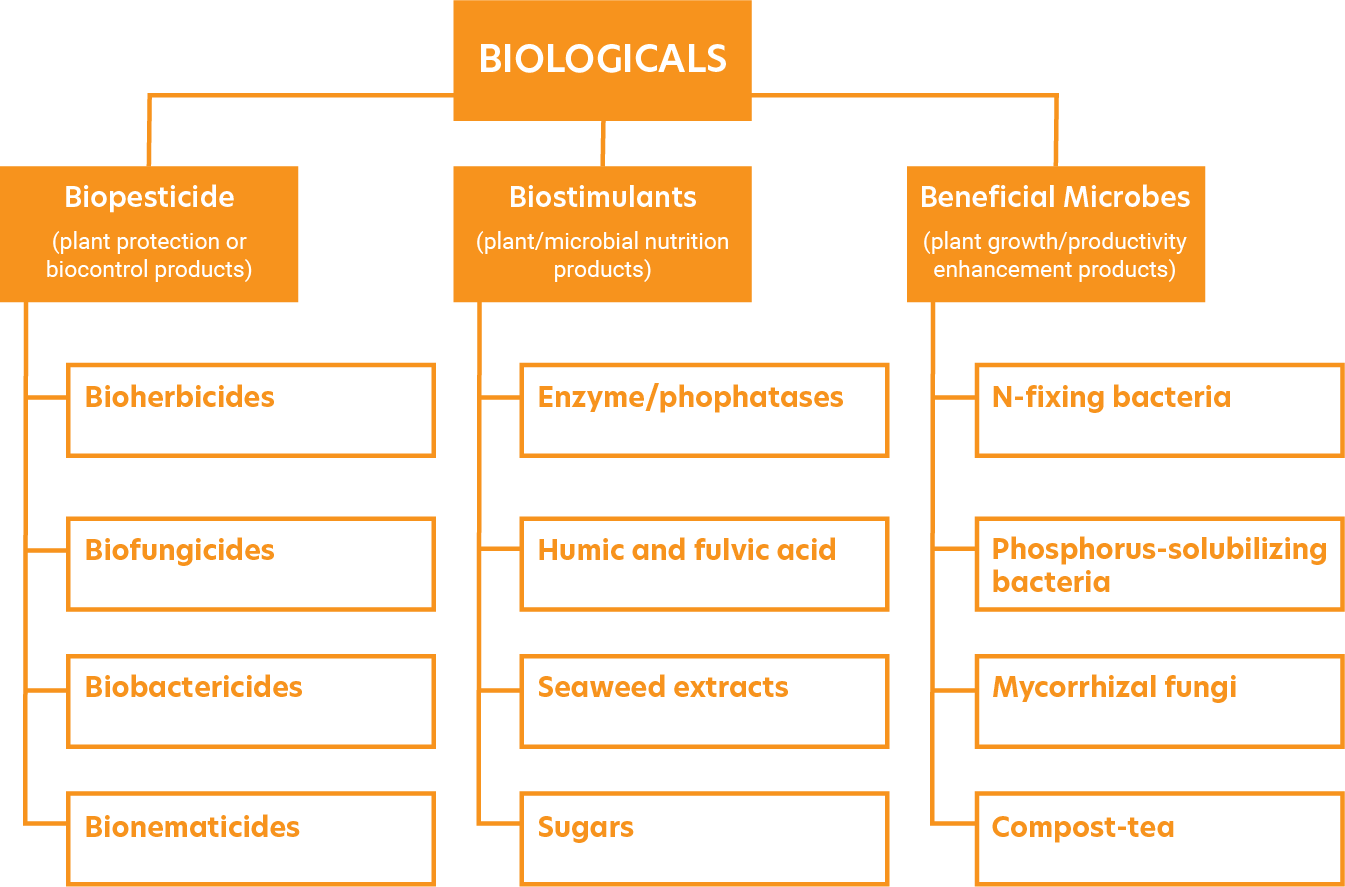
Biologicals: A New Frontier in Organic
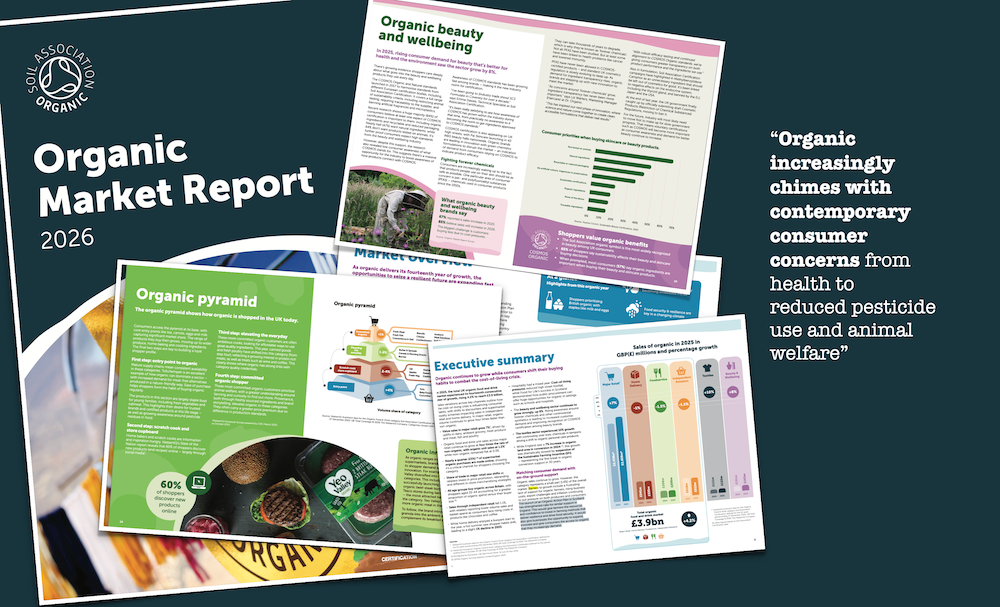
UK Organic Market (2025)
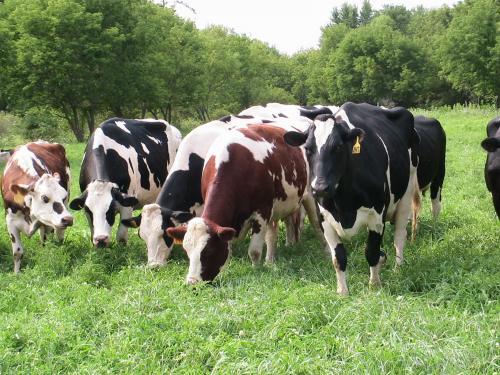
Introduction to Organic Dairy Production
Markets ROI of Organic Transition for Dairy Farmers
Buyer Perspectives on Organic Dairy Sourcing
Canadian Organic Production Systems-General Principles and Management Standards
This 2026 Canadian national standard (CAN/CGSB‑32.310‑2026) sets the general principles, scope, and management requirements for organic production systems in Canada, covering crops, livestock, and processed products for human and animal use. It defines organic agriculture as a holistic system based on the principles of health, ecology, care, and fairness, emphasizing soil biological activity, biodiversity, ecological pest management, and high‑welfare livestock conditions using organically produced feed. The standard clarifies that organic practices aim to minimize, but cannot guarantee elimination of, residues beyond the operator’s control, and that requirements may be applied differently across Canada’s diverse regions. It specifies that organic production must exclude genetic engineering, intentional nanotechnology (with a few clearly defined exceptions), irradiation (with limited exceptions), and cloned livestock and their descendants, and it links to a companion standard (CAN/CGSB‑32.311) that lists permitted substances. Finally, it explains that the document is intended for certification and regulatory use, outlines the products covered, and notes that certification bodies must allow up to 12 months after amendments for operations to come into compliance.
Expo West 2026 - Consumer Values are Reshaping Meat and Dairy. Are You Ready?
This Expo West industry panel examines how shifting consumer values are driving growth in meat and dairy, especially for products that are high‑quality, nutrient‑dense, and verified as sustainable, high‑welfare, and regenerative. Speakers from A Greener World, SPINS, Whole Foods Market, and ASPCA share data showing booming demand for animal‑welfare certifications, grass‑fed and pasture‑based attributes, and “food as medicine” positioning, but stress that taste, trust in labels, and clear communication of certification value are non‑negotiable for repeat purchase. They highlight that consumers across demographics increasingly want healthy food, healthy farms, and transparent labels, are actively avoiding artificial ingredients, and are rewarding brands that can credibly show products are better for people, animals, and the planet—while warning that confusing or weak claims carry real reputational risk.
Prescribed fire: a land restoration tool we’re lucky to have
How does setting a natural landscape on fire (in a safe and controlled way) encourage more native wildflowers and grasses to grow? Why is prescribed fire different from the massive problematic wildfires out west? How does controlled burning help insects, birds, and other wildlife in Wisconsin, and how can YOU help?
GreenWave’s State of the Kelp Industry
GreenWave’s State of the Kelp Industry: A Decade in Review and the Road Ahead charts ten years of commercial progress in the U.S. and Canada. Tracking developments and recommendations across seed production, farm production, and the market landscape, the report captures an industry at an inflection point.
Drawing on on-farm production data, public records, market inputs, and interviews with farmers and partners across the kelp value chain, the report identifies where markets are taking shape, where bottlenecks persist, and what it will take to translate growing capacity into a durable, farmer-led kelp industr
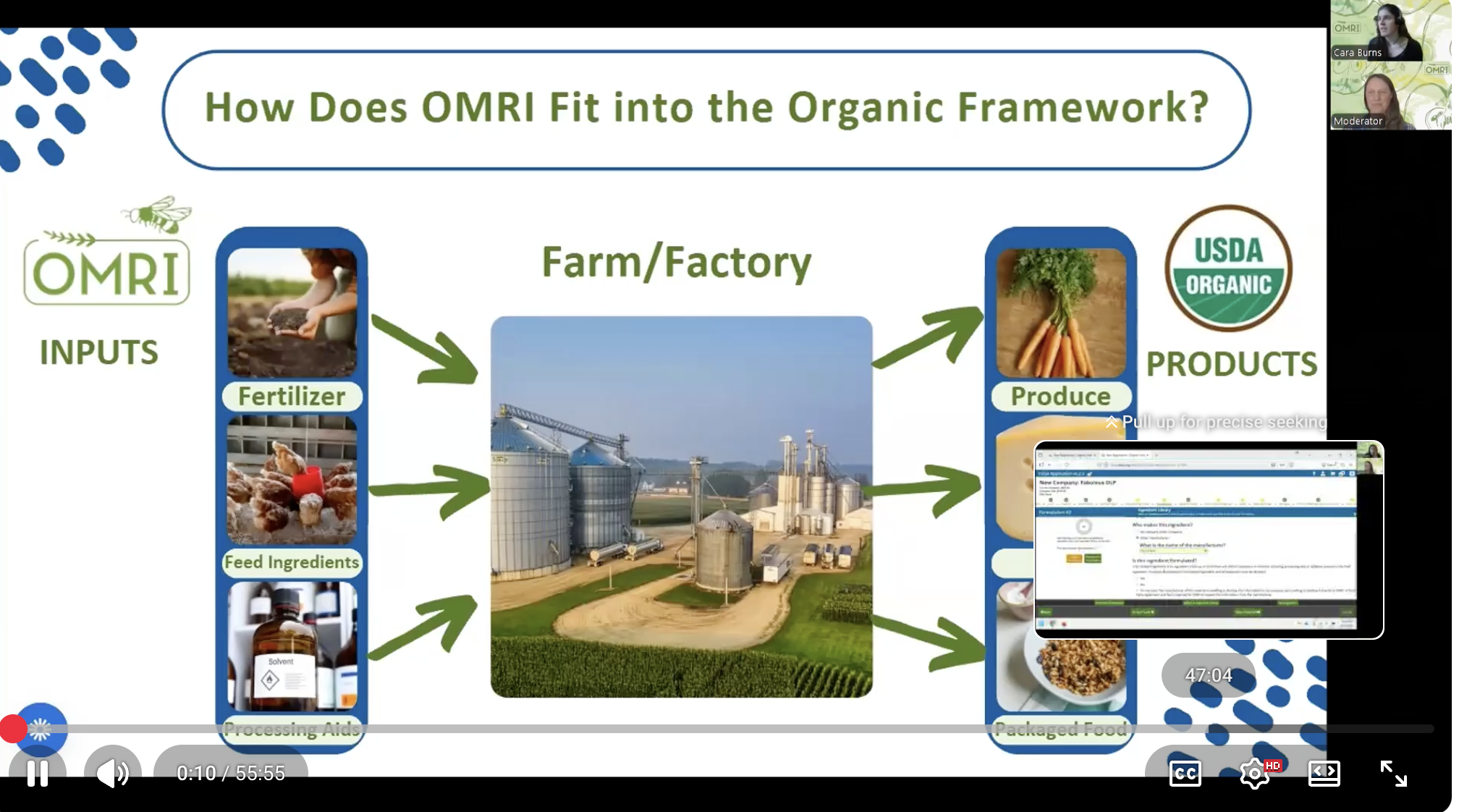
OMRI - Get Listed Webinar
This OMRI Get Listed webinar goes over OMRI’s role in the organic sector, includes important online application requirements, and what to expect during each phase of the Review Process.
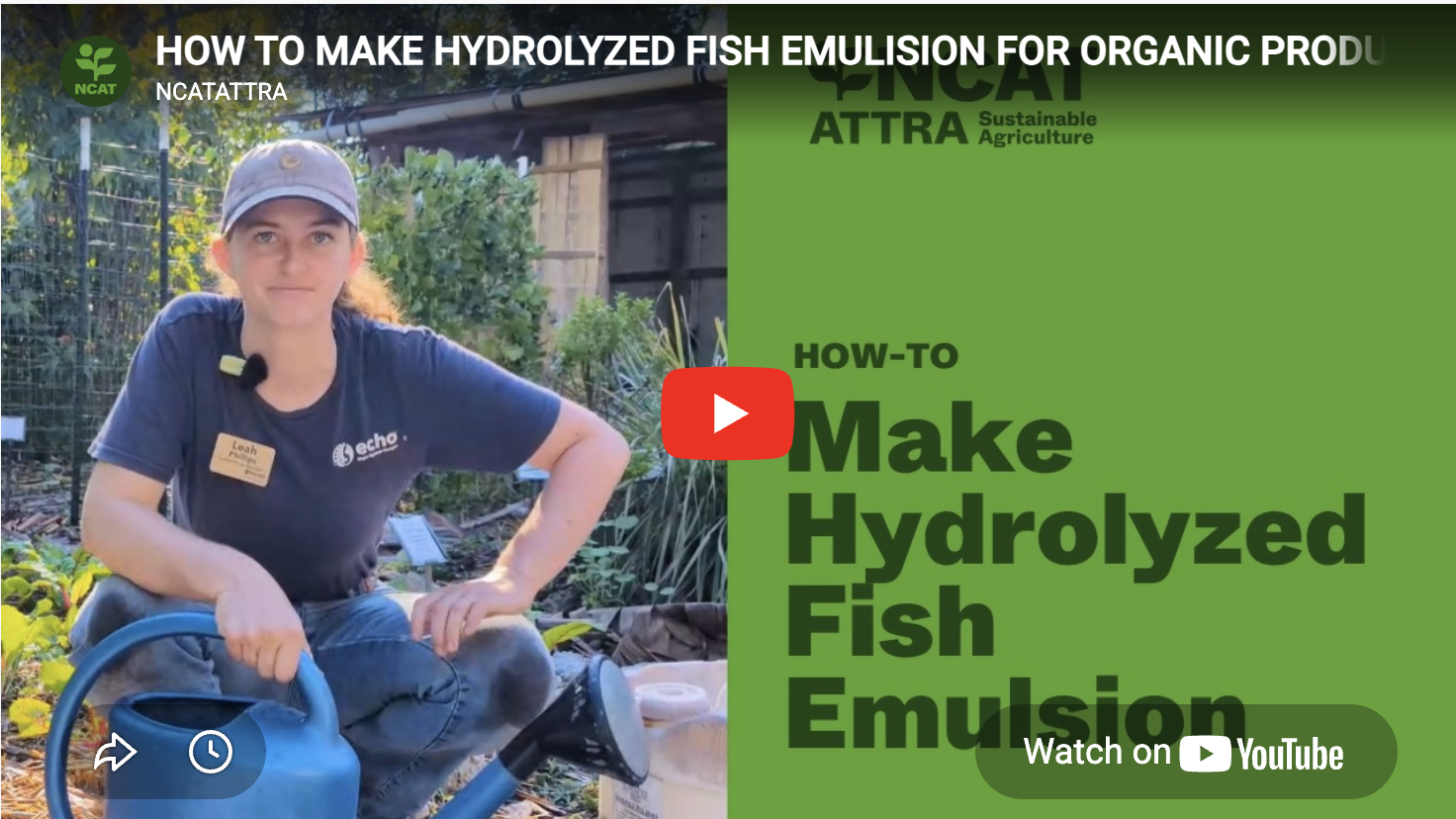
How to Make Hydrolyzed Fish Emulsion for Organic Production
The ATTRA resource explains how small-scale and organic producers can make their own hydrolyzed fish emulsion fertilizer using fish scraps, water, and microbial or enzymatic digestion, rather than heat-based cooking. It walks through the step‑by‑step process (chopping fish, mixing with water and a sugar source, fermenting under controlled conditions, straining, and storing), and emphasizes food-safety and regulatory considerations so the final product meets organic standards and can be used safely on crops. It also highlights the agronomic benefits of fish hydrolysate—supplying nitrogen and micronutrients, feeding soil biology, and fitting into broader ecological fertility management for organic systems
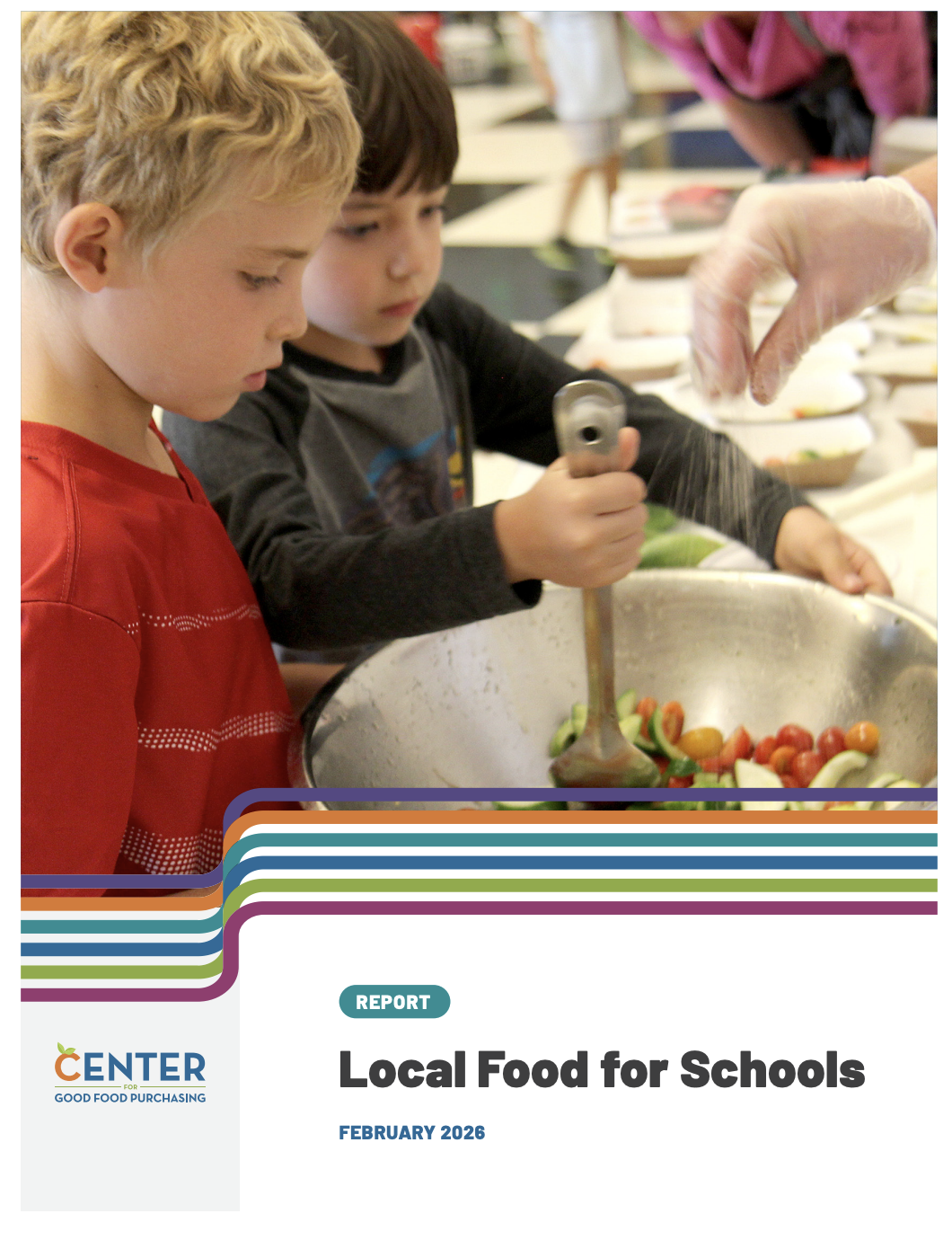
Local Food For Schools
The report analyzes USDA’s one-time Local Food for Schools (LFS) program and finds that relatively modest investments helped school districts across 17 states buy more local foods—especially fruits, vegetables, and animal proteins—while strengthening relationships with nearby farmers and food hubs and exposing students to new, higher-quality foods. LFS funds averaged about 3–4% of districts’ food budgets (roughly 9.42 dollars per student), with smaller rural and town districts generally spending more per student but facing delivery and capacity barriers, and large urban districts seeing LFS as a marginal yet welcome supplement. The report’s Oregon case study shows how one state used LFS primarily for milk while relying on existing farm to school funds for produce, highlighting varying implementation strategies and the need for better integration with other programs. Overall, the authors conclude that permanent, increased, and better-aligned funding, streamlined reporting, stronger supply-chain infrastructure (including food hubs), and clear best practices would allow LFS-style initiatives to deliver more durable, equitable impacts for students, farmers, and regional food systems.
2026 Regenerative Ag. Webinar: Grazing in Cropping Systems
The report analyzes USDA’s one-time Local Food for Schools (LFS) program and finds that relatively modest investments helped school districts across 17 states buy more local foods—especially fruits, vegetables, and animal proteins—while strengthening relationships with nearby farmers and food hubs and exposing students to new, higher-quality foods. LFS funds averaged about 3–4% of districts’ food budgets (roughly 9.42 dollars per student), with smaller rural and town districts generally spending more per student but facing delivery and capacity barriers, and large urban districts seeing LFS as a marginal yet welcome supplement. The report’s Oregon case study shows how one state used LFS primarily for milk while relying on existing farm to school funds for produce, highlighting varying implementation strategies and the need for better integration with other programs. Overall, the authors conclude that permanent, increased, and better-aligned funding, streamlined reporting, stronger supply-chain infrastructure (including food hubs), and clear best practices would allow LFS-style initiatives to deliver more durable, equitable impacts for students, farmers, and regional food systems.
Supplier Engagement for Diverse Supply Chains: Moving from Collection to Collaborative Reduction
HowGood, Green Project, and KPMG discuss how to achieve the two pillars of a successful supplier engagement program: high-fidelity data at scale, and actionable planning toward decarbonization.
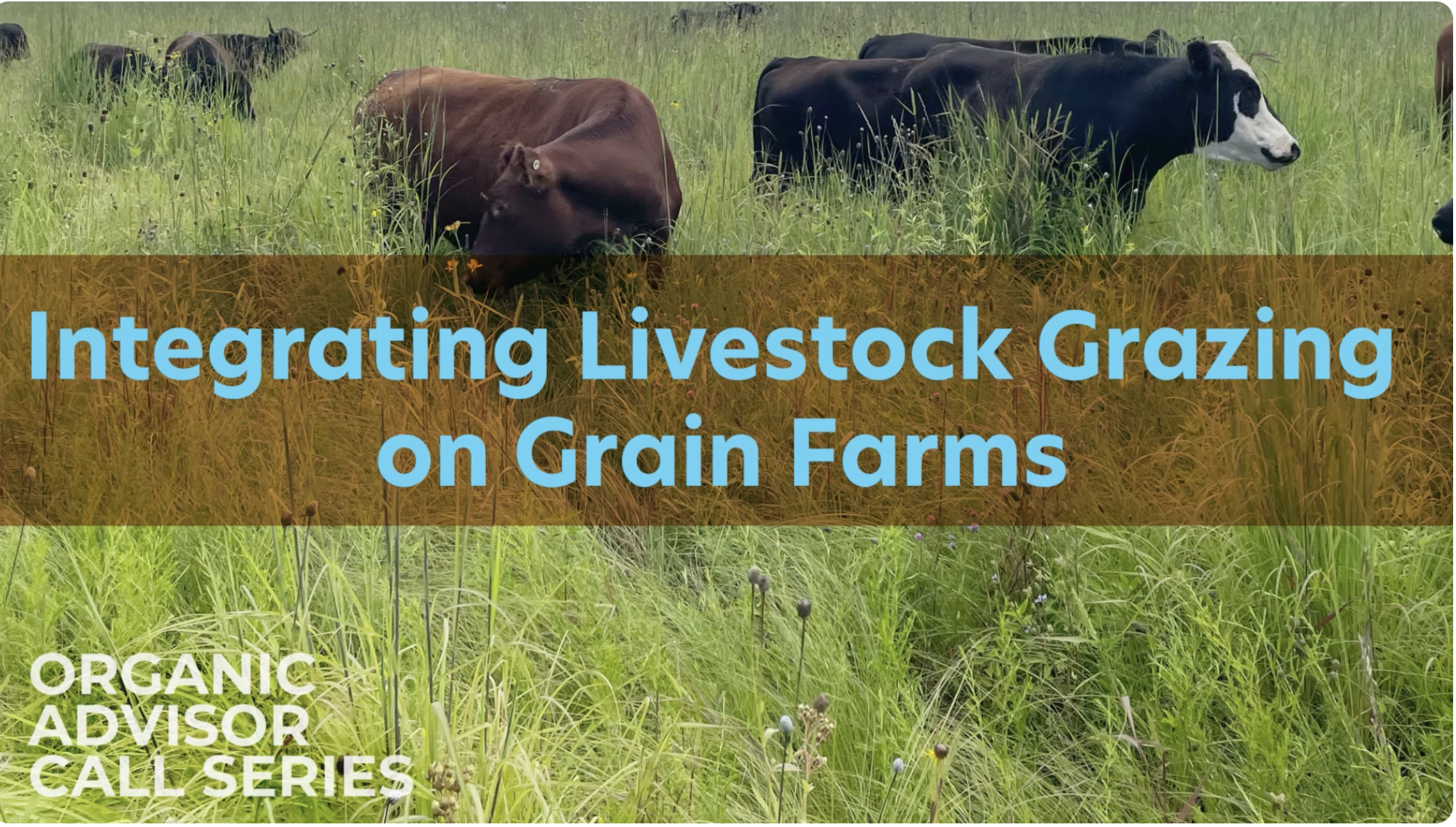
Integrating Livestock Grazing on Grain Farms
Livestock is a powerful tool for building soil health and boosting profitability. In this episode, Sam Oschwald Tilton of OATS talks with Clint Epley and Knute Severson—two farmers who've made it work—about the real-world logistics of integrating grazing into organic grain rotations, from fencing, water, and crop rotation to pasture management and marketing.
Is your Brand Strong Enough to Stand Out?
In this episode (= 9 min) what it means to build a strong brand is broken down—and why it goes beyond your visual brand. You’ll learn: The difference between a brand that looks good and one that’s built on strategy; Why most brands stop at a surface-level story; How to go deeper so your brand truly stands out; How this clarity helps you make better, faster decisions as a business owner
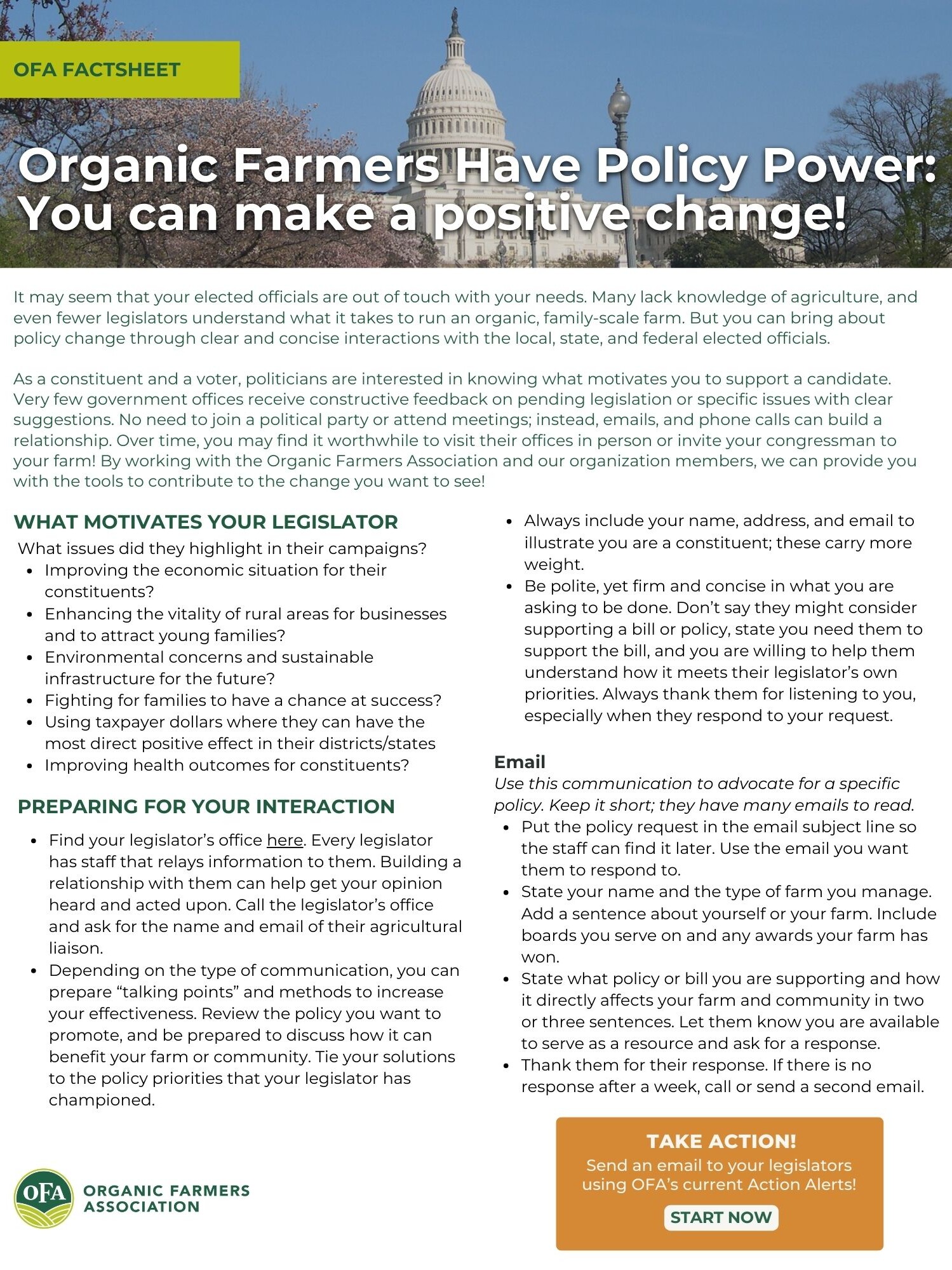
Organic Farmers Have Policy Power
This factsheet is a practical advocacy guide for organic farmers, showing how to influence legislators through emails, phone calls, letters, office visits, and farm visits. Its main message is that farmers can be effective advocates if they keep communication short, specific, and tied to their own farm experience.
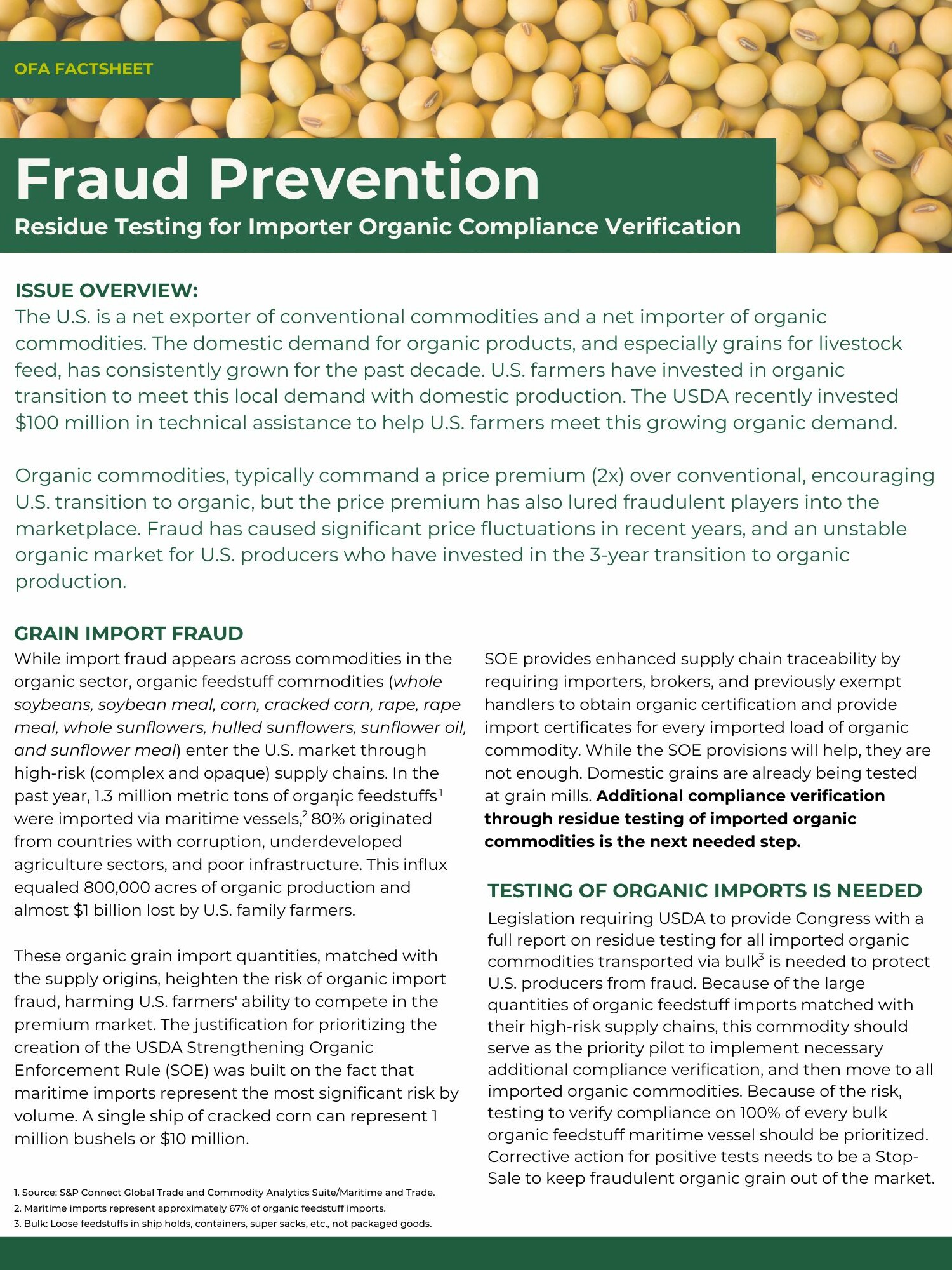
Organic Import Fraud Prevention
This factsheet argues that imported organic grains and feedstuffs can pose a fraud risk because they move through large, complex supply chains, and that residue testing is needed to better verify organic compliance and protect U.S. producers. It also says existing Strengthening Organic Enforcement reforms help, but are not enough by themselves.
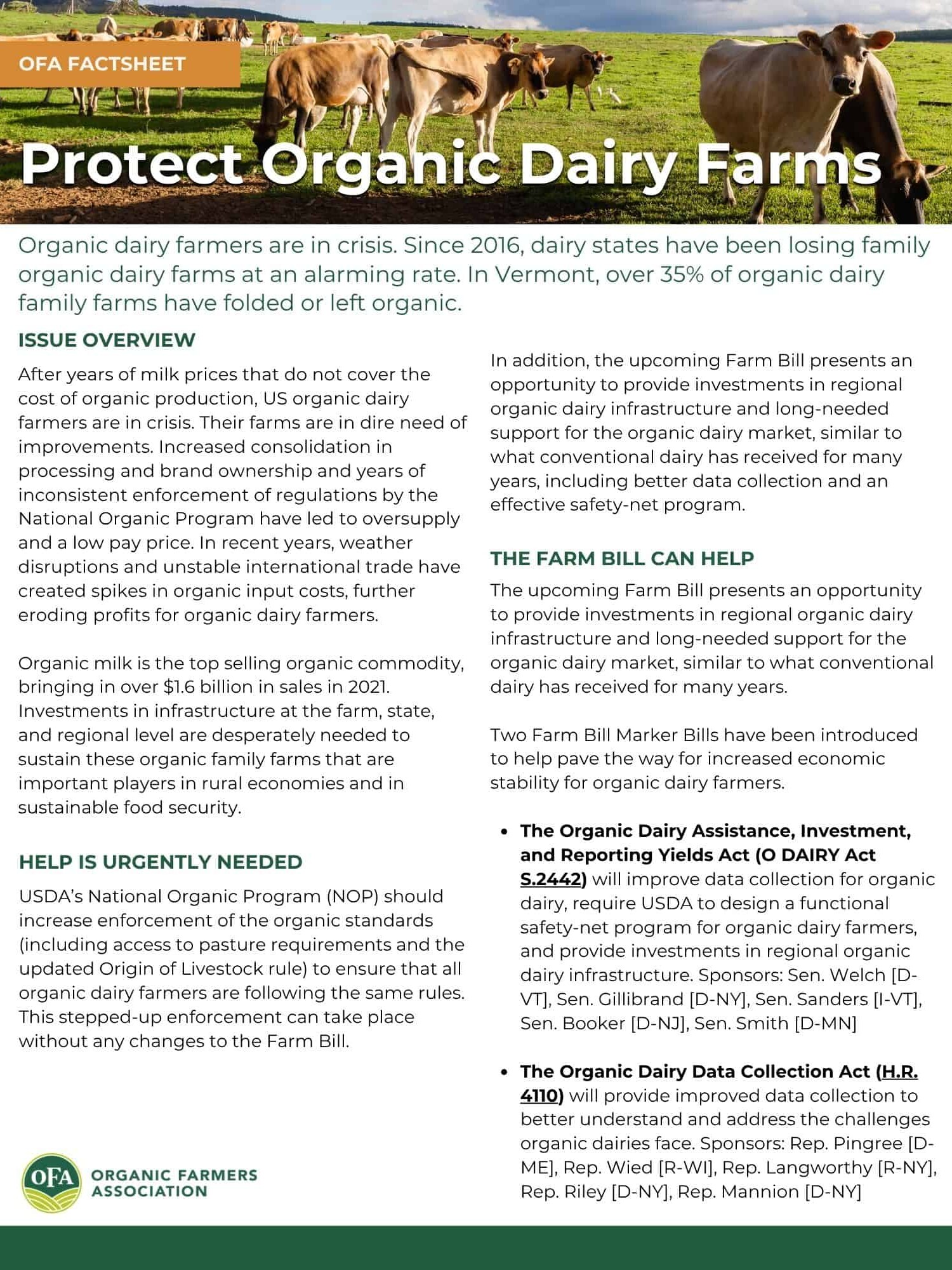
Protecting Organic Dairy
This factsheet says U.S. organic dairy is in crisis because milk prices, rising input costs, and uneven enforcement are squeezing family farms out of the market. Its main ask is for the Farm Bill and USDA to provide better data, a real safety net, and more regional processing infrastructure for organic dairy.
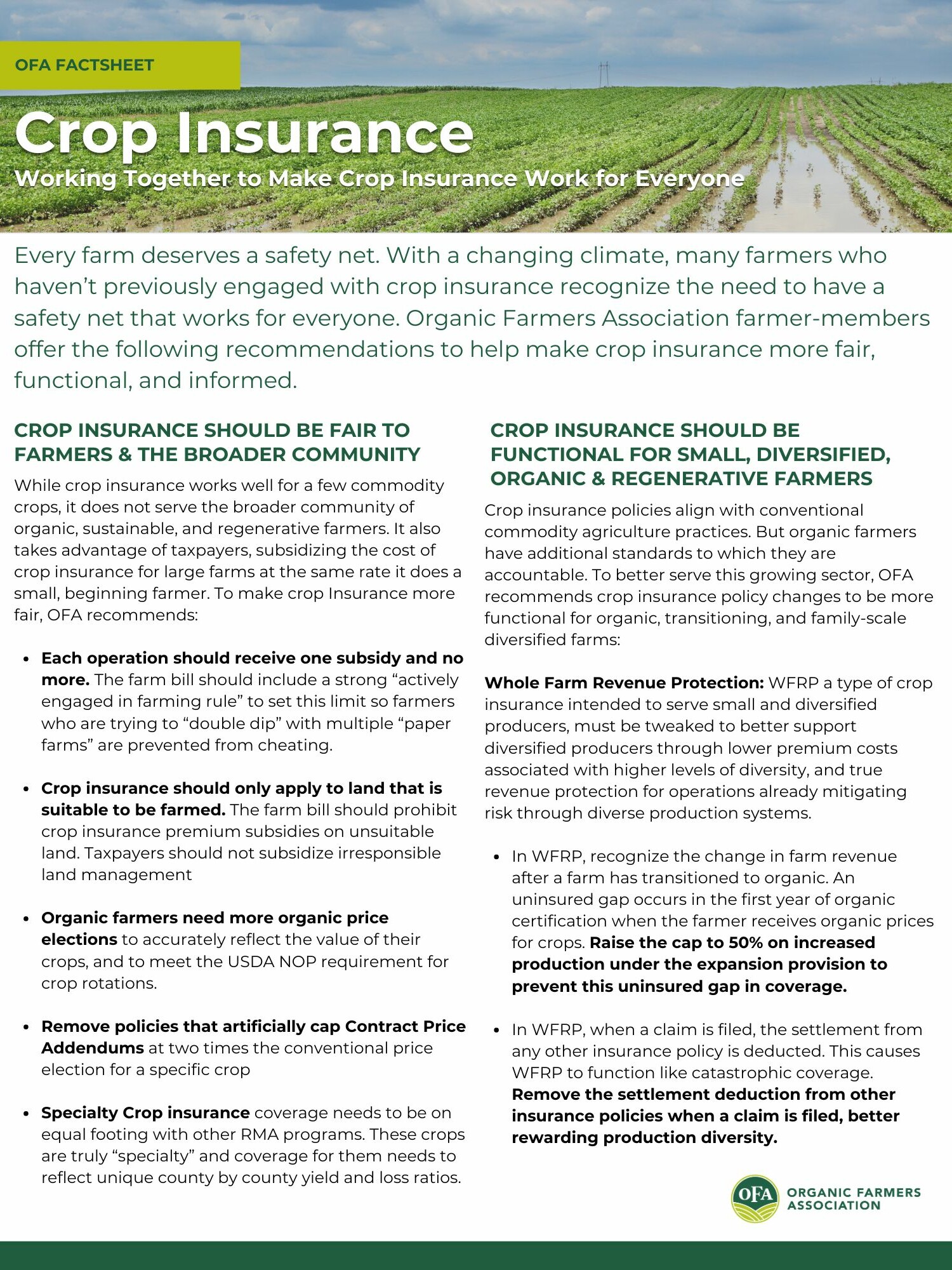
Organic Crop Insurance
This factsheet says crop insurance should work better for organic, transitioning, small, diversified, and regenerative farms, because current programs are built mostly around conventional commodity agriculture and often miss how these farms actually operate. Its overall message is that crop insurance should be fairer, more flexible, and more informed by organic realities.
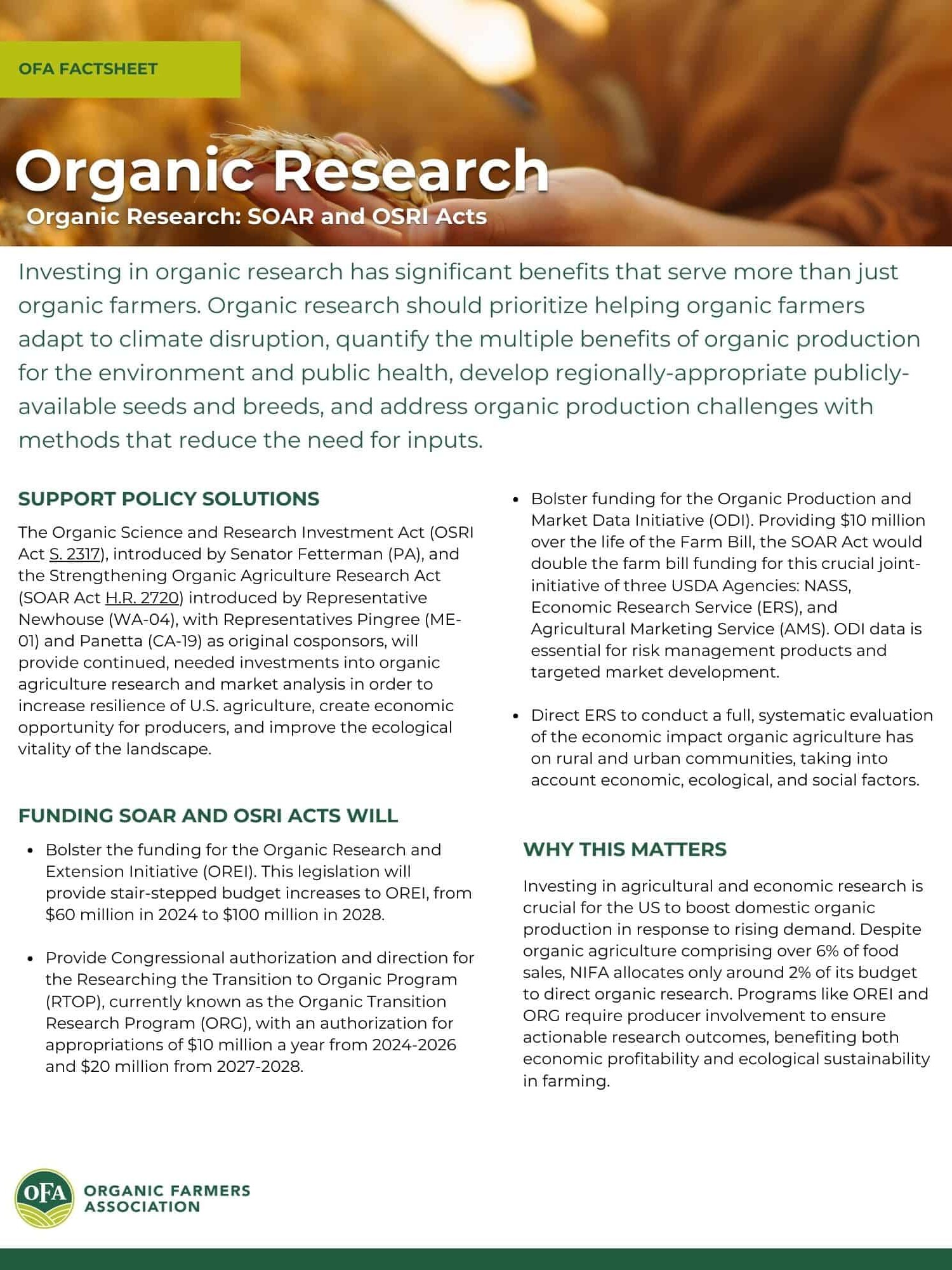
SOAR & OSRI Acts
This factsheet is about the Organic Science and Research Investment Act, or OSRI, and its companion earlier proposal, SOAR. It argues that USDA should invest much more in organic research, data, and transition support because organic farmers are getting too little of the federal research budget relative to the size and importance of the sector.
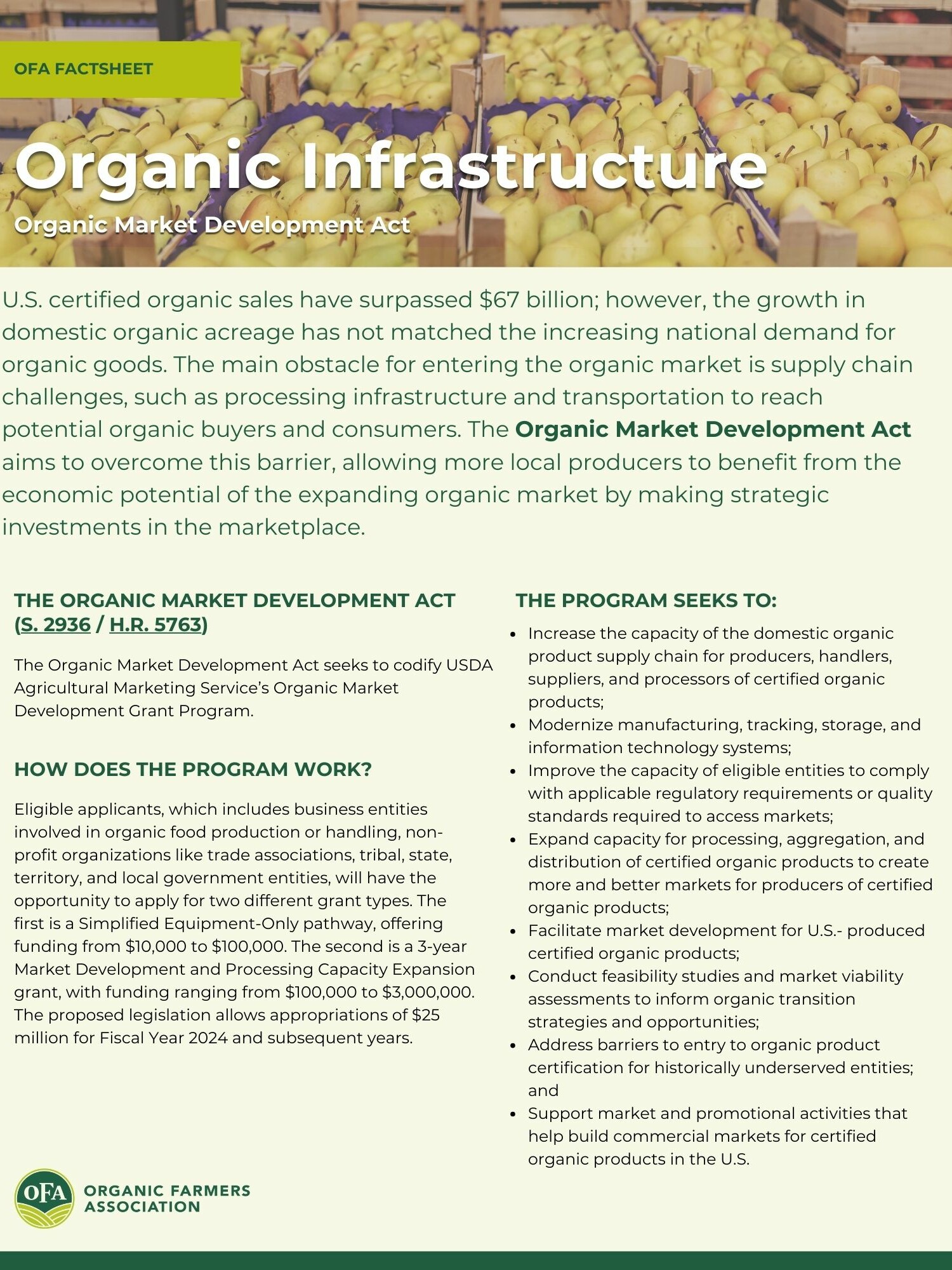
Organic Market Development Act
This factsheet says the Organic Market Development Act would make USDA’s Organic Market Development Grant program permanent and better fund the infrastructure needed to move organic products from farms to markets. Its core argument is that demand for organic has grown faster than domestic processing, storage, transportation, and aggregation capacity.
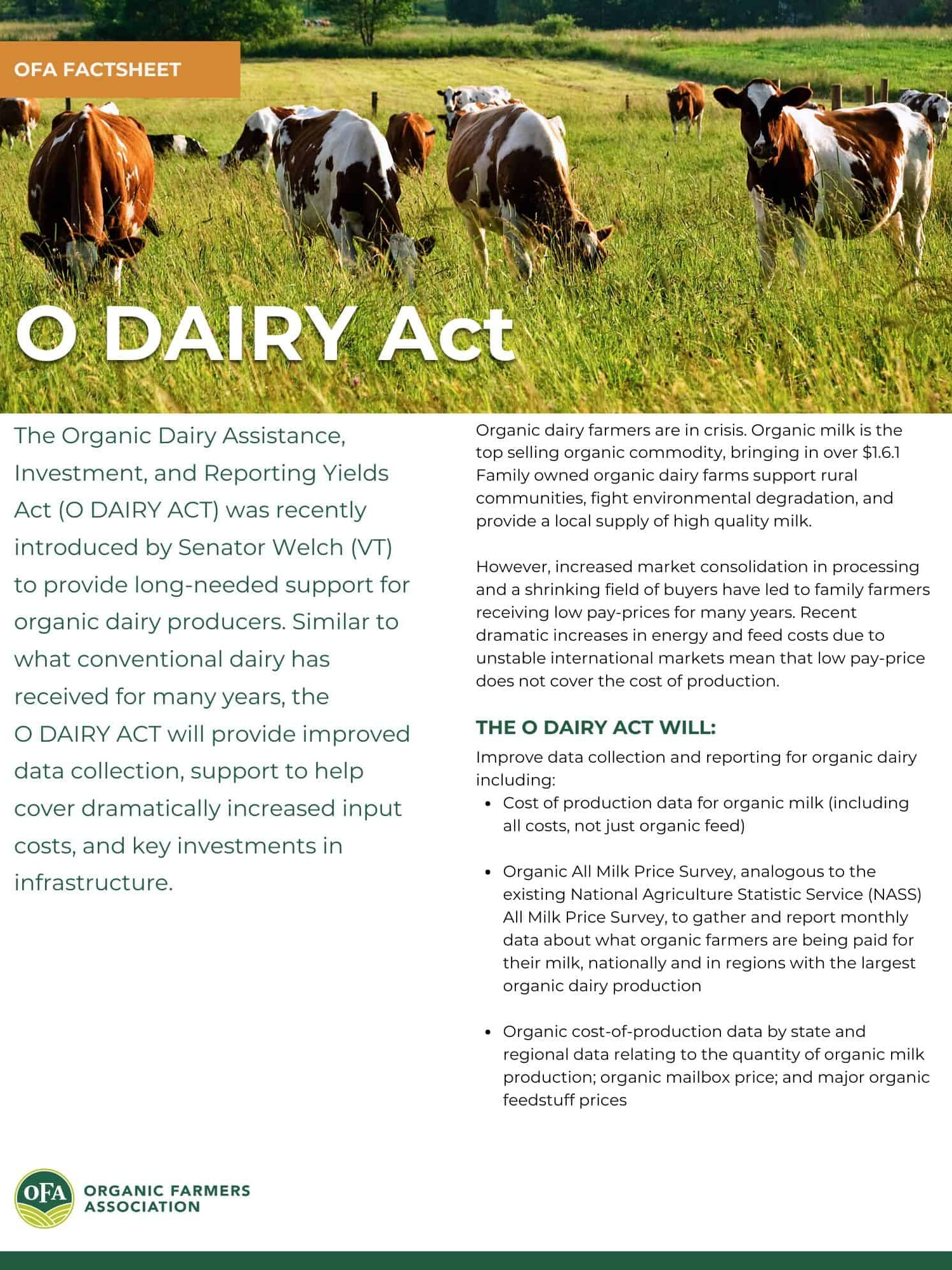
O Dairy Act
This factsheet says organic dairy farms are in crisis because pay prices have stayed too low while feed, energy, and other costs have risen, leaving many farms unable to cover production costs. Its main solution is the O DAIRY Act, which would improve data collection, create a more realistic safety net, and invest in organic dairy infrastructure.
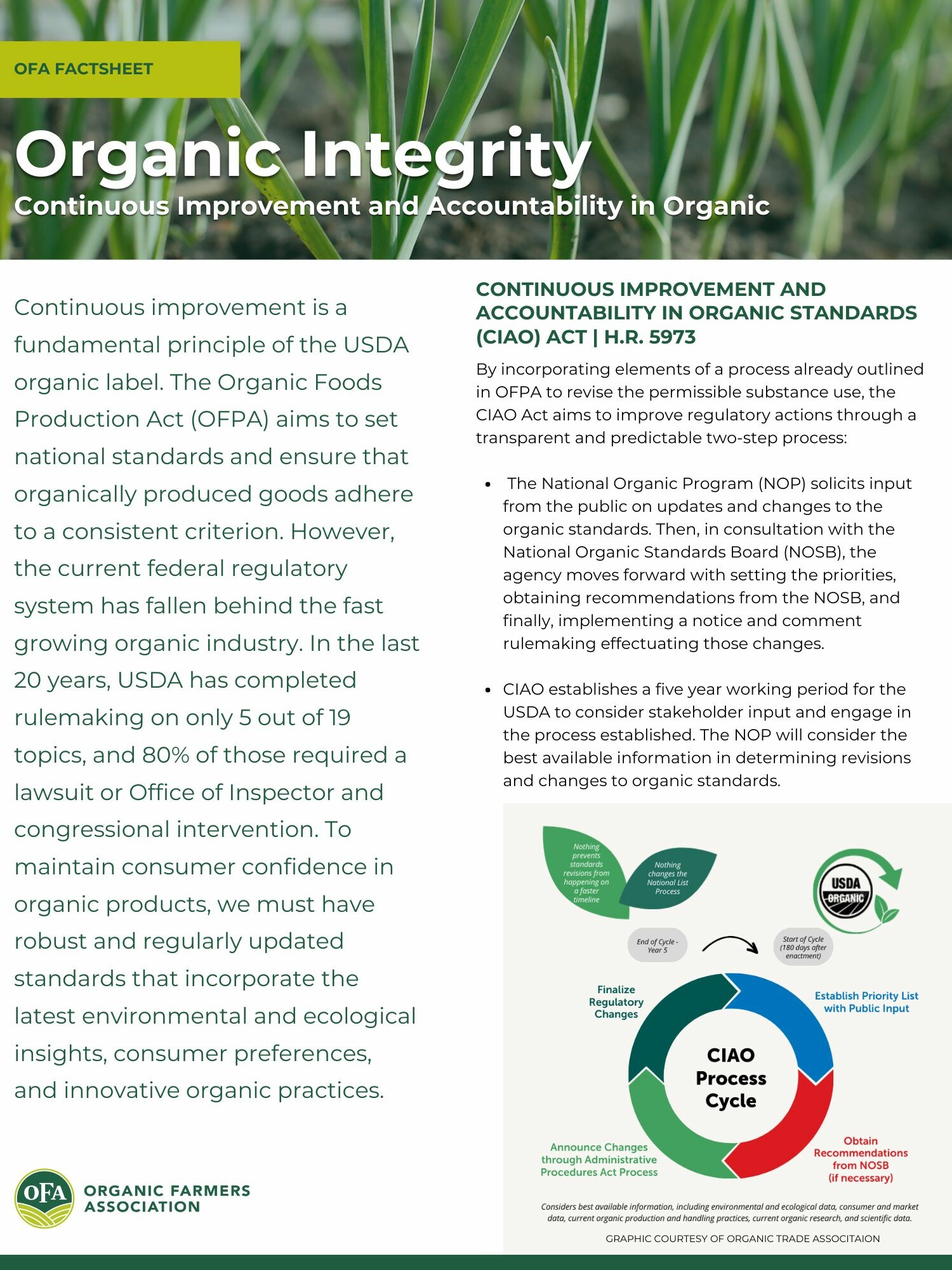
Organic Integrity (CIAO Act)
This factsheet says the CIAO Act would update USDA organic standards through a more predictable, transparent process while preserving the principle of continuous improvement in organic. It argues that USDA’s current rulemaking pace has lagged behind the growth of the organic sector, and that stronger, more regular updates are needed to keep consumer trust high.
Opportunities in Organic
This factsheet says organic agriculture creates economic, environmental, and climate benefits, but public investment still falls short of what the sector needs to keep growing. Its main message is that USDA should expand market-building, transition support, and technical assistance so more farmers can enter and stay in organic.
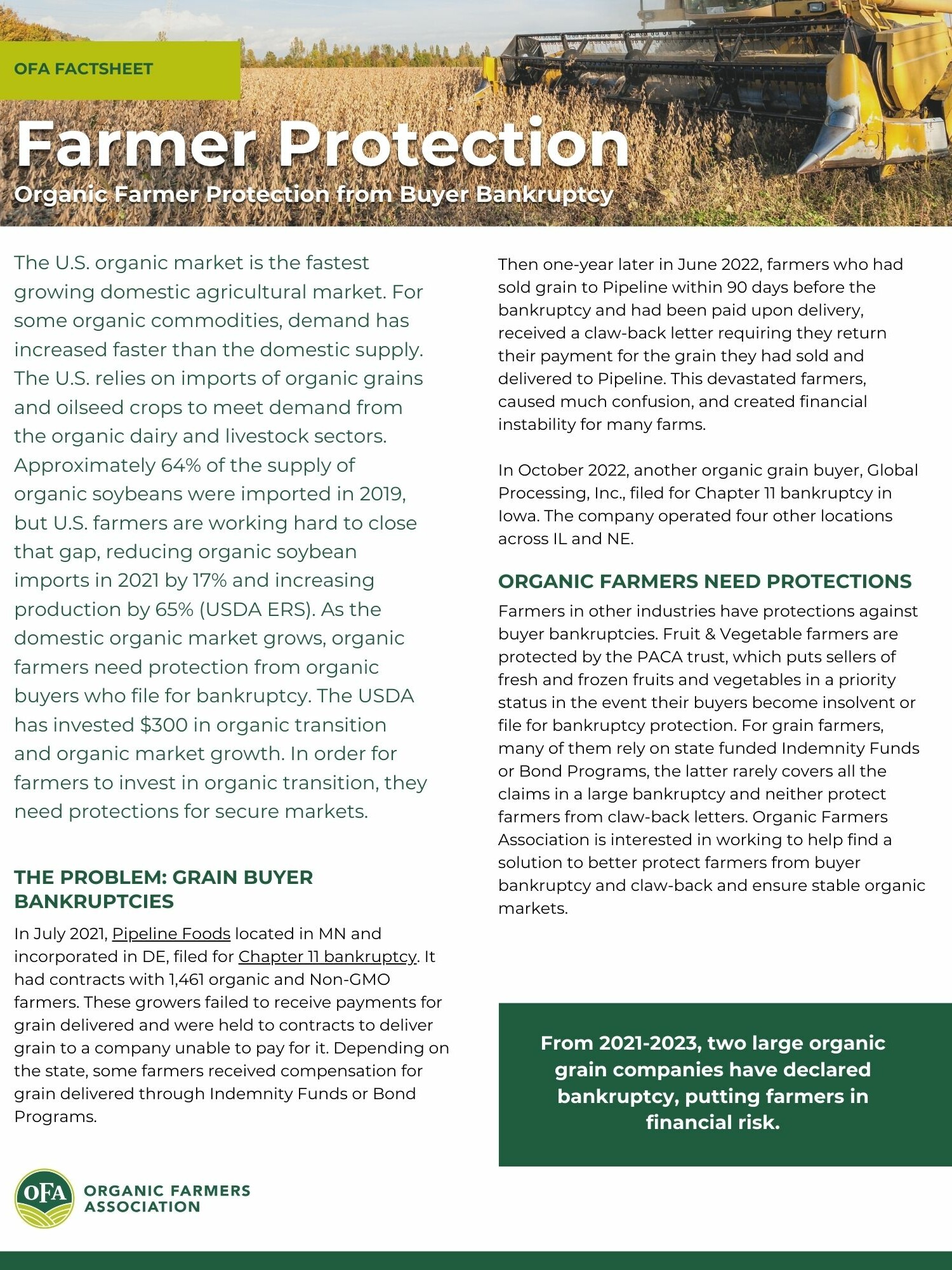
Buyer Bankruptcy Farmer Protection
This factsheet says grain buyer bankruptcies can leave organic farmers unpaid for delivered grain, trapped in contracts, and vulnerable to “claw-back” demands after a bankruptcy filing. Its main message is that organic grain farmers need stronger legal and financial protections so a buyer’s failure does not wipe out a farm’s income.
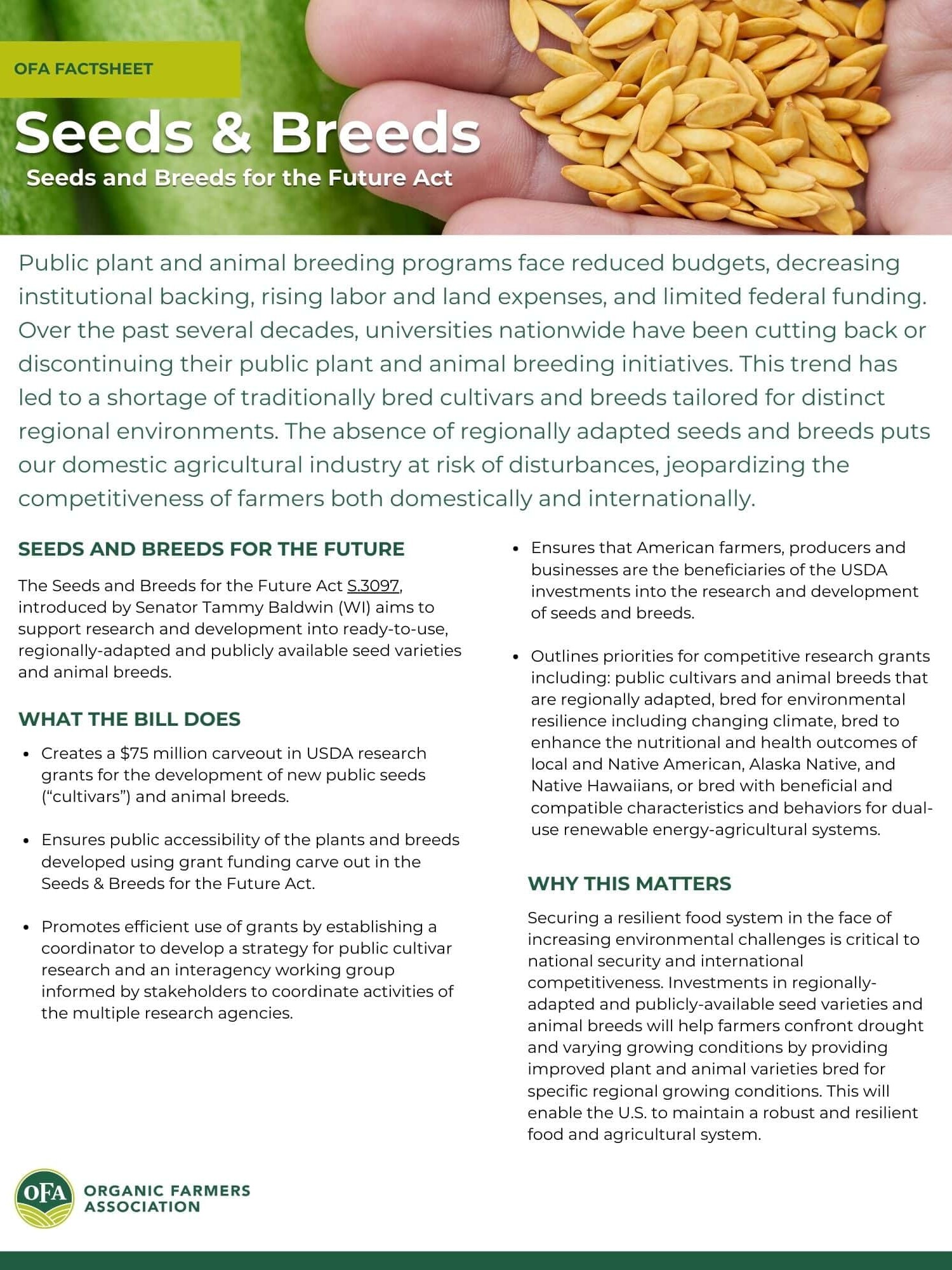
Seeds and Breeds for the Future Act
This factsheet argues that seeds are the foundation of organic agriculture and that farmers need a seed system that supports organic breeding, organic seed availability, and seed sovereignty. Its core message is that organic farmers should have better access to regionally adapted, non-GMO, organically produced seed, and that USDA should invest more in organic breeding and public seed infrastructure.
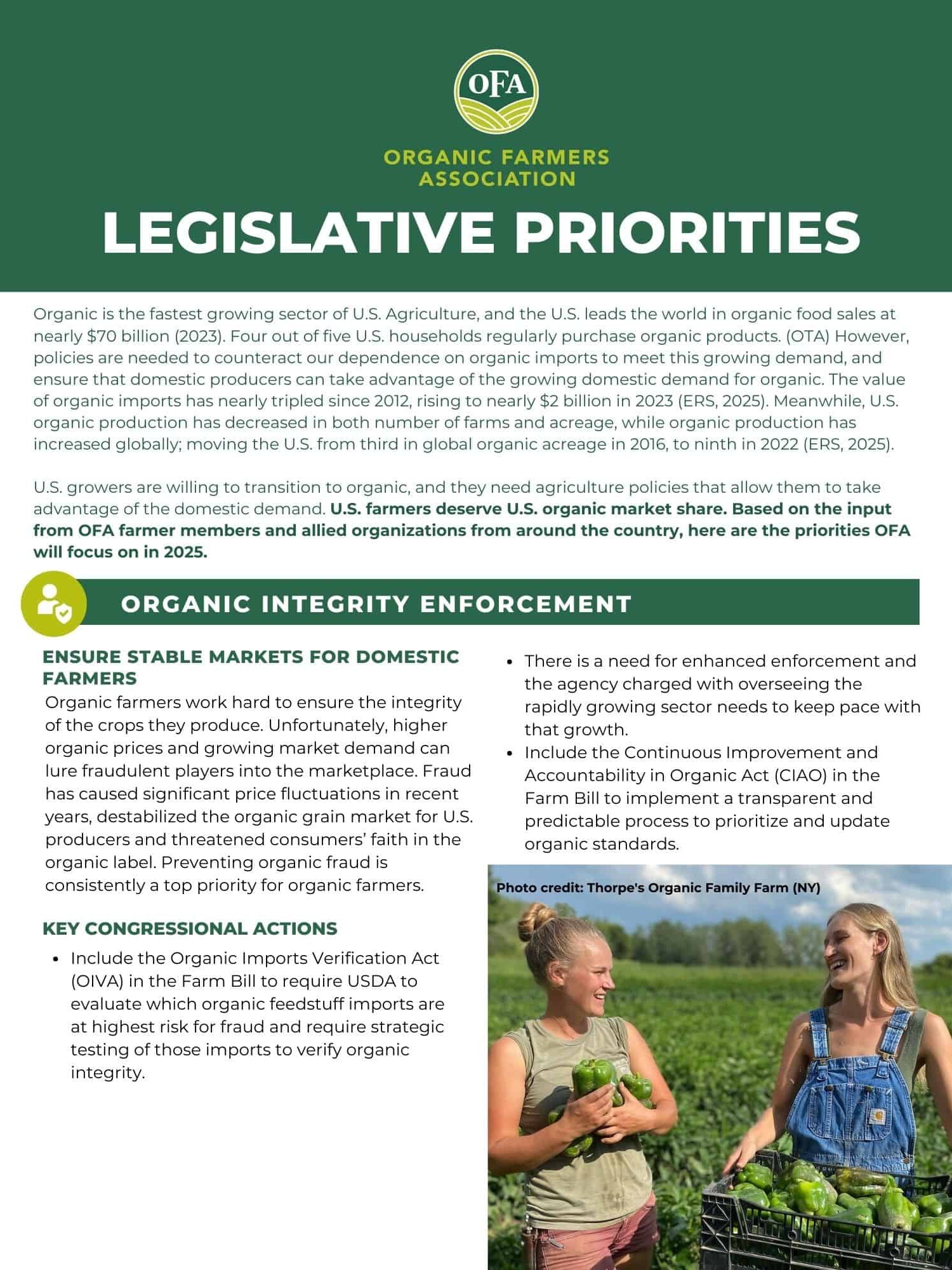
Organic Farmers Association 2025 Legislative Priorities
This handout lays out Organic Farmers Association’s 2025 Farm Bill priorities: stronger organic integrity enforcement, better USDA programs for organic farmers, improved infrastructure and market access, and more funding for organic research and conservation. It argues that organic demand is strong, but policy needs to do more so domestic farmers can capture that market instead of relying too much on imports.
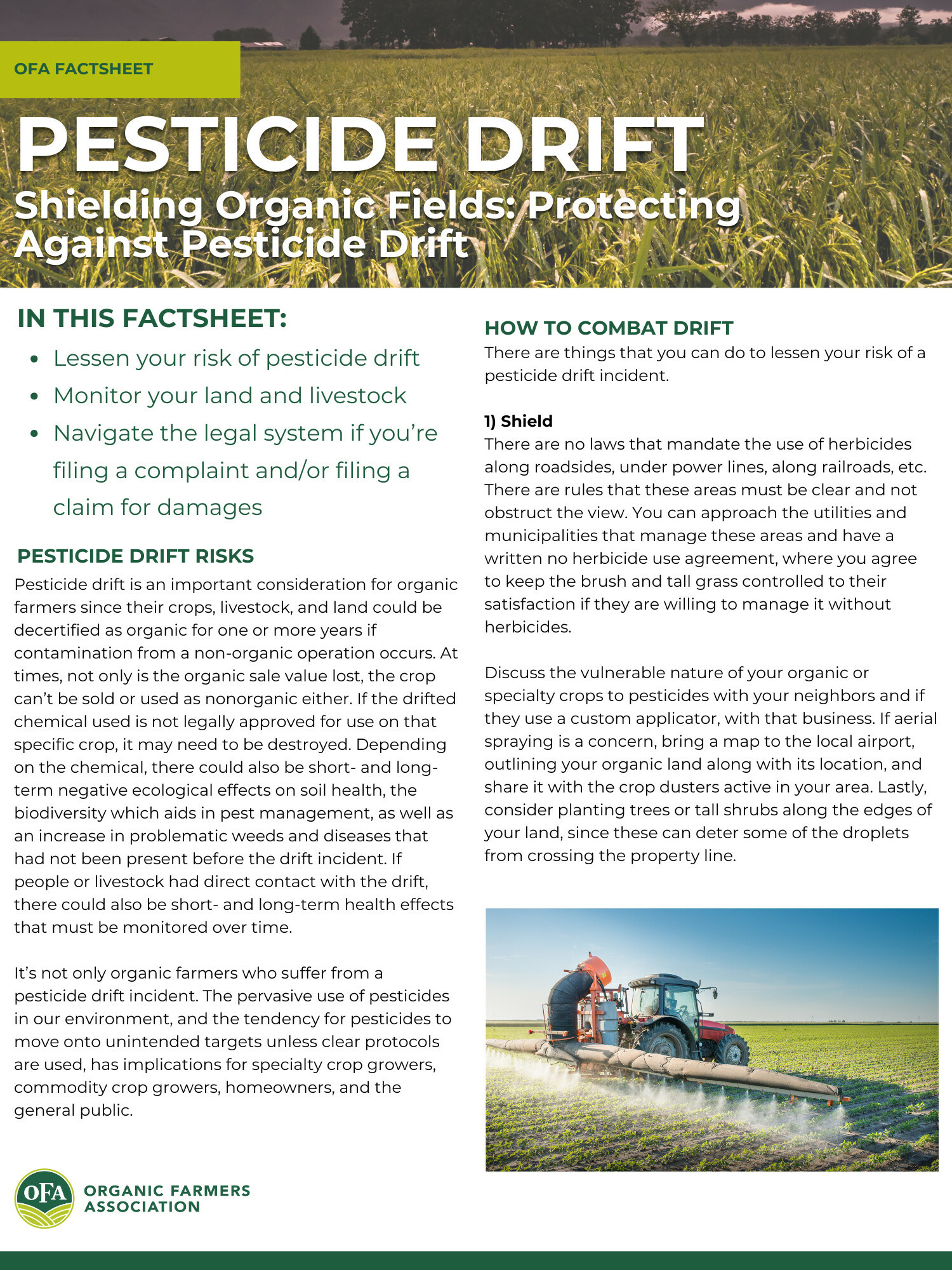
Pesticide Drift Factsheet
This factsheet explains that pesticide drift is a serious risk for organic farms because contamination can trigger organic decertification, destroy crop value, and sometimes force crops to be discarded entirely. It also says drift can harm soil health, biodiversity, people, and livestock, so the impacts extend beyond the farm’s bottom line.
Organic Livestock & Poultry Standards Rule (OLPS)
This one-pager appears to focus on the new Organic Livestock and Poultry Standards, especially how USDA should finish implementing and enforcing them. The main idea is that organic livestock rules should better protect animal welfare, pasture access, and consistent standards across farms and certifiers.
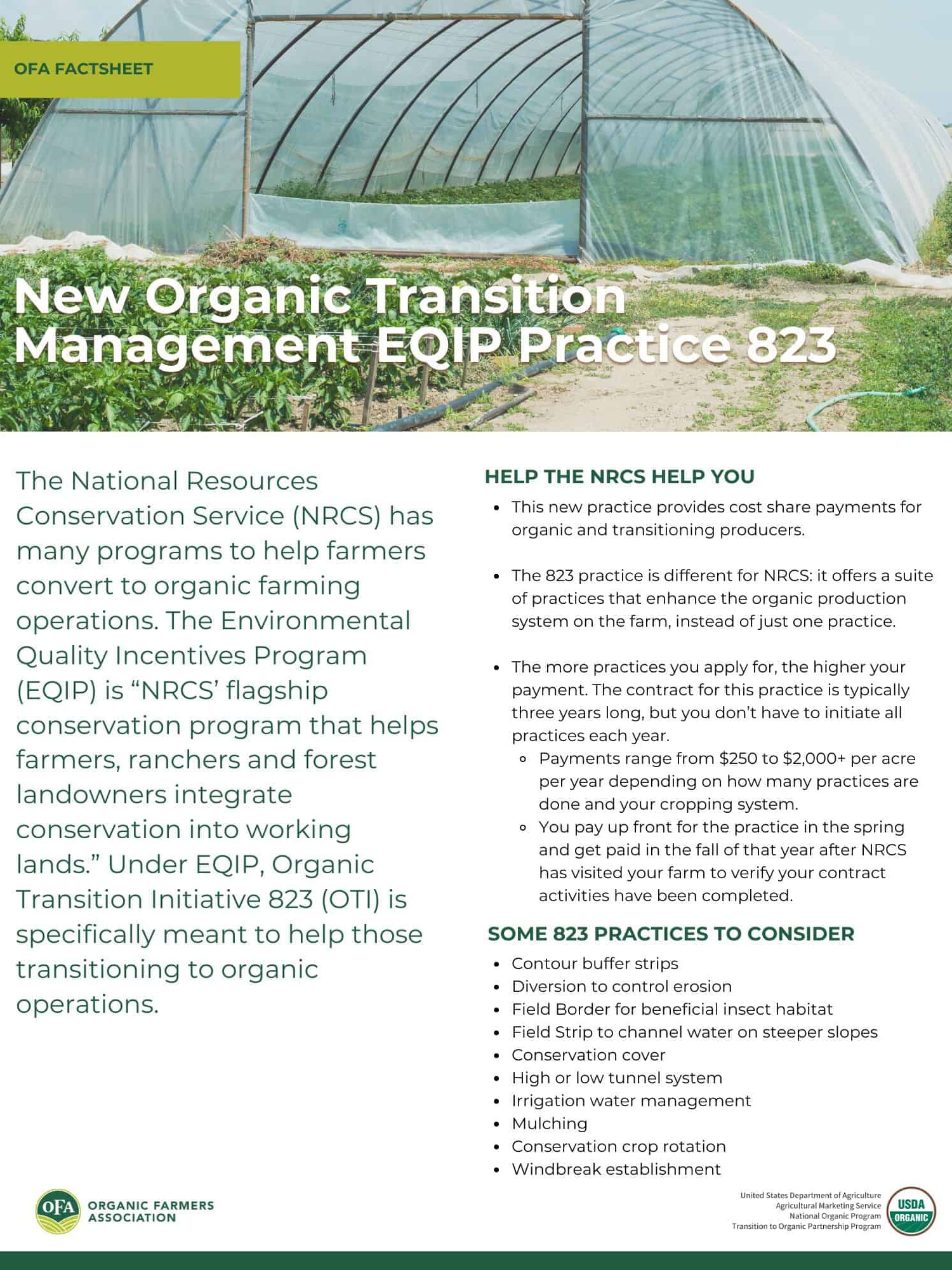
Organic EQIP Transition Management-823
This factsheet explains that NRCS’s EQIP Organic Transition Initiative 823 can help organic and transitioning farmers pay for conservation practices that fit an organic system, not just a single isolated practice. Its main message is that farmers should use the program strategically, with a well-prepared plan, because the payment depends on the mix of practices and the application’s ranking.
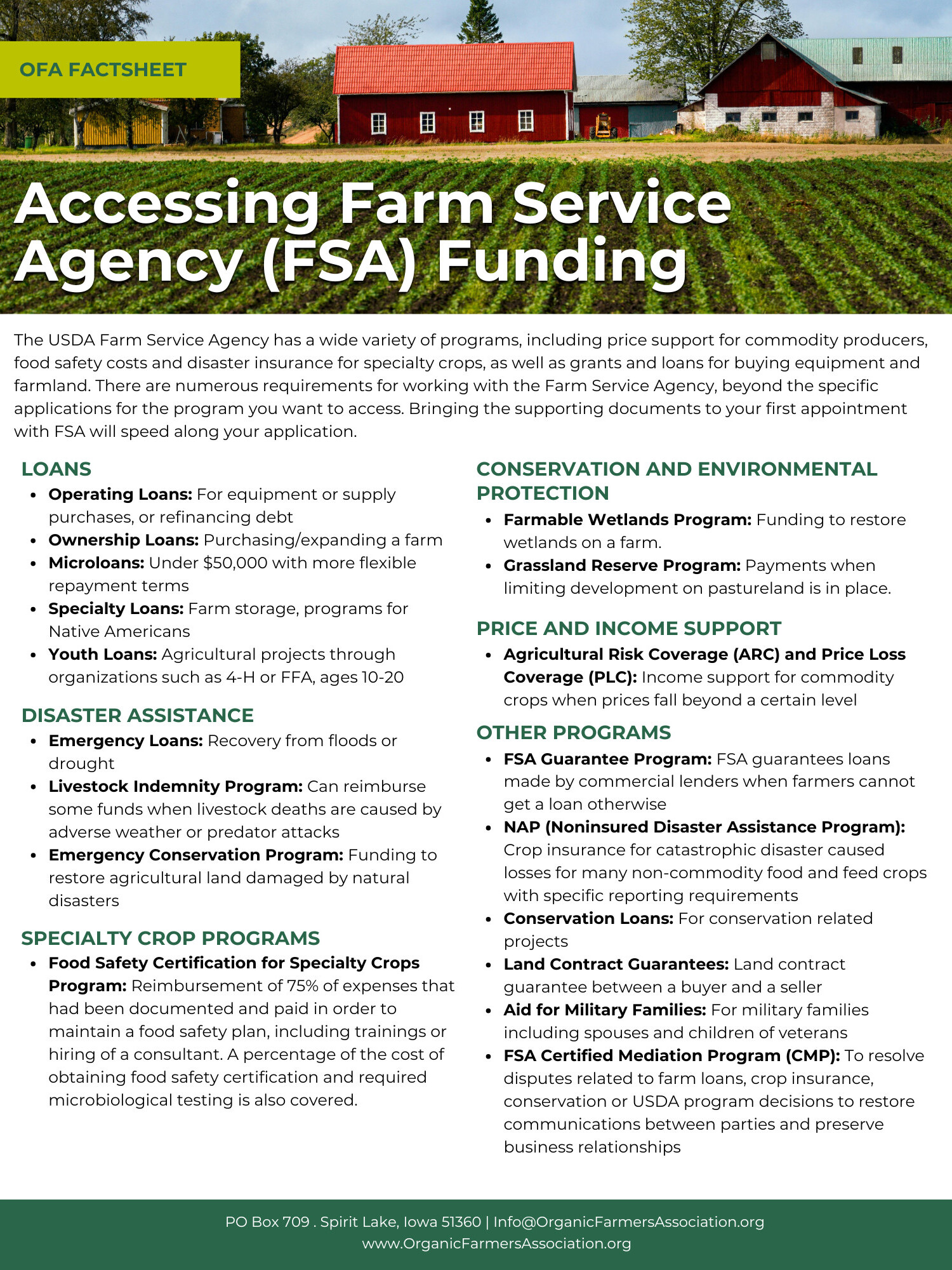
Accessing Farm Services Agency (FSA) Funding
This factsheet explains that NRCS’s EQIP Organic Transition Initiative 823 can help organic and transitioning farmers pay for conservation practices that fit an organic system, not just a single isolated practice. Its main message is that farmers should use the program strategically, with a well-prepared plan, because the payment depends on the mix of practices and the application’s ranking.
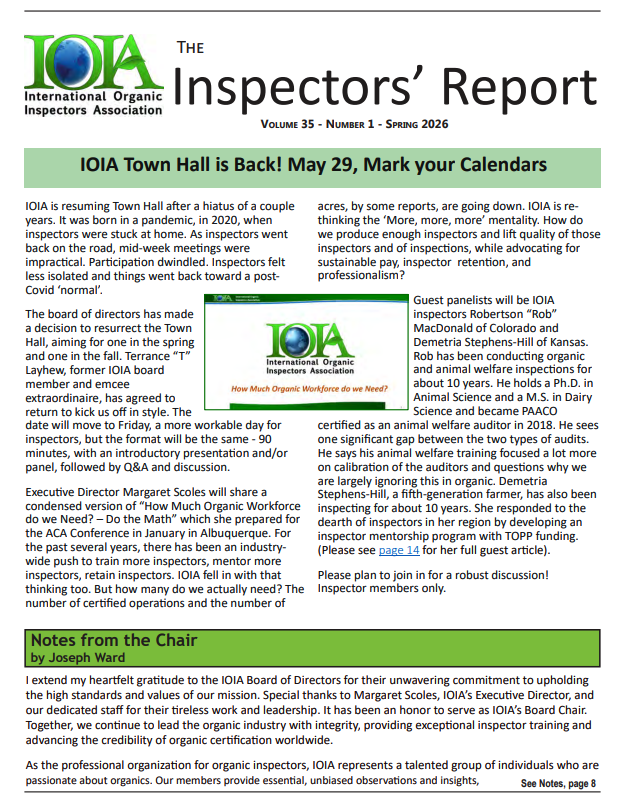
The Inspectors’ Report-SPRING 2026
This is the International Organic Inspectors Association (IOIA) quarterly newsletter.
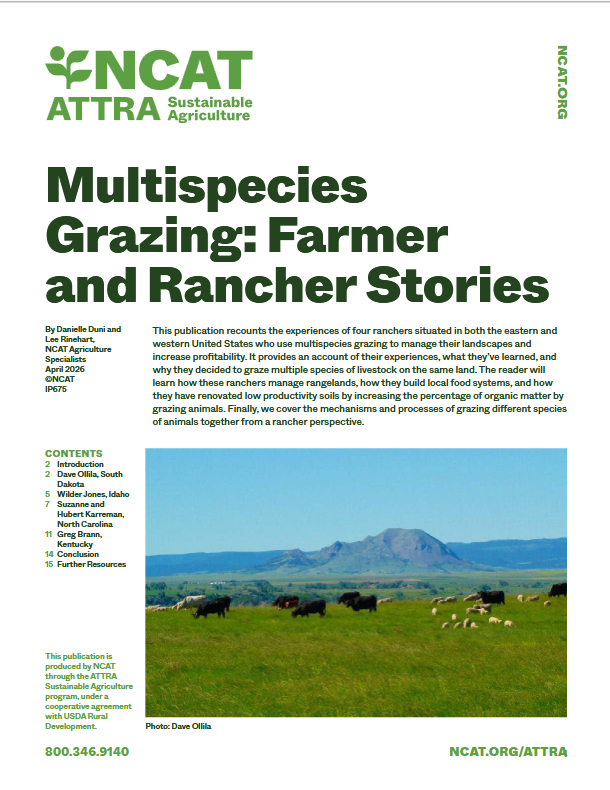
Multispecies Grazing- Farmer and Rancher Stories
The ATTRA publication “Multispecies Grazing: Farmer and Rancher Stories” shares the real‑world experiences of four livestock producers in the eastern and western United States who graze multiple species—typically combinations of cattle, sheep, and goats—on the same land to improve both ecological health and profitability. Through detailed case studies, it shows how these ranchers match different animals to diverse vegetation, design fencing and working facilities for each species, and use practices like “flerds” (bonded mixed groups), rotational grazing, and guardian animals to manage parasites and predation. Their stories illustrate key benefits of multispecies grazing, including greater carrying capacity, better weed and brush control, more even manure distribution, improved plant diversity, and enhanced soil health and organic matter, which together stabilize income by diversifying products like meat, milk, and fiber. The publication concludes with practical principles for success: align species with landscape and forage, plan stocking rates and rest periods carefully, and proactively manage parasites and predators—offering a rancher‑friendly roadmap for others considering adding additional species to their grazing system
Conservation Planning and Erosion Control on Organic Farms
This presentation explains how organic certification standards address natural resources and soil erosion, and how farmers can use NRCS tools and programs to meet and exceed those requirements. It outlines key organic rules related to maintaining or improving soil and water quality and minimizing erosion, then introduces the NRCS conservation planning process, including how resource concerns and erosion risks are identified and documented. The session covers practical methods for assessing erosion risk on organic farms and highlights specific NRCS conservation practices—such as cover cropping, contour farming, residue management, and prescribed grazing—that directly mitigate erosion. Finally, it shows how an organic farm’s Organic System Plan (OSP) and an NRCS conservation plan can be aligned so that organic compliance and NRCS assistance work together, helping farmers protect natural resources while improving their certification standing and access to technical and financial support.
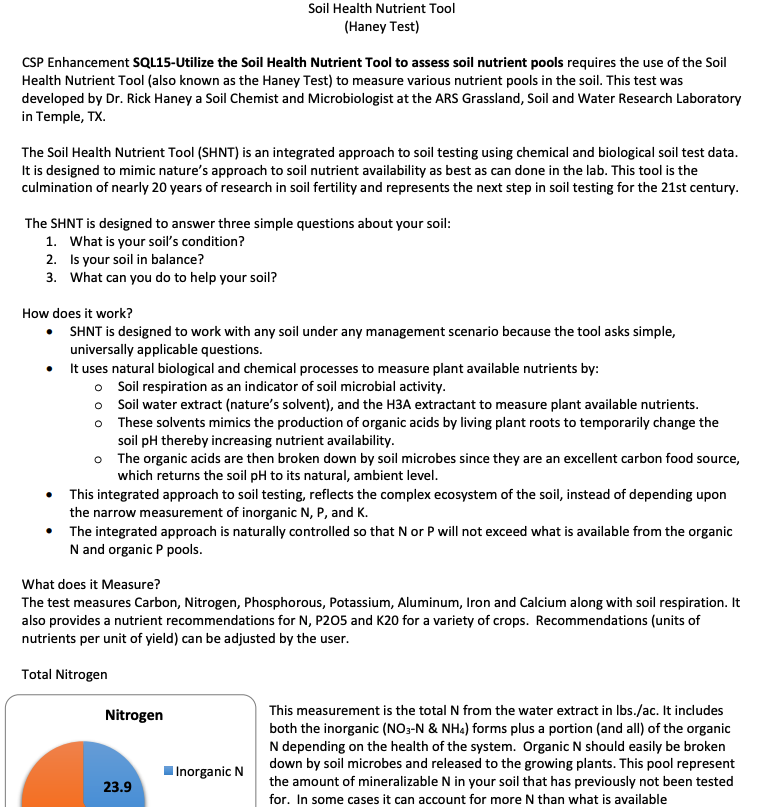
Soil Health Nutrient Tool (Haney Test)
CSP Enhancement SQL15-Utilize the Soil Health Nutrient Tool to assess soil nutrient pools requires the use of the Soil
Health Nutrient Tool (also known as the Haney Test) to measure various nutrient pools in the soil. This test was
developed by Dr. Rick Haney a Soil Chemist and Microbiologist at the ARS Grassland, Soil and Water Research Laboratory
in Temple, TX.
The Soil Health Nutrient Tool (SHNT) is an integrated approach to soil testing using chemical and biological soil test data.
It is designed to mimic nature’s approach to soil nutrient availability as best as can done in the lab. This tool is the
culmination of nearly 20 years of research in soil fertility and represents the next step in soil testing for the 21st century.
The SHNT is designed to answer three simple questions about your soil:
1. What is your soil’s condition?
2. Is your soil in balance?
3. What can you do to help your soil?
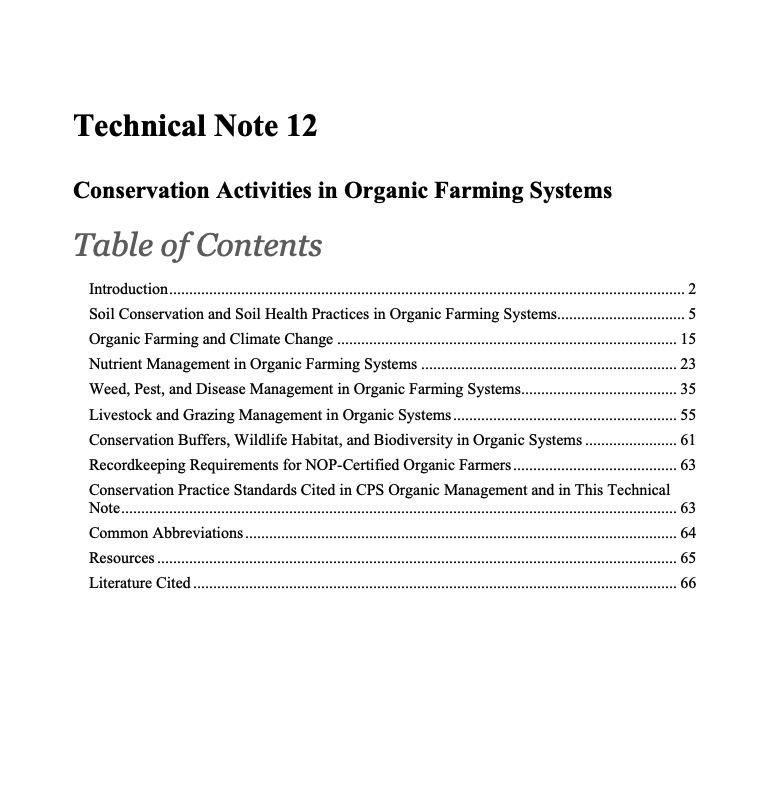
Organic EQIP Transition Management-823
NRCS Technical Note 12, “Conservation Activities in Organic Farming Systems,” explains how NRCS conservation practices align with and support USDA organic regulations, and offers guidance for integrating the two into coherent farm plans. It outlines the core principles of organic production (such as maintaining or improving soil health, biodiversity, and water quality) and maps them to specific NRCS conservation practices and programs that can help organic and transitioning farmers meet those requirements while addressing resource concerns like erosion, nutrient loss, habitat, and climate resilience. The note provides examples of conservation activities commonly used on organic farms—cover cropping, diversified rotations, reduced tillage, buffer strips, prescribed grazing, and habitat enhancement—and shows how they can be documented both in an Organic System Plan (OSP) and an NRCS conservation plan. It emphasizes that using NRCS planning tools and financial assistance can make it easier and more cost‑effective for producers to implement and maintain organic-compliant conservation practices, positioning NRCS and organic certification as complementary frameworks rather than parallel or conflicting systems.
Natural Resources Conservation Service-Organic Initiative
The EQIP Organic Initiative is a special component of USDA NRCS’s Environmental Quality Incentives Program designed to help certified organic, transitioning, and exempt organic producers implement conservation practices tailored to organic systems. It provides financial and technical assistance so farmers and ranchers can address resource concerns—such as soil health, erosion, water quality, habitat, and nutrient and pest management—while meeting National Organic Program (NOP) requirements and following an Organic System Plan.
Through the Initiative, eligible producers can receive cost-share support (typically up to 75%, and up to 90% for beginning or socially disadvantaged farmers) for practices like conservation planning, cover crops, crop rotation, buffer zones, pollinator habitat, irrigation efficiency, nutrient and pest management, and prescribed grazing. Organic and transitioning producers apply through their local NRCS field office and compete in separate funding pools from general EQIP, which improves their chances of funding but comes with a lower payment cap (recently increased to about $140,000 over the life of the contract, depending on Farm Bill rules). The Initiative does not pay for “going organic” itself; instead, it supports the conservation side of organic farming, making it easier and more affordable for producers to build environmentally sound, organic-compliant operations.
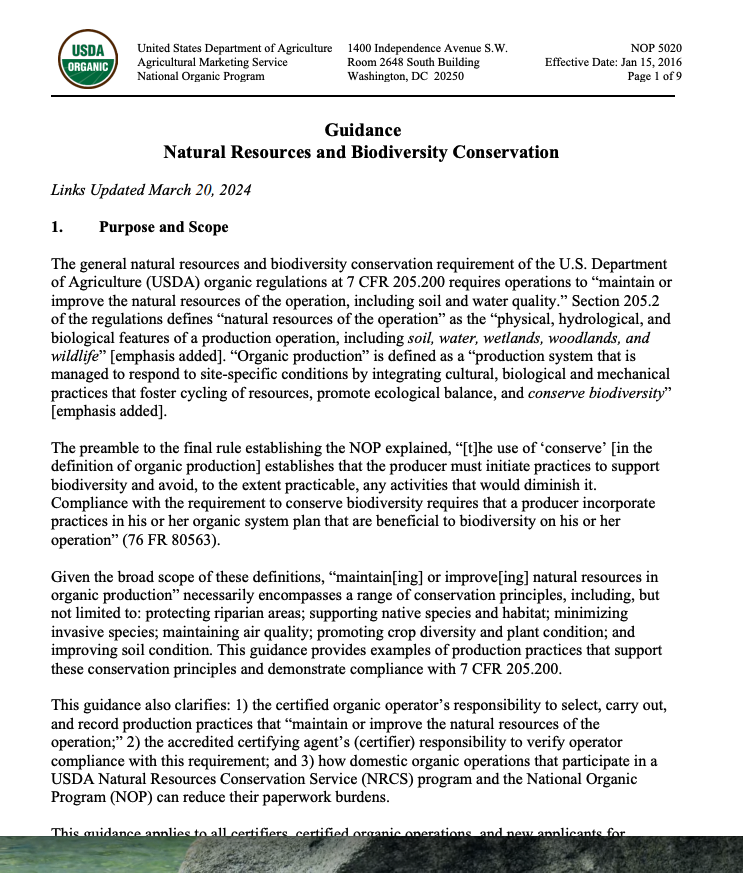
National Organic Program-Guidance Natural Resources and Biodiversity Conservation
NOP 5020, Natural Resources and Biodiversity Conservation, is USDA’s official guidance clarifying how organic operations must “maintain or improve the natural resources of the operation, including soil and water quality,” and actively conserve biodiversity as required by the organic regulations at 7 CFR 205.200 and 205.2. It explains that “natural resources of the operation” includes physical, hydrological, and biological features—soil, water, wetlands, woodlands, and wildlife—and that organic production must use cultural, biological, and mechanical practices that foster resource cycling, ecological balance, and biodiversity.
Natural Resources Conservation Service-Conservation Technical Assistance
NRCS’s Conservation Technical Assistance (CTA) program provides free, one‑on‑one technical help to farmers, ranchers, and forestland owners so they can conserve, maintain, and restore natural resources on their land while improving the long‑term health and productivity of their operations. Through CTA, NRCS conservation planners work directly with landowners to assess resource concerns (such as erosion, soil health, water quality, habitat, and air quality), develop customized conservation plans, and design systems of practices—like cover crops, nutrient management, prescribed grazing, or buffers—that fit the operation’s goals and landscape. Assistance can also be provided by certified Technical Service Providers (TSPs) who plan and design conservation practices that meet NRCS standards. CTA support is voluntary, not tied to a specific financial‑assistance contract, and is often the first step for producers who later enroll in cost‑share programs such as EQIP or CSP, since those programs typically require an NRCS conservation plan
An Overview of Technical Note 190-12: Conservation Activities in Organic Farming Systems Part 2: Organic IPM, Livestock, Pastures, and Buffers — The Webinar Portal
This on‑demand NRCS webinar provides a practical overview of the second half of Technical Note 190‑12: Conservation Activities in Organic Farming Systems, focusing specifically on organic integrated pest management (IPM), livestock, pastures, and buffers. Presented by Rebecca Champagne and Mark Schonbeck of the Organic Farming Research Foundation, it explains the science behind these topics in organic systems and then connects that science to concrete NRCS conservation practices that planners and organic producers can use. The webinar walks through real‑world examples showing how organic farms implement conservation activities such as habitat‑based IPM, well‑managed grazing and forage systems, and vegetative buffers that both meet National Organic Program requirements and address resource concerns like erosion, water quality, and biodiversity. Overall, it is designed to equip NRCS staff, technical service providers, and organic farmers with the knowledge needed to apply Technical Note 12 effectively when planning conservation systems on organic operations.
Where Plans Meet People: Scaling Regen Ag Through Smarter Program Design
Regenerative agriculture programs can start with science-backed plans but still struggle to deliver consistent results. In this webinar, Regrow and Farm Journal explore how successful programs connect sustainability and agronomic insights with real farmer participation. The discussion focused on how organizations move from footprint analysis and program prioritization to targeted engagement, enrollment, and verification of on-farm outcomes. Attendees will gain a clearer understanding of how aligning data-driven planning with the human realities of farmer decision-making can improve adoption, reduce uncertainty, and help regenerative agriculture programs scale with confidence.
Declining Nutrients in the Food Supply
Many common food crops today contain 25–50% fewer nutrients than they did in the past, due to degraded soils, climate change, heavy agrochemical use, and breeding for higher yields that dilute nutrient content. The Nutrient Density Initiative has created a downloadable set of talking points on this issue that can be used by dietitians, food brands, chefs, farmers, environmental advocates, food‑as‑medicine practitioners, and other food system leaders.
Rethinking No Till
The Friends of the Earth report “Rethinking No-Till” argues that conventional, pesticide‑intensive no‑till systems—especially in large‑scale U.S. corn and soy production—are being inaccurately promoted as “regenerative” or “climate‑smart,” despite heavy reliance on synthetic herbicides and other pesticides. Synthesizing scientific research and USDA data, it concludes that stand‑alone no‑till in these chemical‑dependent systems often fails to deliver genuine soil health or climate benefits and instead contributes to water contamination, biodiversity loss, and human health risks. The report calls for stricter, pesticide‑free definitions of regenerative agriculture and warns policymakers, companies, and consumers against greenwashing no‑till systems that maintain high synthetic input use.
Beyond the Harvest-Value-Added Product Development & Path to Organic
This session introduces the foundations of value-added food production for farms. Participants will explore how to move from raw agricultural products to marketable packaged goods through market research, customer positioning, product differentiation, packaging considerations, and sales channel strategy. The workshop will also cover scalability and startup cost considerations to help farmers assess feasibility and readiness before investing in production.
Organic Marketing 101
The guide is a practical overview of how organic producers can choose and succeed in different market channels (farmers’ markets, CSA, restaurants, retail, wholesale, export) by matching their goals, strengths, and logistics capacity to the right buyers and sales strategies
Wonderstate Transparency Report
Wonderstate’s 2025 Transparency Report explains how the Wisconsin coffee roaster is aligning its business with social and environmental values across the supply chain, using its new B Corp certification as a framework for sourcing, operations, and workplace practices. It highlights a strong focus on farmer equity, including a minimum green coffee price roughly double Fair Trade levels and an insistence on pay transparency so farmers receive higher, more stable incomes. The report also details internal commitments such as sharing 10% of company profits with employees and building a fair, inclusive workplace rooted in transparency and shared success. Environmentally, Wonderstate notes that its roastery is powered entirely by solar energy to shrink its carbon footprint and position coffee as a climate‑conscious choice. Finally, it describes a 5% giving program that channels profits into coffee‑growing communities, regenerative agriculture, local organizations, DEI efforts, and education and research in the coffee sector.
Regenerative Food Labels:What’s Behind the Claim?
The publication argues that while “regenerative agriculture” has significant momentum, there is no shared definition, leading to a proliferation of labels that each define “regenerative” differently and with varying rigor. It evaluates these labels through three main lenses in crop systems: how strongly they restrict or reduce synthetic fertilizers and pesticides (including IPM principles), how robustly they require core soil‑health practices, and how credible their verification and chain‑of‑custody systems are, with an appendix touch on social fairness, animal welfare, and native landscapes. Aimed at consumers and institutional purchasers, it asks two key questions: what verifiable claims each label makes about the finished product (such as reduced dietary pesticide exposure) and what verifiable claims it makes about on‑farm practices aligned with sustainability and resilience goals. The central finding is that regenerative labels vary widely in agrochemical rules, soil‑health requirements, and oversight, and that the most credible programs combine clear agrochemical reduction standards, active soil‑building practices, and strong, transparent auditing systems to ensure claims match realit
-1.png)
The Farm Fresh Atlas
The Farm Fresh Atlas of Wisconsin is entering its 25th season with the 2026 edition, continuing a tradition that began in 2002 of helping people find local farms, farmers’ markets, and food businesses committed to local and sustainable food. It notes that what started as a small, folded print booklet has grown into a statewide print and online directory at FarmFreshAtlas.org, now covering all 72 Wisconsin counties and listing hundreds of farms, markets, retailers, and restaurants. For newsletter copy, you might emphasize three angles: (1) the Atlas as a “where to buy local” finder for consumers and institutions; (2) the opportunity for farms and food businesses to list and reach new customers in both print and online formats; and (3) the broader impact of the Atlas in strengthening Wisconsin’s local food economy by making it easier to keep food dollars circulating in local communities
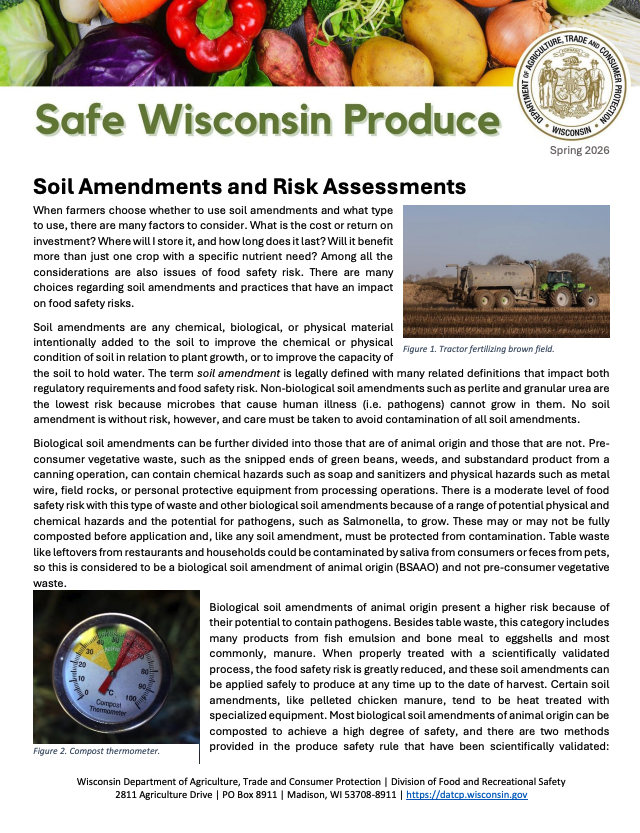
Safe Wisconsin Produce Spring 2026 Newsletter
The Safe Wisconsin Produce (SWP) Spring 2026 newsletter is now available for download. It highlights key topics for growers, including soil amendments and risk assessments, a nutrient management plan survey, strategies for improving tomato production, and updates on spotted lanternfly. Growers are also invited to contribute ideas or experiences for future editions by contacting the SWP team.
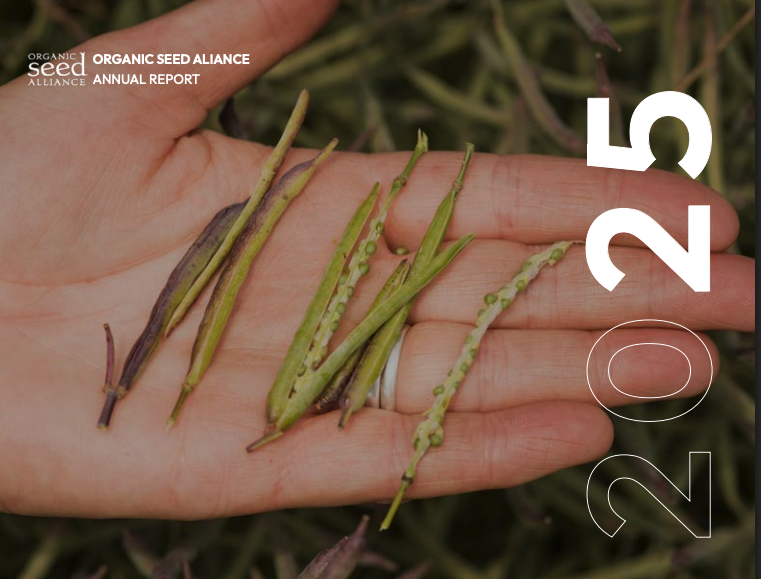
Organic Seed Alliance Annual Report 2025
The Organic Seed Alliance’s 2025 annual report highlights a year of growth, connection, and expanded impact across the U.S. organic seed sector. Celebrating its 22nd year, OSA emphasized its participatory approach by working closely with farmers, researchers, and advocates to strengthen organic seed systems.
Find your NRCS Provider
This search tool helps farmers and landowners quickly find their local USDA Service Center in Wisconsin. When you open it, the state is already set to Wisconsin, and you select a county from a dropdown list. After you choose a county, the page shows the address, phone number, and basic contact details for the USDA office serving that area, typically including Farm Service Agency (FSA) and Natural Resources Conservation Service (NRCS) staff. It’s designed so producers can easily figure out which office to call or visit for help with conservation programs, loans, and other USDA services.
How to Go Organic
This CCOF guide walks farmers through what organic agriculture is, how to adopt key organic practices, and the step‑by‑step process for getting certified, from planning the transition through inspection. Purpose and overview-The guide is designed as a practical roadmap for farmers beginning their transition to organic production in California, funded through USDA’s Transition to Organic Partnership Program (TOPP). It emphasizes that transitioning to organic deepens understanding of the farm ecosystem, improves soil health and pest resilience, and relies on good recordkeeping and planning.
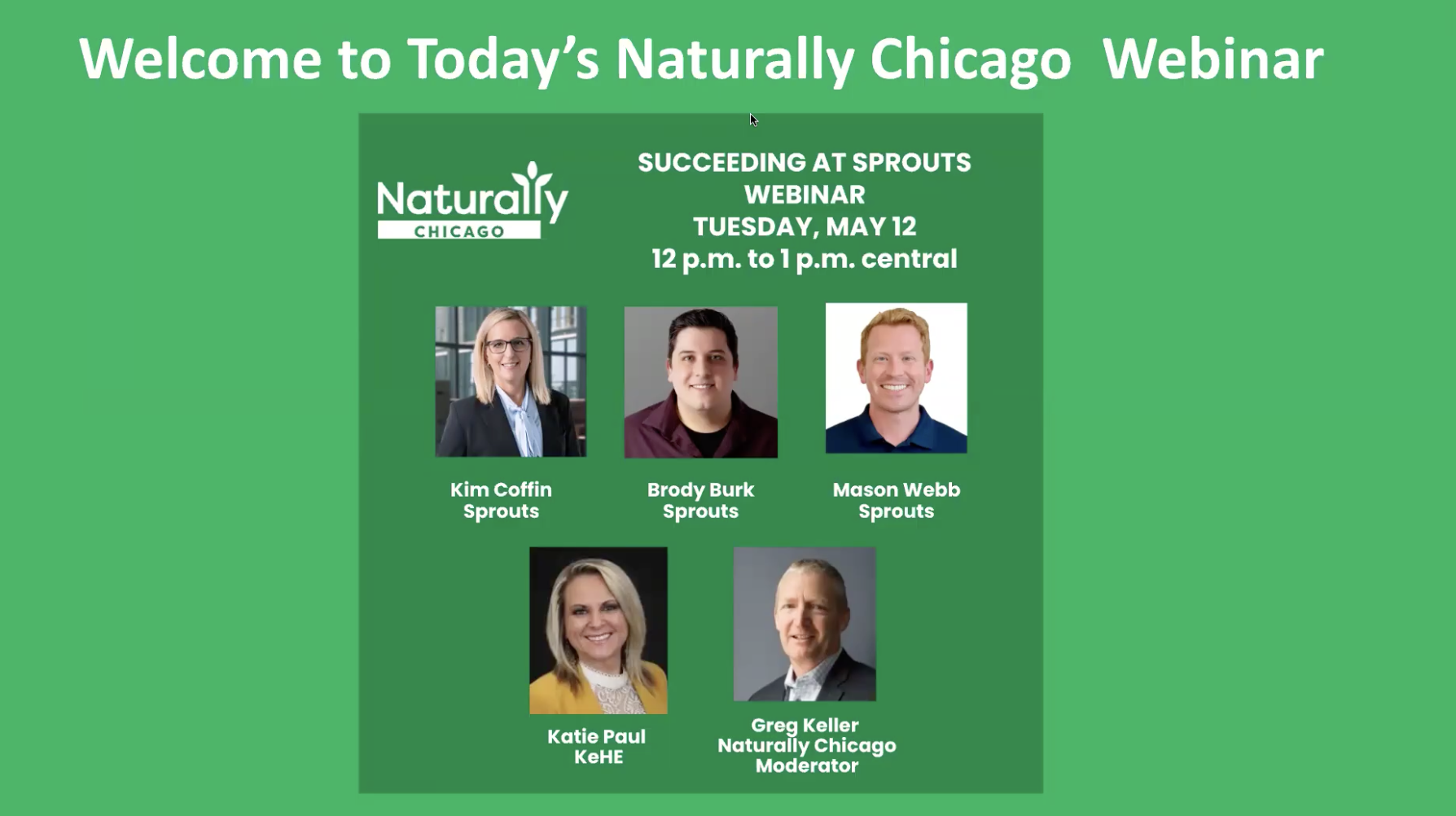
Succeeding at Sprouts
A Naturally Chicago webinar for emerging natural and organic brands on how to succeed at Sprouts as the retailer enters the Chicago market. Sprouts and KeHE leaders explain Sprouts’ growth plans, strict clean‑ingredient standards, and health‑focused shopper base, then walk through the Forager program and 90‑day “Forager Finds” tests that help new brands get national exposure with lower upfront costs and hands‑on support. The session covers how to apply, what buyers look for in packaging, pricing, and velocity, and where current opportunities lie in high‑protein, gut‑health, and other better‑for‑you categories.
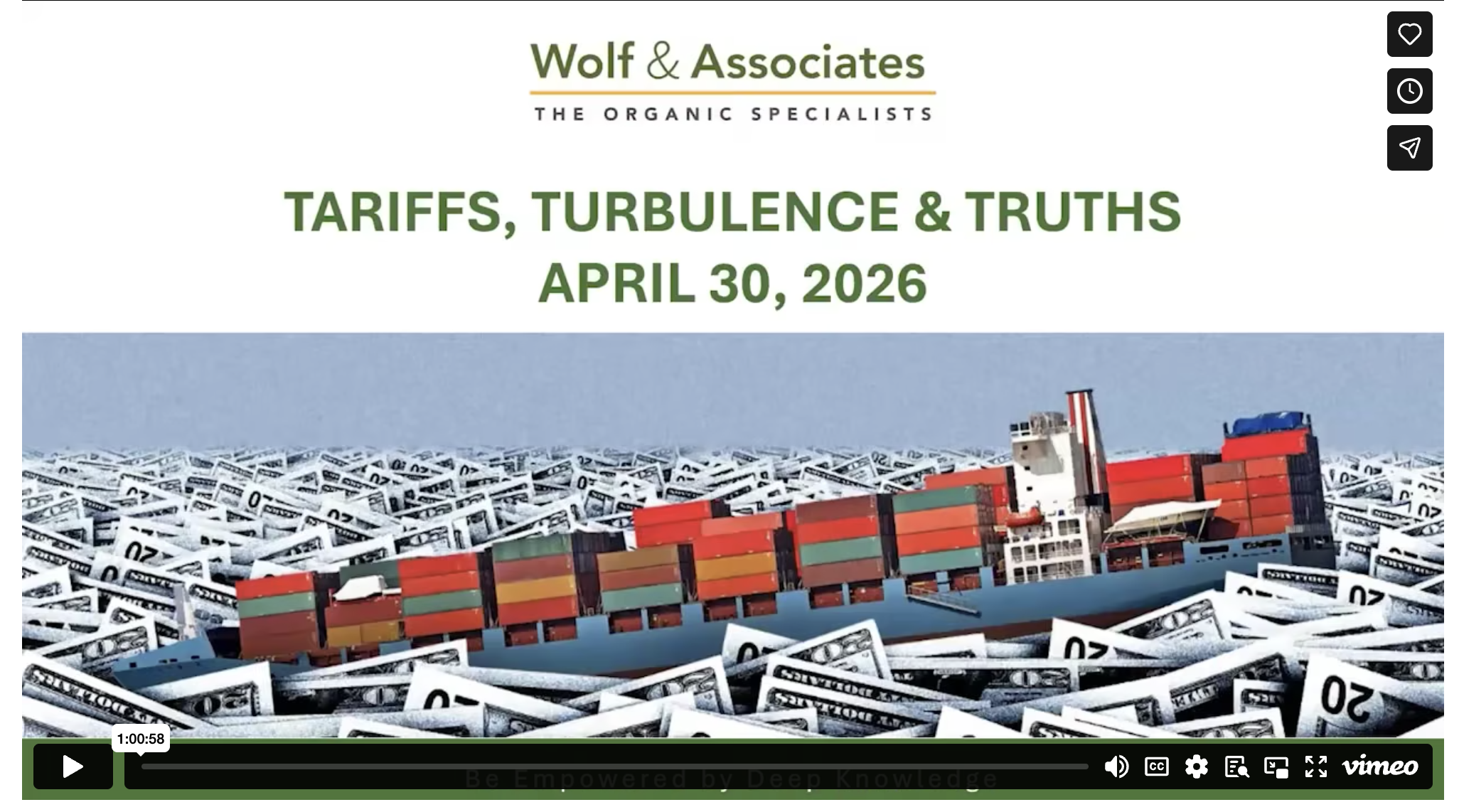
Organic Tariffs, Turbulence & Truths
A focused, expert‑led Wolf & Associates webinar breaking down what today’s fast‑moving tariff and trade policy shifts actually mean for organic businesses and supply chains. Industry leaders Chris Anderson, Tom Chapman, and John Foster share practical insights on organic trade policy, regulatory changes, and market dynamics, then close with an audience Q&A to help brands navigate risk and make confident decisions in a volatile environment
The Midwest Craft Distillers Guide to Local Grain Sourcing
A “Midwest Craft Distillers Guide” is designed to help craft distillers source regional grains, understand key supply-chain partners (farmers, maltsters, mills), and explore examples of grain‑to‑glass collaborations within the Midwest.
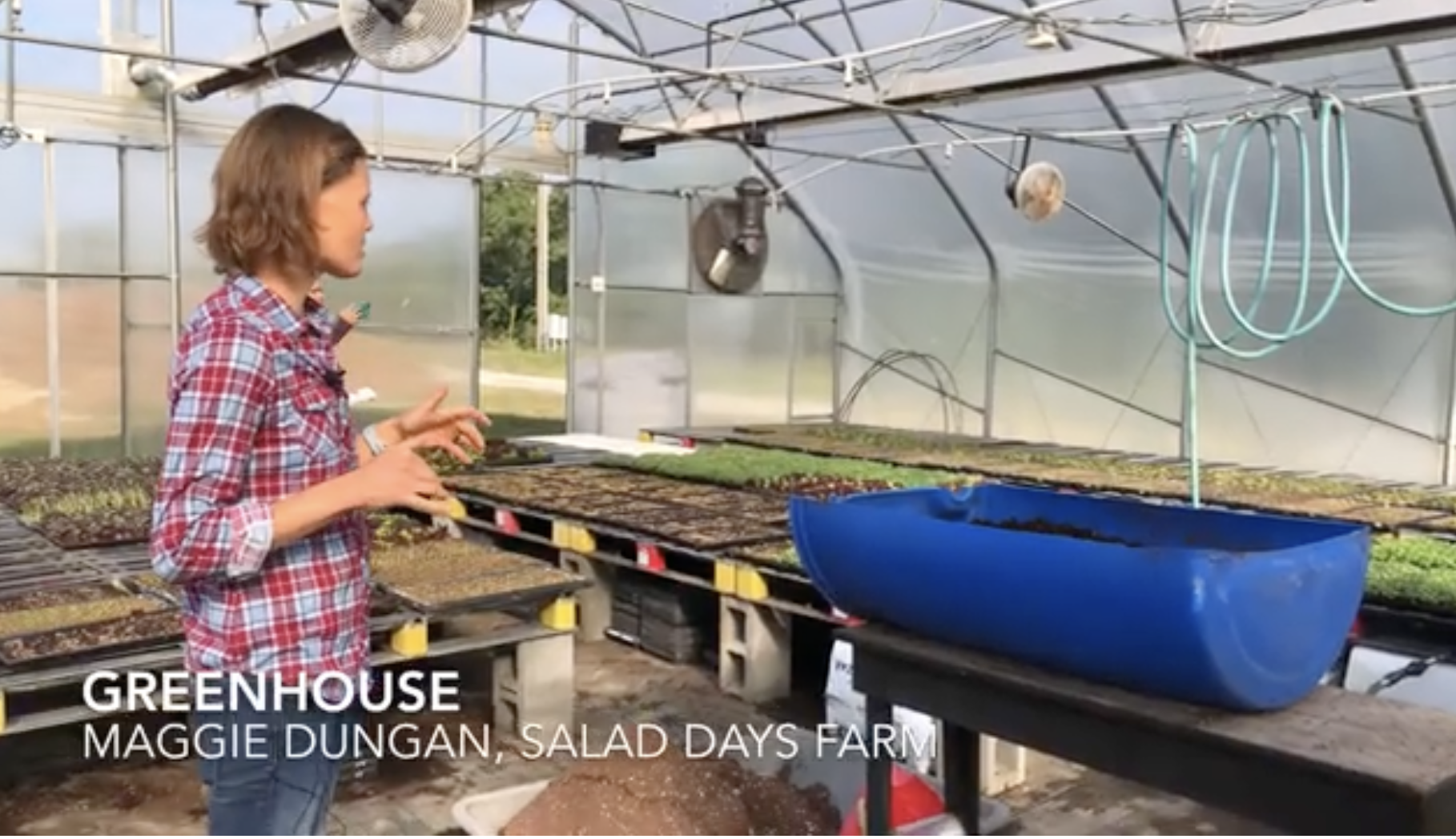
Direct to Consumer Salad Marketing
This is a recording of an April 2021 virtual farmer field day on certified organic specialty crops from production to product at Salad Days Farm. Diversity and year-round production have been part of Maggie Dungan's process from the start. Four seasons of crop harvest offer fresh vegetables and herbs to keep customers coming back. Value-added products extend and make use of every bit of the fresh harvest. New varieties, crops, and shelf products add to the Farm's product line every year. GAP Certification and an on-farm commercial kitchen broaden Salad Days' market possibilities and product potential.
Organic Grower: Summer 2026 Salad Farm Days
The Summer 2026 issue of Organic Grower Magazine, which features news and grower-focused content for the organic agriculture community and invites readers to subscribe for updates.
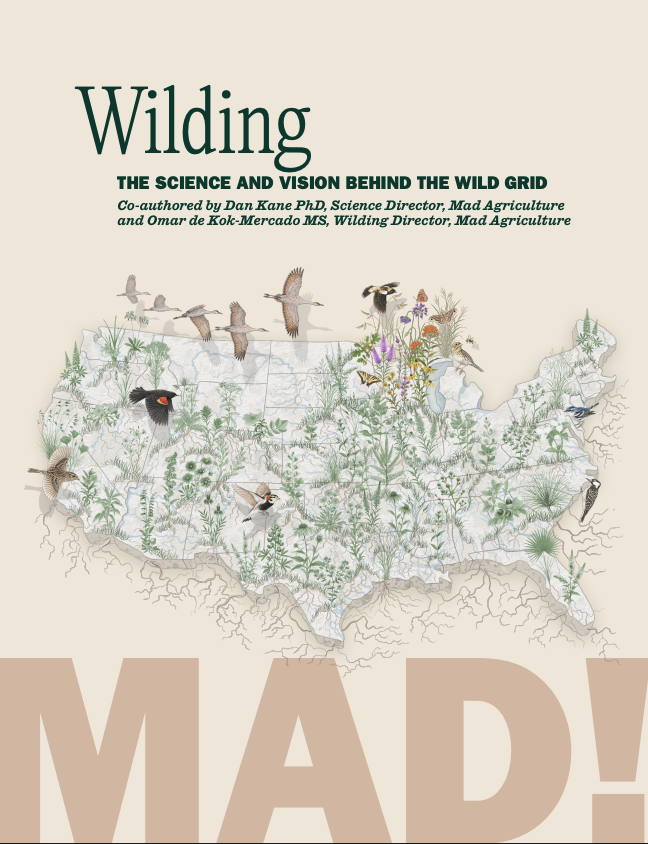
Wilding Project White Paper-Mad Agriculture
The paper proposes "Wilding," a 50-year conservation framework to establish 65 million acres of strategically placed native perennial plantings across U.S. agricultural landscapes, creating an interconnected habitat network called the Wild Grid. Two centuries of row crop expansion has caused a 29% decline in North American bird populations since 1970, elevated extinction risk for a third of native bee species, widespread water pollution, and massive soil carbon loss. Field research shows that native perennial plantings on just 10% of agricultural land—strategically positioned at footslopes and contours—can reduce nitrate-nitrogen loss by 67%, total phosphorus by 90%, and sediment by over 95%, while more than doubling bird diversity and increasing pollinator abundance several-fold. Currently, 70% of the 12,412 majority-cropland sub-watersheds in the U.S. fall below the 20% semi-natural habitat threshold scientists identify as necessary for maintaining ecosystem services, creating a planting gap of 22.9 million new acres. Unlike existing USDA programs that operate at individual parcel scales with short contract periods, Wilding works across four nested scales—field, community, regional, and continental—to create landscape-level connectivity and long-term durability, with Mad Agriculture launching a pilot project in Wisconsin's Driftless Area to test the approach.
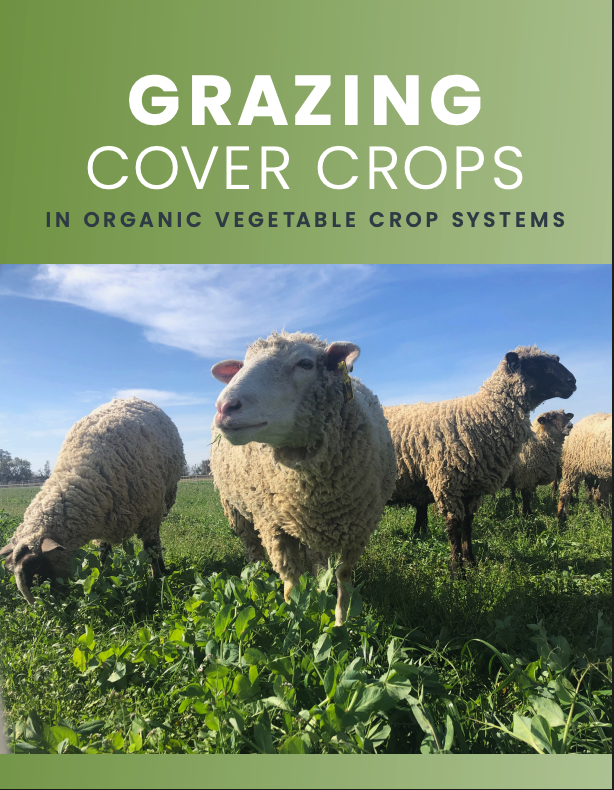
Grazing Cover Crops In Organic Vegetable Crop Gardens
Research on grazing cover crops shows that, when managed carefully, integrating livestock into cover-cropped fields can maintain or improve soil health while providing valuable forage and offsetting some or all of the costs of cover crop establishment. Well-managed grazing generally does not harm soil structure or reduce yields of following cash crops, and in many trials, yields remain comparable to ungrazed cover crop systems. Economic analyses suggest that the combination of reduced purchased feed, potential fertility benefits, and long-term soil improvements can make grazed cover crops financially attractive, especially when producers use adaptive/rotational grazing, avoid grazing saturated soils, and maintain adequate ground cover to protect the soil surface.
.png?utm_medium=email&_hsenc=p2ANqtz-8yvAsmEwJLgb98--1bchFBPfVgkJy-GPtf8yjGAdP9714hgctotVlTzdiMbYCqSBOg8KpUNPramlJui9f0CTReuL5OKQ&_hsmi=420082911&utm_content=420082911&utm_source=hs_email)
Tradin Organic Berry Market May 2026
The Berry market is transitioning from extreme scarcity to gradual stabilization across key regions. Improved availability is expected across several categories. While some regional supply imbalances are expected due to weather disruptions, prices are easing and early contracting is recommended.
.png?utm_medium=email&_hsenc=p2ANqtz-_jNOVC5i9FVrwmgtkOjK5bQPS2ohczs4UDECOmh5Jy7TZ_2aPcJpVwWrHII6U-q8tVtp-J6AfieLkY4UcoLyMqhuHO8g&_hsmi=420082911&utm_content=420082911&utm_source=hs_email)
Tradin Organic Mango Outlook 2026
In 2025, strong yields and exports across key origins drove prices down, prompting buyers to build positions and resulting in high stock levels. Early 2026 crops, first from Peru and then Mexico, came in lower, supporting firmer prices and a more balanced market. For Indian varieties, stock remains ample, particularly Alphonso, while Totapuri is comparatively tighter. Looking ahead, rising energy costs are expected to increase production costs and extend lead times.
USDA Organic Retail Toolkit
The toolkit provides ready-made graphics for use in different parts of grocery and online shopping environments, with guidance on size, placement, and example mockups. It advises using the graphics as designed (without changing the text) to preserve accurate and consistent messaging about organic products, while noting that each graphic can be used on its own or as part of the full set.
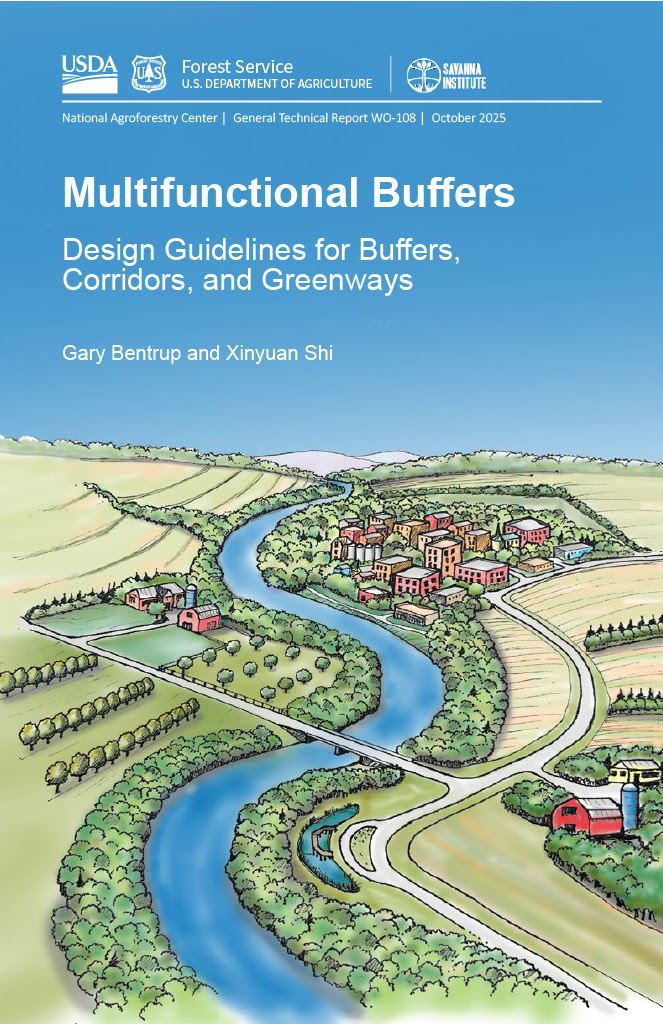
Multifunctional Buffers Guide
USDA's National Agroforestry Center and staff member Xinyuan Shi have released a new guide to multifunctional buffers! Over 80 illustrated design guidelines for multifunctional buffers are synthesized and developed from a review of more than 1,900 research publications. These science-based guidelines are presented as easy-to-understand rules of thumb for facilitating the planning and designing of multifunctional buffers in rural and urban landscapes. You can download a PDF of the guide by clicking below. Print copies can be requested by emailing Gary Bentrup at the National Agroforestry Center (gary.bentrup@usda.gov).
Wisconsin's Changing Climate
The Wisconsin Initiative on Climate Change Impacts (WICCI) provides science-based guidance to support resilience. Its 2026 update emphasizes coordinated action across sectors and highlights key priorities: preparing for more extreme weather, strengthening community resilience through climate-smart and nature-based strategies, and adapting to rapid changes in natural ecosystems.
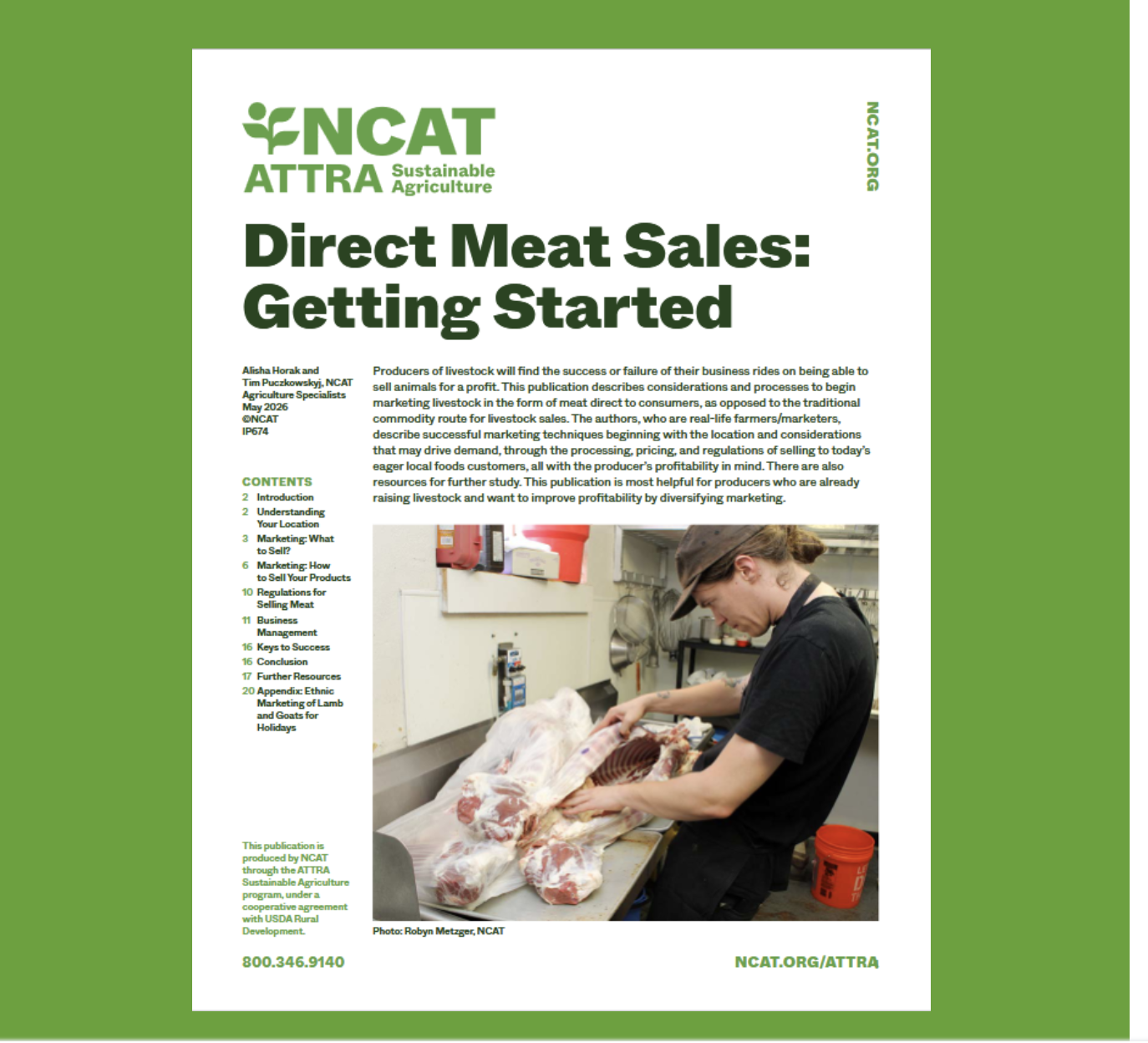
Direct Meat Sales-Getting Started
ATTRA's publication describes considerations and processes to begin marketing livestock in the form of meat direct to consumers, as opposed to the traditional commodity route for livestock sales. The authors bring their personal experience as farmers and marketers to this publication. They describe successful marketing techniques, beginning with the location and considerations that may drive demand, and extending to processing, pricing, and regulations that affect selling to local foods customers, all with the producer’s profitability in mind.
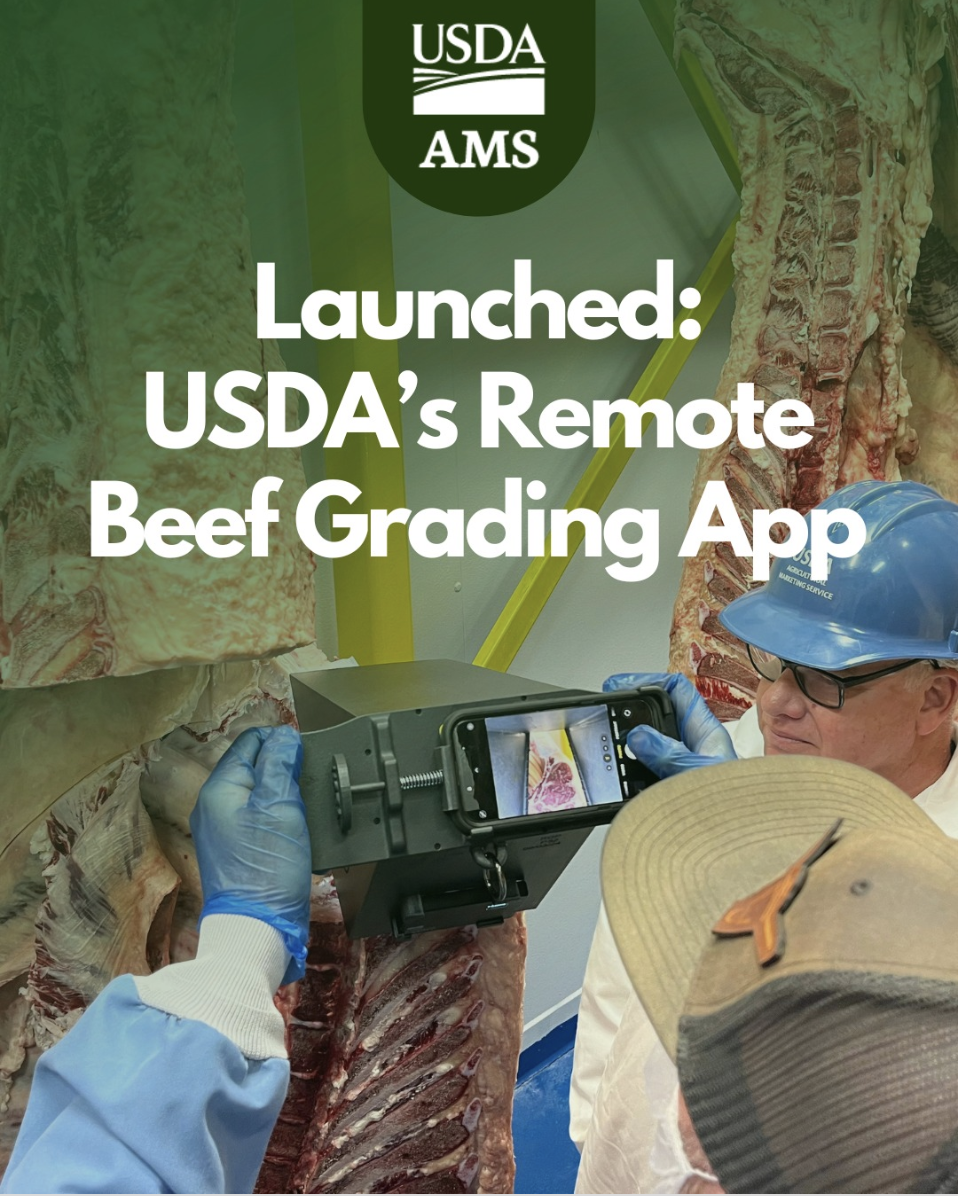
USDA’s Remote Beef Grading Service App
The USDA’s Remote Beef Grading service provides processors across the country, especially smaller entities, more access to USDA beef grading (Prime, Choice and Select) by offering grading remotely at a lower cost than traditional onsite services.
And now, we have launched a new app, making participation in the program even easier. Using the mobile app, processors can take photos of beef carcasses so graders can review them remotely and provide the official USDA grades. The app adds data protections and validation to ensure integrity, while giving customers a simpler process to follow with clearer updates to track grading progress.
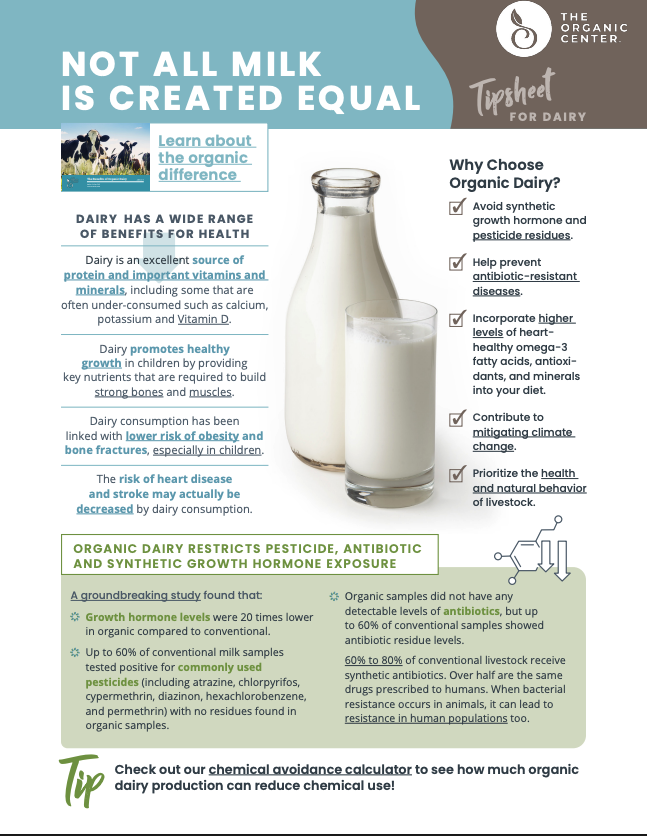
The Benefits of Organic Dairy Tip Sheet
The Benefits of Organic Dairy Tip Sheet-
Download the tip sheet on organic produce! Learn about the health benefits, environmental impact, and purity of organic options – all in one quick guide!
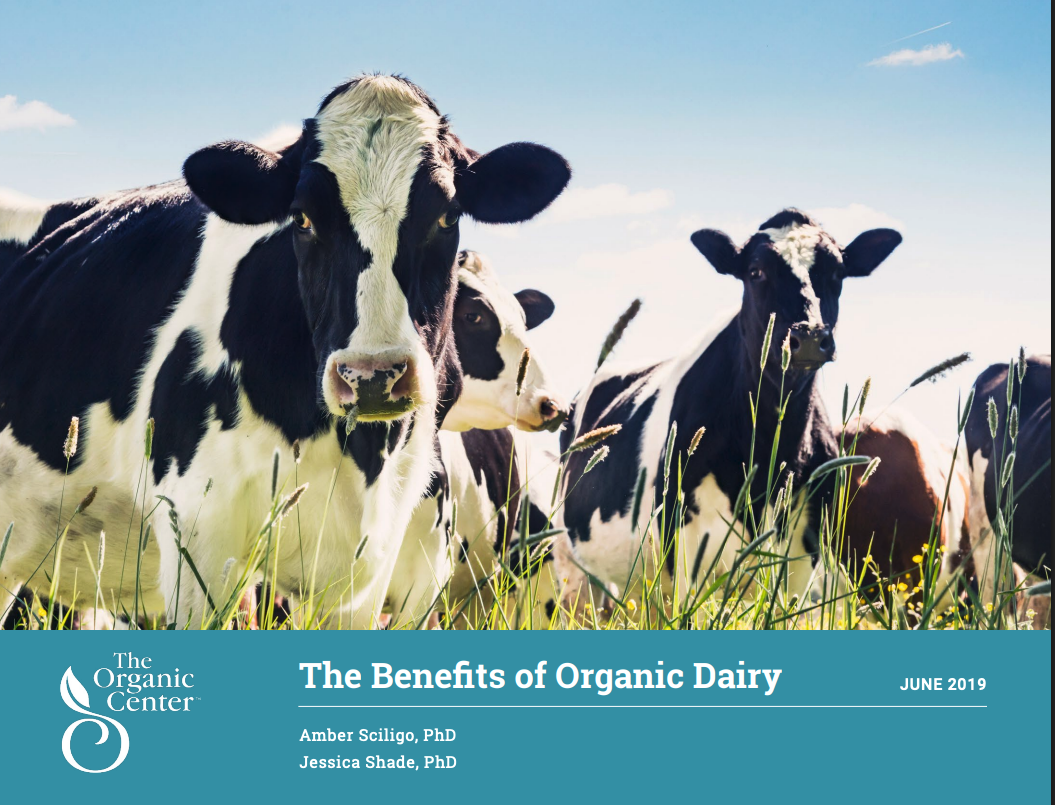
The Benefits of Organic Dairy-The Organic Center
Research highlighted by The Organic Center shows that organic dairy offers important benefits for consumers, animals, and the environment. Studies have found that organic milk contains more beneficial omega-3 fatty acids, antioxidants, and key nutrients, while avoiding the use of synthetic growth hormones and routine antibiotics. Organic dairy production also supports grazing-based systems that can help improve soil health and reduce greenhouse gas emissions.
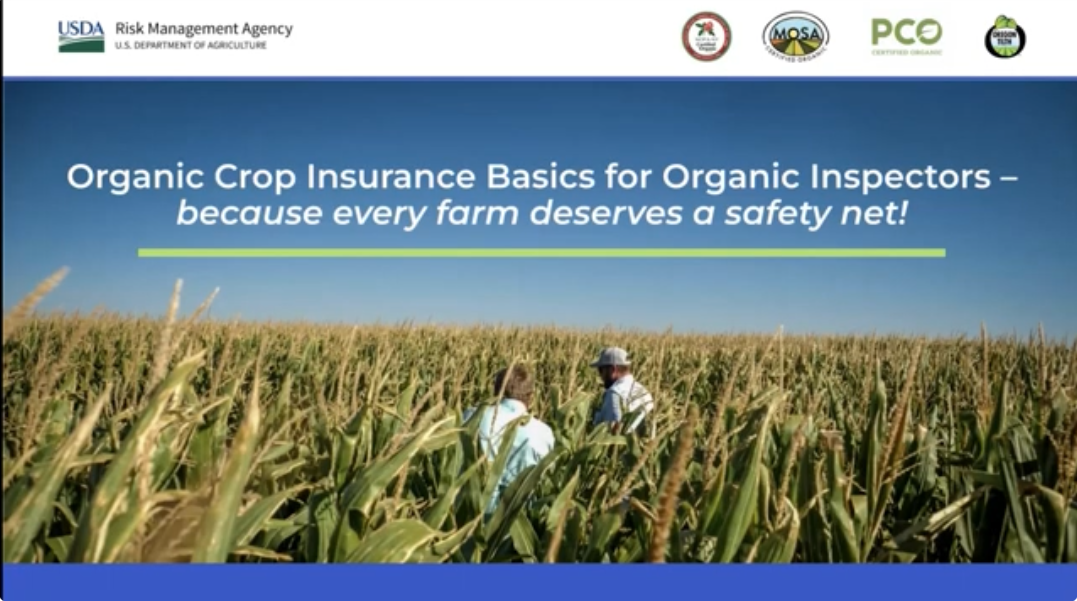
Training for Organic Inspectors: Organic Crop Insurance Options for Producers
Learn about crop insurance options for organic producers in this quick and essential training! This session is designed to equip organic inspectors with the knowledge they need to share valuable risk management resources during farm inspections. By helping producers understand their insurance options, inspectors can support stronger, more resilient organic operations..
Oregon Tilth’s Crop Insurance Page
Oregon Tilth’s crop insurance page is a practical guide to how organic-curious, transitioning, and certified organic farmers can use federal crop insurance (and related tools) as part of a broader risk management strategy, with clear explanations of program types, organic-specific provisions, and tips for working with agents
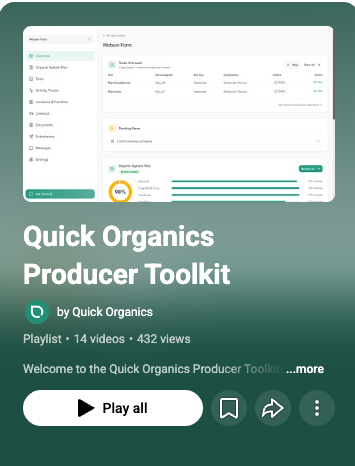
Quick Organics Producer Toolkit
This playlist is your go-to resource for walkthroughs, tutorials, and tips for navigating the Quick Organics platform. Whether you're just getting started or looking to explore specific features, these short, easy-to-follow videos are designed to help you feel confident and supported every step of the way. From building your Organic System Plan (OSP) to updating records, tracking activities, and uploading documents, everything you need is right here.
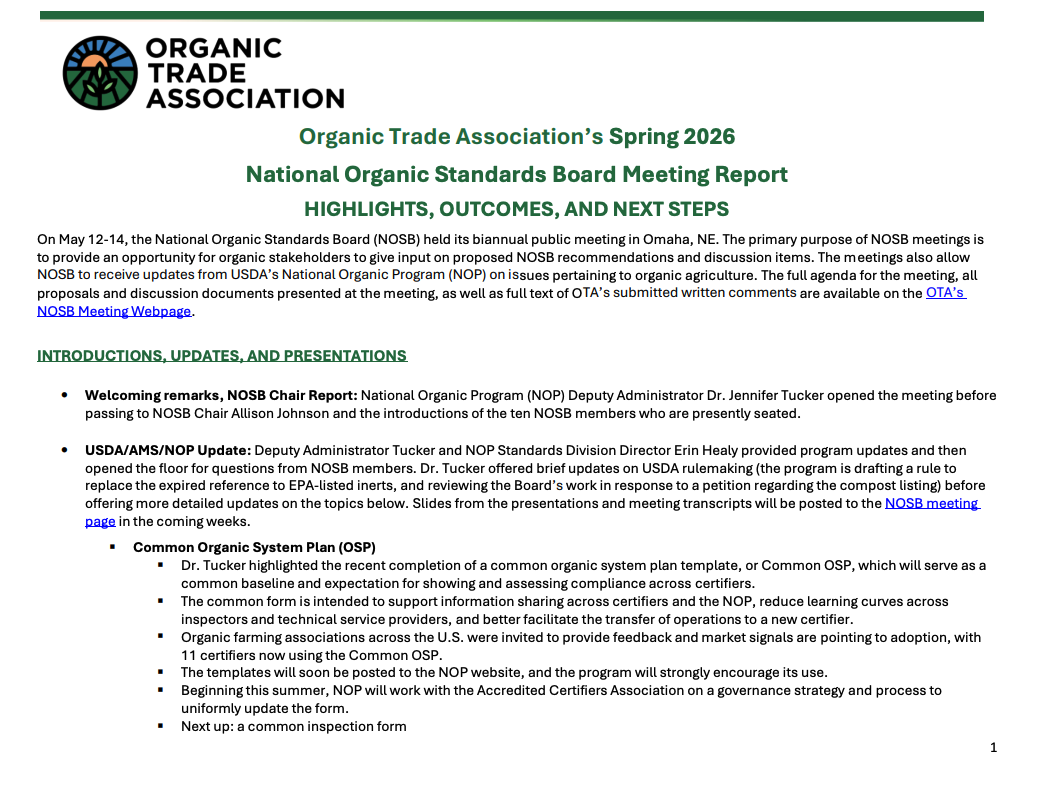
Organic Trade Association’s Spring 2026 National Organic Standards Board Meeting Report
The Organic Trade Association's Spring 2026 National Organic Standards Board (NOSB) Meeting Report is now available. Prepared by OTA's Regulatory Affairs team, the report provides a comprehensive overview of key discussions, recommendations, sunset reviews, and policy developments from the May 12–14 NOSB meeting in Omaha, Nebraska.
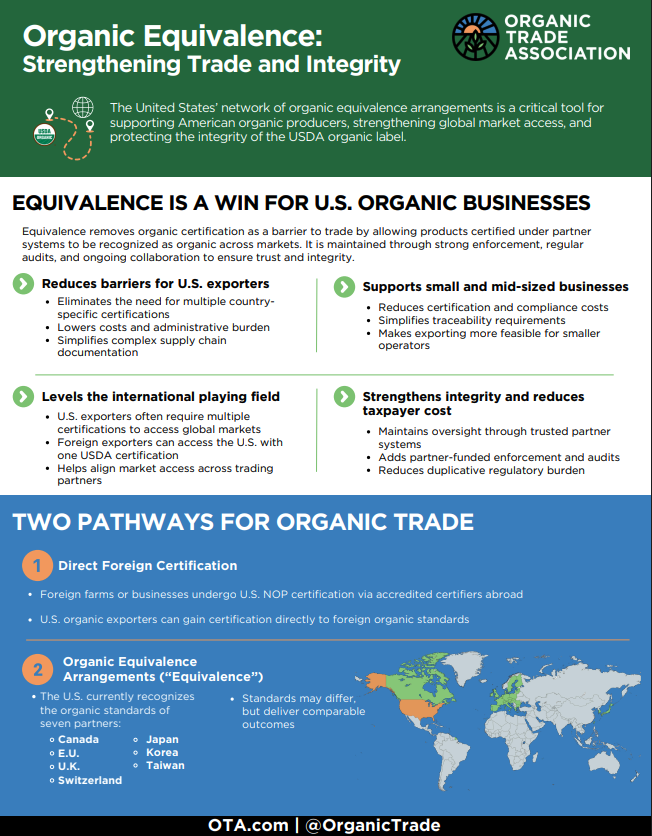
Organic Equivalence: Strengthening Trade and Integrity
The United States’ network of organic equivalence arrangements is a critical tool for supporting American organic producers, strengthening global market access, and
protecting the integrity of the USDA organic label.
Organic Trade Association-2026 U.S. Organic Exports Report
The Organic Trade Association has launched the new 2026 U.S. Organic Exports Report, offering a comprehensive, data-driven look at the current state of U.S. organic exports and the opportunities shaping global organic trade.
Farm to School - Connecting Kids and Farmers for Fresh Organic Food
The Farm to School program connects schools and kids with fresh, organic food from local farmers.
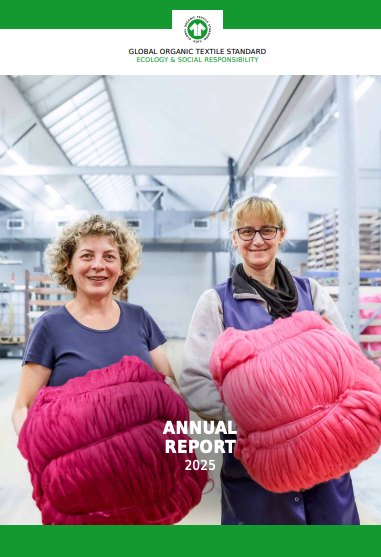
Global Organic Textile Standard Annual Report 2025
In 2025, the Global Organic Textile Standard (GOTS) continued to scale — reaching 17,800 certified facilities across 95 countries and reinforcing its alignment with global due diligence expectations.
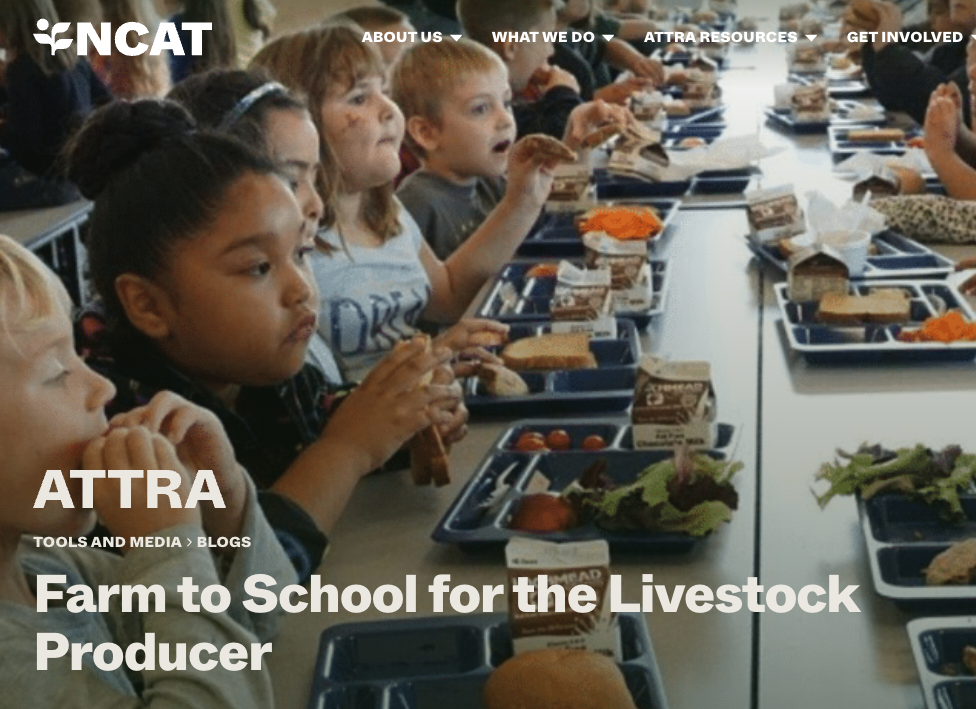
Farm to School for the Livestock Producer
The article is a practical guide for livestock producers considering selling meat or eggs into farm to school markets, emphasizing relationship-building and careful financial planning
Smart Sustainability: Cost-Effective Solutions for CPG Brands
Sustainability doesn't have to mean a big budget or a full brand overhaul. For CPG brands navigating tight margins, MOQs, and retailer requirements, the most impactful moves are often the most practical ones. This panel brings together packaging experts, brand operators, and sourcing specialists to share what actually works, without blowing up your COGS or overwhelming your team.
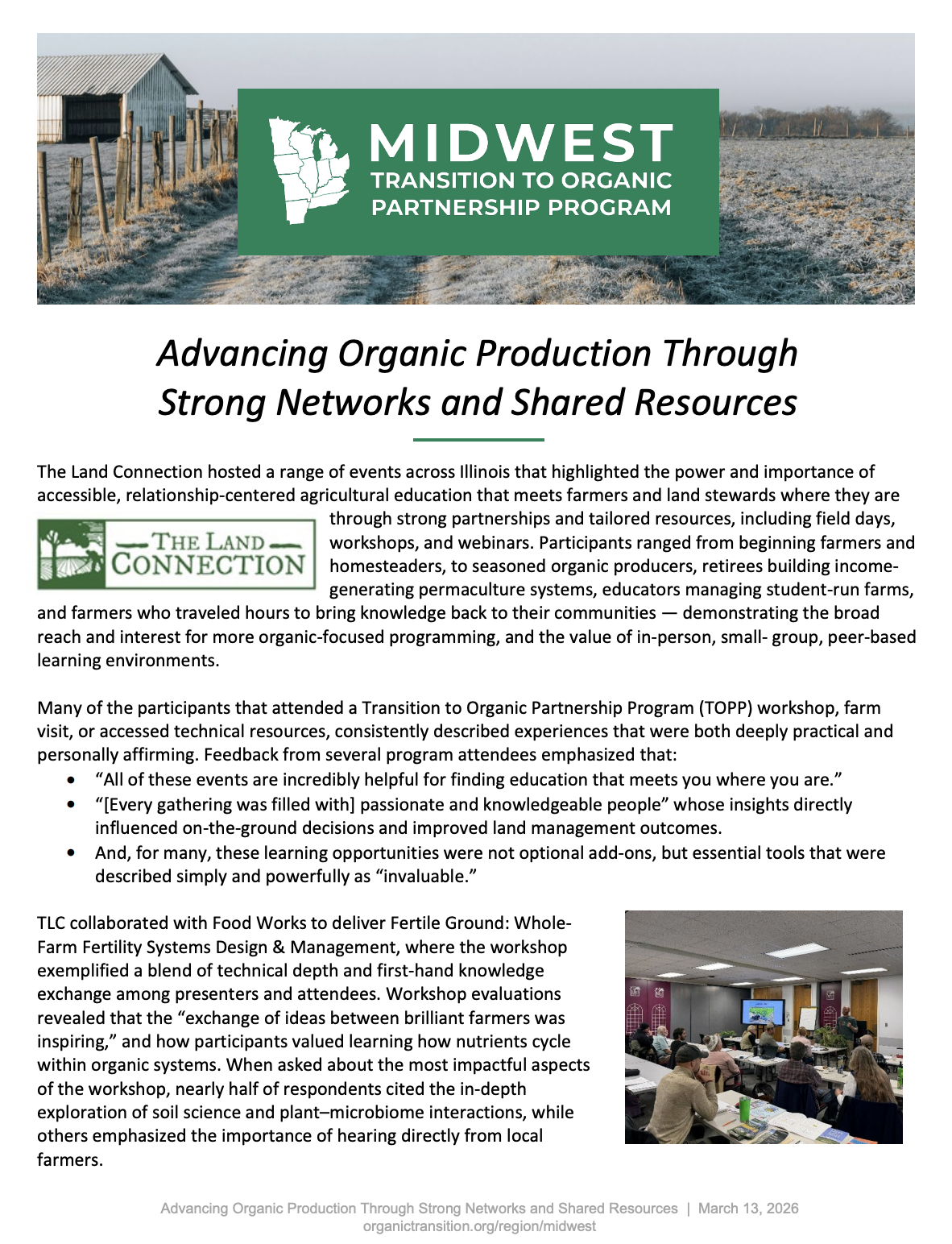
Advancing Organic Production throug Strong Networks
The Land Connection hosted a range of events across Illinois that highlighted the power and importance of accessible, relationship-centered agricultural education that meets farmers and land stewards where they are through strong partnerships and resources, including field days, workshops and webinars. Many of the participants that attended a TOPP activity or accessed technical resources consistently described experiences that were both deeply practical and personally affirming.
Maintaining Quality in Stored Organic Grain
You can't maintain grain quality if you don't know what's in the bin. In this Organic Advisor Call, Sam Oschwald Tilton of OATS talks with Curt Petrich of HC International about maintaining quality in stored organic grain. They discuss grain testing, documentation, storage management, and why understanding grain quality is essential for successful marketing and preserving value after harvest.
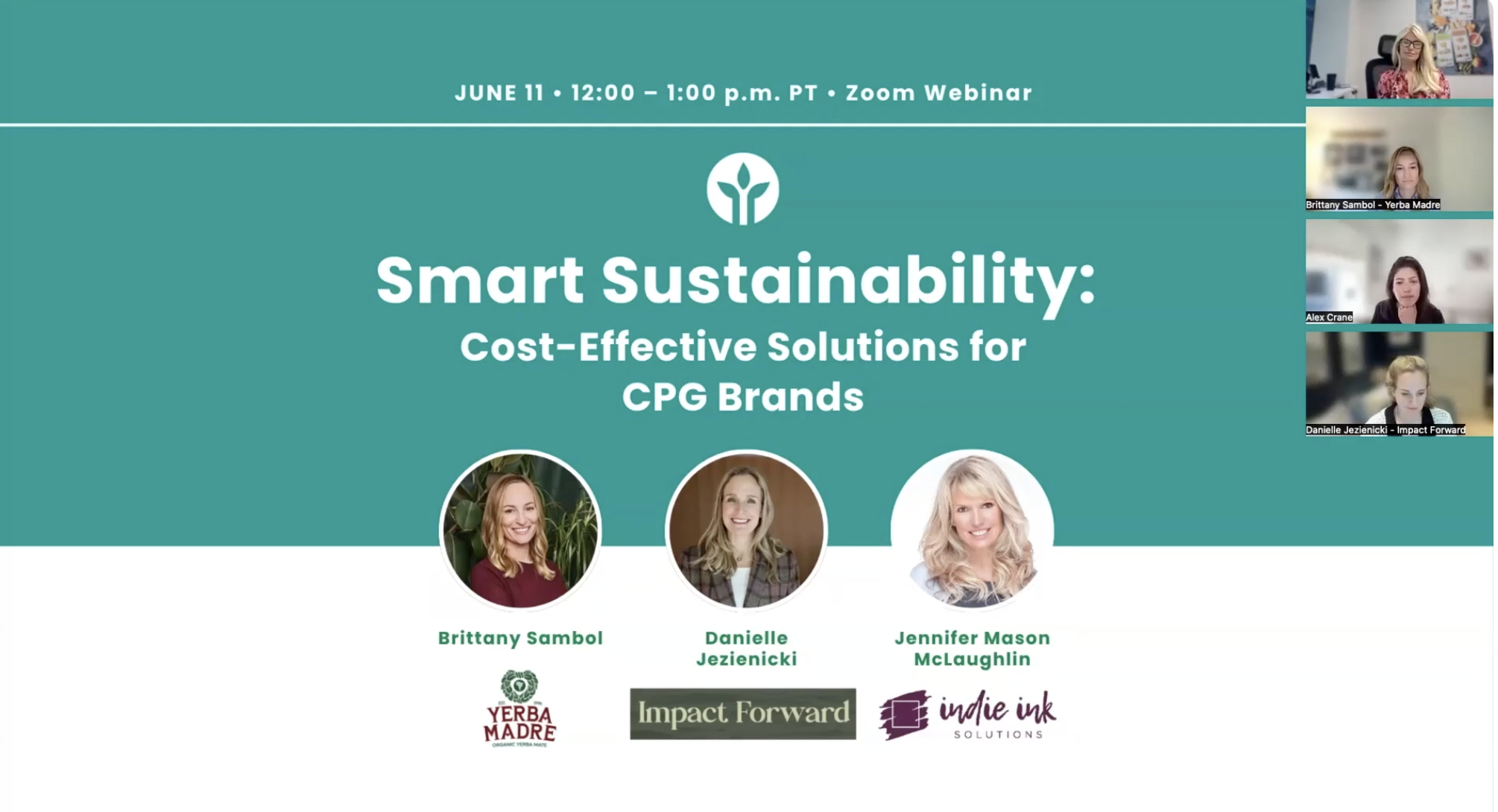
Naturally NorCal Smart Sustainability: Cost-Effective Solutions for CPG Brands
Sustainability doesn't have to mean a big budget or a full brand overhaul. For CPG brands navigating tight margins, MOQs, and retailer requirements, the most impactful moves are often the most practical ones. This panel brings together packaging experts, brand operators, and sourcing specialists to share what actually works, without blowing up your COGS or overwhelming your team.
10 Most Sustainable Grocers
Progressive Grocer’s “10 Most Sustainable Grocers of 2026” highlights retailers that are embedding sustainability into their core business models, from store operations and supply chains to community initiatives and product assortments. The 2026 list (in alphabetical order) includes large national chains and mission‑driven regionals: Costco Wholesale, Grocery Outlet, Hy‑Vee, Natural Grocers by Vitamin Cottage, PCC Community Markets, and others, all recognized for going “above and beyond” on sustainability. The mix underscores that both value formats and premium/mission‑driven grocers can lead on sustainability if they integrate it into strategy rather than treat it as a side program.
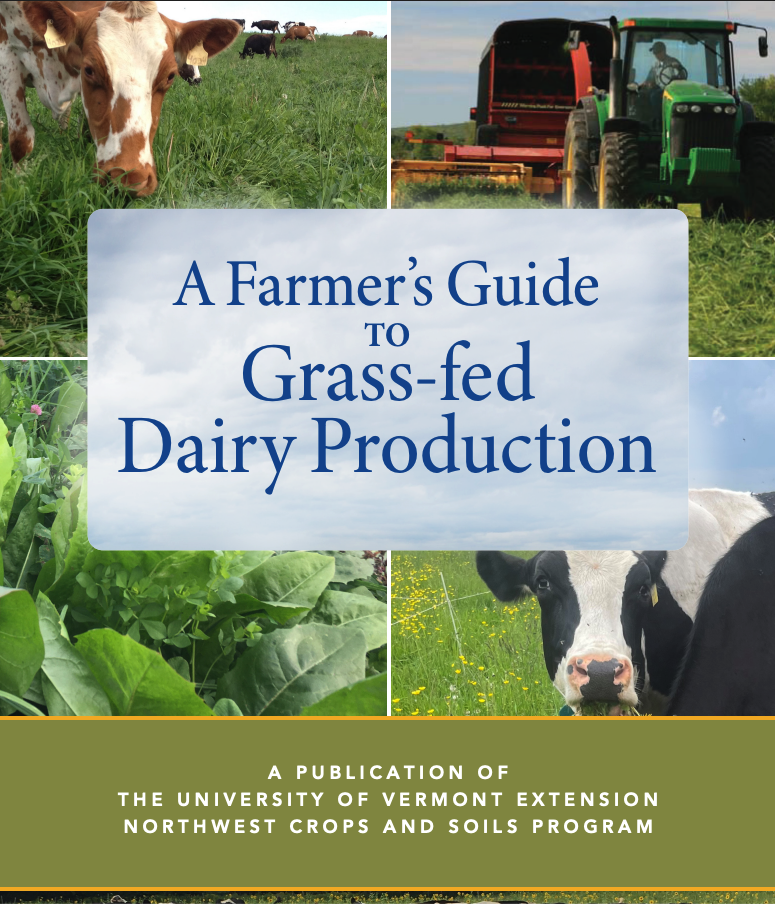
A Farmer’s Guide to Grass-fed Dairy Production
The guide walks you through the ins and outs of grass-fed dairying from soil fertility and nutrient cycling, to forage production and quality, herd health and reproduction, farm financials, and more! Community Markets, and others, all recognized for going “above and beyond” on sustainability. The mix underscores that both value formats and premium/mission‑driven grocers can lead on sustainability if they integrate it into strategy rather than treat it as a side program.
Experiments in Cut and Carry Mulch at Three Sisters Community Farm
Jeff Schreiber of Three Sisters Community Farm, Campbellsport, WI talks about his recent experiences with cut and carry mulch systems.
Measuring Cover Crop Performance
Dr. Etienne Sutton shares insights from the Great Lakes Cover Crops Project, a collaborative project that brings together farmers, researchers, and conservation professionals from across the Upper Midwest to build a regional database of cover crop performance.
Farmer Zoom Call: Introductions, discussion of farming systems and previous trials,
Farmer Zoom Call: Introductions, discussion of farming systems and previous trials, description of Google Forms for recording ongoing trials. (Video, Audio, Notes, Climate Resilience Trial Description form, Climate Resilience Trial Data Collection form)
No-Till Vegetable Production - Planting into Cover Crops, with Les Macare of Racing Heart Farm
Jan 11 2022 online presentation by Les Macare of Racing Heart Farm (https://www.racingheartfarm.com/), Colfax WI, to the Climate Resilient Organic Vegetable Production group.
Nutrient Management to Avoid Loss and Overaccumulation
Natalie Hoidal, Extension educator with the University of Minnesota, discusses how soil tests apply in minimal and no-till systems and how these reduced tillage practices influence nutrient management and soil health.
Overcoming Barriers to Soil Health Practices
Kerem Sengun, Farm Manager at Gwenyn Hill Farm in Waukesha, WI kicks off a discussion on barriers to implementing soil health practices with a presentation on some of the practices implemented at Gwenyn Hill Farm.
Comparing No-Till Methods to Conventional Tillage at Whitewater Gardens Farm
Sandy Dietz of Whitewater Gardens Farm in Altura, MN talks about the results of a SARE funded on-farm research project comparing three no-till methods (deep compost mulch, cut-and-carry mulch, and living mulch) with conventional tillage on crop performance. Then, Dr. Rue Genger of UW-Madison Extension describes research results from trials with fall cabbage planted into roller crimped winter rye.
Perennial Clover Cover Crops and Managing Crop Rotations to Reduce Tillage
Kat Becker discusses how she manages crop rotations on her diversified vegetable farm to reduce tillage. Lincoln Fishman shares how he manages his perennial clover cover crop system to minimize cash crop competition and maximize ecosystem benefits.
Vegetable Production in No-Till Terminated Cover Crops
James DeDecker and Matt Van Grinsven share results from a 2-year research study evaluating the influence of cover crop termination methods, including conventional tillage, strip-tillage, rolling and crimping, and tarping on 1) soil health and fertility 2) GHG emissions 3) climate resiliency 4) weed occurrence and 5) organic vegetable crop production and quality.
Farmer Experiences with Cover Cropping
Tom Bryan shares his experiences with three different cover crop systems at Gorman Farm: perennial pathways between rows of vegetable crops, sweet alyssum grown along the edges of high tunnels, and potatoes interseeded with mustard.Tenzin Botsford talks about how he establishes, manages and terminates his diverse cover crop mixes within his vegetable crop rotations at Red Door Family Farm. Solveig Hanson shares the latest updates in winter pea breeding efforts through the Cover Crop Breeding Network.
https://www.covercropbreeding.com/
Cover Crop Research
Rue Genger shares observations from a winter rye-vetch cover crop establishment trial at the West Madison Agricultural Research Station this year.
Equipment Modifications for Reduced Tillage
Janaki shows his delivery system for his cut-and-carry rye mulch, which involves a chopper box with a chute added on the side for more precision. Rufus shows his manure spreader with a rear box added to the back to drop compost directly onto his vegetable bed
Soil Health, Nutrient Cycling, and Soil Biology in Reduced Tillage Systems
Christine Sprunger, Asst. Professor of Soil Health, Michigan State University
Optimizing No-Till Methods for a Direct-to-Market Organic Vegetable Farm
Presenter: Sandy Dietz, Whitewater Gardens Farm
Developing New Production Systems Through Farm Research Networks
Collaborative farmer research networks offer a way to learn alongside - and from - other farmers as you explore new methods, observing and modifying them to suit your specific on-farm conditions and needs. Join Emma Link (Practical Farmers of Iowa) and Rue Genger (University of Wisconsin-Madison) for a discussion of different approaches to on-farm research, and learn about opportunities to get involved.
Farmer Experiences with Cover Cropping
Tom Bryan shares his experiences with three different cover crop systems at Gorman Farm: perennial pathways between rows of vegetable crops, sweet alyssum grown along the edges of high tunnels, and potatoes interseeded with mustard.Tenzin Botsford talks about how he establishes, manages and terminates his diverse cover crop mixes within his vegetable crop rotations at Red Door Family Farm. Solveig Hanson shares the latest updates in winter pea breeding efforts through the Cover Crop Breeding Network.
https://www.covercropbreeding.com/
Introduction: Farming Systems, previous trials, description of Google Forms for ongoing trials
Farmer Zoom Call: Introductions, discussion of farming systems and previous trials, description of Google Forms for recording ongoing trials. (Video, Audio, Notes, Climate Resilience Trial Description form, Climate Resilience Trial Data Collection form)
Farmer Experiences with Cover Cropping
Tom Bryan shares his experiences with three different cover crop systems at Gorman Farm: perennial pathways between rows of vegetable crops, sweet alyssum grown along the edges of high tunnels, and potatoes interseeded with mustard.Tenzin Botsford talks about how he establishes, manages and terminates his diverse cover crop mixes within his vegetable crop rotations at Red Door Family Farm. Solveig Hanson shares the latest updates in winter pea breeding efforts through the Cover Crop Breeding Network.
https://www.covercropbreeding.com/
Low-till Vegetable Production at the Farley Center Farm Incubator
Seth Riley, Farley Center, WI
Jennica Skoug, Lansing Street Veggies, WI
Ruthanna Hutton-Okpalaeke, Urban Triage, WI
Cover Crop-Based Reduced Tillage Trial, with Dana Jokela of Sogn Valley Farm, Cannon Falls, MN
On-Farm Experimentation with Reduced Tillage Systems, with Jeff Schreiber and Peter Seeley
On-Farm Experimentation with Reduced Tillage Systems, with Jeff Schreiber of Three Sisters Community Farm, Cambellsport WI and Peter Seeley of Springdale Farm, Plymouth WI
Strategies to Reduce Reliance on Tillage, with Kat Becker of Cattail Organics, Athens WI
Problem-Solving Organic Vegetable No-Till group discussion
Transitioning to No-Till Vegetable Production, with Rufus Haucke of Keewaydin Farms
Feb 8 2022 online presentation by Rufus Haucke of Keewaydin Farms, Viola WI (https://keewaydinfarms.com/), to the Climate Resilient Organic Vegetable Production group. YouTube no-till recommendations from Rufus.
Establishing No-Till Beds
Farmer Zoom Call where Dylan Bruce of Circadian Organics describes working on no-till garden beds.
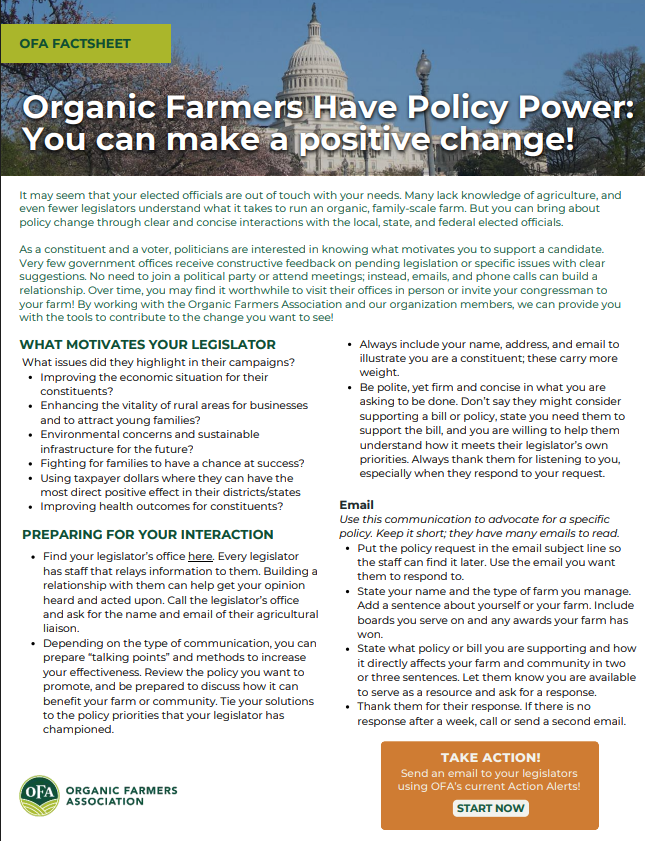
Organic Farmers Have Policy Power: You Can Make a Positive Change!
It may seem that your elected officials are out of touch with your needs. Many lack knowledge of agriculture, and even fewer legislators understand what it takes to run an organic, family-scale farm. But you can bring about policy change through clear and concise interactions with the local, state, and federal elected officials.
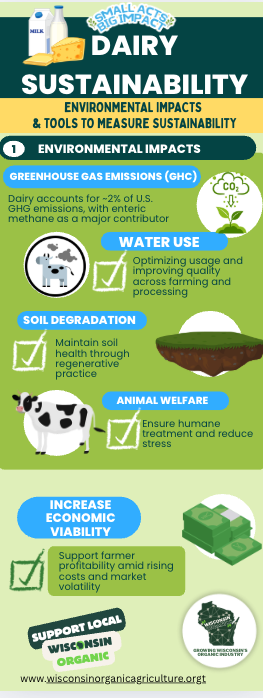
Dairy Sustainability Infographic
From Edge-of-Field to In-Field: Rethinking Agricultural Solutions for Clean Water
Access to clean drinking water remains a pressing public health challenge in the United States, particularly in the Midwest where agricultural pollution continues to degrade water quality. This paper discusses scientific literature, long-term monitoring data, and recent case studies to examine how modern agricultural practices, especially intensive fertilizer and pesticide use in corn–soybean systems, drive contamination of drinking water with nitrates and pesticides.
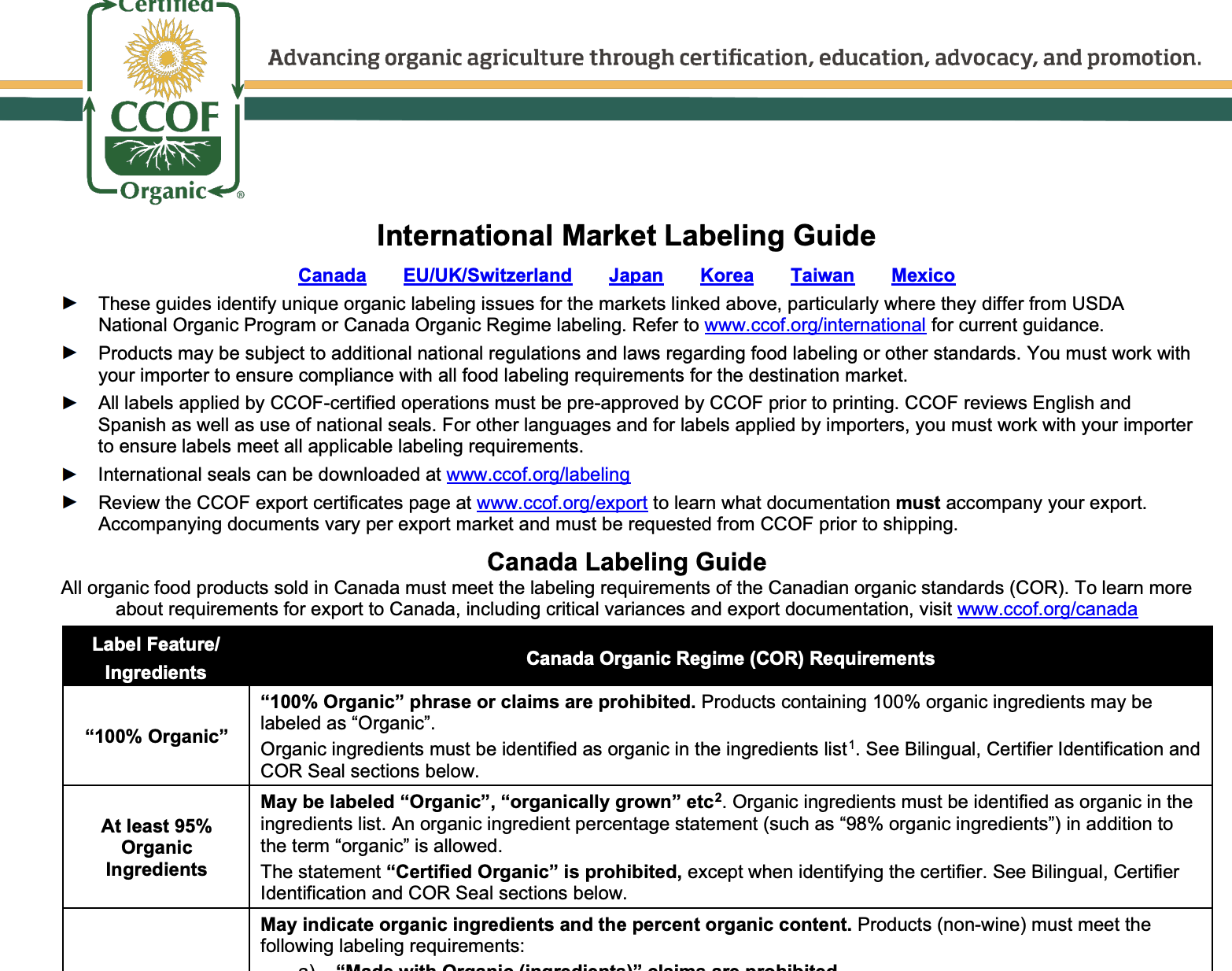
International Market Labeling Guide
When you design labels for export outside of the United States, be sure to check out CCOF’s International Labeling Guide-a guide to international organic labeling requirements.

Composting: Turning Waste into Soil Health
Learn how composting transforms everyday food scraps and yard waste into a valuable resource for healthy soils and sustainable growing systems. This tip sheet covers the basics of composting, its benefits for soil health and waste reduction, and practical tips for starting and maintaining a compost system at home. Discover how this simple organic practice can help build healthier gardens, reduce environmental impact, and support a more resilient food system.
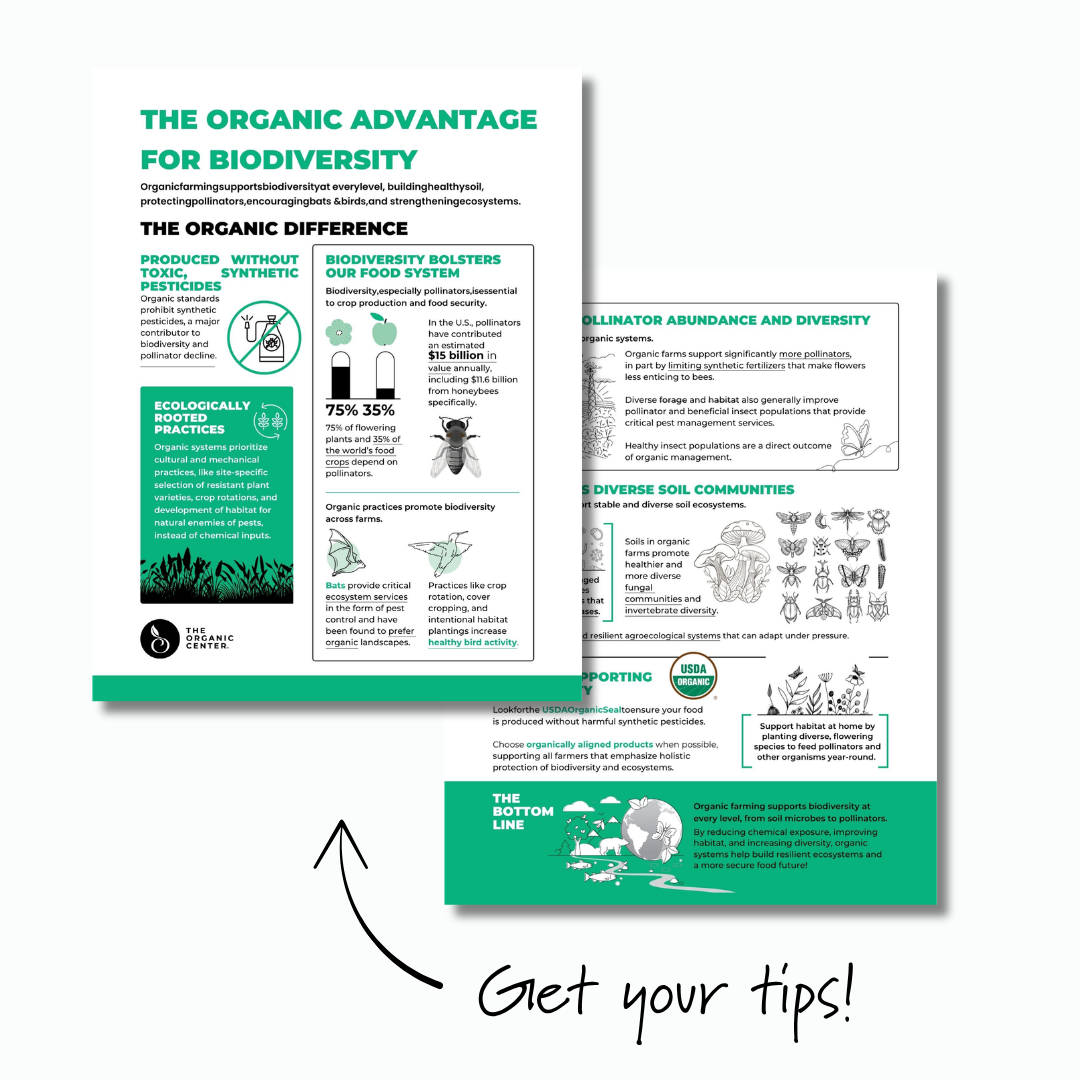
The Organic Advantage for Biodiversity
Discover how organic farming supports biodiversity from the ground up. This tip sheet explores how organic practices—such as eliminating synthetic pesticides, fostering healthy soil ecosystems, and creating habitat for pollinators, birds, and bats—help strengthen biodiversity and build more resilient food systems.
OGRAIN Resource Library
The Organic Grain Resource and Information Network (OGRAIN) offers an educational framework for supporting organic grain production in the Upper Midwest. Whether you farm 10 acres or 10,000, are an experienced organic grower or just considering the transition to organic, OGRAIN provides learning opportunities to improve your organic row crop and small grain operation. From weed control to marketing, grain storage to termination of specific cover crops, the OGRAIN community of experienced growers, researchers, industry experts and others is here to support you.
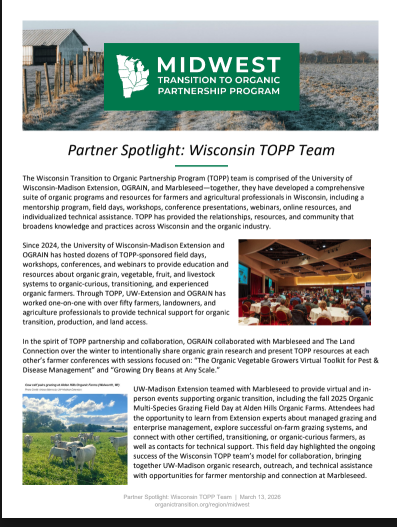
Midwest TOPP Partners
The Wisconsin Transition to Organic Partnership Program (TOPP) team is comprised of the University of Wisconsin-Madison Extension, OGRAIN, and Marbleseed—together, they have developed a comprehensive suite of organic programs and resources for farmers and agricultural professionals in Wisconsin, including a mentorship program, field days, workshops, conference presentations, webinars, online resources, and individualized technical assistance.
USDA Organic Certification for Handlers: The Organic System Plan (OSP) Explained
The Organic System Plan (OSP) is a core component of USDA organic certification, outlining how an operation meets National Organic Program (NOP) requirements. In this recorded session, SCS Global Services provided a practical overview of the SCS Handler Organic System Plan (OSP) and USDA organic certification process, covering the journey from application submission through certification decision.
Designed for handlers, brokers, traders, importers, private label brand owners, and storage or distribution operations, including those that may not take physical possession of organic product, the session explored key certification requirements and considerations for organic applicants.
Participants gained a clearer understanding of required OSP sections, supporting documentation, and common areas that may require follow up during certification review. The webinar also outlined the five-stage certification process and highlighted publicly available USDA and NOP resources to support first-time applicants
Understanding the Organic Certification Process
In this episode of Voices from the Field, Martin Guerena, a sustainable agriculture specialist with the National Center for Appropriate Technology’s western regional office in Davis, California, speaks with Sean Feder, director of inspection operations for California Certified Organic Farmers
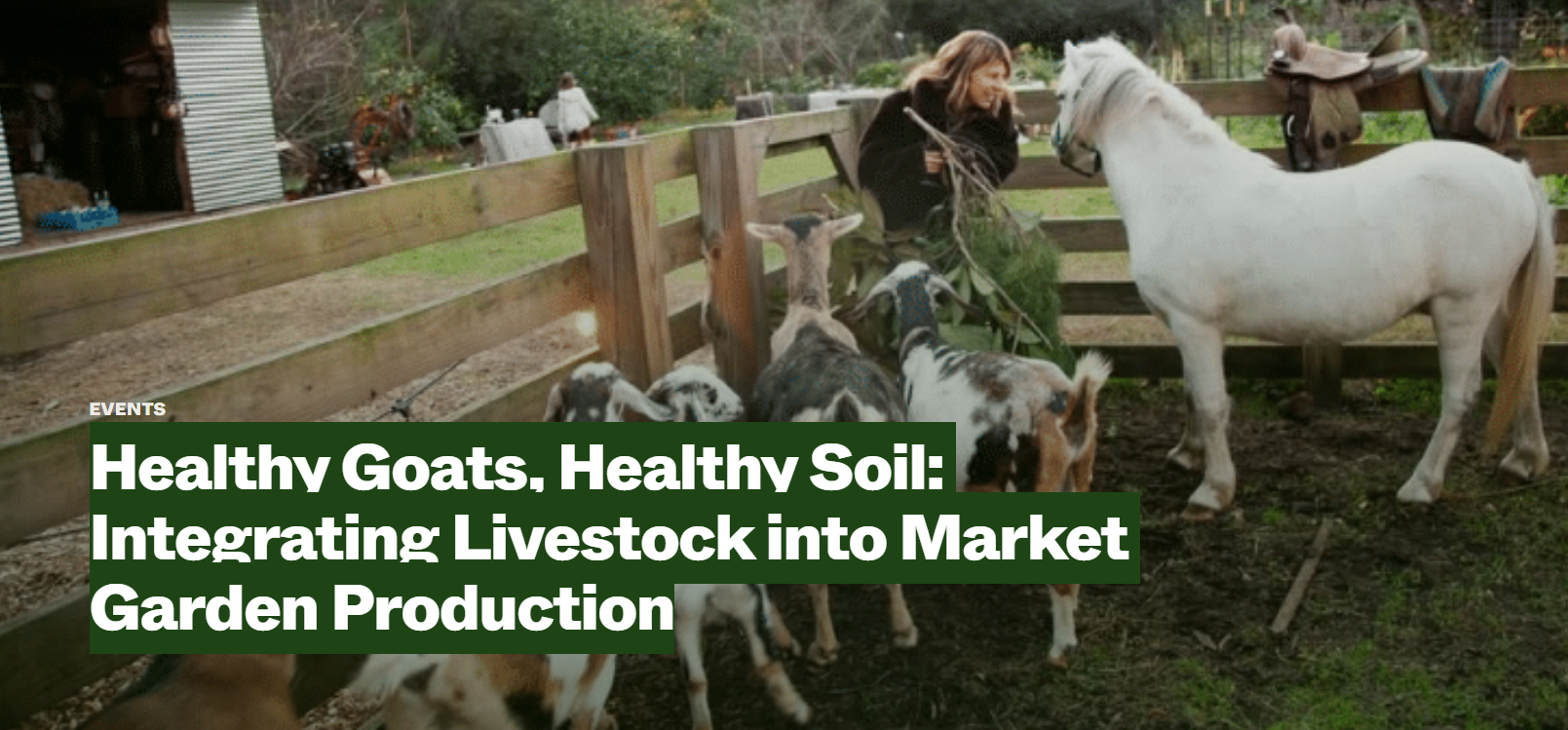
Sustainable Goat Production and Parasite Management
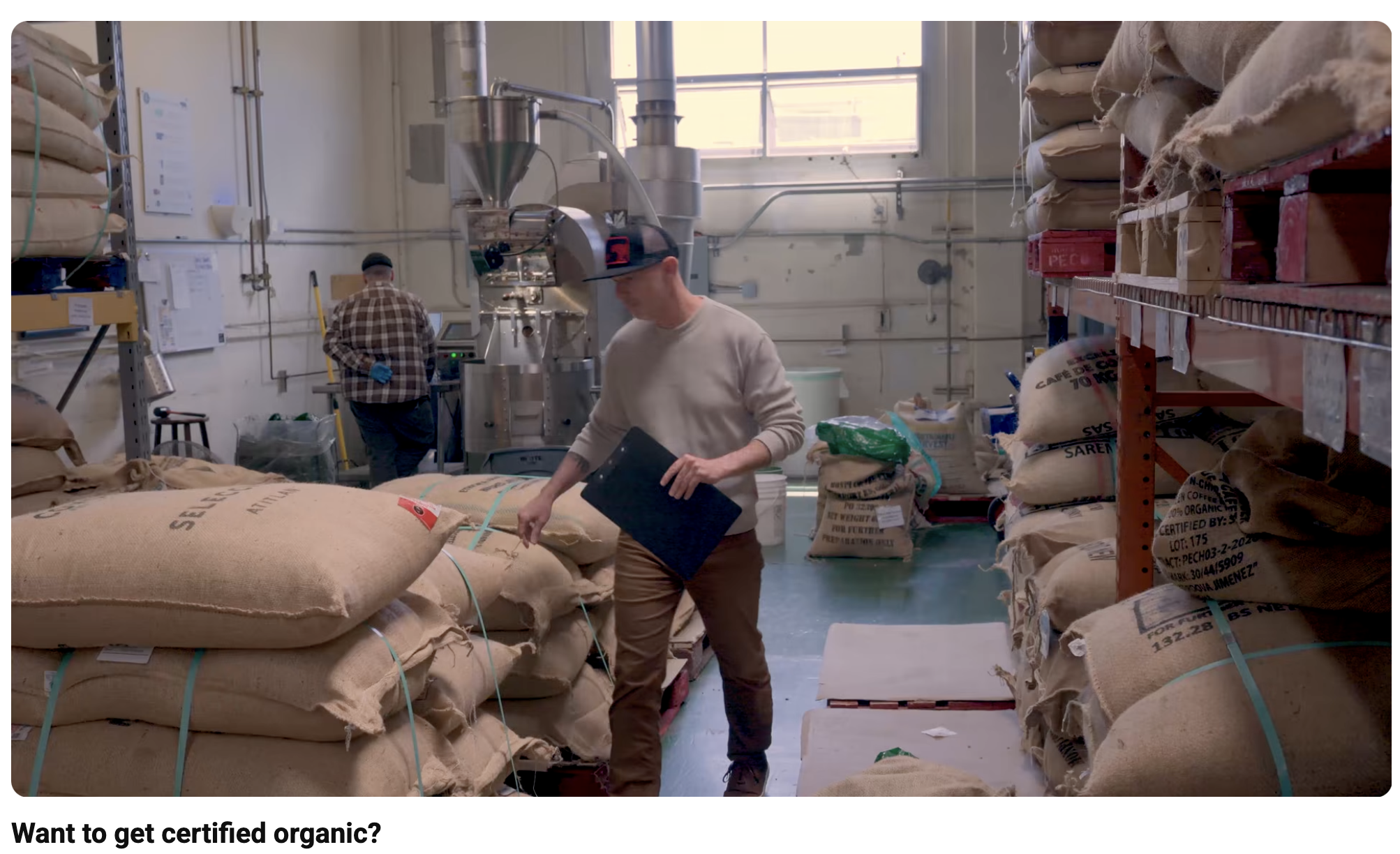
Want to Get Certified Organic (for Handlers)
If your company handles organic products after they leave the farm, CCOF can support you through every step of your certification process. In this video, CCOF walks you through the certification process, how to apply, what to expect, and how we support you from start to finish.
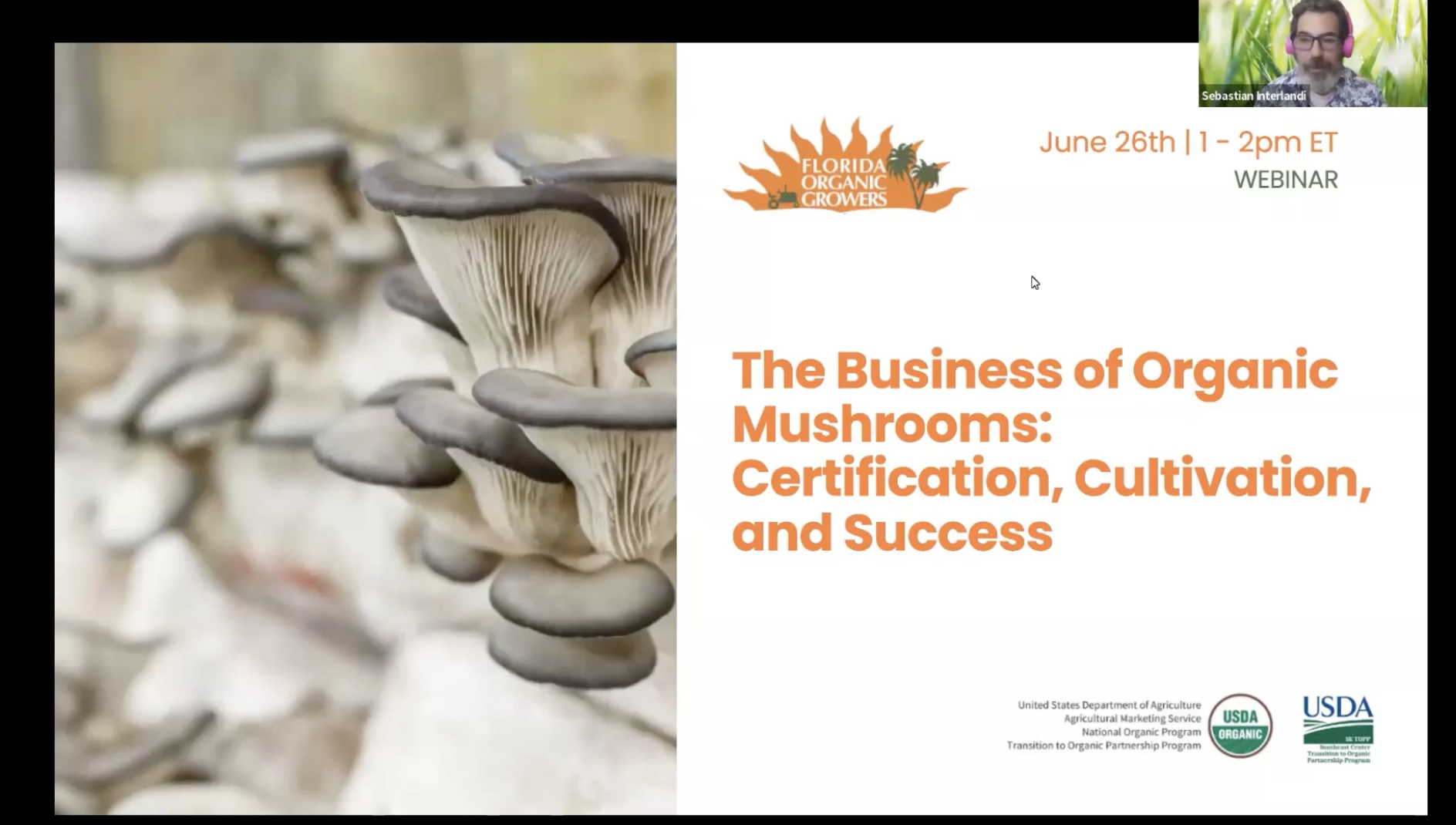
The Business of Organic Mushrooms: Certification, Cultivation and Success
In this webinar, Claudio Gómez De La Vega and Joseph Chammas of GGF Specialty Mushrooms, a leading certified organic mushroom farm in Palm Beach County, Florida, share their journey of building a successful organic mushroom business. Learn about gourmet mushroom cultivation, the process of achieving organic certification, and the sustainable practices that have helped GGF become a trusted supplier for chefs, distributors, and specialty markets. Whether you're a grower, entrepreneur, chef, or simply interested in organic agriculture, this session offers valuable insights into innovation, sustainability, and success in the rapidly growing specialty mushroom industry.
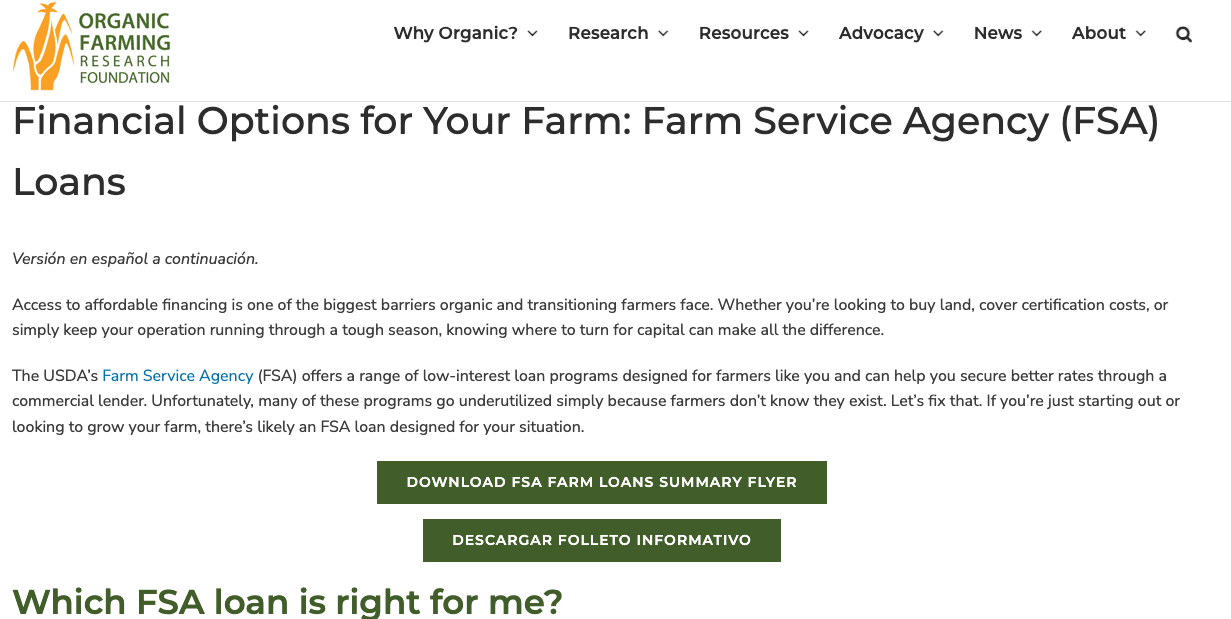
Financial Options for Your Farm: Farm Service Agency (FSA) Loans
Interseeding Wildflowers to Diversify Grasslands for Pollinators
Plant-Based Foods: Regional Retail Insights
Organic Farmer Storytelling Resources
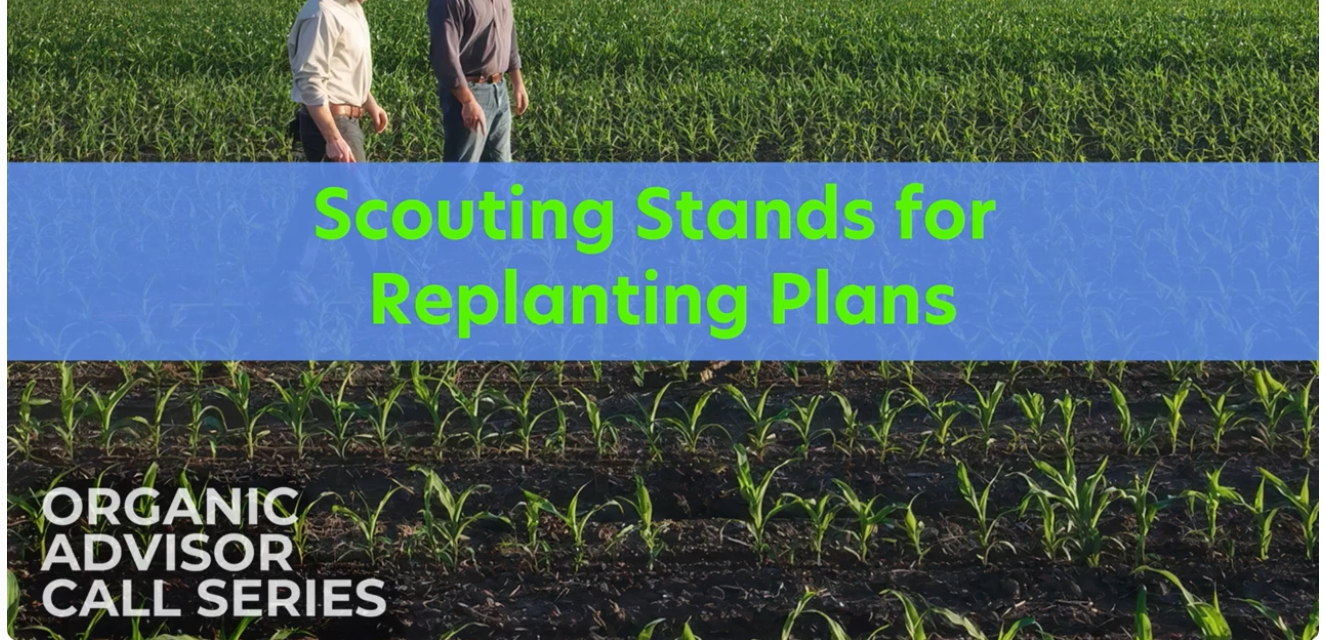
Scouting Stands for Replanting Plans
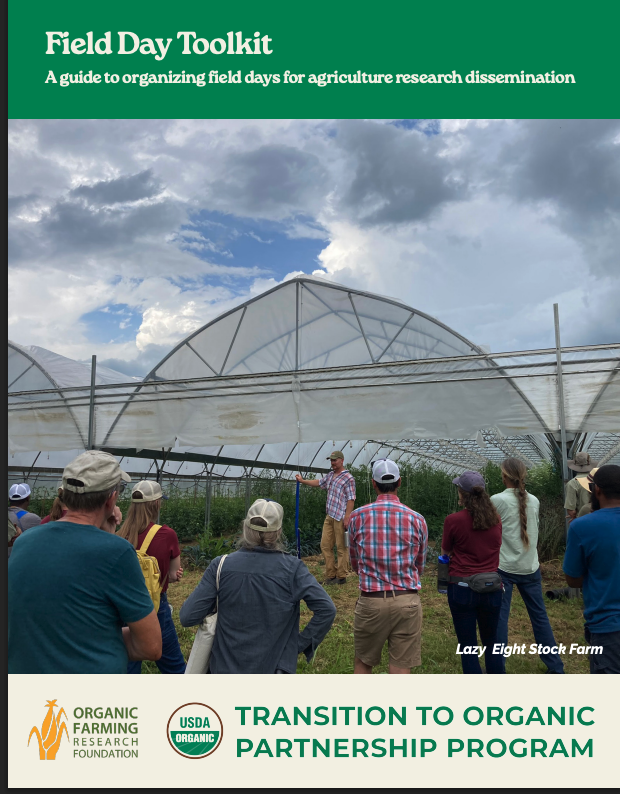
Field Day Toolkit
Cows & Climate
Farm Service Agency (FSA) Loans Toolkit
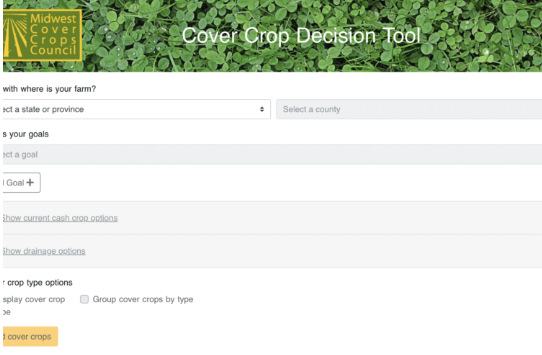
Cover Crop Decision-Tool
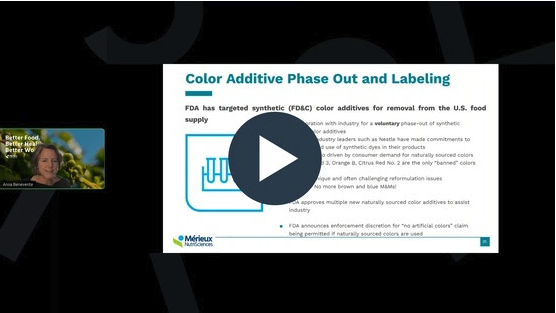
The Next-Gen of Food Regulation: Formulations, Labels, and Proactive Compliance
Compliance
he Next-Gen of Food Regulation: Formulations, Labels, and Proactive Compliance
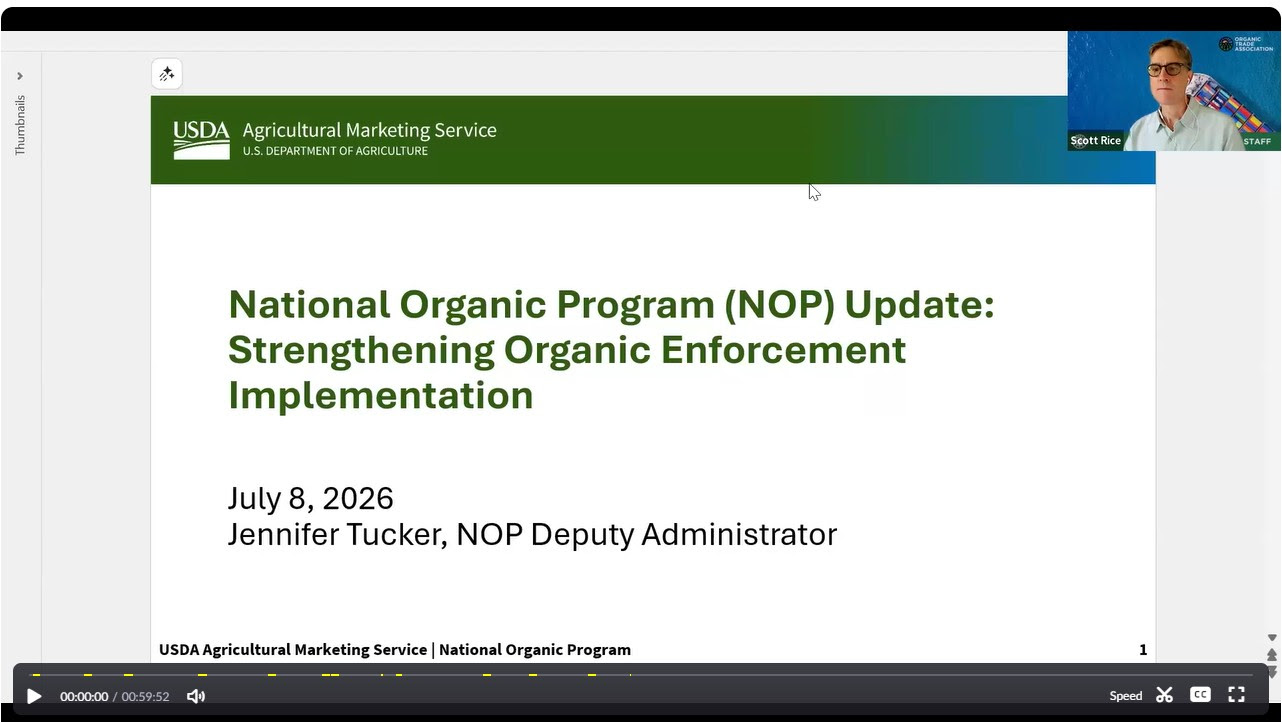
Organic Oversight and Enforcement: Why it Matters and Your Role to Play
During this session, we covered:
🔍 Emerging import and supply chain data collected under SOE
🛡️ How NOP is using expanded enforcement tools to strengthen oversight
📊 Early indicators of how SOE is improving traceability and compliance
🤝 The role of industry stakeholders in supporting enforcement efforts
🌱 How your organization can engage in the evolving enforcement ltandscape
he Next-Gen of Food Regulation: Formulations, Labels, and Proactive Compliance
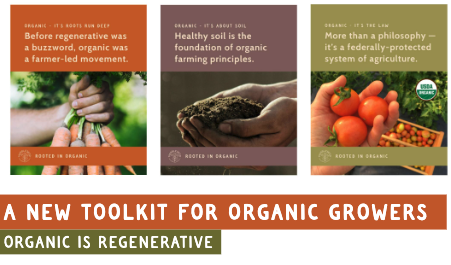
Organic is Regenerative Toolkit
Marbleseed’s “Organic is Regenerative” campaign explains that certified organic farming is inherently regenerative because it protects soil health, ecosystems, and climate while supporting human and rural community well-being. It emphasizes that organic certification has rigorous, legally defined standards, unlike the term “regenerative,” which lacks a binding definition and is often used loosely in marketing. The campaign, funded by Organic Valley’s Farmers Advocating for Organic program and adapted from Organic Farming Research Foundation’s toolkit, equips farmers with communication tools to defend and promote the value of organic certification to consumers
he Next-Gen of Food Regulation: Formulations, Labels, and Proactive Compliance
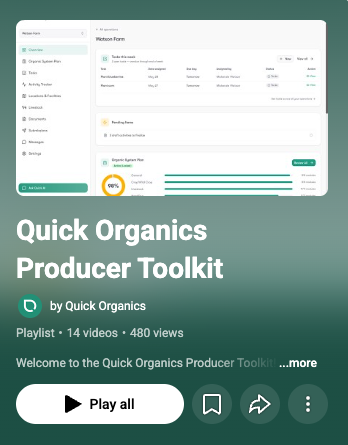
Quick Organics Producer Toolkit
This playlist is your go-to resource for walkthroughs, tutorials, and tips for navigating the Quick Organics platform. Whether you're just getting started or looking to explore specific features, these short, easy-to-follow videos are designed to help you feel confident and supported every step of the way. From building your Organic System Plan (OSP) to updating records, tracking activities, and uploading documents, everything you need is right here.
✅ Step-by-step guidance
✅ Time-saving tips and best practices
✅ Built for crop operations, livestock producers, and handlers/processors
he Next-Gen of Food Regulation: Formulations, Labels, and Proactive Compliance
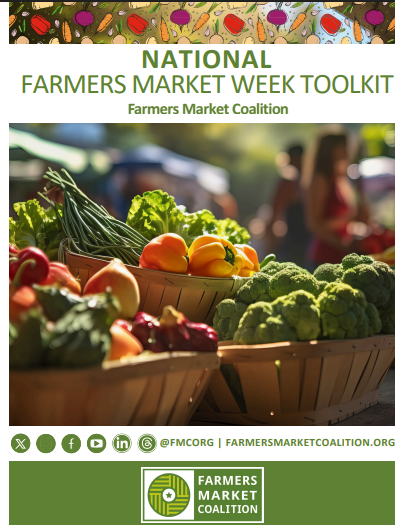
National Farmers Market Week
National Farmers Market Week is an annual celebration that highlights the crucial role farmers markets play in the nation’s food system and in local communities. Markets use the week to host special events, contests, and activities that boost attendance, visibility, and appreciation for their community value. To support market managers, the Farmers Market Coalition offers a free annual toolkit with facts, ideas, graphics, and templates to help plan and promote effective celebrations.
he Next-Gen of Food Regulation: Formulations, Labels, and Proactive Compliance
The Common OSP & How Quick Organics Supports Your Work in the Field
What's covered:
The Common OSP — what it is and what's changing
What it means for inspectors and consultants on the ground
A full walkthrough of Quick Organics in action
What inspectors and consultants specifically get out of the platform
Ways to engage with Quick Organics
he Next-Gen of Food Regulation: Formulations, Labels, and Proactive Compliance
The Common OSP: How It Serves Certifiers & Their Clients
In this video, we'll explore how the Common OSP was developed to support greater consistency in organic certification create a more streamlined experience for both certifiers and organic operations. We'll also demonstrate how the Common OSP functions within Quick Organics and how certifiers and producers can use it as part of their certification workflow. Interested in using Quick Organics as a certifier or have questions about the Common OSP? Contact us at hello@quickorganics.com
he Next-Gen of Food Regulation: Formulations, Labels, and Proactive Compliance
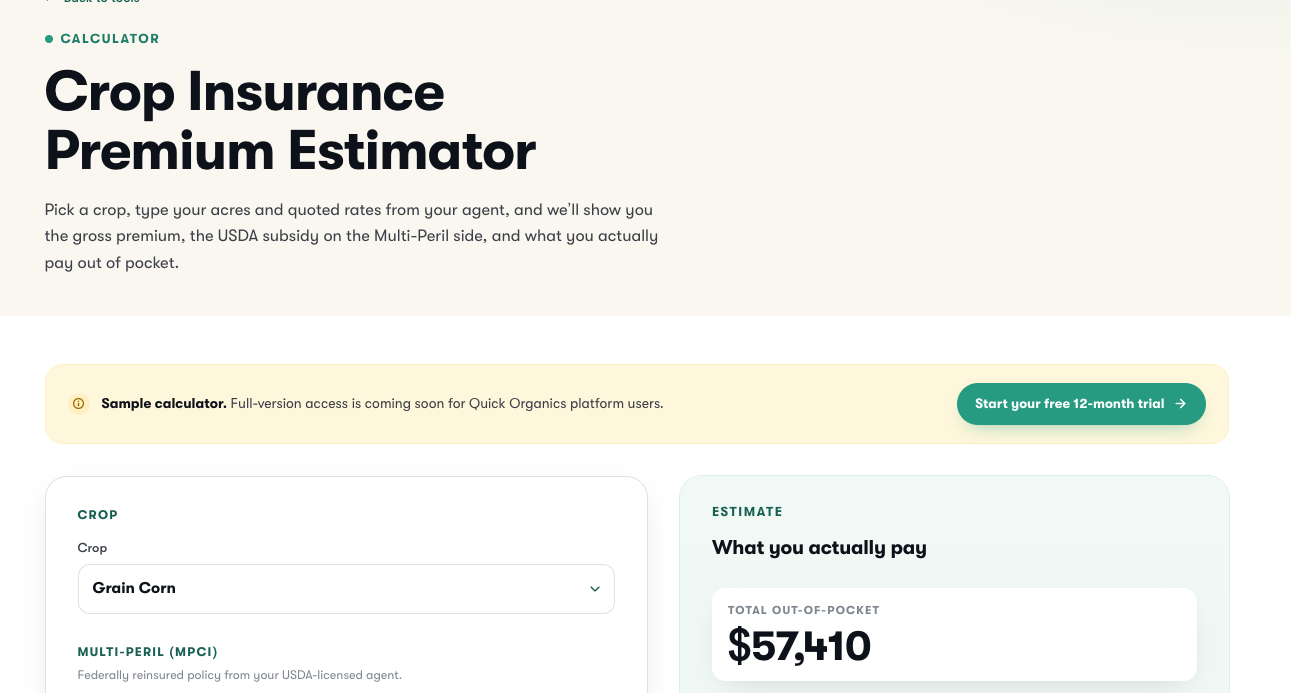
Crop Insurance Premium Estimator
Quick Organics’ Crop Insurance Premium tool is an online calculator that helps farmers quickly estimate what they will actually pay for crop insurance. It provides combined Multi-Peril and hail premium estimates for a single crop, showing both the total premium and the USDA subsidy so producers can see their true out-of-pocket cost. This makes it easier to compare coverage options and budget for insurance within an organic or conventional farm business planget for insurance within an organic or conventional farm business planood Regulation: Formulations, Labels, and Proactive Compliance.
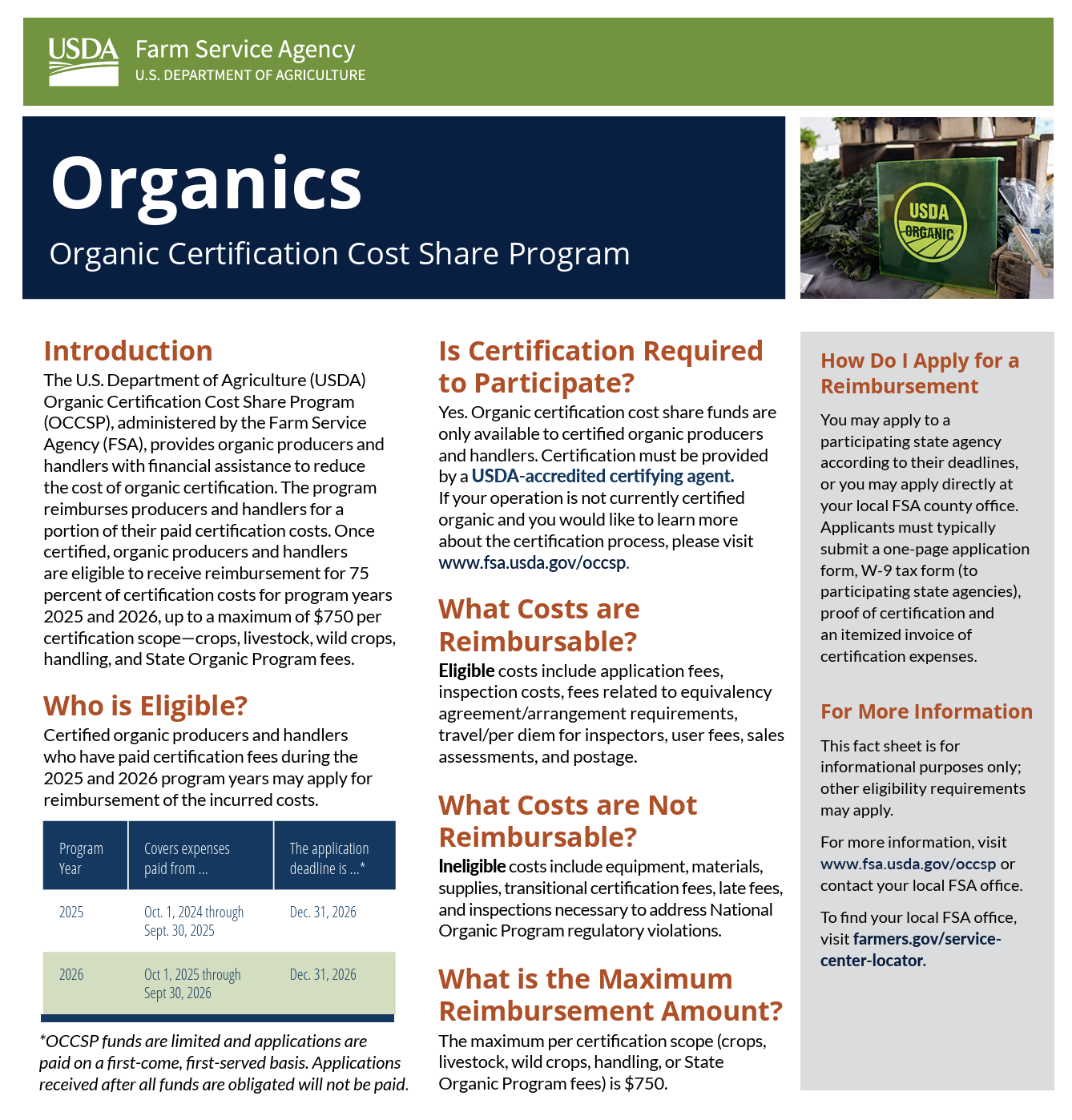
Organics Organic Certification Cost Share Program
The U.S. Department of Agriculture (USDA) Organic Certification Cost Share Program (OCCSP), administered by the Farm Service Agency (FSA), provides organic producers and handlers with financial assistance to reduce the cost of organic certification.
Organics Organic Certification Cost Share Program
This webinar recording explores the essential components of organic red meat processing tailored for those interested in entering the certified organic meat market. Listeners will gain insights into USDA National Organic Program (NOP) regulations and learn how to maintain compliance while optimizing product quality and sustainability.
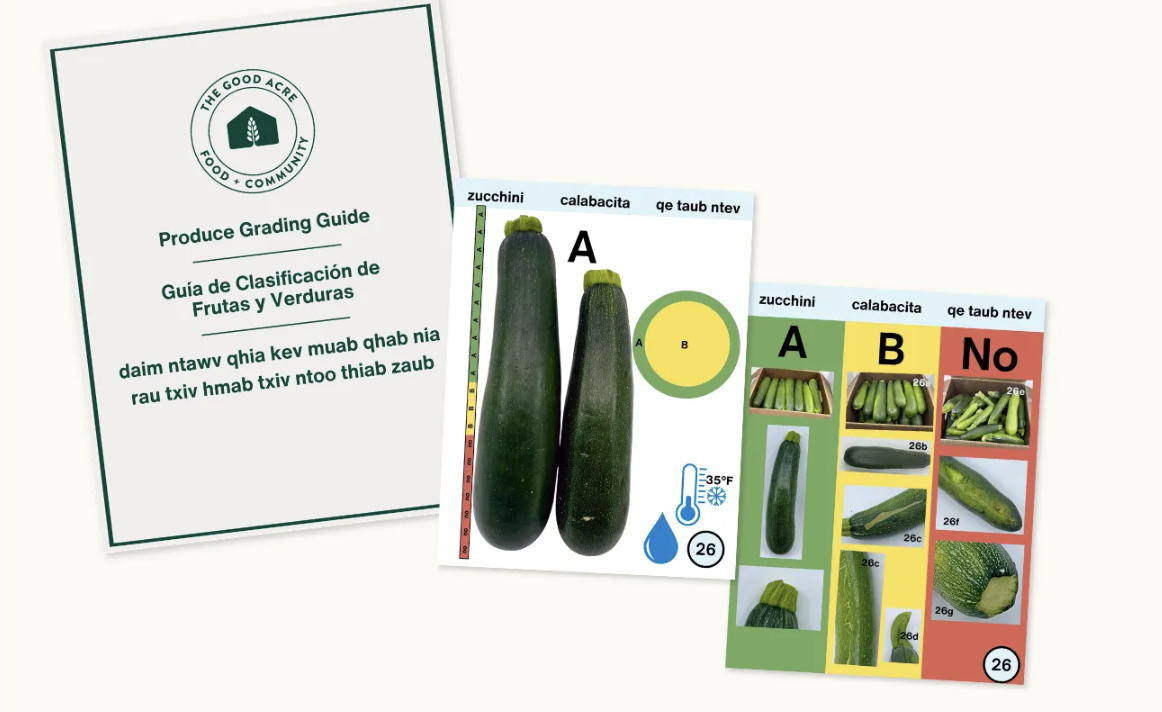
Produce Grading Guide
Selling into wholesale markets requires consistent quality, but clear grading standards are not always easy to find.The Good Acre created this guide to make wholesale expectations easier to understand through photographs, crop-specific specifications, and practical guidance.
Farm Stop Webinar
Farm Stops find the connection between a typical grocery store and farmers market, building upon the advantages of both and ultimately providing a stable market for the producers and an increase in local options for the consumer. Often Farm Stops use a consignment model where producers bring their goods to the Farm Stop, set their own prices and earn most of the percentage of the sale as compared to a traditional grocery store. Join Patrick Randolph of Grandad Farmstand, Bobbi Boos of Bloomington Farm Stop Collective and Lily Gross of Radish Farm Stop to learn more about the similarities and differences of the Farm Stop’s they manage, why the model works well for producers and how to get involved in organizing a Farm Stop in your own backyard.
A Professional Development Program for the Food Industry: Inside Organic:Understanding the System Behind the USDA Organic Label
“Inside Organic: Understanding the System Behind the USDA Organic Label” is an eight‑session professional development program that explains how the USDA organic system actually works—from the National Organic Program and federal standards, to the roles of certifiers, inspectors, and the Organic Integrity Database. It is designed to help participants understand what the USDA Organic label means in practice, how certification and enforcement protect the label’s integrity, and how organic products are traced from farm to marketplace.
Transition to Certified Organic Agriculture
Rodale Institute’s Transition to Certified Organic Agriculture is a self-paced online course for conventional farmers considering certification, farms already transitioning, and agricultural educators or advisors. It explains USDA organic standards and provides practical guidance for planning a successful transition to certified organic production.
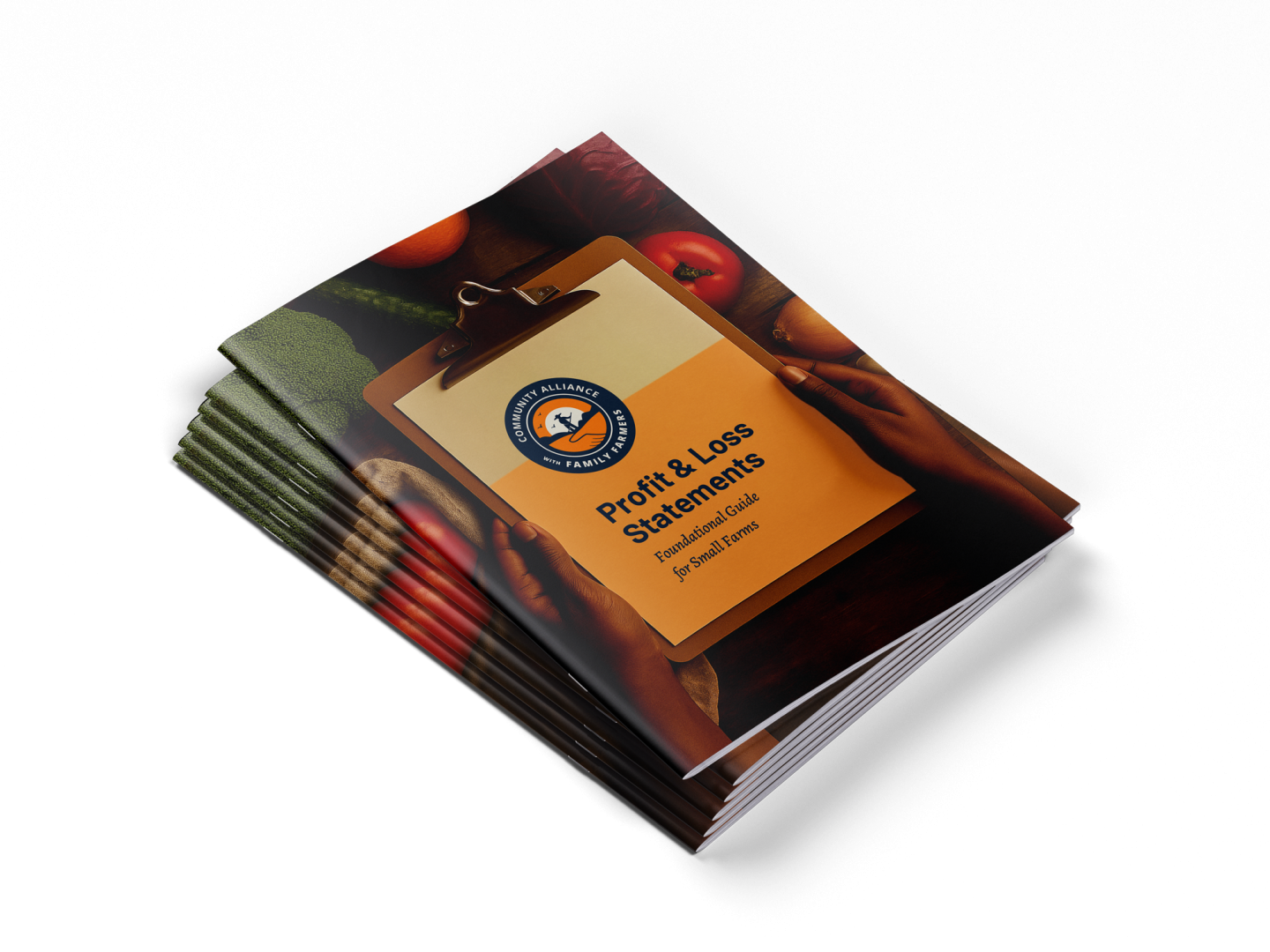
Profit & Loss Statements: A Foundational Guide for Small Farms
CAFF’s Profit & Loss Statements: A Foundational Guide for Small Farmers is a practical farm-financial-management resource, with particular relevance for certified organic and transitioning farms. It teaches producers how to track income and expenses, read a profit-and-loss statement, identify major costs, and use historical financial information to make better business decisions.
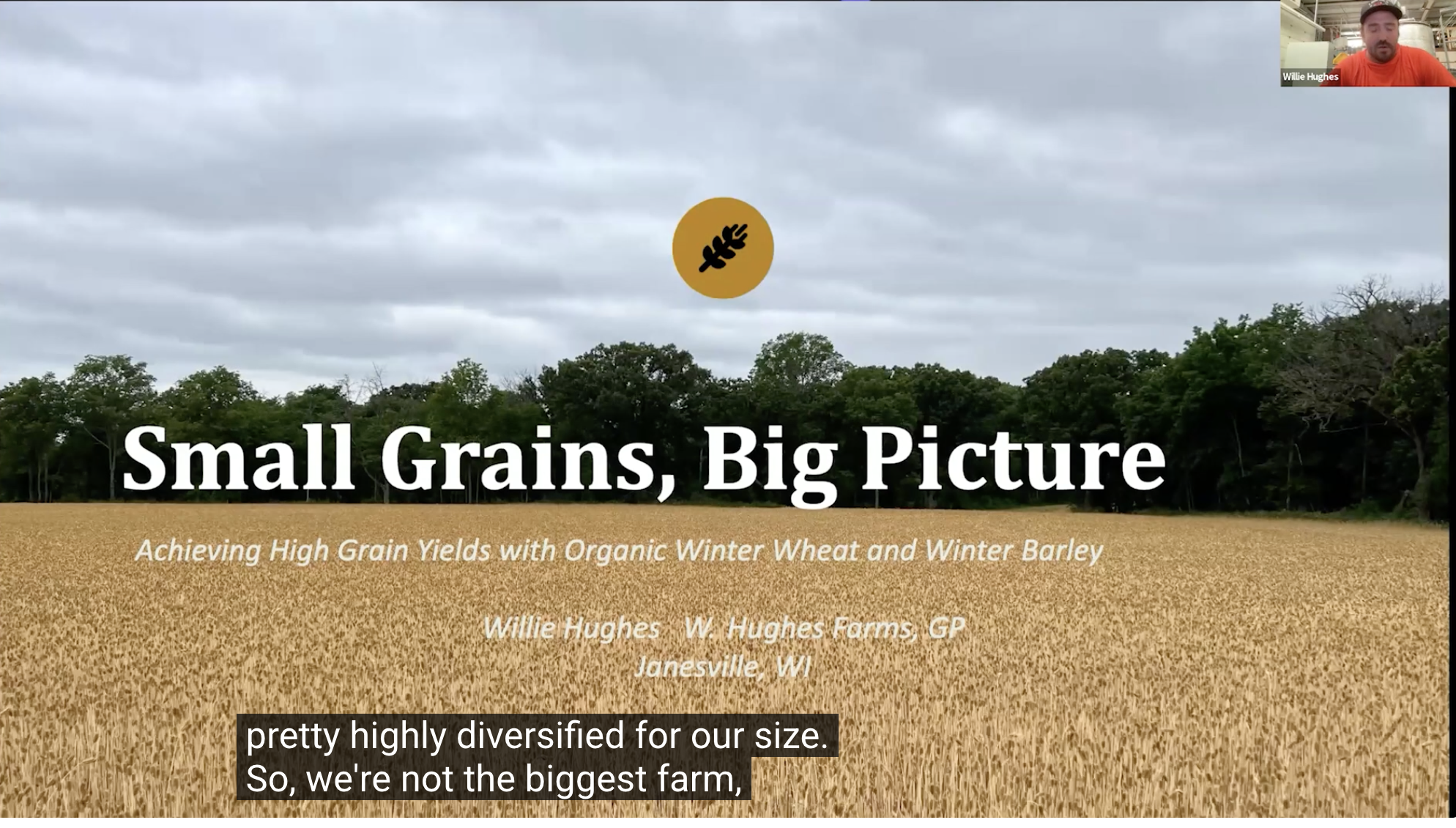
Achieving High Grain Yields With Organic Winter Wheat and Winter Barley
Willie Hughes, a farmer in Rock County, Wisconsin, shares a practical case for putting small grains back into a row-crop rotation — agronomics, soil and weed-control benefits, harvest and storage realities, and the end-use opportunities (including malting) that can make the economics actually work on a Wisconsin farm.
Farmers Share Lessons Learned From Long-Term Cover Cropping, Part 1
Junior farms with his wife Katelyn and their four children near McLean, Nebraska. After exiting the retail ag industry and being fed up with high input prices, he dove headfirst towards regenerative farming practices. Junior is an agronomy enthusiast and started a business called Outside The Box Agronomy. His farm operation consisted of 330 acres which is about 50/50 dryland/irrigated. All of which will be fully regenerative organic certified in July 2026. In 2022 he received the Lower Elkhorn NRD’s Sustainable Agriculture Award.
Farmers Share Lessons Learned From Long-Term Cover Cropping, Part 2
Doug Adams shares how he uses cover crops on his farm to improve soil health and profitability. He also has grown some relay crops and oats for cover crop seed and straw.
Graze Longer, Earn More: How Cover Crops Can Extend Your Grazing Season and Improve Profitability
John and his wife Ashtyn own and operate J&A Farms and Gutzman Agronomy near Rio, Wisconsin. They manage about 600 acres of cropland and pasture, raising corn, soybeans, wheat, alfalfa, and cover crops. They also run a herd of 120 beef cows that calve on green grass in May and June. Through utilizing perennial pastures, cover crops, and corn stalks, they strive to graze as many days of the year as possible — with a goal of feeding hay for 75 days or less per year.
Designing Cover Crops for the Whole Rotation
David Kleinschmidt shares practical, regionally adaptable strategies for species selection, timing, and management to build more efficient, resilient systems. Learn how to integrate cover crops across your entire rotation to improve nutrient availability and reduce input costs.
Hybrid Winter Rye: Basics of Production and Marketing
Learn practical production fundamentals—from field selection and planting to fertility, weed, and disease management—along with harvest considerations for grain and forage. Jim also shares marketing opportunities in feed, food-grade, and distilling markets, highlighting sustainability benefits and early-harvest advantages, along with strategies for aligning production practices with market needs to maximize profitability and adoption.
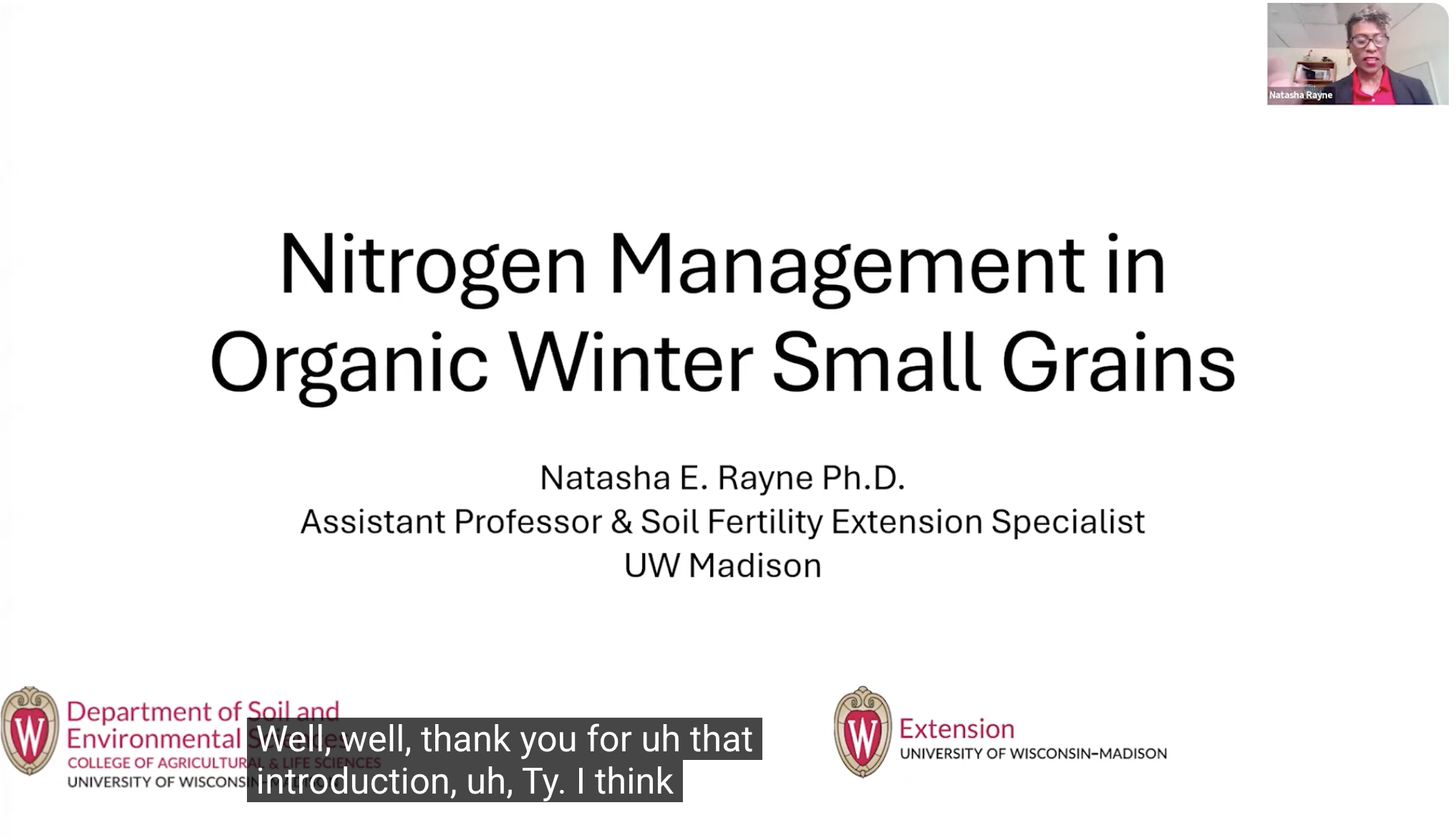
Nitrogen Management in Winter Small Grains
Natasha Rayne, PhD, shares how to build and synchronize nitrogen supply through practices such as manure and compost applications, and diversified crop rotations, giving special attention to timing nitrogen release to match crop demand, managing variability in organic N mineralization, and minimizing losses under different soil and weather conditions. Learn practical approaches that can help improve nitrogen use efficiency, maintain grain yield and quality, and support soil health in organic small grain systems.
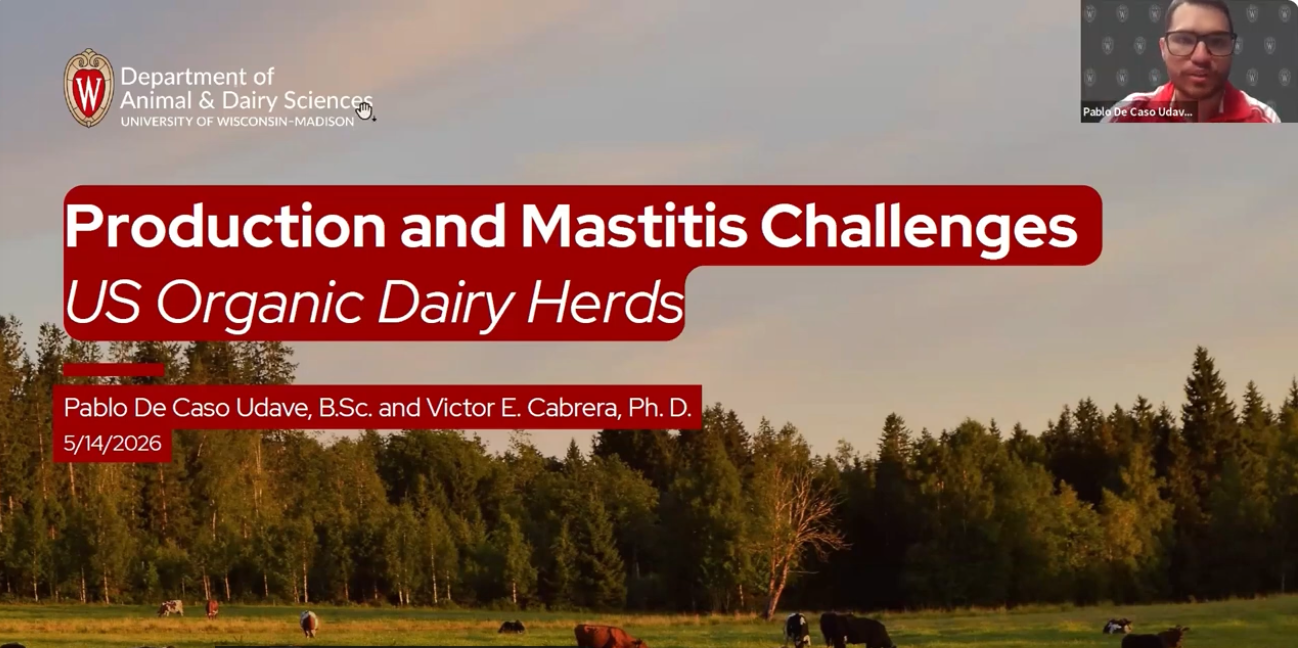
Production and Mastitis Challenges in U.S. Organic Dairy Herds
Pablo De Caso Udave recently shared insights during a webinar exploring key production trends and mastitis risk factors in U.S. organic dairy herds, highlighting how DHI records and data-driven analyses can support better herd management and decision-making.
Getting Started with NRCS
The USDA Natural Resources Conservation Service (NRCS) works with farmers and ranchers to address resource concerns on their land while improving the health, productivity, and resilience of their operations. But if you've never worked with NRCS before, knowing where to start can be confusing. In this episode, they break down the basics of NRCS, including what the agency does, how to connect with your local NRCS office, what a conservation plan is, and how programs such as EQIP and CSP can support producers in implementing conservation practices.
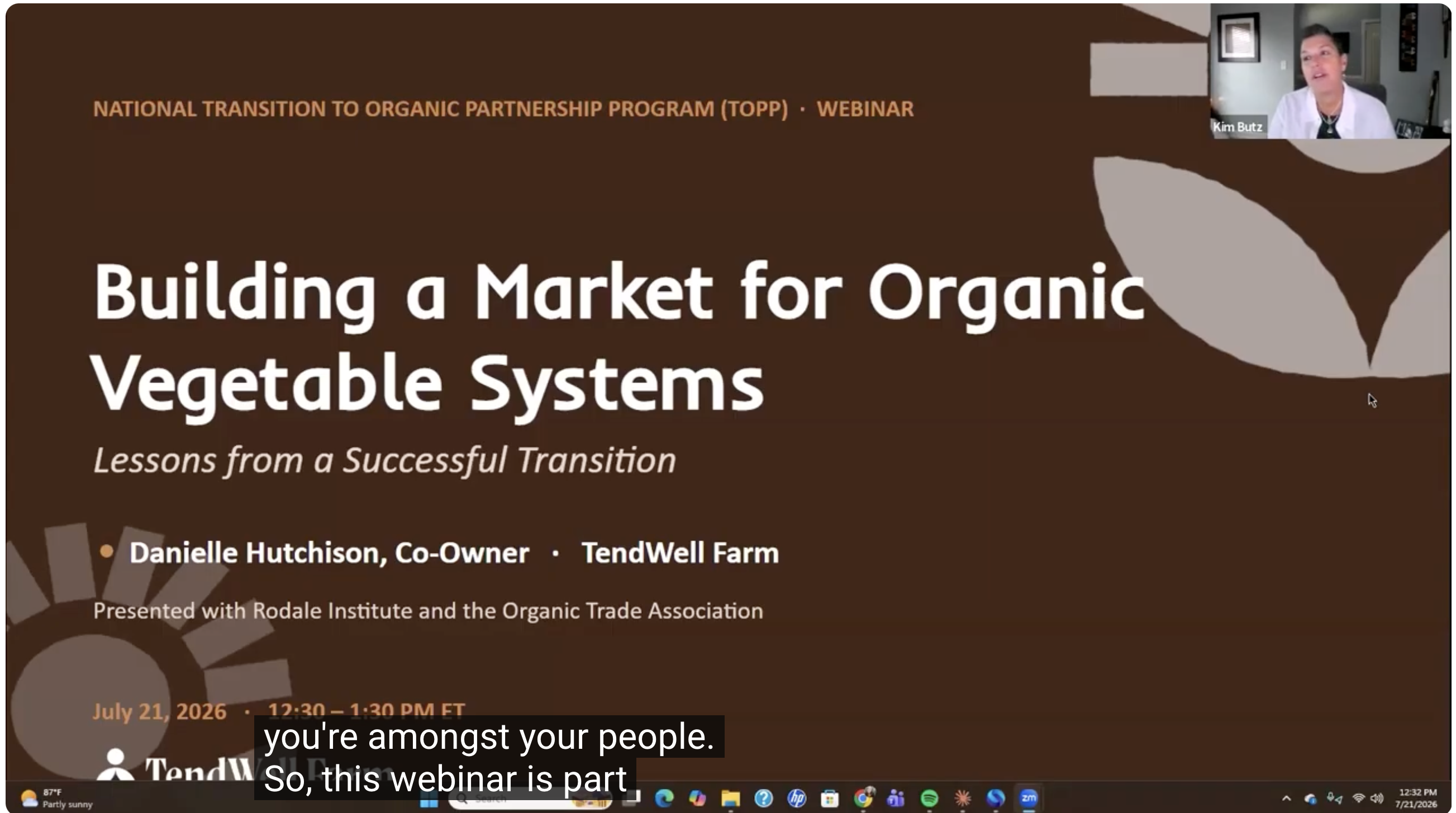
Building a Market for Organic Vegetable Systems - Lessons from a Successful Transition
Building a Market for Organic Vegetable Systems – Lessons from a Successful Transition,
USDA Organic Certification Webinar with MOSA
USDA Organic Certification Webinar with MOSA
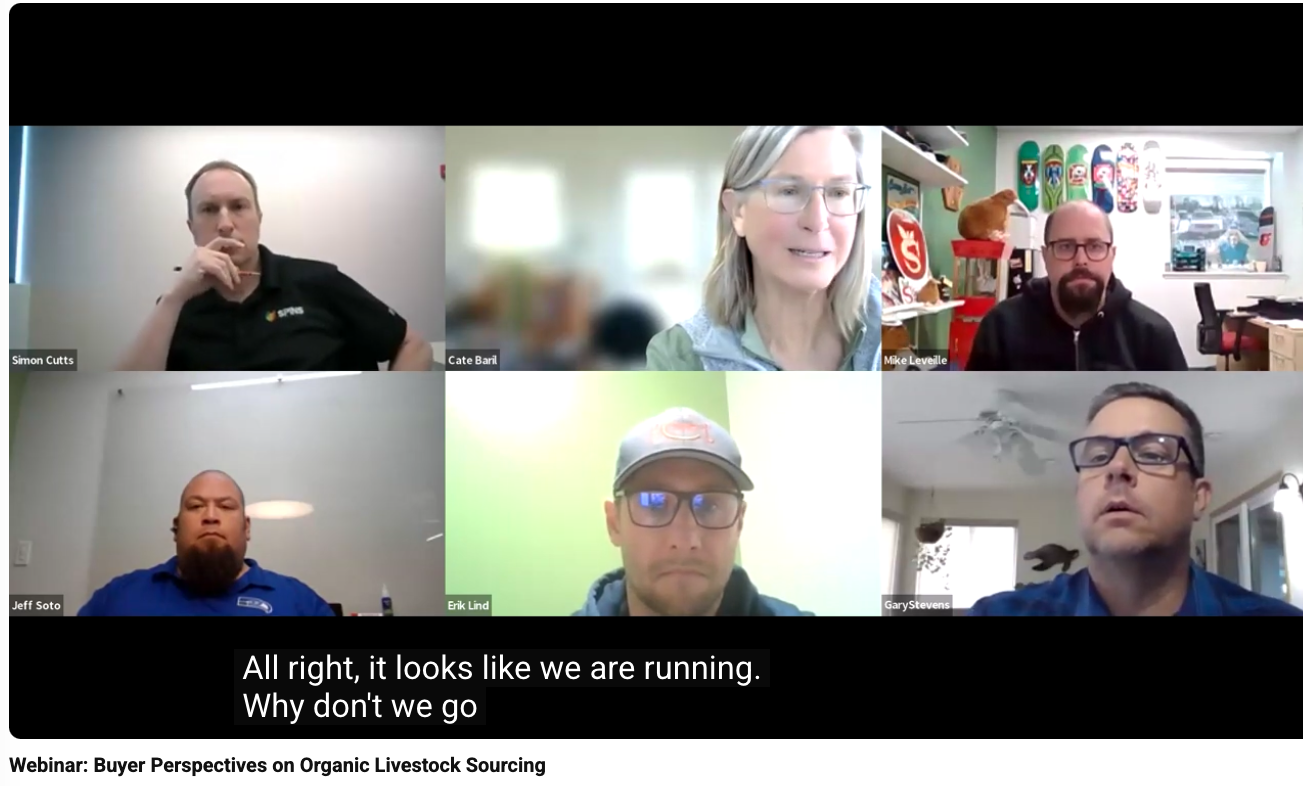
Webinar: Buyer Perspectives on Organic Livestock Sourcing
“Markets ROI of Organic Transition for Livestock Farmers,” where we dive deeper into the perspectives of buyers in the organic livestock market. Attendees will gather insights from multiple buyers across the U.S. on their sourcing needs, learn about key factors that influence buyer decisions, and learn how to build strong, collaborative relationships with buyers. This conversation is designed specifically for farmers looking to understand the current landscape and future opportunities in organic livestock markets.
Organic Cranberries: James Lakes Farm
.
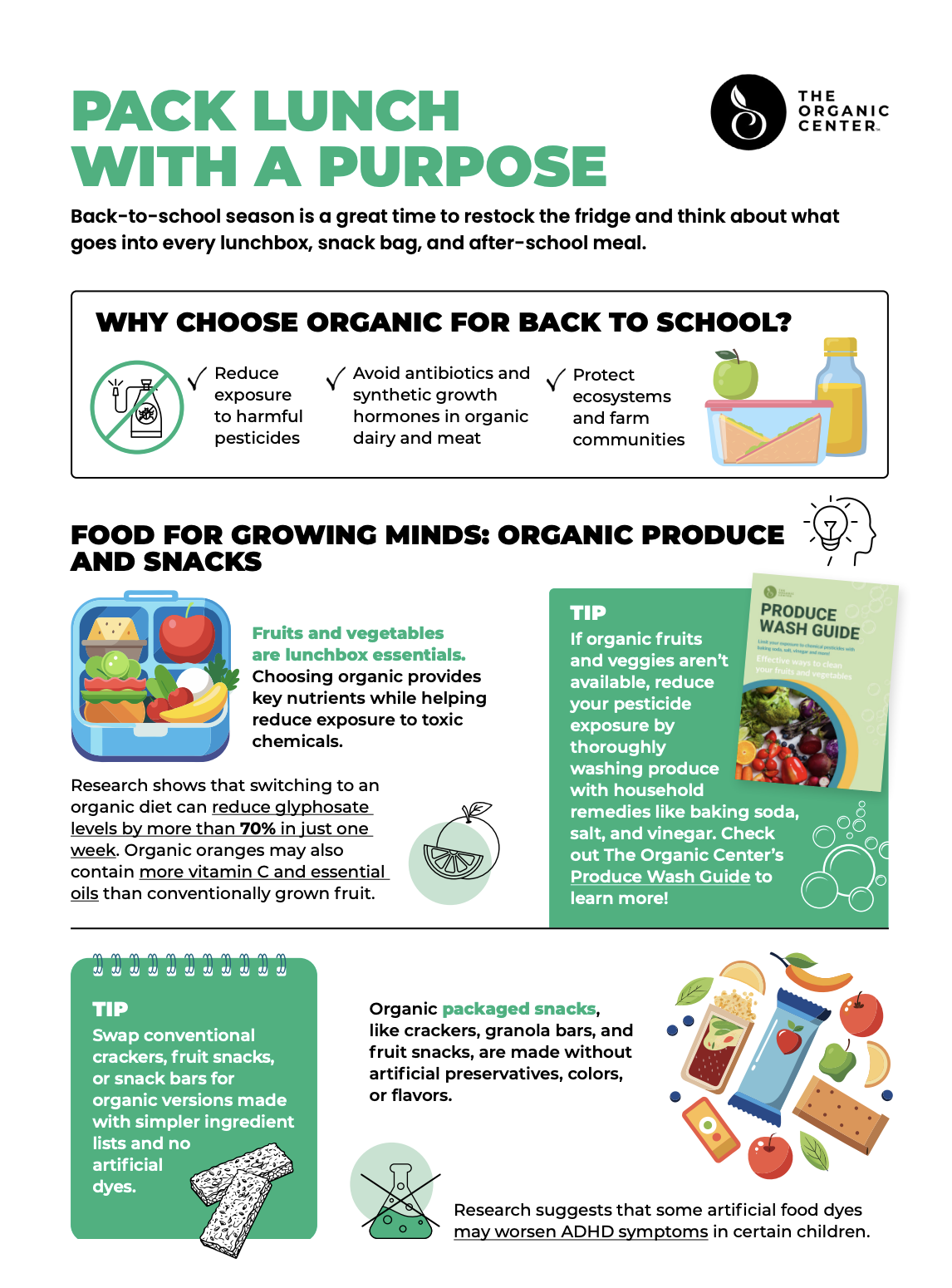
Pack Lunch with a Purpose
Just in time for back-to-school season, The Organic Center has launched a new Seal Makes It Simple tip sheet to help families make informed organic choices for lunches, snacks, and after-school meals. Pack Lunch with a Purpose shares science-backed benefits of choosing organic produce, snacks, dairy, and meat, along with easy lunchbox swaps and practical tips for reducing exposure to pesticides, antibiotics, synthetic growth hormones, and artificial food dyes.
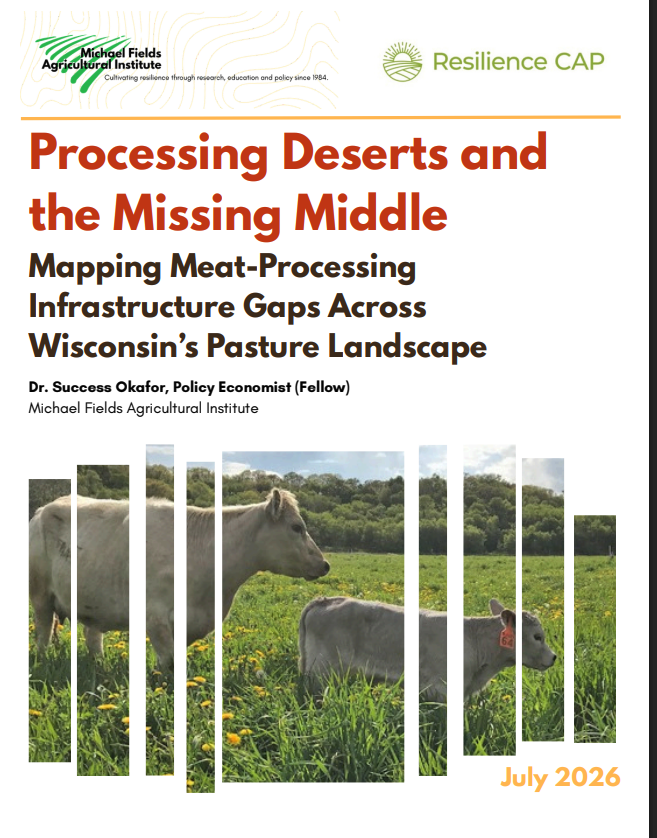
Processing Deserts and the Missing Middle
The integration and maintenance of livestock into diversified farming systems requires access to inspected meat-processing infrastructure as a legal precondition for market participation. Commercial market sale requires the use of an inspected facility, making practical geographic access to such infrastructure a necessary condition for participation. This study examines the spatial distribution of inspected red-meat slaughter infrastructure relative to pastureland across Wisconsin’s 72 counties and
introduces two analytical constructs, the processing desert and the processing
thinness index, for measuring infrastructure adequacy at the state scale.
Using AI in Organic Ag│Organic Advisor Call Series 2026
Two ag professionals are putting AI to work every day; find out how they apply it. In this episode, Sam Oschwald Tilton of OATS talks with Dan Perkins of Perkins' Good Earth Farm, a certified crop advisor who's farmed with AI all season using Advancing Eco Ag's FieldLark, and Franklin Smith, a longtime organic certification and handling professional who developed Organic Agent to help operators and certifiers navigate USDA organic rules. They discuss where purpose-built, citation-backed tools outperform general chatbots, and where they're still leaning on human judgment..