.svg "logo no tag line (1)")
Artisan Grain Collaborative
The Artisan Grain Collaborative is a network that connects farmers, processors, makers, and advocates across the Midwest to build a resilient regional grain supply chain focused on diverse, sustainably and regeneratively grown grains that support healthy communities, local economies, and ecosystems.

Climate Resilient Organic Vegetable Production
A group of organic vegetable farmers, educators, and researchers in the Upper Midwest that came together in 2018 over concerns with the impact of extreme weather events on vegetable production, the lack of data-driven recommendations for increasing system resilience for vegetable production,
and the need to test strategies on-farm.
The Cornucopia Institute
The Cornucopia Institute is a nonprofit organization dedicated to protecting the integrity of organic agriculture by advocating for family-scale farmers and exposing industrial practices that undermine authentic organic standards.
Dairy Grazing Alliance
Dairy Grazing Alliance (DGA), home to the Dairy Grazing Apprenticeship, is the nation’s foremost, farmer-led organization committed to growing markets for grass-based dairy.
Fairshare CSA Coalition
Fairshare CSA Coalition mission is to build resilient food communities by investing in farmers and empowering eaters. Some of the CSA members practice organic methods or are certified organic.
Farmers for Sustainable Food
Farmers for Sustainable Food is a Green Bay–based nonprofit that brings farmers, food companies, scientists, environmental groups, and ag businesses together to advance farmer‑led solutions to environmental challenges. The organization supports farmer‑led conservation groups and climate‑smart projects across the Upper Midwest, using on‑farm data and technical assistance to help producers adopt practical conservation practices that improve environmental outcomes while maintaining farm profitability and long‑term sustainability for the whole food system.
Food Finance Institute
The University of Wisconsin Food Finance Institute provides specialized financial training, consulting, and technical assistance to help organic food businesses and other food and farm enterprises become profitable and financially resilient at every stage of growth.
Glacial Drift Enterprises, LLC
Glacial Drift Enterprises is a technical service provider for organics led by Sam Oschwald Tilton, a Wisconsin‑raised vegetable specialist and horticulture educator with deep experience in organic weed management, mechanical cultivation tools, and farmer training gained through work on CSA and educational farms, research at Michigan State University, and roles with KULT‑Kress, Lakeshore Technical College, UW–Madison Extension, and FairShare CSA Coalition. Glacial Drift helps organic farmers understand soil tests, make fertility plans, improve their weeding tools, custom-build cultivators, design irrigation systems, and more.
Glacierland RC&D
Glacierland RC&D supports organic and sustainable agriculture in Eastern Wisconsin by working with farmers to promote practices such as managed intensive grazing, soil conservation, and farm business planning, and by providing technical assistance to help transition row crop land into restorative pasture systems that align with organic principles.

Grassland 2.0
Grassland 2.0 is a collaborative initiative dedicated to transforming agriculture by promoting well-managed perennial grasslands and grazing systems that enhance soil health, water quality, biodiversity, and climate resilience while supporting profitable farms, healthy communities, and sustainable food systems through inclusive community engagement, policy advocacy, and innovative supply-chain development
Grassworks Inc.
GrassWorks is a Wisconsin‑based membership organization that champions managed, grass‑based livestock farming through education and farmer‑to‑farmer support. It coordinates regional grazing networks, an intensive Grazier Mentorship Program, and two‑day Wisconsin Schools of Grazing that teach practical pasture management skills. GrassWorks also convenes the G‑Team for technical service providers and supports Grazing Ambassadors who share the economic and ecological benefits of grazing with the public.
IPM Institute
The IPM Institute of North America is a Madison‑based nonprofit that has spent more than 25 years advancing Integrated Pest Management (IPM) to reduce pesticide use and risks and improve sustainability in agriculture and communities. Working with partners across the food supply chain, the Institute develops and supports standards, certifications, and technical assistance programs that help growers, food companies, and institutions adopt science‑based IPM practices—emphasizing monitoring, thresholds, and least‑hazardous controls—to protect soil and water, cut greenhouse gases, safeguard farmworkers and communities, and meet growing marketplace demand for more sustainable food and land management.
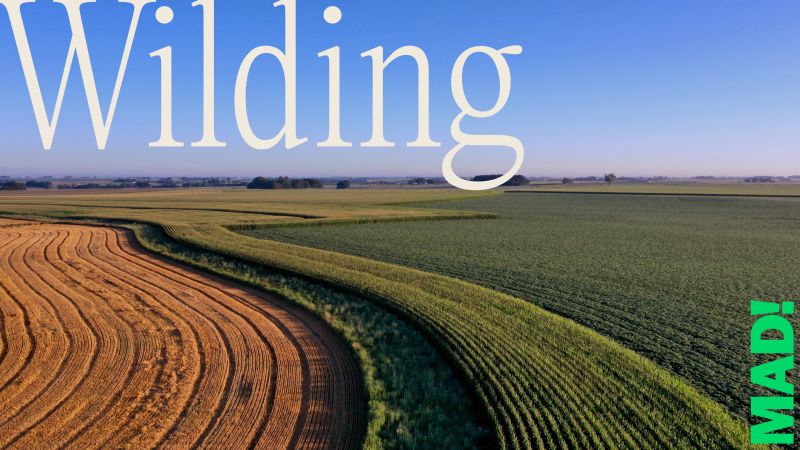
Mad Agriculture Wisconsin Wilding Project
Mad Agriculture's Wilding is a long‑term regenerative strategy that could guide Wisconsin toward “rewilding” priority acres by weaving high‑diversity native habitat corridors through farms, conservation lands, and tribal, public, and private properties. By treating habitat as core rural infrastructure, a Wisconsin‑focused Wilding approach targets underperforming or marginal acres for multi‑functional corridors that reconnect prairie, wetlands, forests, and working lands, support practices like managed grazing and prescribed fire, enhance biodiversity and water quality, and open new income streams for farmers through ecosystem service markets and perennial, regionally adapted agriculture.
Mandaamin Institute
Mandaamin Institute is a Wisconsin‑based 501(c)(3) nonprofit breeding corn (and some grains) to create nutrient‑dense, climate‑friendly, fertilizer‑independent maize for organic and sustainable farming systems. Their work focuses on developing corn varieties that form strong partnerships with beneficial microbes (endophytes) so plants can fix nitrogen from the air, access soil nutrients efficiently, resist Fusarium and root disease, compete with weeds, and maintain high protein quality and mineral content without heavy synthetic inputs.
Midwest Transition to Organic Partnership Program (TOPP)
The Midwest section of the Transition to Organic Partnership Program (TOPP) provides mentorship, technical assistance, community-building events, and workforce training to support farmers in the Midwest region as they transition to organic agriculture and strengthen the regional organic community.
Michael Fields Agricultural Institute
Michael Fields Agricultural Institute advances organic agriculture through research, education, and policy advocacy, including innovative projects like breeding organic corn hybrids that prevent cross-pollination with GMO corn, all aimed at supporting resilient, sustainable, and ecologically sound farming systems.
Midwest Vegetable Growers Network (MVEG)
The Midwest Vegetable Growers Network (MVEG) is a regional community of market farmers and technical assistance providers across eight Midwestern states that focuses on organic and ecologically minded vegetable production. Through peer-to-peer networking, curated resources, and training on production, business management, certification, and quality-of-life topics, MVEG connects diverse direct-market growers with each other and with service providers to strengthen farm profitability, resilience, and equity in the regional vegetable sector.
Organic Fruit Growers Association
The Organic Fruit Growers Association is a grower-led research and education organization that connects fruit growers, industry professionals, and hobbyists to share knowledge, conduct collaborative research, and support the improvement and marketing of organic fruit.
Organic Grain Resource and Information Network (OGRAIN)
The Organic Grain Resource and Information Network (OGRAIN) is an educational and community network based at the University of Wisconsin–Madison that supports organic grain production in the Upper Midwest by providing resources, research, events, mentoring, and peer-to-peer learning for both new and experienced organic grain farmers.
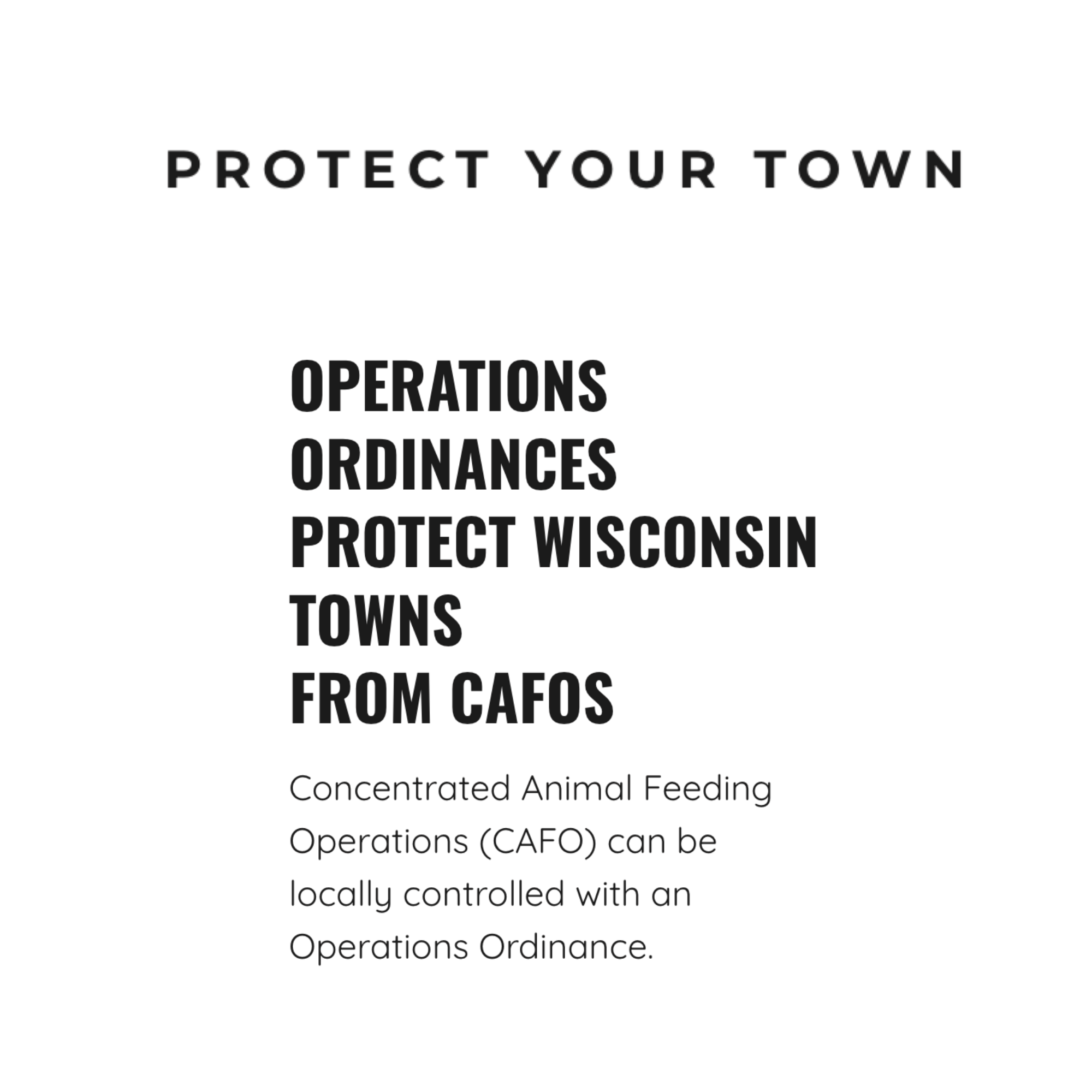
ProtectYourTown.org
ProtectYourTown.org is an advocacy and education site that helps Wisconsin towns use local “operations ordinances” to regulate Concentrated Animal Feeding Operations (CAFOs) and protect public health and property values. It explains how state law leaves major gaps in protections from manure, air pollution, carcasses, fires, and other risks, and shows how a partnership of rural towns created a model ordinance requiring large livestock operations to submit and fund enforceable plans for waste management, air and water safeguards, road impacts, biosecurity, and cleanup bonds—without banning CAFOs outright.
Rye Revival
Rye Revival is a 501(c)(3) nonprofit dedicated to “nourishing the future” by expanding ecological rye production and celebrating rye across food, feed, and farming. The organization supports farmers in integrating cereal rye as a cover crop and cash crop, advances research and education on rye’s roles in soil health, climate resilience, and human and animal nutrition, and promotes the enjoyment of rye-based foods and beverages to strengthen health, equity, culture, and a more resilient food and agriculture system.
Real Food Brands
Real Food Brands is a Brookfield, Wisconsin–based brand strategy consultancy and coaching business led by food brand strategist Katie Mleziva, focused on helping natural food and farm businesses “stand out and scale up.” Through 1:1 consulting, group programs, and the Food Business Marketing (Real Food Brands) podcast, she guides purpose‑driven founders to clarify their brand strategy, align all parts of the business to that strategy, and build meaningful, values‑based brands that connect with consumers and retail buyers in a competitive marketplace.
Savanna Institute
The Savanna Institute is a Midwest‑based 501(c)(3) nonprofit that works with farmers, researchers, and partners to catalyze widespread adoption of agroforestry—integrating trees with crops and livestock—to transform agriculture in the Upper Mississippi and Great Lakes watersheds. Through research, demonstration farms, technical assistance, and farmer training, it promotes diverse, perennial farming systems that build ecological resilience, improve soil and water, support wildlife, diversify farm income, and strengthen rural communities and climate stability.
Southern Driftless Grasslands
Southern Driftless Grasslands is a partnership of public and private organizations working to conserve and restore grasslands in southwest Wisconsin through landscape‑scale change. Hosted by Driftless Area Land Conservancy, the initiative supports landowners with tools, funding connections, and technical help to grow more grass, use rotational grazing, protect and restore prairies and oak savannas, enhance habitat for grassland birds and pollinators, and prevent fragmentation and development—aiming for a future of healthy grasslands, successful working farms, clear streams, diverse wildlife, and communities that value this unique Driftless landscape.
Sustain Rural Network Wisconsin
Sustain Rural Wisconsin Network (SRWN) highlights their work exposing and challenging the financial and regulatory systems that enable mega‑dairies, factory farm gas projects, and large livestock operations to expand across rural Wisconsin.
University of Wisconsin Center for Integrated Agriculture Systems (CIAS)
The Center for Integrated Agricultural Systems (CIAS) is a sustainable agriculture and food systems research center in the College of Agricultural and Life Sciences at the University of Wisconsin-Madison. CIAS fosters transdisciplinary inquiry and supports a range of research, outreach, and professional development opportunities. It brings together university faculty, students, staff, farmers, policymakers, and other practitioners to study relationships between farming practices and profitability, the structure of the food system, the environment, and rural vitality. CIAS was created to build sustainable agriculture and food systems research programs that respond to farmer and citizen needs.
University of Wisconsin-Organic Collaborative
The University of Wisconsin (UW) -Madison Organic Collaborative is a group of faculty, staff, students, and partners who are committed to growing the reach and impact of organic agriculture using world-class research, skillful instruction, and effective outreach.
Wisconsin Food Hub Cooperative (WFHC)
The Wisconsin Food Hub Cooperative (WFHC) is a farmer-led cooperative owned by the producers and the Wisconsin Farmers Union. The WFHC is dedicated to securing the most profitable markets for producer-members.
Wisconsin Grass-fed Beef Cooperative
The Wisconsin Grass-fed Beef Cooperative is a farmer-owned cooperative of over 230 Wisconsin family farms that produces 100% grass-fed and grass-finished beef and pastured pork under the Wisconsin Meadows™ brand. Founded in 2008, the cooperative uses regenerative agricultural practices including rotational grazing to raise livestock naturally without synthetic growth hormones, antibiotics, GMOs, or pesticides.